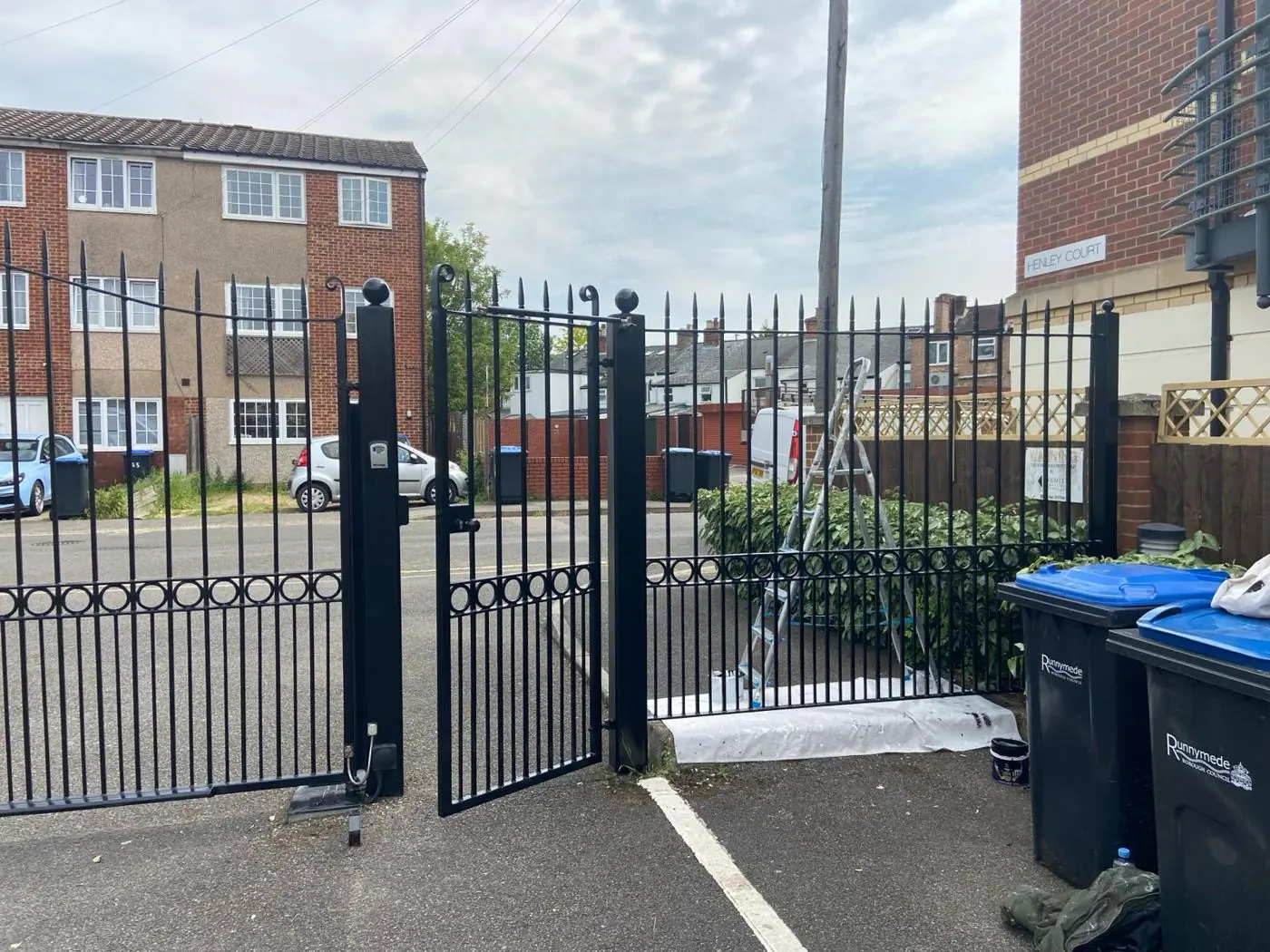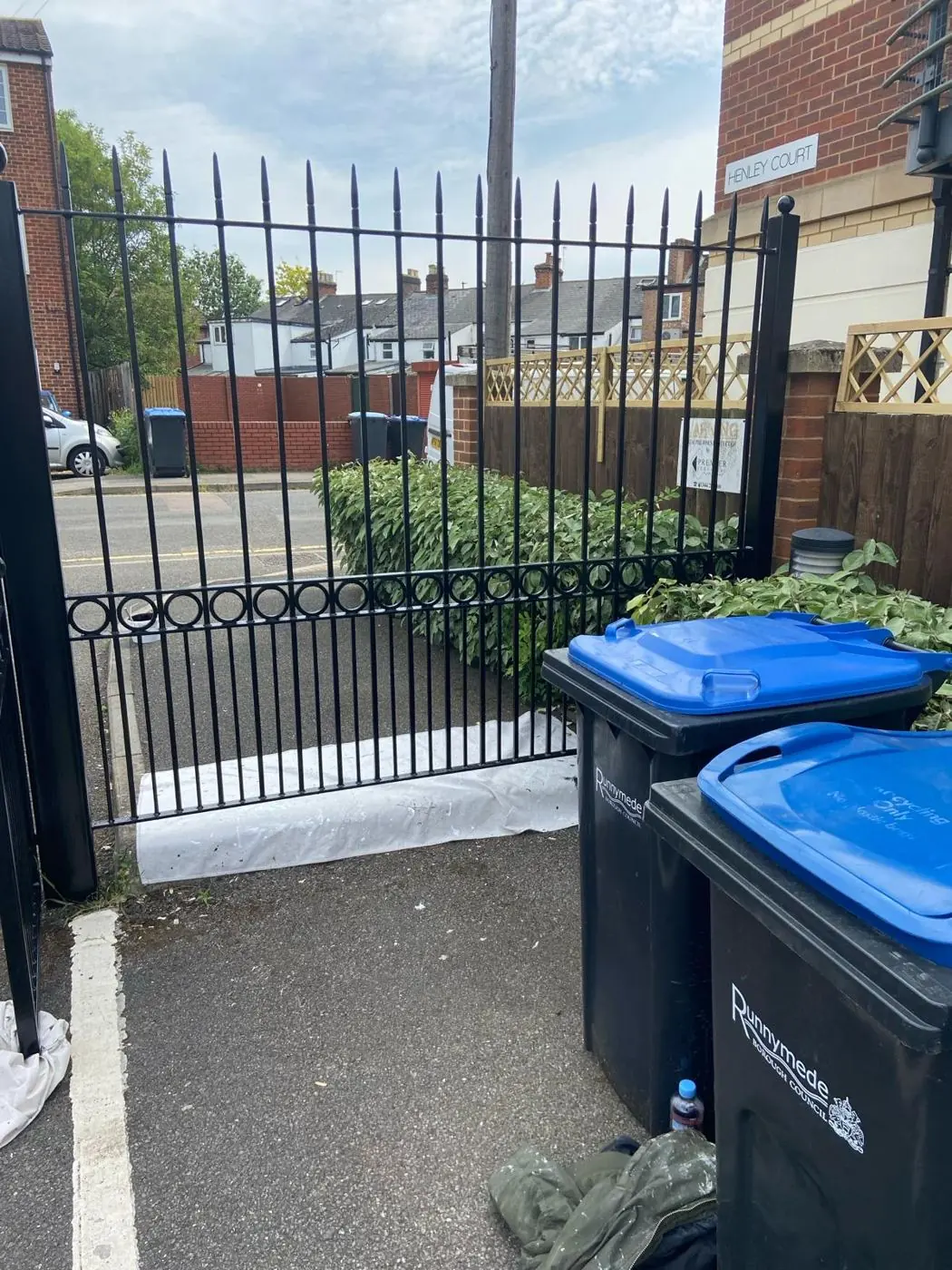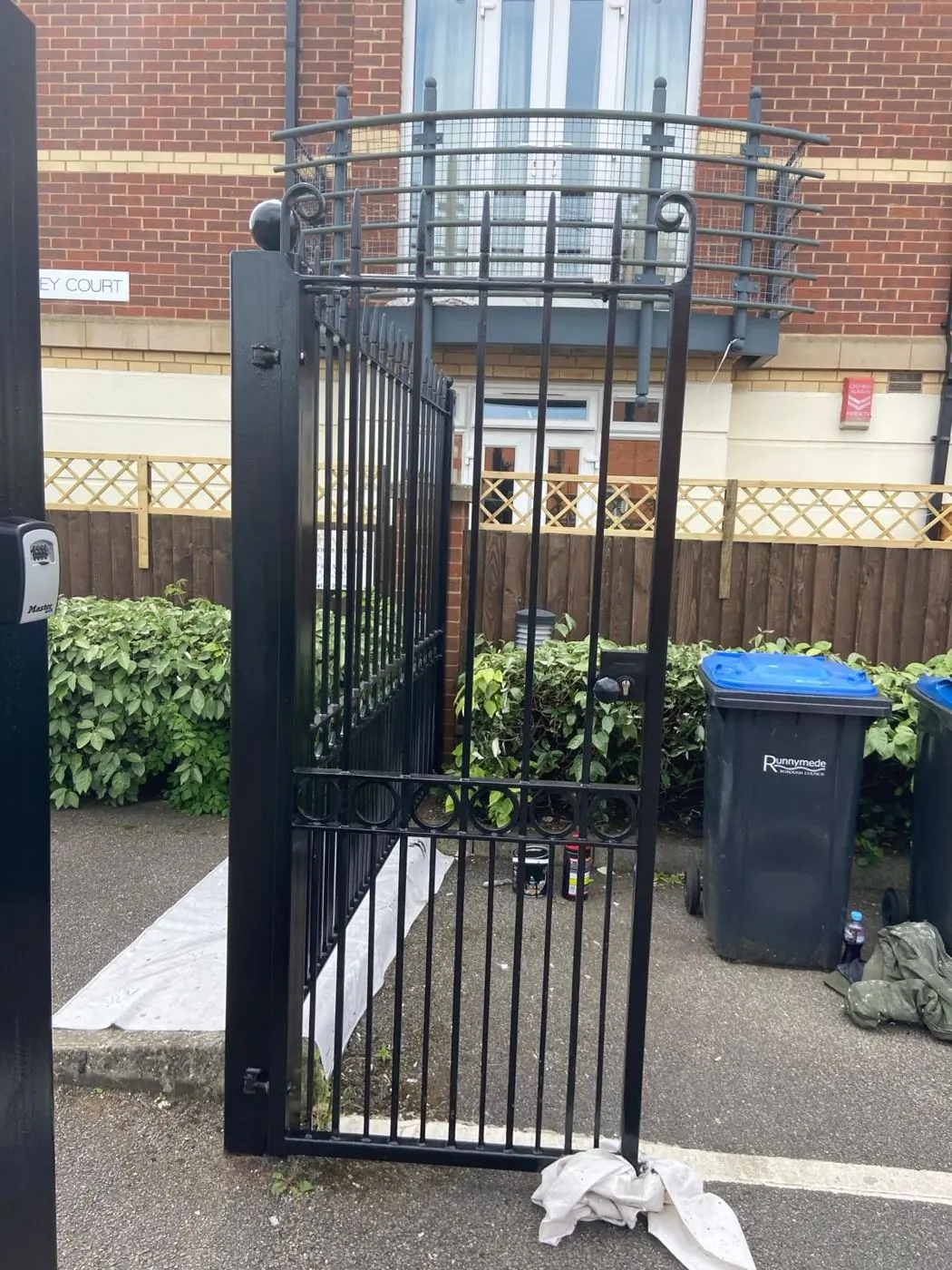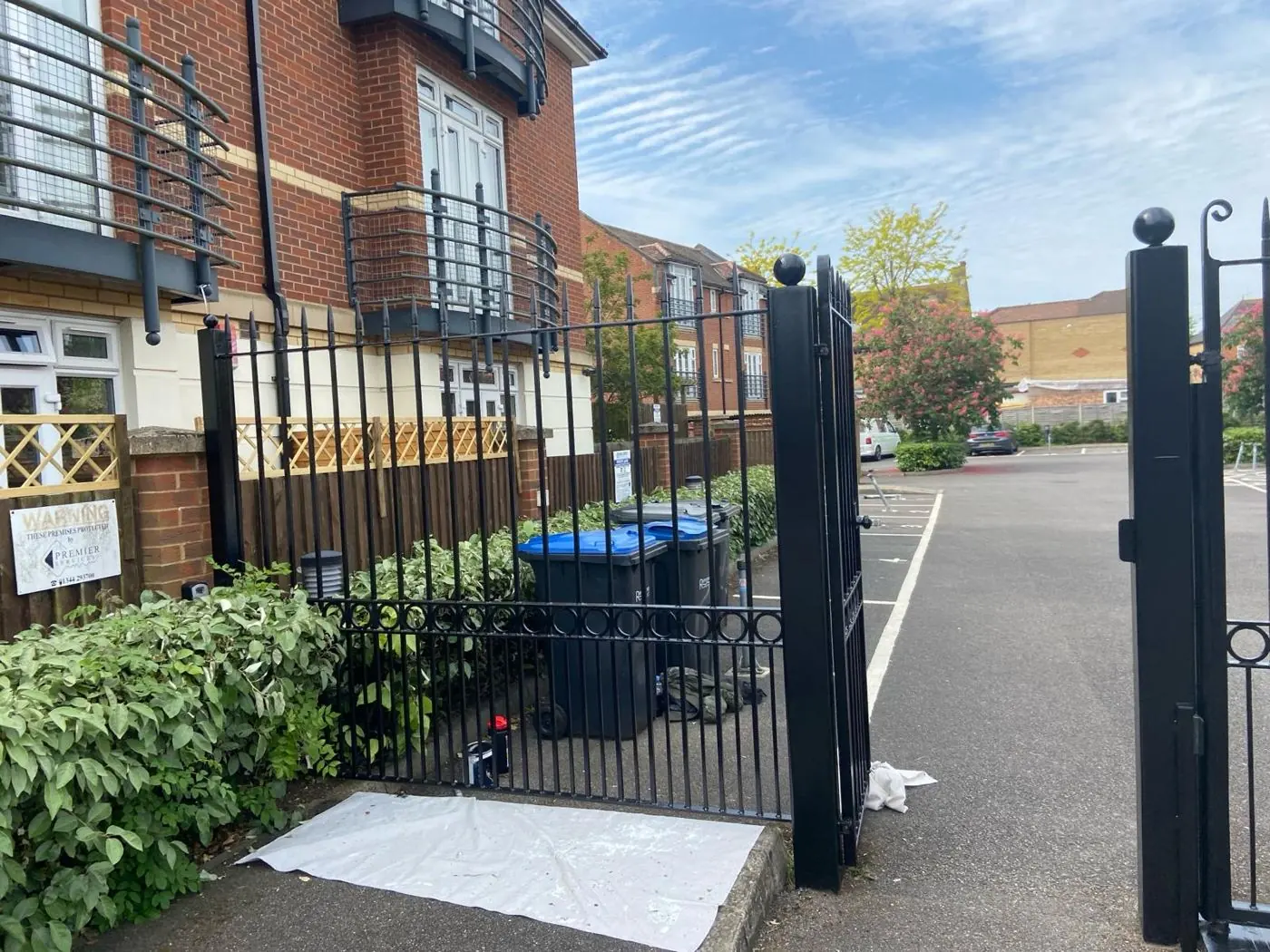
We stain and paint garden fences, posts and timber gates in East Hunsbury, NN4, the parkland-edged suburb roughly 1.9 miles south of central Northampton. Many gardens here back onto parks and green corridors, so algae removal and drying time come before any stain goes on.
Gardens that back onto green space
Open land is threaded between East Hunsbury’s estates: Grangewood Park, Penvale Park, the open ground at Blacky More, the wildflower-sown Stone Pit Hollow and, to the south, the Wootton Brook valley. Watercourses run through Penn Valley Park, Grange Wood Park and Blacky More, and many of these spaces are planted with trees and wildflower areas. That is pleasant to live beside, but it is hard on garden fences. The boundary that faces a park is often in the shade of trees for much of the day, and it stays damp after rain long after the rest of the garden has dried.
The fences themselves are typically what you would expect on 1980s and 1990s family estates: lap panels and close-board runs, usually on concrete or timber posts, gravel boards at the base, and a timber side gate between the house and the garage.
Algae comes off before stain goes on
A green film on a shaded fence is not just a cosmetic issue. Stain applied over algae does not soak into the timber, so it sits on the surface and wears away unevenly within a season or two. Our preparation for East Hunsbury fences therefore follows a fixed order:
- Brush off loose growth, moss and cobwebs from boards and post caps.
- Apply a biocide wash and leave it to work for the time the product states.
- Rinse or brush down the dead growth.
- Let the timber dry properly, which on a tree-shaded boundary can take noticeably longer than on an open one.
- Check for broken boards, loose arris rails and rotten gravel boards that need a carpenter before finishing.
Only then do we brush the stain or fence paint in. The fence and gate staining page covers the choice between stain and opaque fence paint in more detail.
Side gates between house and garage
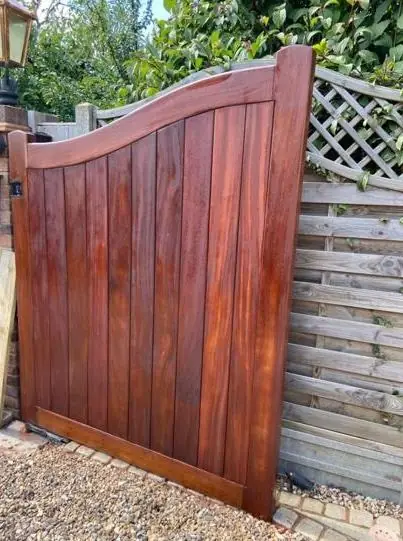
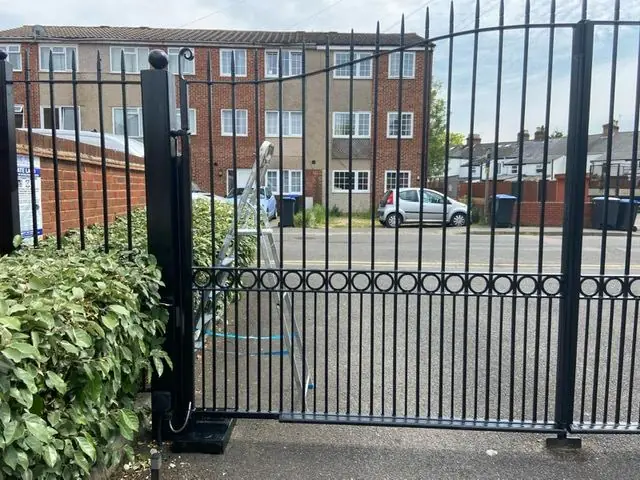
Many detached and semi-detached houses here have a side passage to the garden, often closed off with a timber gate. These gates take more handling than any fence panel, so their finish wears fastest at the latch side and the bottom rail, where rain splashes up off the path. On sloping plots the bottom rail can sit very close to the ground on one side, which keeps it wet. We pay attention to the end grain and the underside of the bottom rail, and to hinges and bolts that need masking or easing. If your side gate is metal rather than timber, that is a separate job with different primers.
Choosing a dry spell in a sheltered valley
The ground in East Hunsbury drops from Mere Way to the brook, and gardens on the lower, tree-lined side can hold moisture in spring and autumn. Stain needs dry timber and a few dry days to cure, so lower gardens with shaded fences are usually booked from late spring into summer. Gardens higher up, with an open aspect, give more flexibility. Easy access helps too: with a drive and garage at most homes, we can unload straight into the side passage without carrying through the house.
Stain colour beside open parkland
A fence that faces a public park or open space is seen from both sides by more people than a fence between two gardens, so many owners prefer a natural brown or muted green that sits quietly against trees and grass. Darker shades also hide the mottling that shade and damp can cause between recoats. Remember that only your side of a shared boundary is yours to treat unless your neighbour agrees, and the park side may belong to someone else entirely.
Read more about the area on our East Hunsbury page.
Last updated by Dean, DH Painter & Decorator.