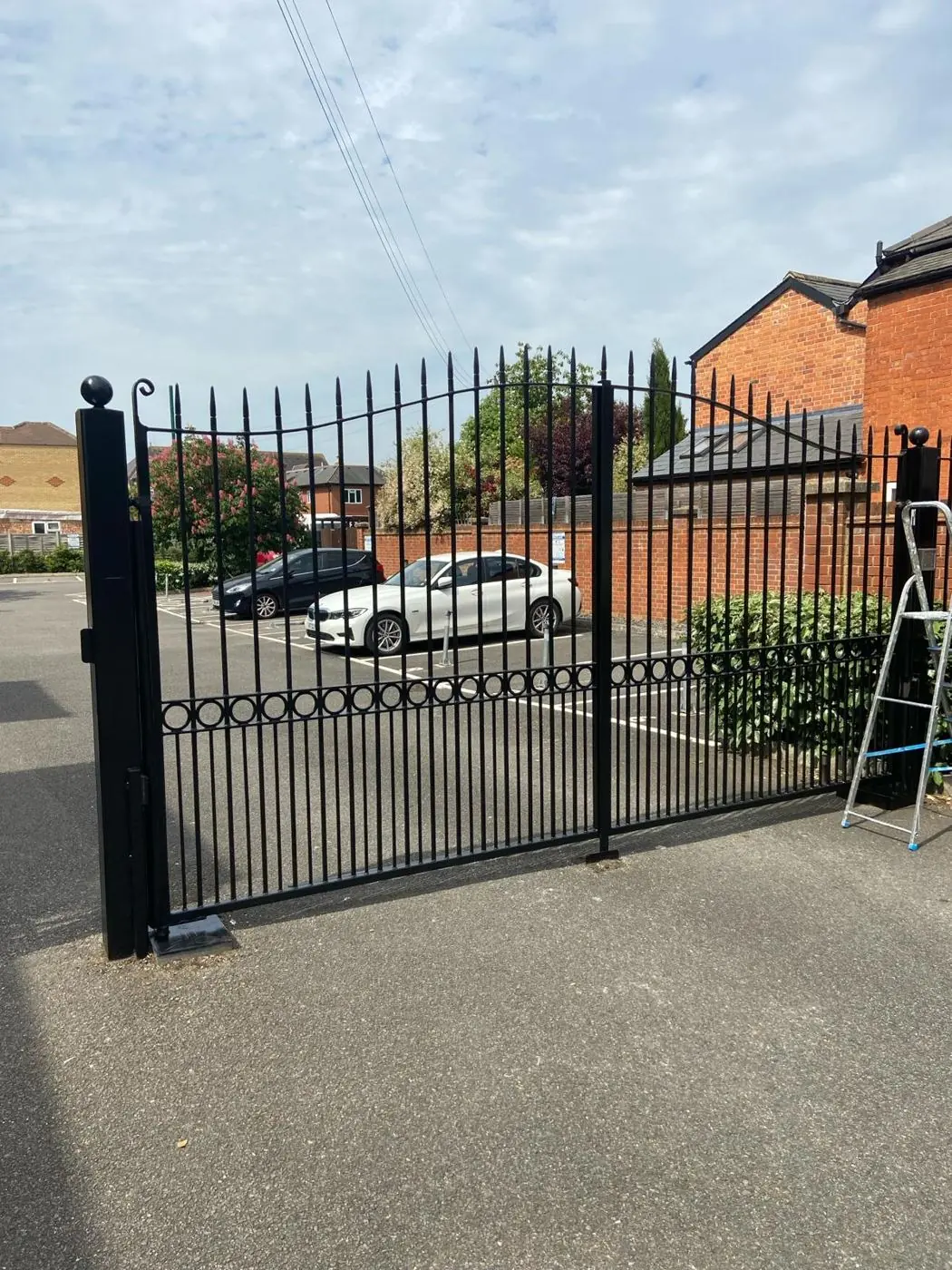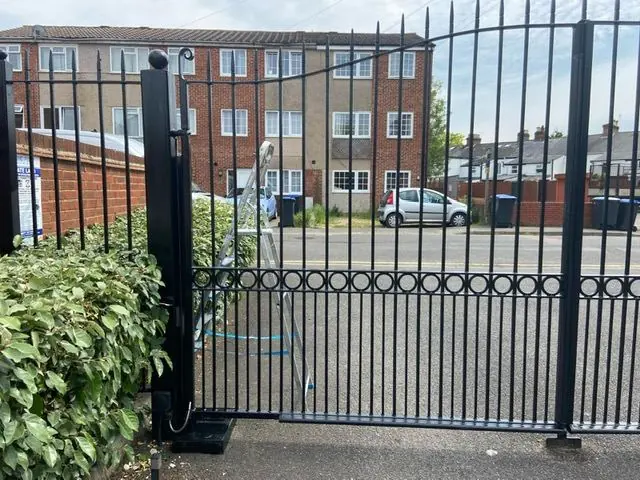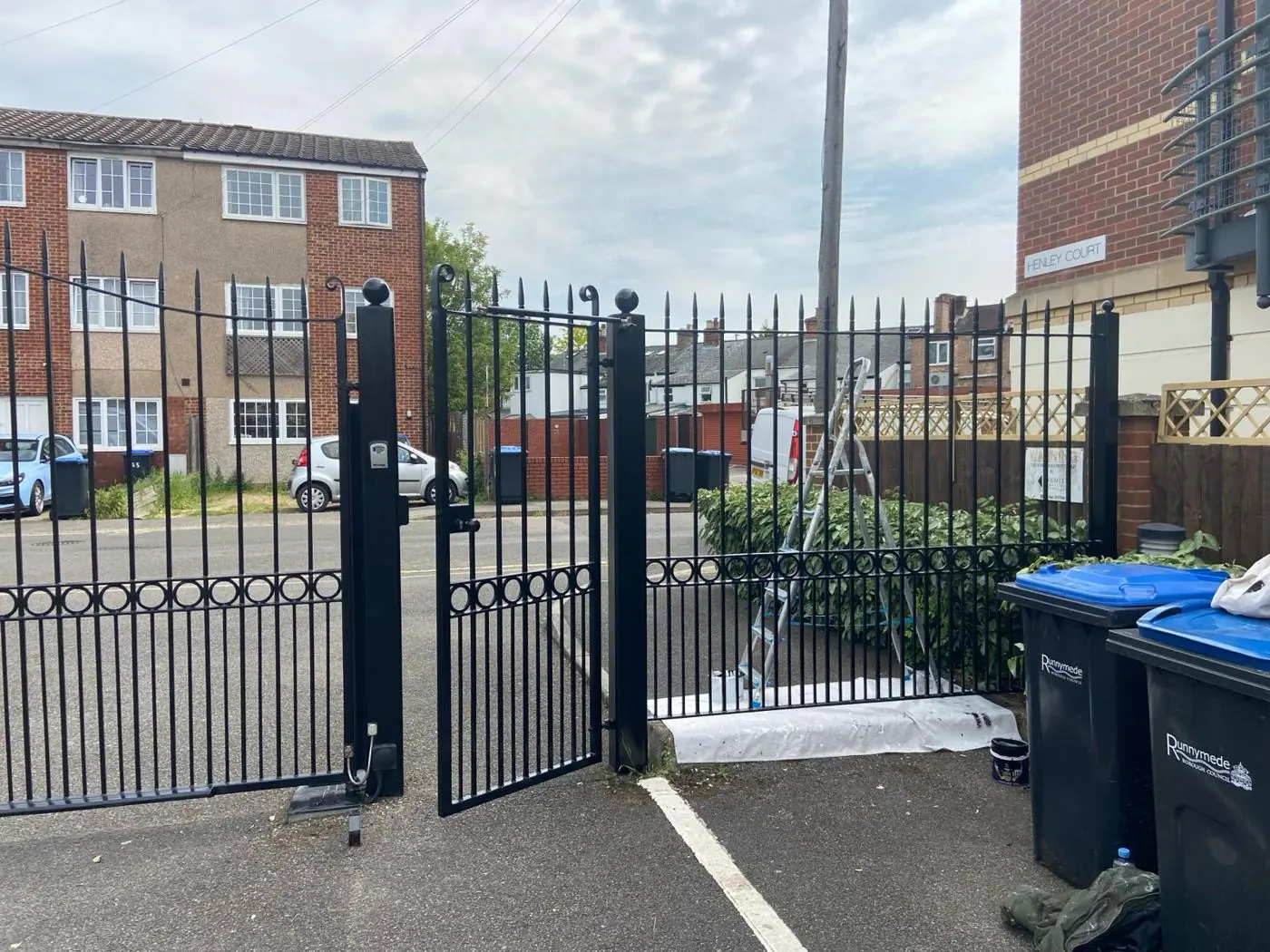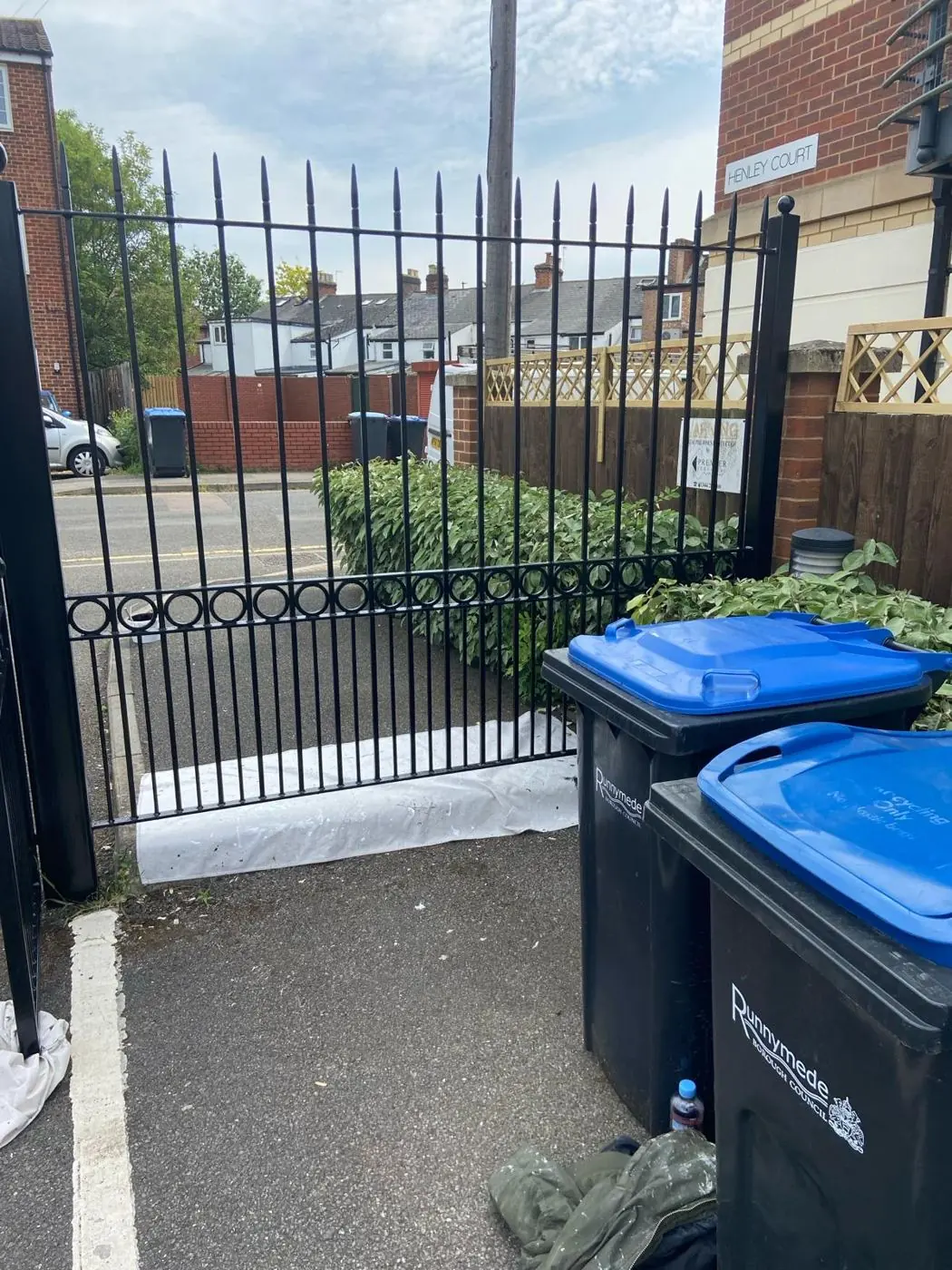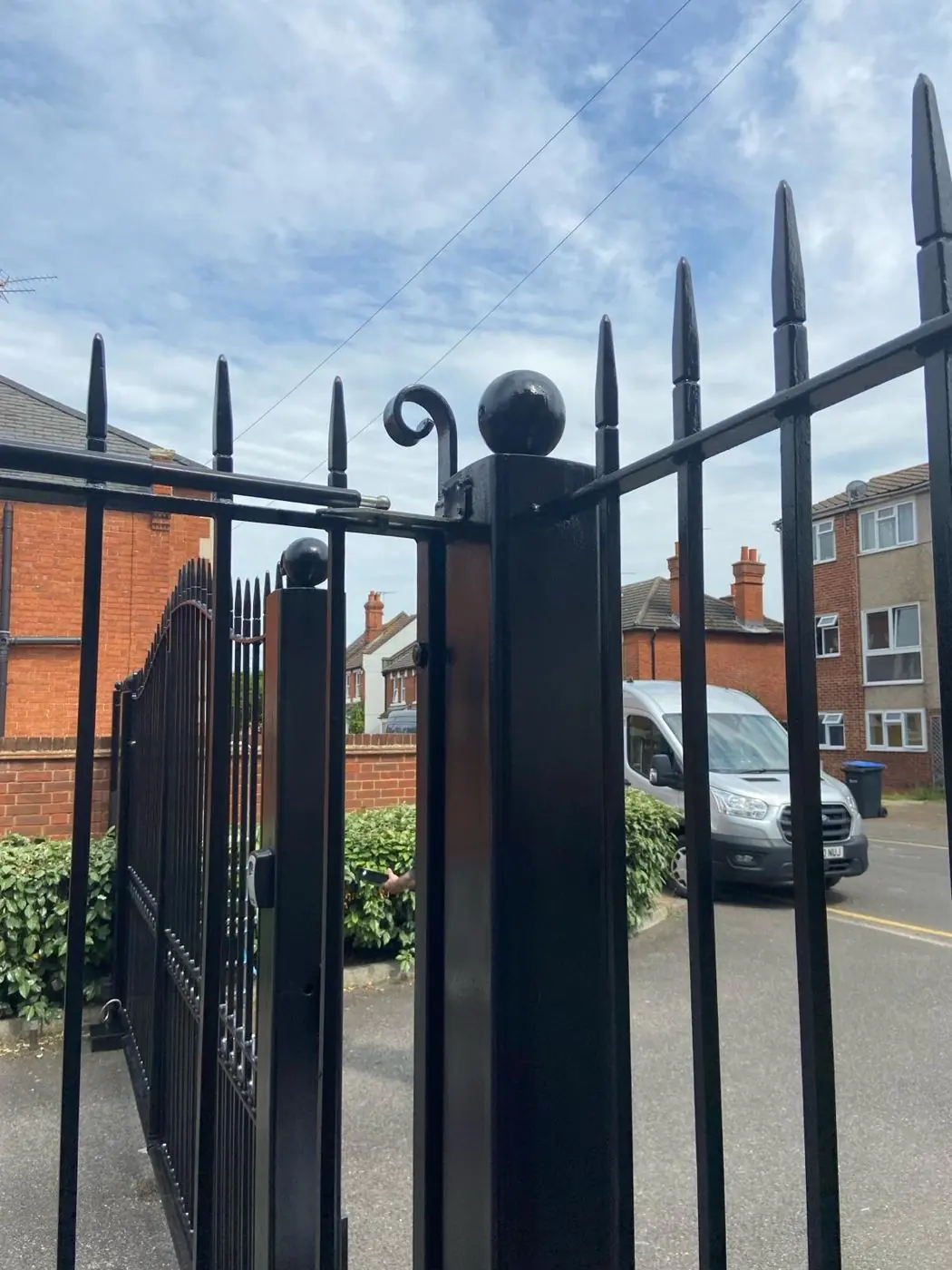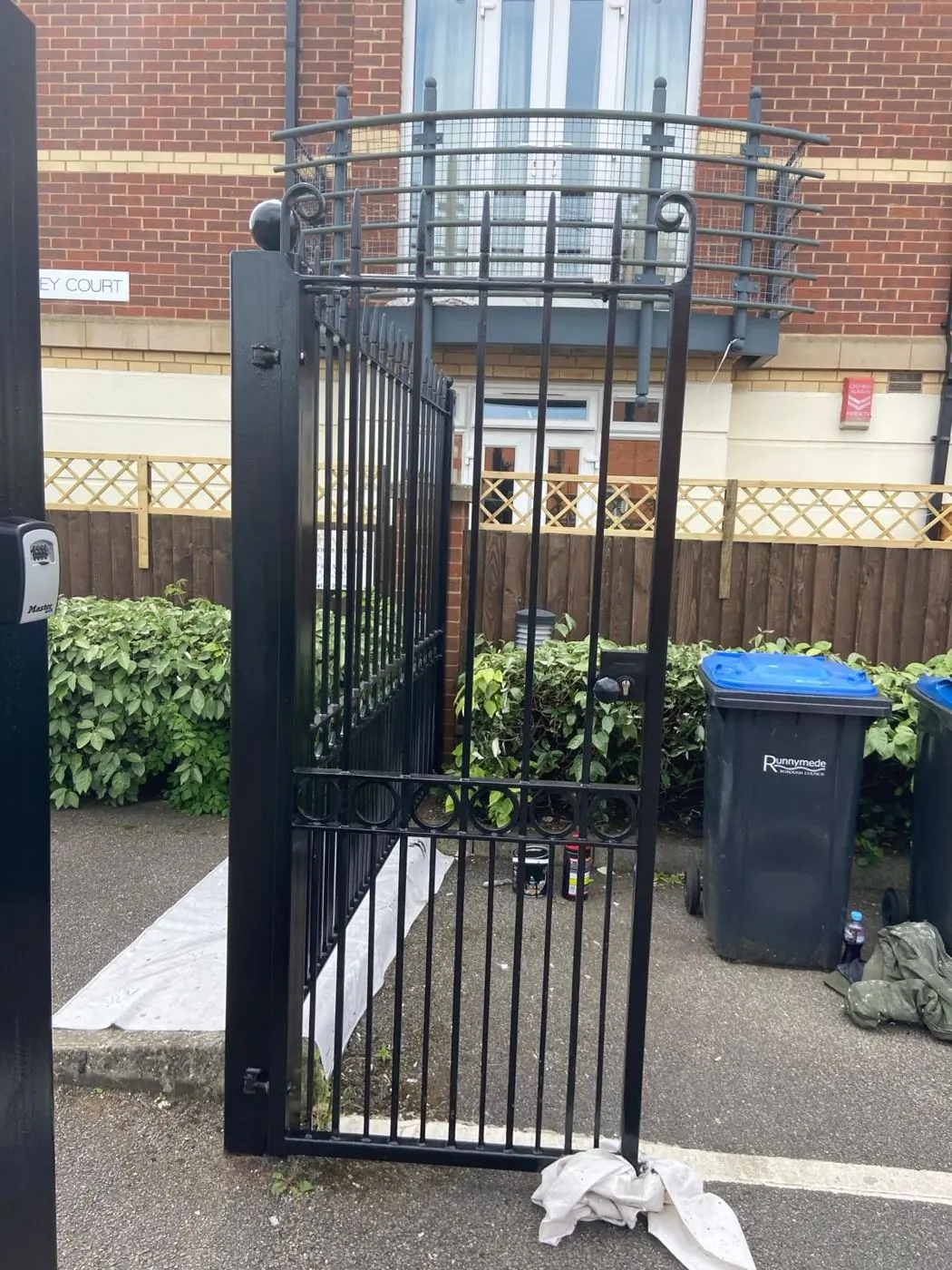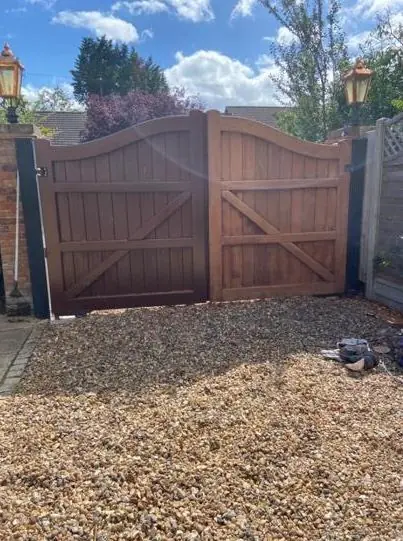
We stain and paint fences and gates in Roade, NN7, about 5.4 miles south of Northampton. Gardens on the modern closes and boundaries next to the surrounding farmland weather quickly, so microporous stains and periodic maintenance coats suit most of the village.
Fences on the edge of open country
Roade is surrounded by farmland, with farmsteads such as Hyde Farm and Woodleys Farm beyond the houses. A garden fence on the outer edge of the village has nothing between it and the fields, so wind-driven rain, low winter sun and summer heat all reach it at full strength. Panels that face south or west usually go silver-grey and dry first, while the sheltered side of the same fence may stay damp and green.
That uneven wear matters when deciding what to put on. A finish that suits a sheltered town garden can fail in a couple of seasons on an exposed boundary here, so we look at which way each run faces before recommending a product.
On the closes west of the A508, back gardens often share fences with neighbours on two or three sides. We only stain the side you own or have agreed with next door, and we talk through how to protect the neighbour’s side from drips before starting. Stain is brushed rather than sprayed, which matters on a windy day with open fields beyond.
Stain or opaque paint?
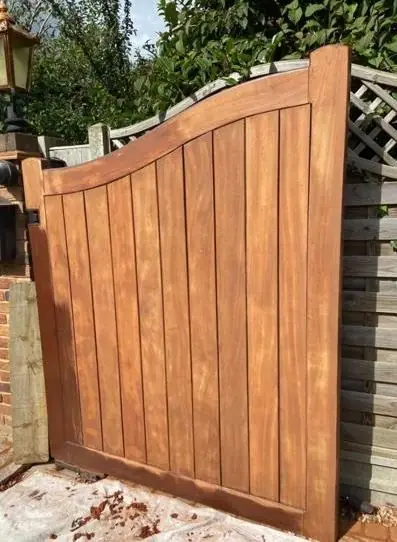
For most Roade gardens a microporous stain is the sensible choice. It lets moisture out of the timber, wears down gradually instead of peeling, and can be topped up with a maintenance coat without stripping the old one. On the exposed sides of the village, a shorter recoat cycle on the field-facing panels keeps the whole fence looking even and saves having to restore it from bare grey wood later.
Opaque fence paint covers older, mismatched panels well and gives a solid colour, but it shows wear as flaking rather than fading, and once it is on, going back to a natural stain is hard work. We talk through both on the visit. Treated softwood that has just gone in should usually be left to dry out before any finish is applied; the product guidance and the state of the timber decide how long.
Gates and boundaries in the old village
In the conservation core around the High Street, Church End and Hartwell Road, timber gates stand in front of limestone cottages and Georgian houses. Colours there look right when they sit quietly against the stone, ironstone and thatch, so deep greens, greys, off-whites and natural wood tones tend to work better than bright fence shades. On a listed building, a gate attached to the property may be covered by its listing, so a dramatic colour change is worth checking first.
One practical point in the conservation area: work to trees there needs six weeks’ notice to the council. If an overgrown tree has to be cut back to reach a fence, allow time for that before booking the staining.
What a fence visit covers
- Brushing down dirt, cobwebs and loose fibres, and treating green growth on shaded panels.
- Checking posts, rails and gravel boards, and pointing out anything loose that needs a fencer.
- Protecting paving, walls, plants and neighbours’ sides from overspray and drips.
- Brushing the stain into the grain, ends and joints, with a second coat where the timber is thirsty.
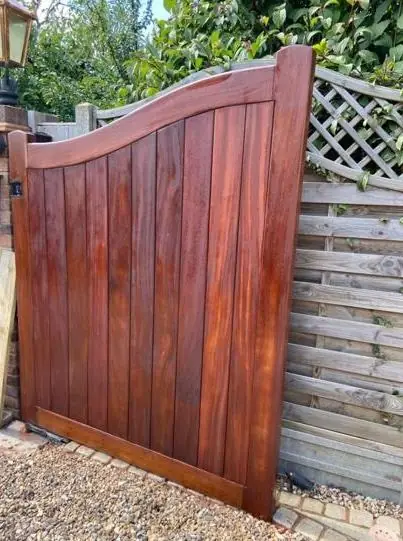
Hardwood and softwood driveway gates are hand finished with an exterior wood stain or oil. The full process for garden timber is on our main fence and gate staining page, and the guide to timing exterior work explains why spring and early autumn are usually the safest windows. Our Roade area page covers the other work we do around the village.
Last updated by Dean, DH Painter & Decorator.