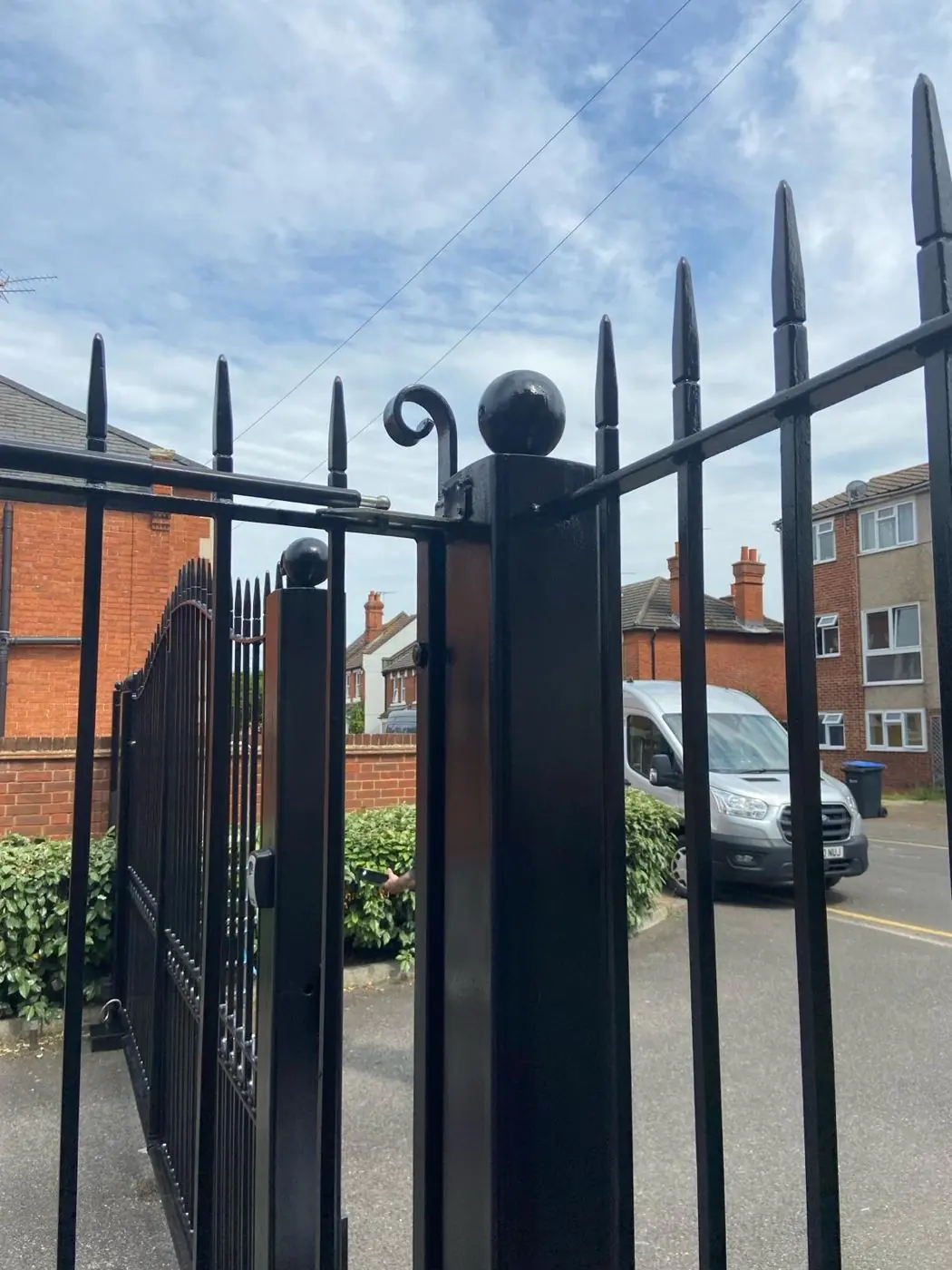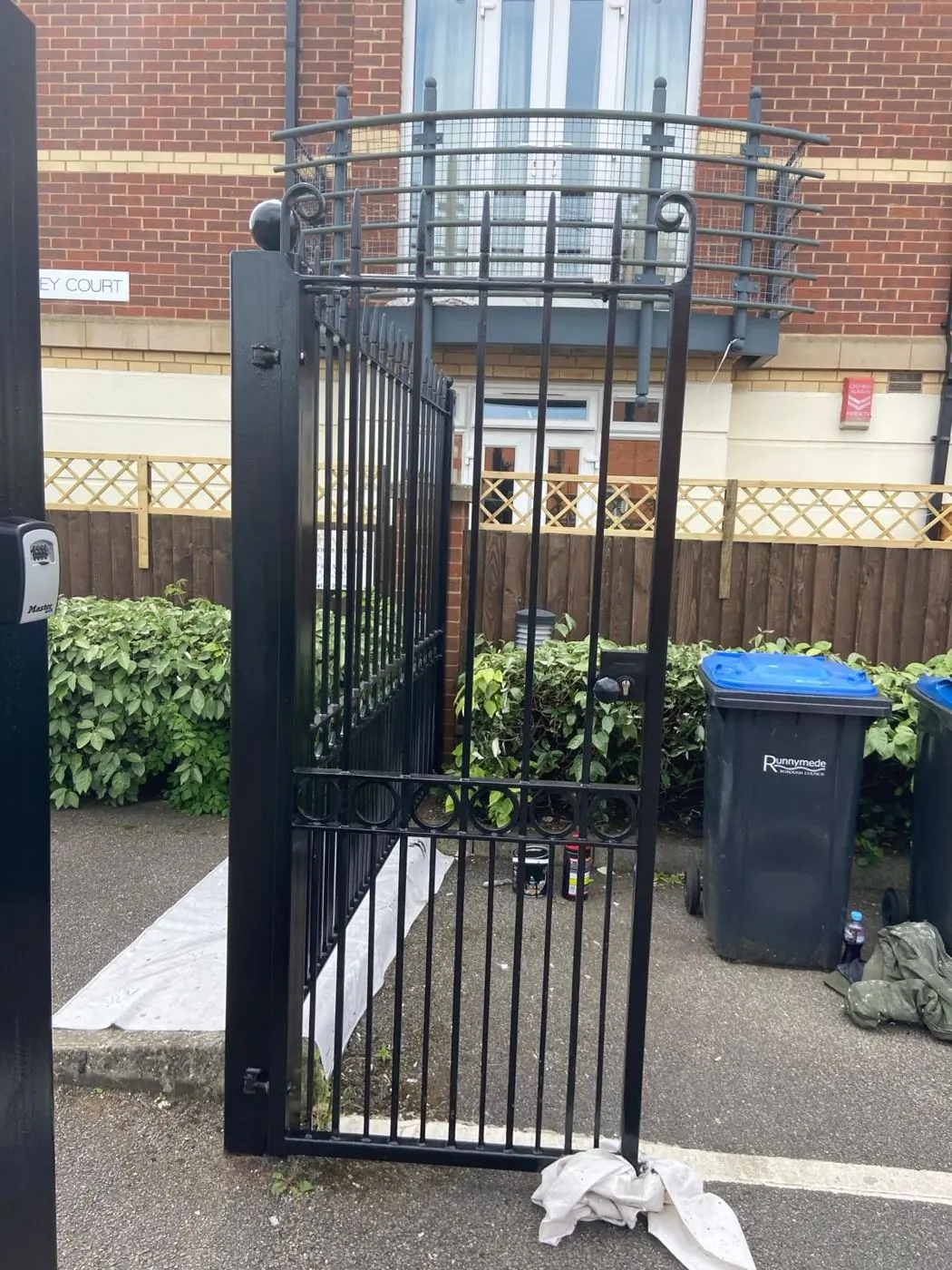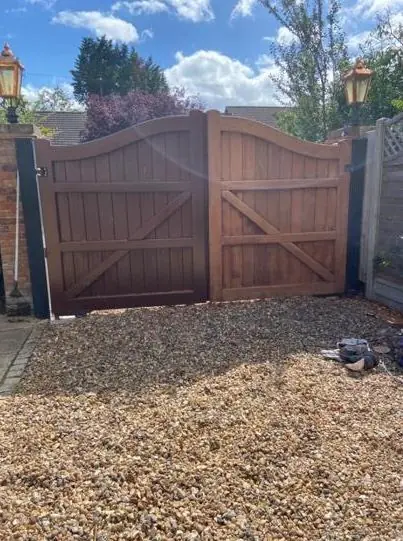
We stain and paint timber fences and gates in Collingtree, NN4, a village 3 miles south of central Northampton, close to M1 Junction 15. Most of the fencing is at the later houses and the golf-side plots in Collingtree Park, because the old High Street is lined with continuous limestone walls instead.
Stone walls first, timber second
Walk the length of Collingtree High Street and you will see very little fencing. The conservation area is defined in part by continuous limestone garden walls along the street, so the boundaries there are stone, and stone is not something we stain. The timber is behind and beyond them: side gates in gaps in the walls, garden gates, and fences at the back of plots. Fencing proper is mainly found at the later houses, around Spinney Drive, Ash Lane, Glebe Farm Close, Barn Mews, Sargeants Lane and Chestnut Avenue, and at Collingtree Park beside the golf course.
That shapes what a typical job here looks like. In the old village it is often one or two gates. At the newer houses it can be a full run of panels, posts and gravel boards.
Golf-side gardens in Collingtree Park
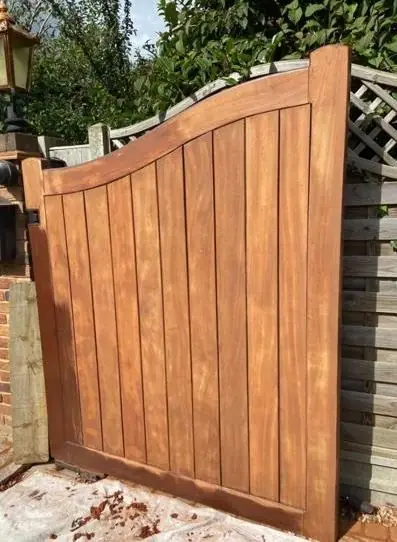
The houses at Collingtree Park sit among mature trees and alongside the course, with Wootton Brook running through a small valley on the north side. Fences in that setting get more shade, more leaf fall and more damp than an open suburban garden. Green algae and lichen build up on the shaded face of the panels and along the gravel boards, and leaves lying against the bottom of a fence keep it wet. A finish brushed over that does not last.
Before any stain goes on, we:
- clear leaves and debris from the base of the fence and between posts
- treat green growth with a fungicidal wash and leave it to work before brushing off
- let the timber dry properly, which in shaded spots can take longer
- check posts and rails for soft wood and loose fixings, and point out anything that needs replacing
Golf-side boundaries can also be seen from the course, so a colour that sits quietly against the greens and trees is often the sensible choice. We bring sample swatches and try them on the actual timber.
Gates hung in old stone walls
A wooden gate set into a limestone wall needs a slightly different approach from a gate on a fence post. Where the hinges or the gate post sit against stone, we keep stain and paint off the stonework, masking it or cutting in by brush. Bare limestone around a gate should stay bare. Gates hung on old walls also tend to drop and rub over time, so we check the swing before finishing and note any hinge or latch problems. If a gate belongs to a listed house in the conservation area, keep any new colour in character; changing the external appearance of a listed property may need listed building consent, which West Northamptonshire Council handles.
Stain or paint for a Collingtree boundary
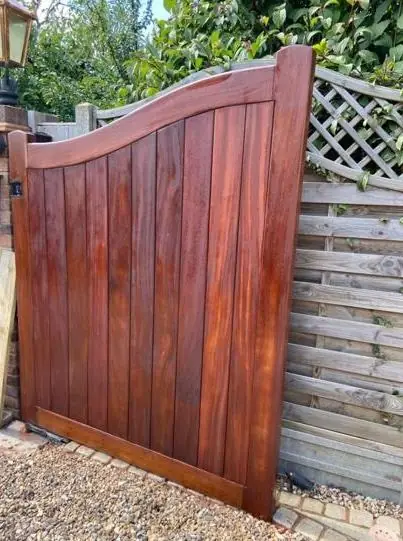
Stain soaks in and shows the grain, and wears gradually rather than peeling, which suits shaded fences that stay damp. Opaque fence paint covers weathered, patchy timber well and gives a solid colour. For a hardwood gate, a penetrating oil or translucent stain usually looks right and is easy to refresh. We recommend one after seeing the timber and how much shade it gets.
The method is set out in full on our fence and gate staining page. If you are comparing quotes, our guide on how to choose a painter and decorator lists what to ask. Our Collingtree page covers the rest of the village.
Last updated by Dean, DH Painter & Decorator.