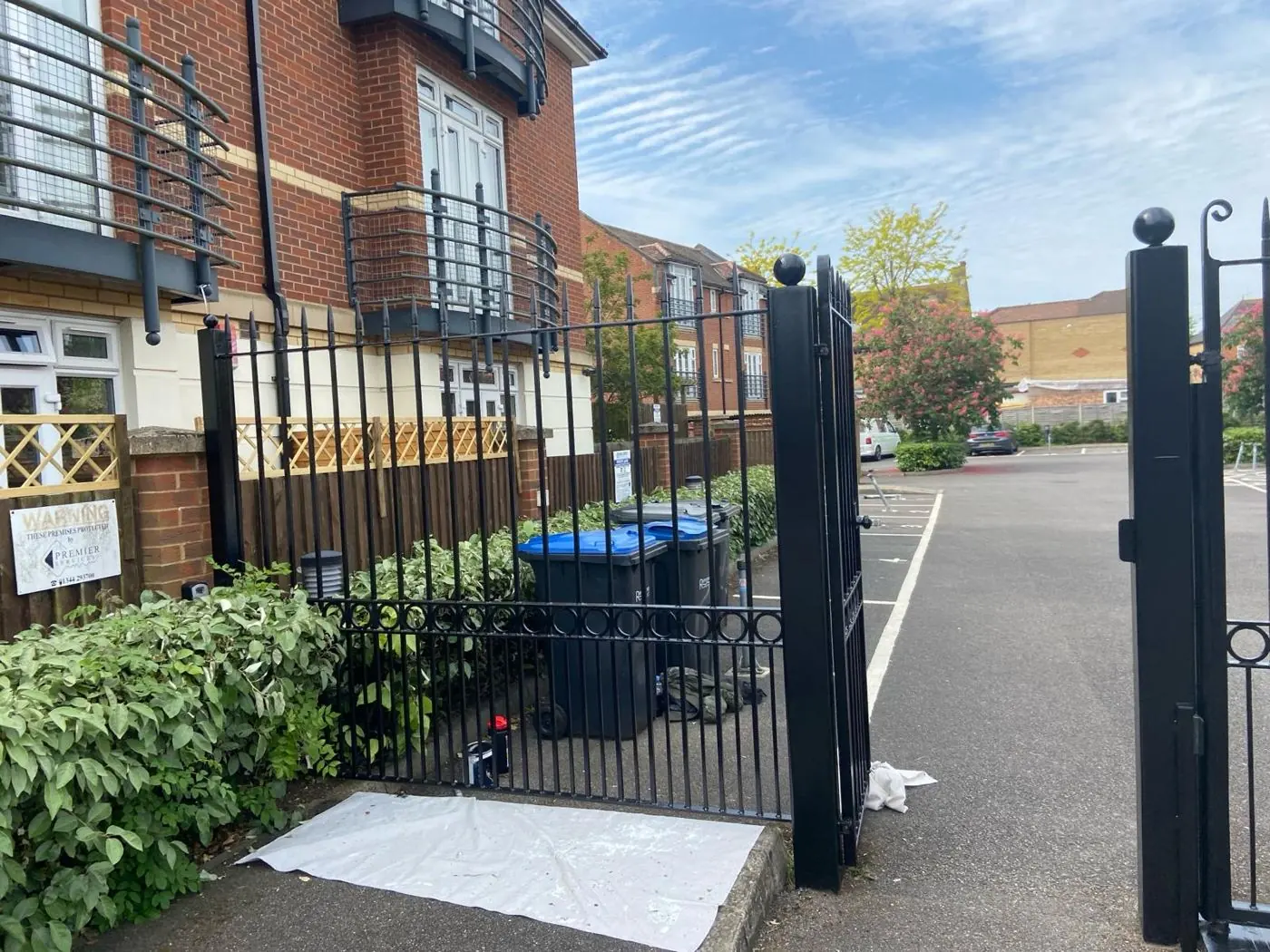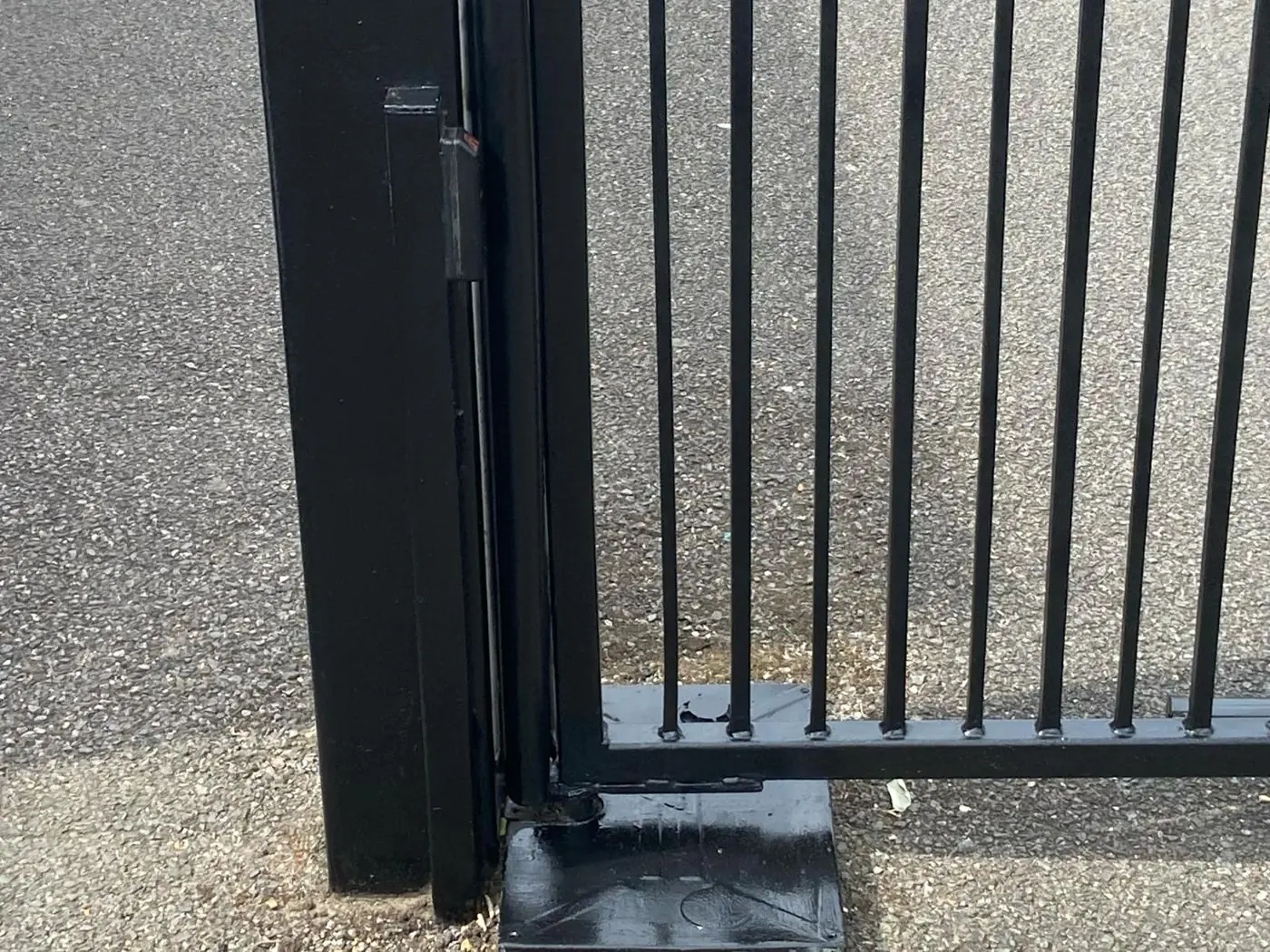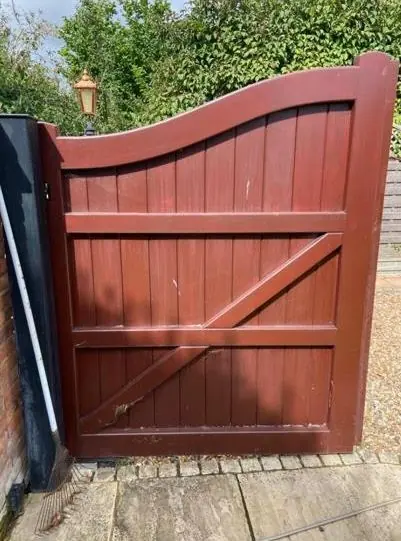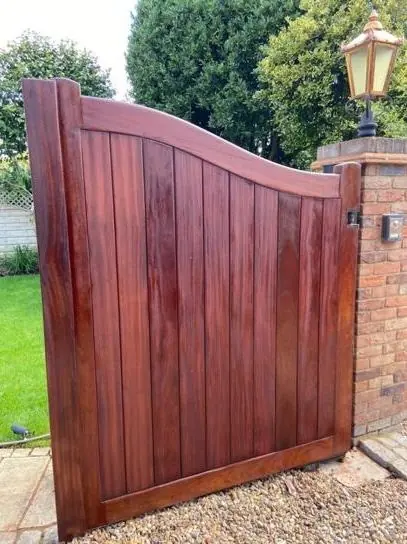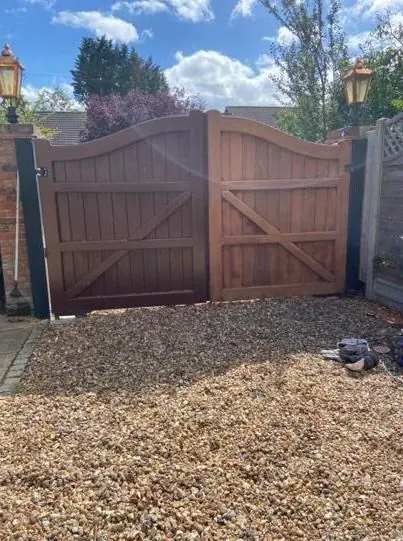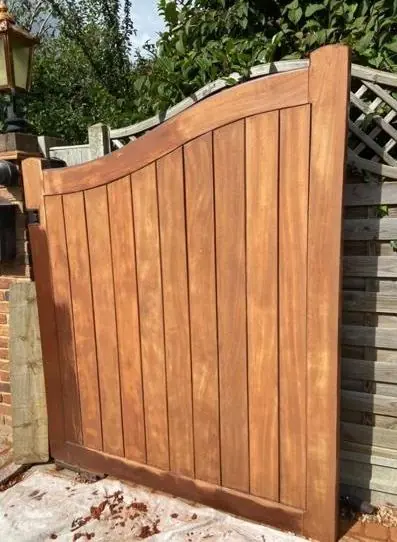
DH Painter & Decorator stains and treats fences and gates in Wootton, the NN4 parish about 2.4 miles south of Northampton town centre. Most fencing here is on the Wootton Fields and Simpson Manor estates, while the old village mostly has timber gates in stone walls.
Two kinds of boundary in one parish
Wootton’s boundaries depend on which part of the parish you live in. In the old village around High Street, Green Lane and Church Hill, the defining boundary is the stone wall with a brick or stone coping, and the conservation area protects most of them from demolition. Timber there is mostly a gate set into a wall, a side door or a short stretch of fencing behind it. On the estates that grew up around the village from the 1980s and 1990s, Wootton Fields and Simpson Manor, the picture is the usual one of panel or close-board fences between gardens and timber side gates. We cover both from our Northampton base, and the general method is on our main fence and gate staining page.
Estate gardens on a south-facing slope
The parish falls from about 110 metres in the north to 60 metres down at Wootton Brook, and much of it faces south. Fences on the sunny side of a garden bleach and dry out faster, so the stain loses colour within a few seasons, while fences in shade or on a north-facing boundary stay damp and go green. We usually suggest a different maintenance gap for each side instead of one schedule for the whole garden.
Before staining we check what is already on the timber. Spirit-based and water-based products don’t always sit well over each other, and a fence previously coated with a heavy solid colour can’t be taken back to a natural tone. We clean off algae, let the wood dry properly and then apply two coats with a brush on gates and rails and on any boards that need working in. Posts get a look at ground level, since that is where moisture rots them first.
Several family lets on the estates, such as mid-terraces on Aldwell Close and Montgomery Way, need a finish that holds up between tenancies without fuss. For those we favour a mid-tone stain that hides wear and is easy to recoat.
Village gates under yews and sycamores
In the conservation core, the trees are what make timber hard to maintain. The churchyard has ten yews, there are sycamores outside the Yeoman of England, and birches and yews line Church Hill and Green Lane. Gates under them drip for hours after rain and pick up algae and sap. We treat them with a biocide, give it time to work and scrub back before staining, and for a ledged and braced gate we pay attention to the top edges and joints where water sits. If you want branches cut back first, remember that trees over 75mm in diameter in the conservation area are protected and need six weeks’ written notice to the council, so we work around them.
Getting materials to the back garden
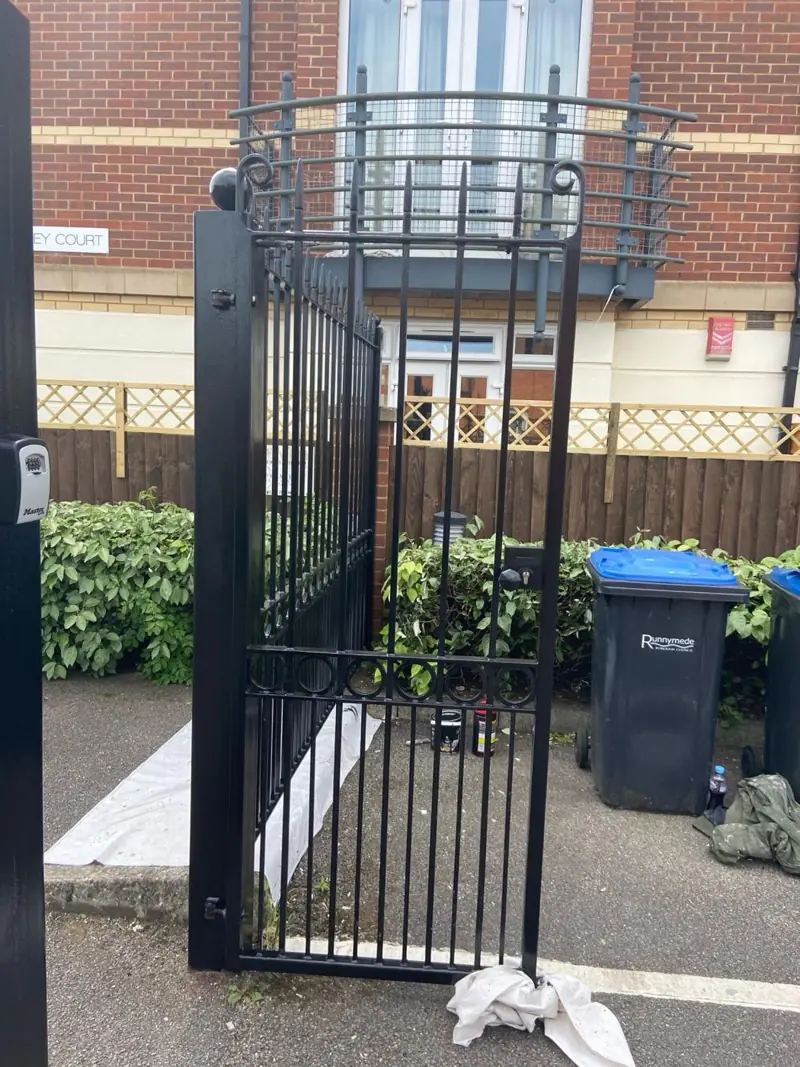
Access in Wootton can mean high stone walls with one narrow entrance, sunken lanes and High Street parking restrictions. On a mid-terrace house the only route to the back may be through the house or along a shared path, so we agree how we will carry tins and dust sheets before the day. We also ask about the neighbour’s side: we stain your face of a fence, and the other side needs the neighbour’s permission. Timing matters as well, since stain needs dry timber and settled weather; our exterior painting seasons guide explains which months work. More on the parish is on our Wootton page.
Last updated by Dean, DH Painter & Decorator.