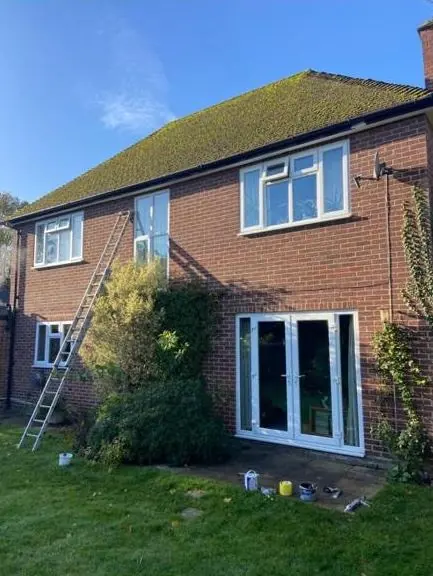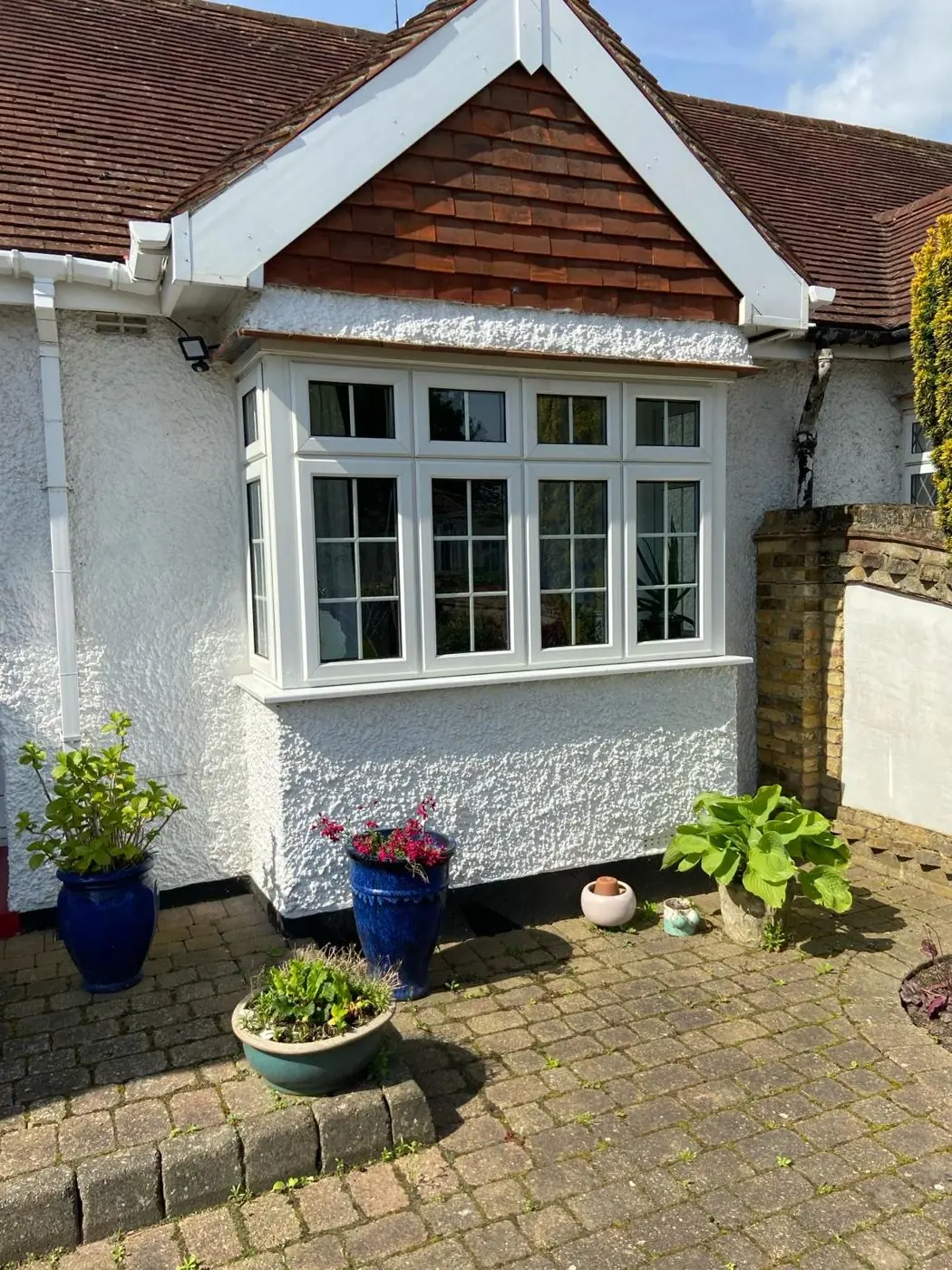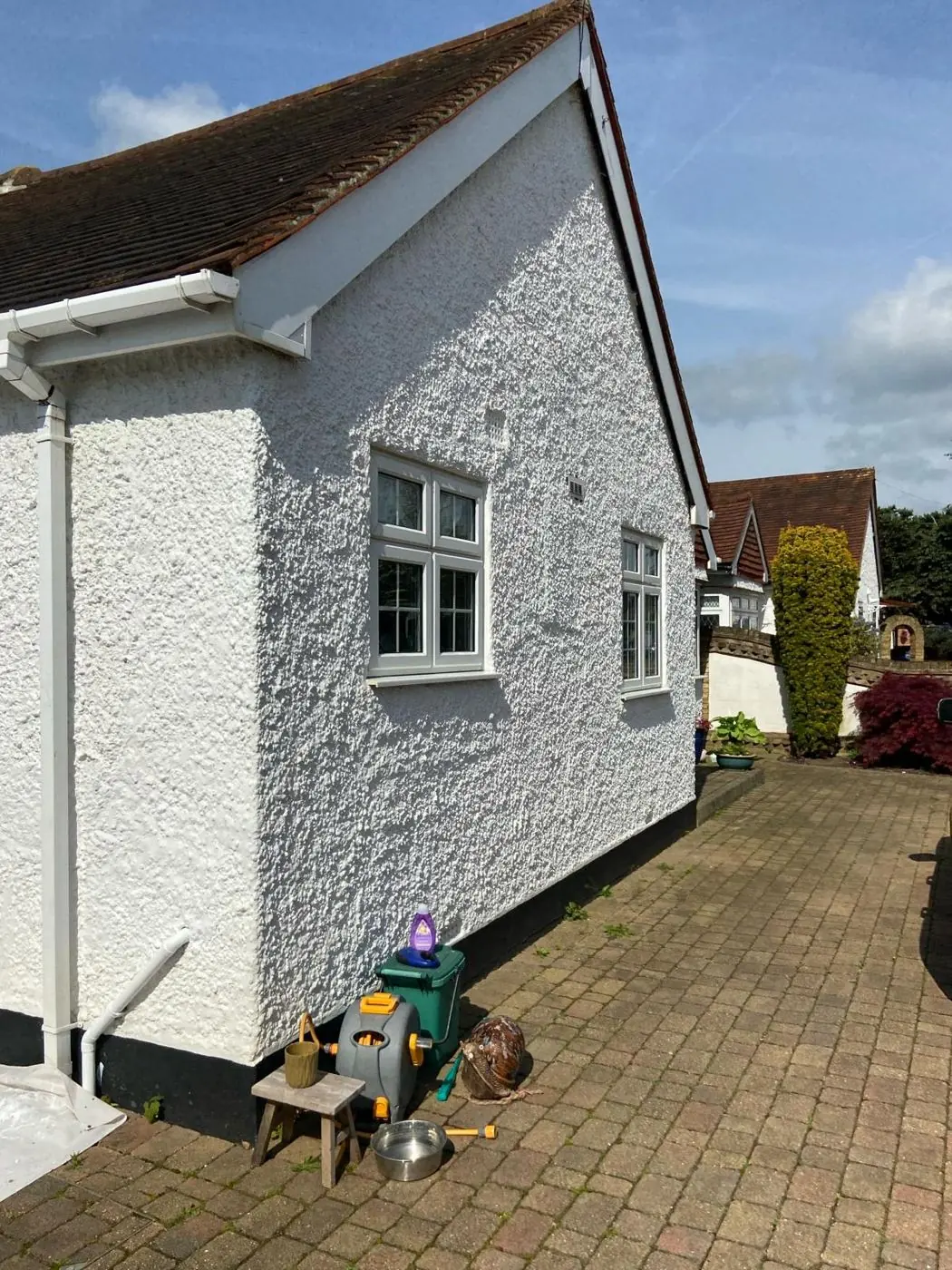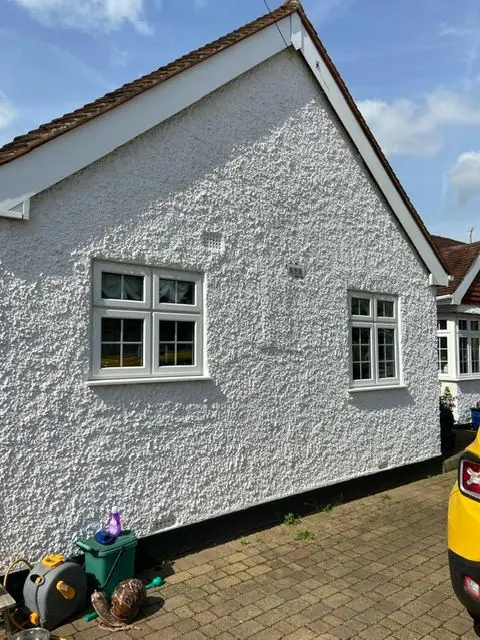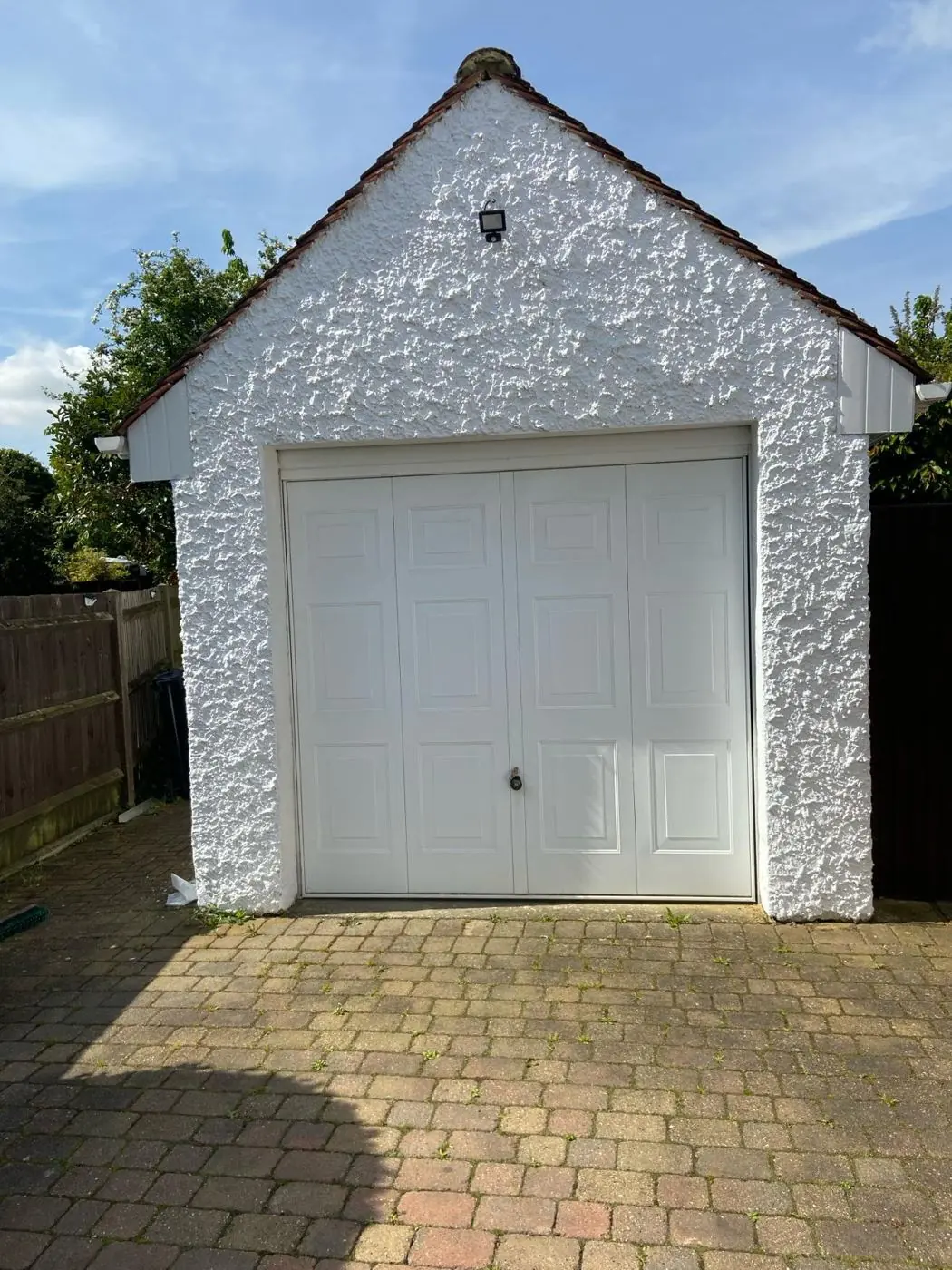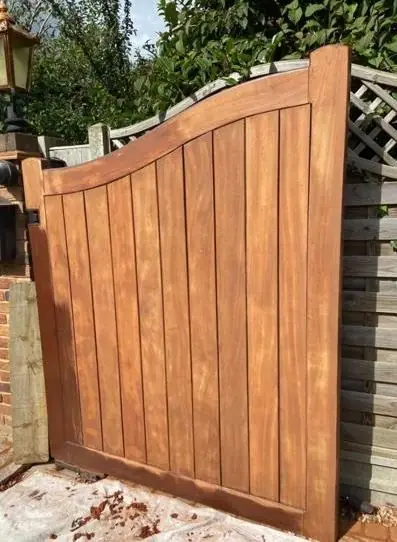
We paint house exteriors in Greens Norton, NN12, about 8.5 miles south-west of Northampton town centre. In this stone village most of the job is joinery rather than walls: casements, lintels, doors and sashes, done with breathable products and with the listed status of 27 local buildings in mind.
Where the paint actually goes on a Greens Norton house
On most older houses in Greens Norton, very little of the outside is painted at all. The village is built of coursed limestone and ironstone rubble, honey-coloured and orange-brown, and that stone is meant to be seen. Exterior painting here is mostly joinery: front doors, two- and three-light casements, the timber lintels above them, sills and gable bargeboards. A smaller share is painted masonry, such as the painted rubble fronts of 1 and 3 Blakesley Hill or a painted brick extension like the 19th-century one recorded at 34 High Street. Modern houses and 20th-century red-brick additions sit outside that historic core and take ordinary exterior systems, so we price the two separately when a property has both.
Our exterior painting service page covers general preparation. This page deals with what is particular to the village.
Timber lintels on the 1690s rows
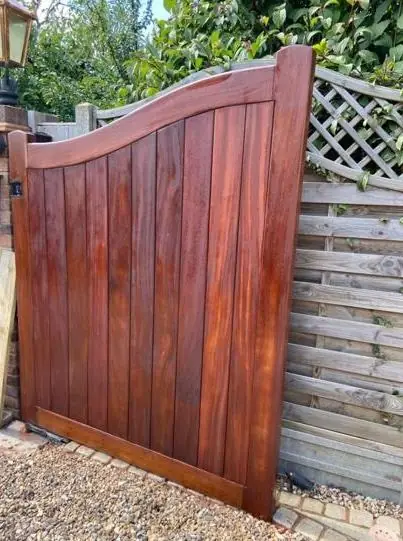
The listing descriptions for cottages on Blakesley Hill, High Street and Bengal Lane mention timber lintels over the windows again and again. Nos 2 to 8 Blakesley Hill are dated 1694, and an interior beam in No. 4 carries the date 1654, so some of this timber is very old. A lintel set into rubble takes water at both ends where it bears on the wall, and that is where rot starts. Before painting, Dean probes the bearing ends, lets wet timber dry where the weather allows, fills sound but open grain, and uses a microporous paint that lets moisture out of the wood. Sealing a damp lintel under hard gloss tends to make the decay worse.
Small-paned casements need patient cutting in so paint does not creep onto the glass or the stone reveal. Where a cottage has eyebrow dormers under thatch, as Brookside Cottage on Bengal Lane does, access is light and careful, with ladders kept off the thatch and nothing leaned against the straw.
Sashes, keyblocks and the Grafton farmhouses
The larger houses bring different joinery. Falcon Manor has 12-pane sashes under painted stone lintels and keyblocks, and the Old Rectory on Towcester Road mixes mullion, cross and 12- and 16-pane sash windows, so one house can need several approaches. Out at Caswell and Field Burcote, the model farmhouses built for the 4th Duke of Grafton between 1839 and 1844 have 12-pane sashes with stone lintels and keyblocks, hipped slate roofs and deep overhanging eaves. Sash work there means painting both sashes without sealing them shut and keeping primer off the stone dressings. The eaves usually need a tower rather than a ladder. These farms are reached by rural roads outside the village, so we check where a van and tower can stand before the day.
Listed status and a change of colour
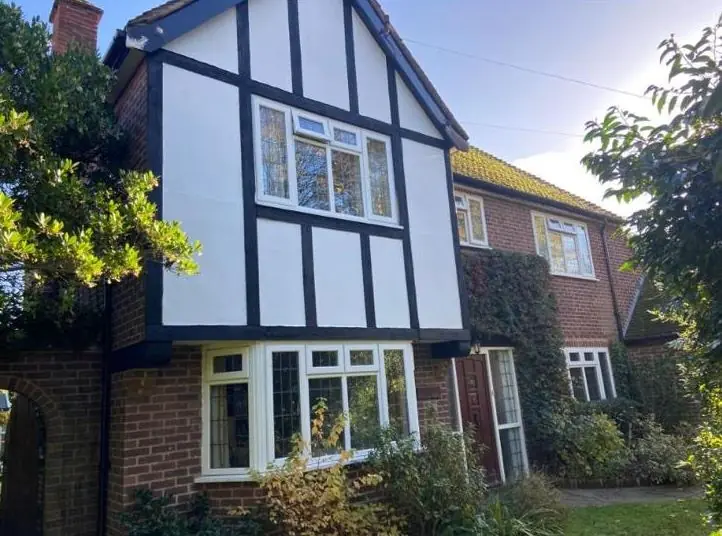
Greens Norton has 27 listed buildings: the church of St Bartholomew is Grade I and the rest are Grade II. The village does not appear in West Northamptonshire Council’s list of conservation area appraisals, so heritage control comes from individual listings rather than an area designation. Repainting existing joinery in its current colour is usually treated differently from changing a colour or finish on a listed building’s exterior, which may need consent. If you are thinking of moving from white casements to a dark heritage green, for example, speak to the council first, and we can help narrow the choice so the question you put to them is clear. Unlisted modern houses in the parish don’t carry the same restriction.
Timing outside work on rising ground
Greens Norton sits on rising ground just over a mile north-west of Towcester, with open farmland around it. Exposed rural houses dry slowly after rain and take wind-driven weather on their gable ends, so we book outside work for settled spells and leave slack in the diary for wet days. Our guide to timing exterior painting sets out the conditions paint needs. For the wider picture of decorating in the village, see the Greens Norton area page.
Last updated by Dean, DH Painter & Decorator.