We stain and paint fences, gates and outdoor timber in Greens Norton, about 8.5 miles south-west of Northampton town centre. Many plots here back onto open farmland, so we focus on the weather side of the boundary and on farm-type gates and outbuilding doors as well as garden fences.
Boundaries that face open fields
Greens Norton is a rural village on rising ground with farmland all round it, a playing field and a pocket park nature reserve within it, and outlying farms at Caswell, Duncote and Field Burcote. Plenty of gardens back onto open land, and those boundaries take more weather than a fence between two town gardens. The side facing the fields gets wind-driven rain and full sun with no shelter, so it greys and dries out faster than the side facing the house. We look at that face first, because that is where timber opens up, joints loosen and old stain disappears. Our main fence and gate staining page explains stain versus fence paint; here the question is how much protection an exposed rural boundary needs.
The short answer is a penetrating, pigmented stain with real UV protection rather than a thin clear coat, worked well into end grain and the tops of posts and boards, with a maintenance coat on the exposed side sooner than on the sheltered one.
Field gates, yard gates and outbuilding doors
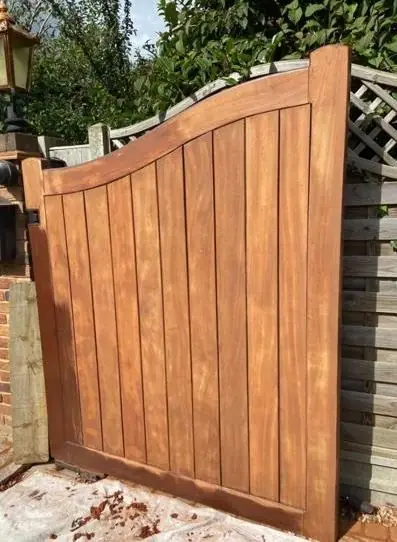
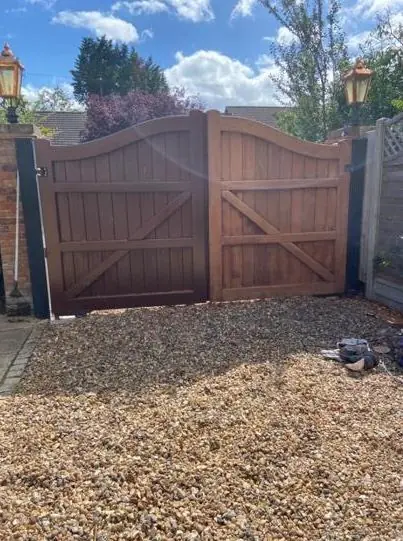
Around the hamlets you meet timber that rarely appears on a town job list: five-bar field gates, wide yard gates, ledged and braced outbuilding doors and stable-type doors. Gates that are swung every day wear at the hanging stile and the bottom rail, where mud and standing water sit, so those parts get the most preparation. We clean off green growth and dirt, let the timber dry, sand back loose fibres and brush stain into joints and the underside of rails. Hinges and latches are masked or removed rather than stained over.
- Bottom rails and the feet of posts: extra coats, as they stay damp longest
- Gate tops and post tops: end grain sealed so water doesn’t wick in
- Outbuilding doors: both faces where exposed, plus the bottom edge
When the barn is listed too
Several farm buildings in the parish sit within listed groups. Caswell is listed with its attached outbuildings, Field Burcote Farmhouse with its farm buildings, and Wyken with its attached barn. Staining a new garden fence needs no permission, but changing the finish or colour of doors and timber on a listed outbuilding can need consent from West Northamptonshire Council, while re-coating like for like is usually treated differently. If you aren’t sure which applies, ask the council before work starts; we would rather the job wait a fortnight than go ahead on a guess.
Stain colours beside honey and orange stone
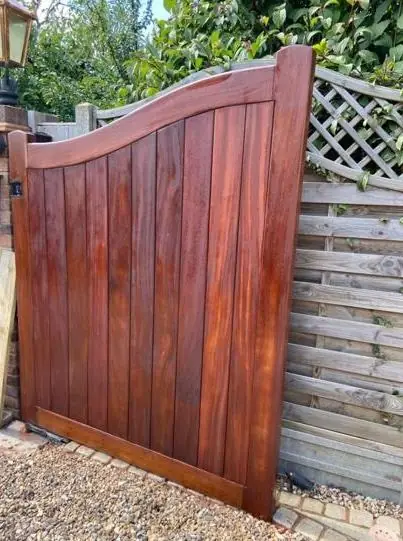
Timber in Greens Norton is seen next to honey limestone, orange-brown ironstone and green fields. Very red or orange cedar-type stains can fight with the ironstone, while mid browns, dark oaks, muted greens and grey-browns tend to sit back quietly. Our colour advice service can help if you are torn, and we always test a small patch first, because a stain’s colour changes a lot with the age and species of the timber.
Damp ground near the brook
A brook runs near Bengal Lane, as the name of Brookside Cottage suggests. Gardens near the brook can keep fences damp for longer after rain, and timber has to be properly dry before stain goes on or it will sit on the surface instead of soaking in. We plan those jobs for a settled spell and check the wood before starting. For the rest of the work we cover in the village, see our Greens Norton page.
Last updated by Dean, DH Painter & Decorator.