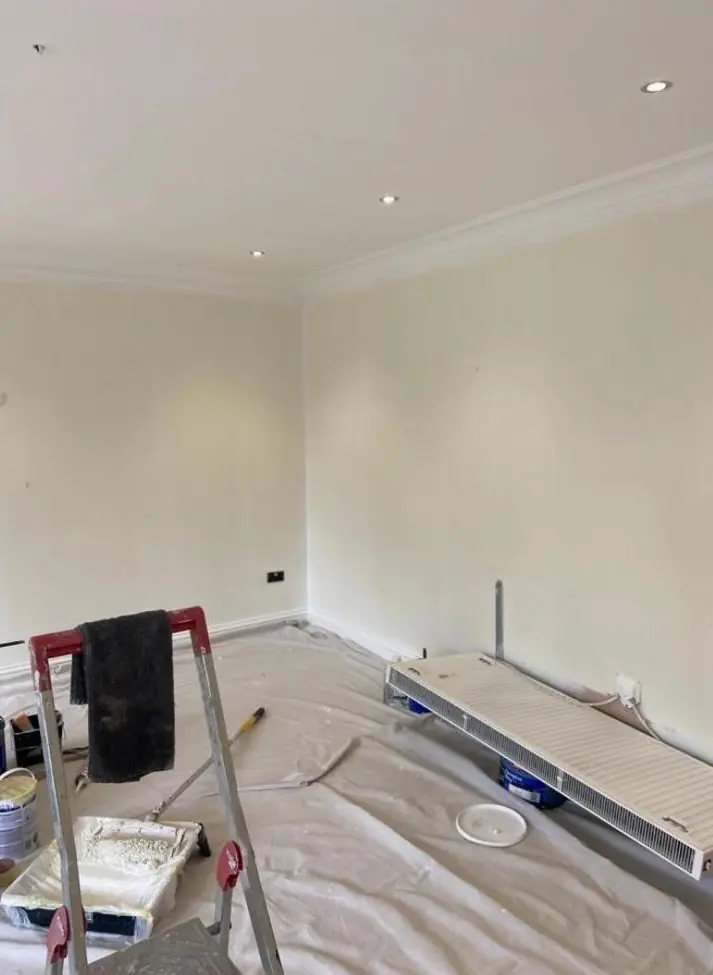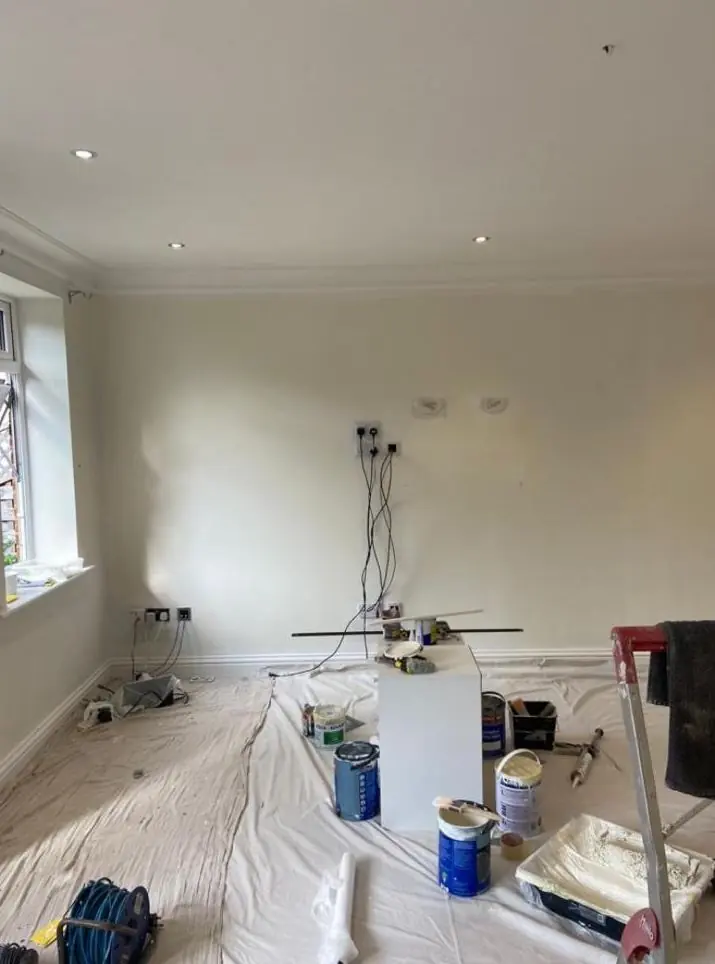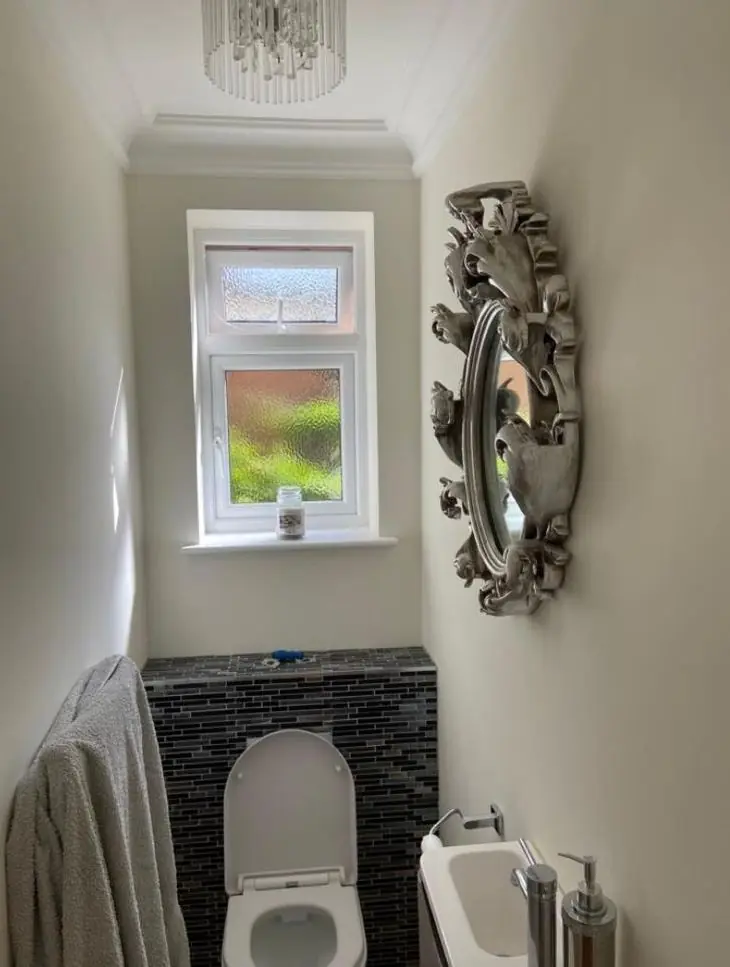
DH Painter & Decorator applies limewash, mineral paint and hand-painted decorative finishes in Greens Norton, a stone village 8.5 miles south-west of Northampton. Dean chooses finishes that suit the parish's rubble-stone cottages and farm buildings, and uses more modern effects only where the wall allows.
Limewash suits buildings like these
For centuries before emulsion, limewash was the normal finish on stone and lime plaster. In Greens Norton, where the oldest dated cottages (2 to 8 Blakesley Hill) carry a 1694 datestone and much of High Street and Bengal Lane is 17th- and 18th-century rubble, limewash and mineral paints are the natural decorative choice. They soak into lime plaster, let moisture move through the wall and leave a soft, chalky surface whose tone shifts slightly with the light. Brushed on in several thin coats, the finish has a gentle variation that suits walls which were never flat.
It has limits, and we tell people about them up front. Limewash rubs off on clothes when dry if it is not bound, it needs recoating more often than modern paint, and colours come from earth pigments so the range is softer. It also will not bond to modern vinyl emulsion. Where a cottage wall has been painted with emulsion, the choice is to remove it, which is slow, or use a mineral paint system designed to go over sound existing coatings.
Stone barns and outbuildings
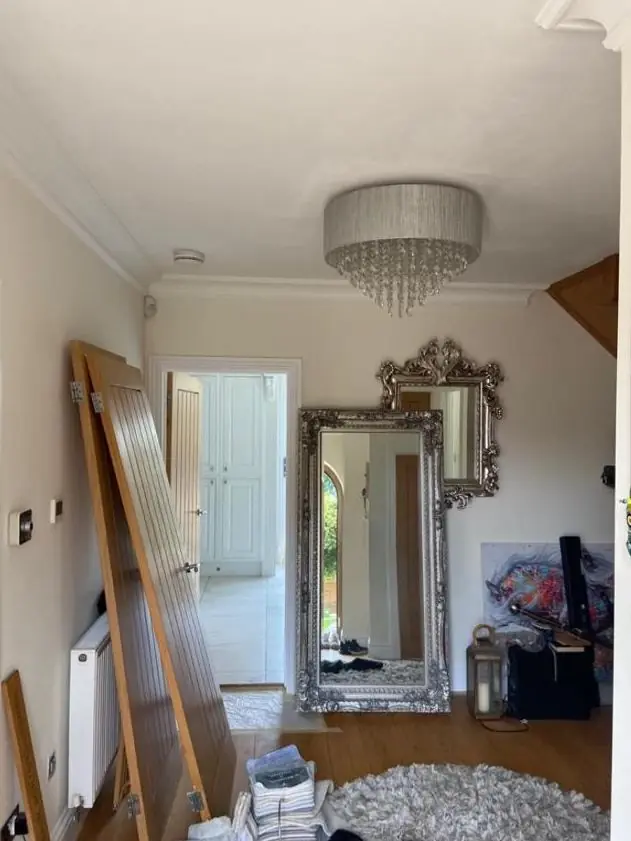
Farm buildings around the parish are part of its listed fabric: Caswell has attached outbuildings and Field Burcote at Duncote has its own farm buildings, both from the Grafton estate model farms of 1839 to 1844. Stone stores, workshops and barns converted to rooms are well suited to limewash inside, where it brightens rough stone without sealing it. On a listed building, a new finish on walls that are bare at present is a change of appearance, so ask the council first.
Which effect for which wall
| Finish | Where it suits in the village | What to watch |
|---|---|---|
| Pigmented limewash | Lime-plastered walls in the old cottages; stone outbuildings | Won’t take over vinyl emulsion; needs damping down between coats |
| Mineral (silicate) paint | Previously painted solid walls where stripping is impractical | Needs a compatible base; small colour range |
| Two-tone split at dado height | Low cottage rooms, darker below to hide scuffs | Old floors slope, so the line is set by eye with you, not by spirit level alone |
| Glaze and colourwash effects | Flat modern plaster in 20th-century extensions | Needs a sound, even base; not for damp-prone solid outer walls |
Period detail in the larger houses
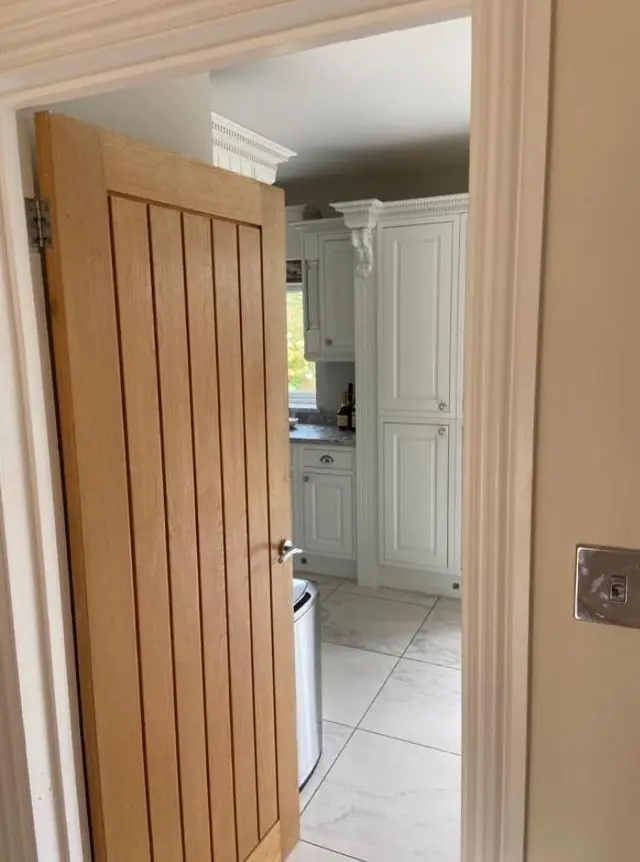
A few of the parish’s houses are on a bigger scale than the cottages. Falcon Manor carries a 1665 datestone and was remodelled in the mid-18th century, with additions in 1841 and 1900. The Old Rectory on Towcester Road mixes mullion, cross and 12- and 16-pane sash windows. Houses with that kind of layered history can hold joinery, mouldings and fire surrounds from several periods, and picking those out in a contrast shade or sheen is careful, slow brushwork. Old paint on such features may contain lead, so we test before any sanding and use wet methods if it is present. With 27 listed buildings in the parish, it is also worth checking any change to original features with West Northamptonshire Council.
Arranging the work
We cover Greens Norton, Caswell and Duncote from Northampton, around 8.5 miles away, and always start a decorative finish with a sample on a board or a hidden patch so you see the real colour and texture first. The main decorative finishes page describes faux effects, feature walls and panelling in general. Our Greens Norton page covers the village’s housing as a whole.
Last updated by Dean, DH Painter & Decorator.