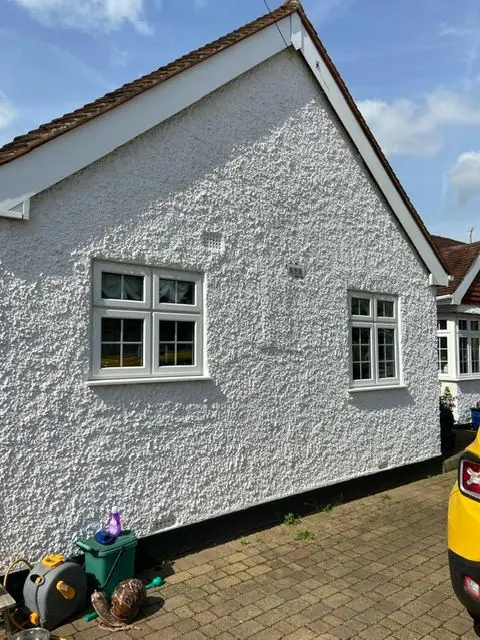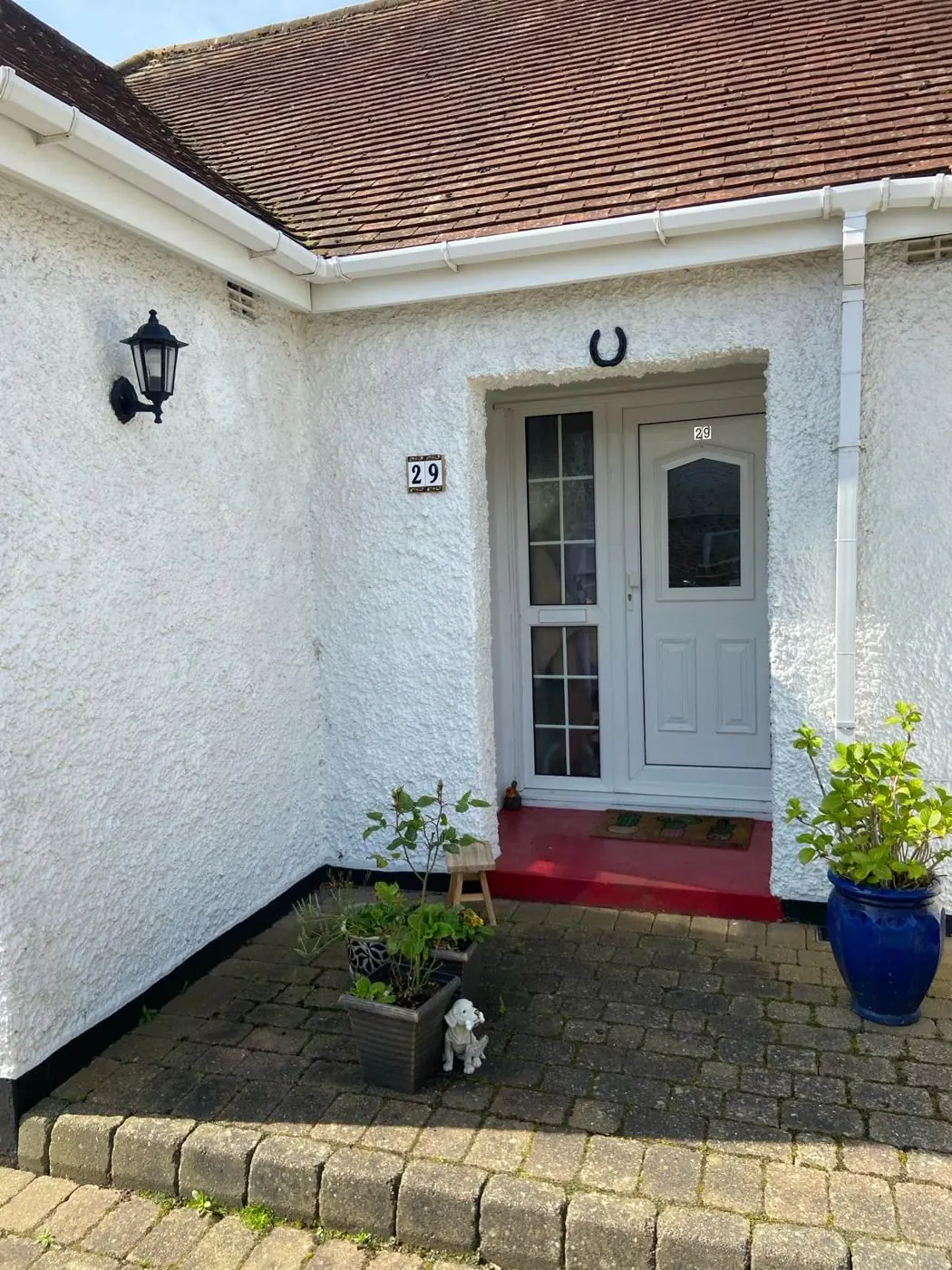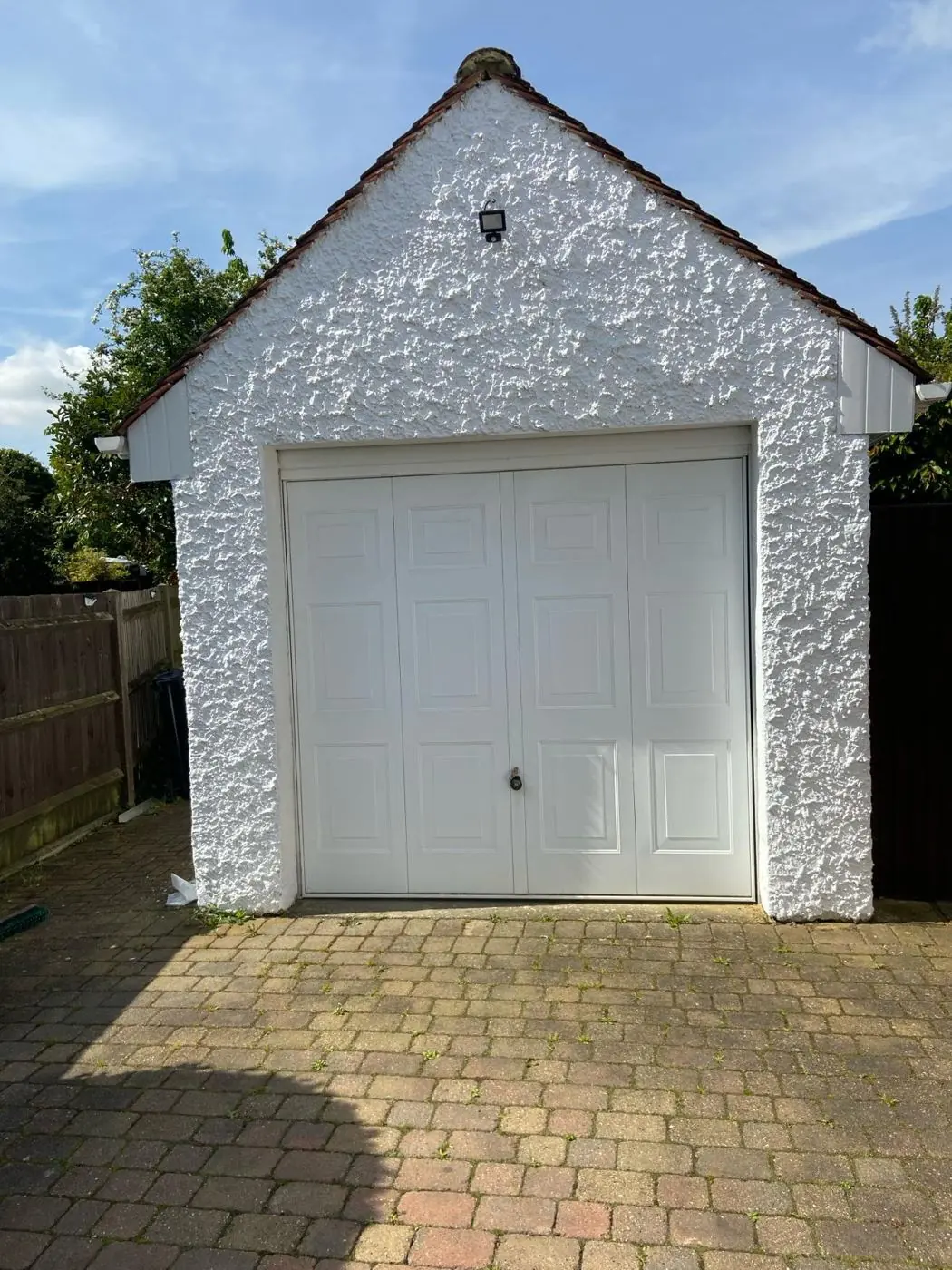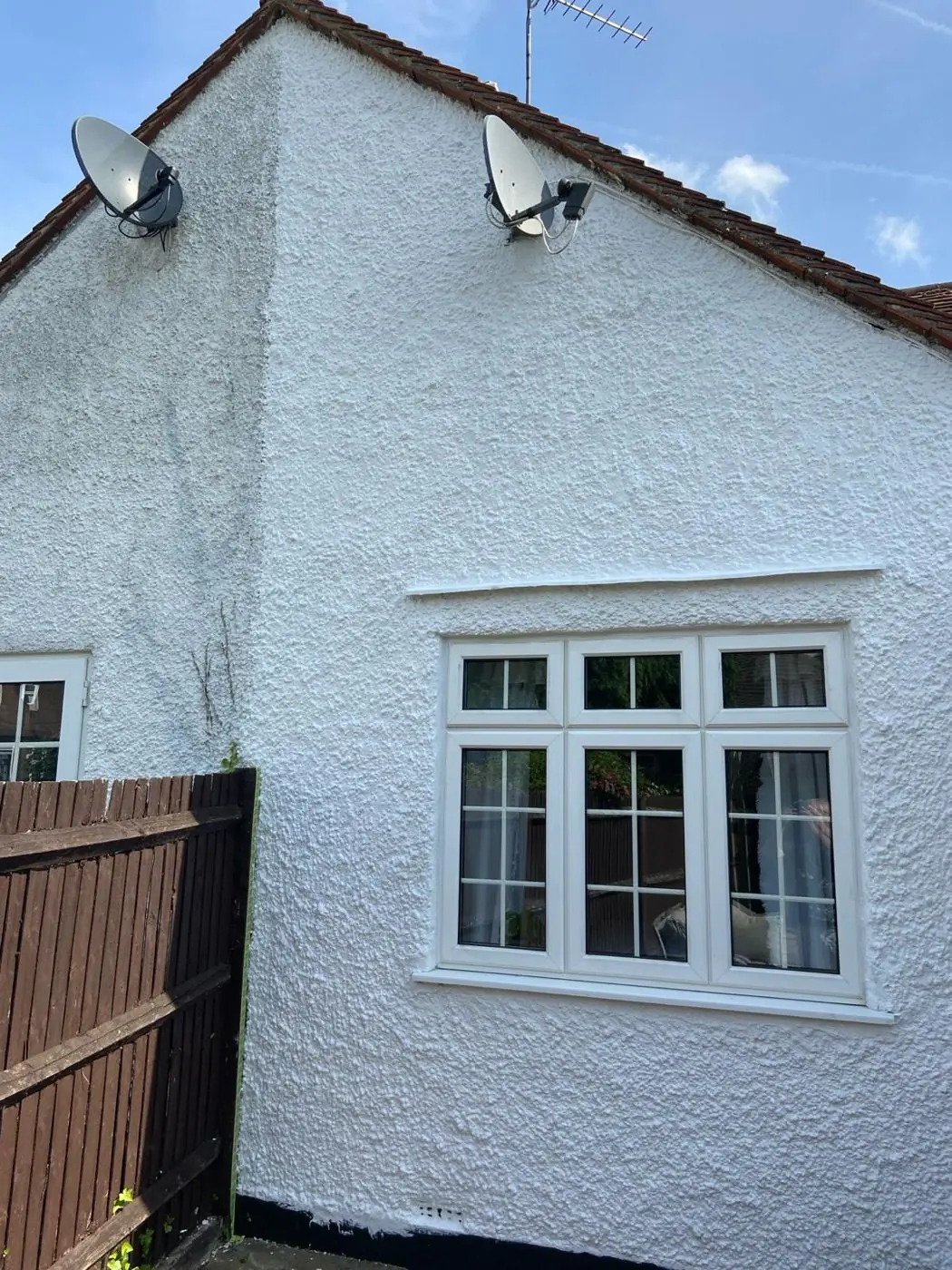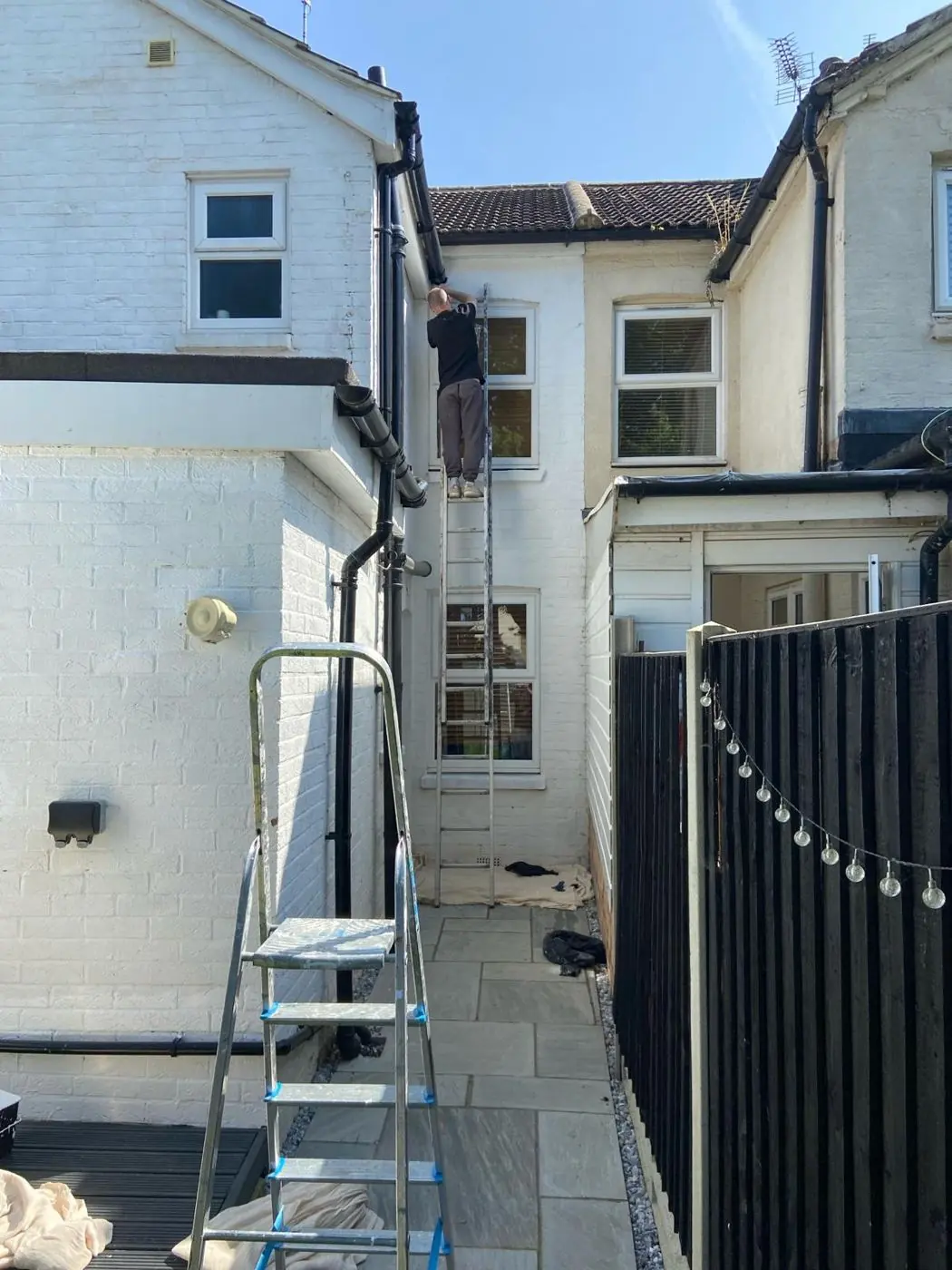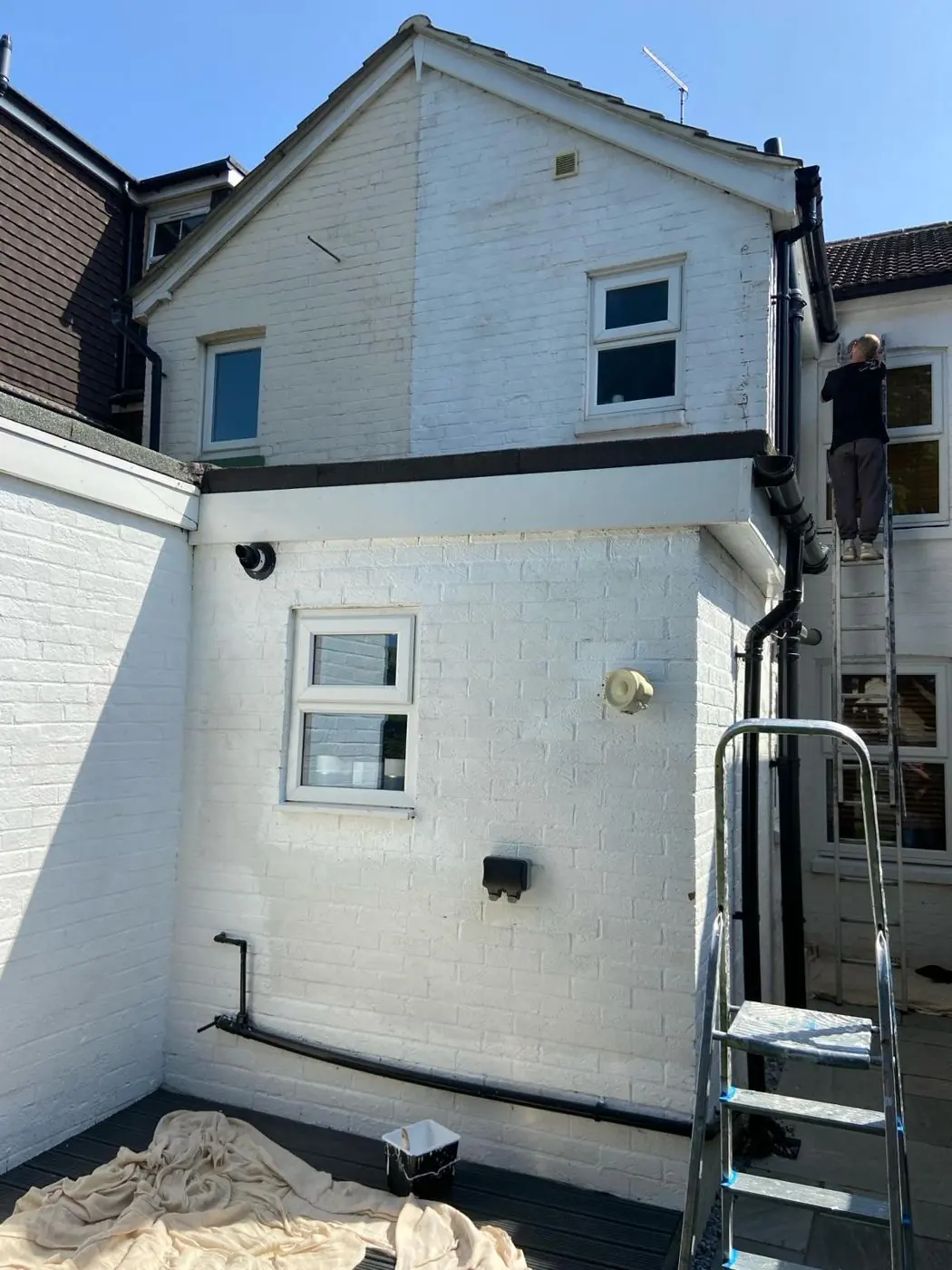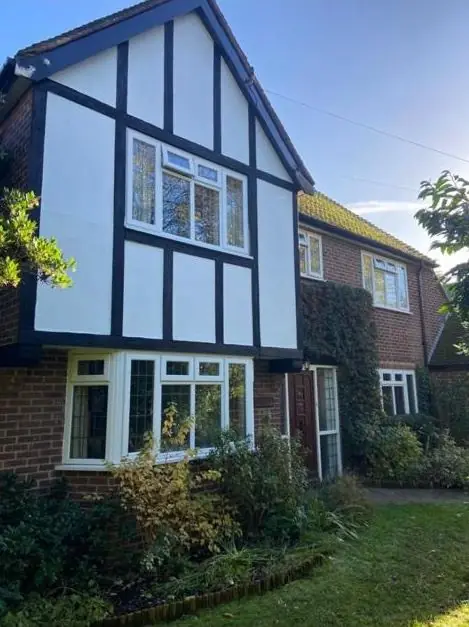
We repaint masonry in Greens Norton, near Towcester and around 8.5 miles from Northampton. Here that rarely means render: it means painted rubble, painted 19th-century brick and painted stone lintels, which need breathable finishes, plus conventional masonry paint for newer houses.
Why render is the exception in Greens Norton
Around Northampton, masonry painting usually means pebbledash or sand and cement render on 20th-century houses. Greens Norton’s historic core is different. Its cottages and manor houses are coursed limestone and ironstone rubble dating from the 1650s to the early 1800s, and most of those walls have never been painted. Where paint does appear on the older buildings, it is on rubble that was painted long ago, on soft brick extensions and on stone window dressings. Each needs a finish that lets the wall breathe, because a solid stone wall with no cavity relies on moisture moving out through its face.
The village’s listing records give clear examples. Nos 1 and 3 Blakesley Hill, 18th-century and Grade II, are described as painted coursed rubble. The 19th-century extension at 34 High Street is painted brick. Falcon Manor’s stone lintels and keyblocks are painted while its ironstone walls are not. Newer houses and red-brick additions in the parish are a separate case and take a standard masonry paint, which our render and masonry painting service covers in detail.
Matching the finish to the wall
| Surface in the village | Typical finish | What to watch |
|---|---|---|
| Old painted rubble, as at 1 and 3 Blakesley Hill | Limewash or a mineral paint, matched to what is already there | Modern acrylic layers underneath that hold damp in |
| Painted 19th-century brick, as at 34 High Street | Breathable masonry paint | Soft, crumbling brick faces and failing pointing |
| Painted stone lintels and keyblocks, as at Falcon Manor | Breathable masonry paint suited to limestone | Paint straying onto the bare ironstone around them |
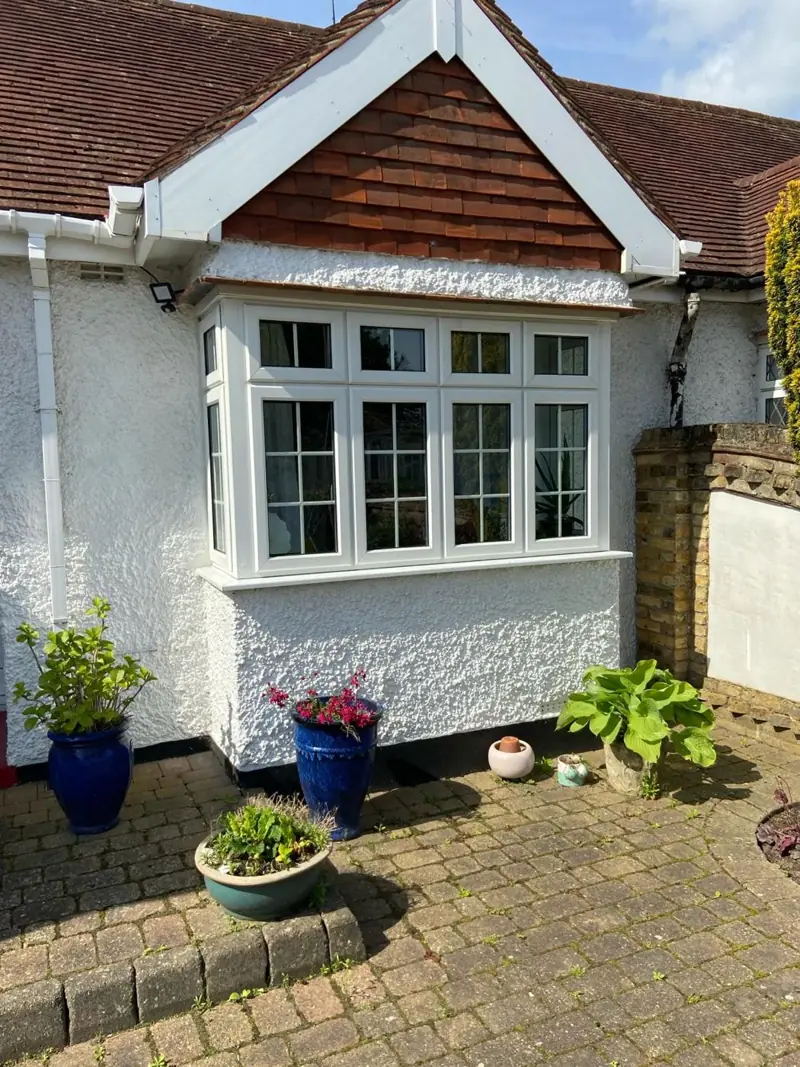
| 20th-century brick or render | Conventional exterior masonry paint | Algae on shaded walls, hairline cracks |
Stripping back a plastic coat
The most common problem on old painted stone is a film-forming acrylic masonry paint applied at some point over limewash or bare rubble. It looks fine for a few years, then blisters and peels as moisture behind it tries to escape, often taking the soft face of the stone or mortar with it. Another coat of the same product only repeats the cycle. Where we find this, we explain the options when we quote: careful removal of loose and failing coating, time for the wall to dry, then a breathable system. On a listed building, switching from one type of finish to another is worth checking with West Northamptonshire Council before work starts, and we will flag that rather than guess. Our guide to painting render and roughcast explains why breathability matters so much.
Stone that should stay as it is
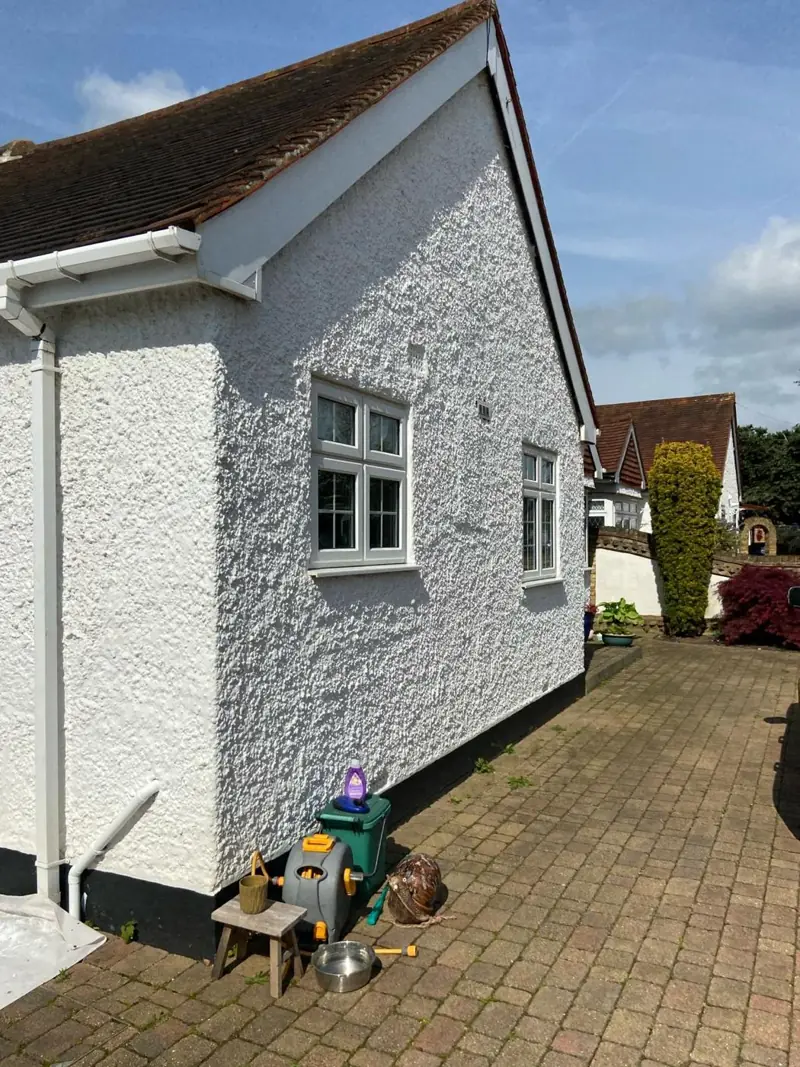
Sometimes the most useful advice is not to paint. Bare honey limestone and orange-brown ironstone define how Greens Norton looks, from the Grade I church of St Bartholomew with its Saxon long-and-short quoins to the cottage rows along High Street and Bengal Lane. Painting unpainted stone on a listed building would normally need consent, and on an unlisted stone house it is still very hard to reverse. If a stone wall looks tired, cleaning, lime repointing or dealing with damp at its source usually does more than paint ever could. We say so plainly at the quote.
Rows, slopes and the brook
The village is built on rising ground, so scaffold and ladder footings on the street side often need levelling. Its cottages stand in attached rows, such as 2 to 8 Blakesley Hill, so the rear of a mid-row house may only be reachable through the property, and we plan how materials come through before the day. A brook runs near Bengal Lane, and walls close to it can stay damp at the base well into spring; masonry paint goes on only once the wall has dried through. More about the village is on our Greens Norton page.
Last updated by Dean, DH Painter & Decorator.