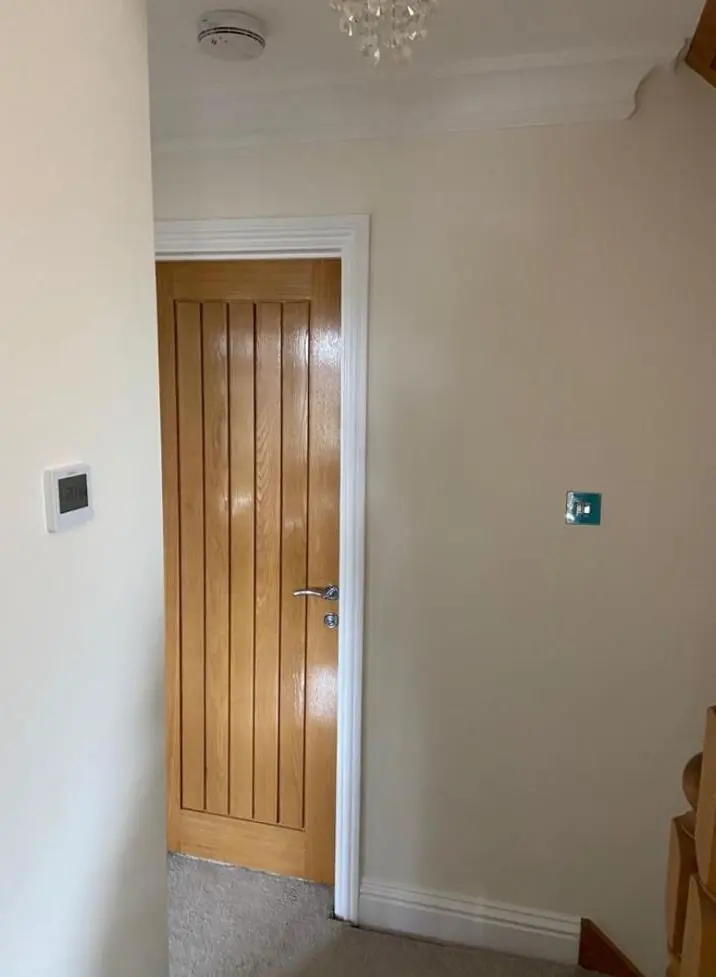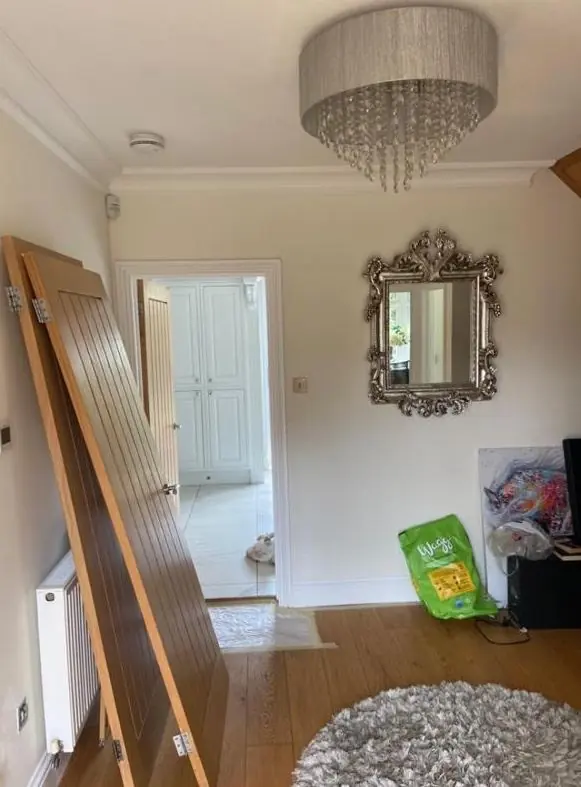
Dean paints doors, skirtings, architraves, casements and sashes in Greens Norton, the NN12 stone village 8.5 miles south-west of Northampton town centre and just over a mile from Towcester. Most of the joinery here sits in 17th- to 19th-century limestone and ironstone buildings, so the work is planned around old timber and listed fabric.
What the joinery in Greens Norton is actually made of
Woodwork in Greens Norton follows the age of the village. The cottage rows on Blakesley Hill, High Street and Bengal Lane go back to the late 1600s and 1700s, and the listing descriptions record the same features again and again: plank and part-glazed doors, two- and three-light timber casements, and timber lintels carrying the stone above each opening. Further up the scale, the Old Rectory on Towcester Road has mullion, cross and 12- or 16-pane sash windows, and Falcon Manor has 12-pane sashes under painted stone lintels and keyblocks. Out at Caswell and Field Burcote, the Grafton model farmhouses of 1839 to 1844 also have 12-pane sashes set under stone lintels.
So a woodwork job here is rarely one type of timber in one condition. A single cottage can have a weathered ledged door, casements with small panes to cut in, and internal doors and skirtings that have collected a century of gloss.
Timber lintels deserve their own line on the quote
Almost every listed cottage in the village has timber lintels over its windows, and these are easy to overlook because they sit flush with the stonework. They carry load, they take rain off the wall face, and their ends bear into rubble that can hold damp. Before any paint goes on, we probe the bearing ends for softness. Sound lintels are cleaned, keyed and given a microporous finish that lets the timber breathe. Any decay is reported to you rather than painted over, because a fresh coat on rotten wood only hides the problem for a season.
Brookside Cottage on Bengal Lane, still under thatch with eyebrow dormers, shows another local quirk: casements tucked into the roof line. Working around thatch calls for light, careful access and no heavy ladders resting on the straw.
Inside the cottages: skirtings, beams and solid walls
Inside the oldest houses, skirtings meet solid stone walls that were never straight, and exposed beams such as the 1654 bressumer recorded at 4 Blakesley Hill sit right beside painted joinery. We mask historic timber before sanding anything nearby. Gaps behind skirtings on rubble walls are often too wide for a bead of caulk alone, so they are packed and filled in stages. Built-up layers of old gloss on door mouldings are taken back where they have lost detail, then primed and finished in satinwood or eggshell, whichever suits the room.
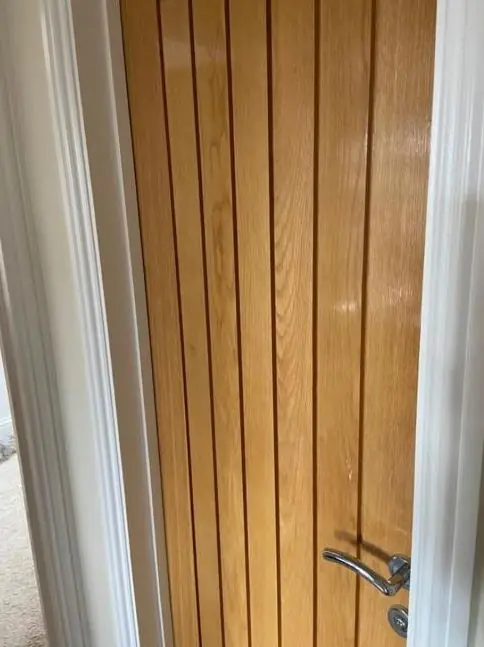
The 20th-century houses and red-brick extensions in the village are a different matter, with machined skirtings, flush or panelled doors and standard frames that take a normal modern system. When a house has both an old core and a newer extension, we price the two parts separately so you can see where the time goes.
Listed buildings and colour choices
Greens Norton has 27 listed buildings and no conservation area, so heritage control comes through listing rather than area rules. Repainting existing painted joinery like for like is usually treated differently from changing its colour or finish. Changing a front door or window colour on a listed building’s exterior, or stripping painted joinery to bare wood, can need consent from West Northamptonshire Council, so check with them first. Colours that sit well against honey limestone and orange-brown ironstone tend to be the muted greens, greys and off-whites rather than bright modern shades.
| Joinery | Where you find it here | Main concern |
|---|---|---|
| Plank and part-glazed doors | The older stone cottages | Open grain, weathered bottoms, old paint build-up |
| Timber lintels | Nearly every listed cottage | Rot at bearing ends, need for a breathable finish |
| 12-pane sashes | Falcon Manor, the Old Rectory, Grafton farmhouses | Cutting in, keeping sashes free to run |
| Modern doors and skirtings | 20th-century houses and extensions | Standard prep and durable top coats |
The general method for preparing and finishing woodwork is set out on our door and skirting painting page. For everything else we do in the village, see our Greens Norton area page.
Last updated by Dean, DH Painter & Decorator.