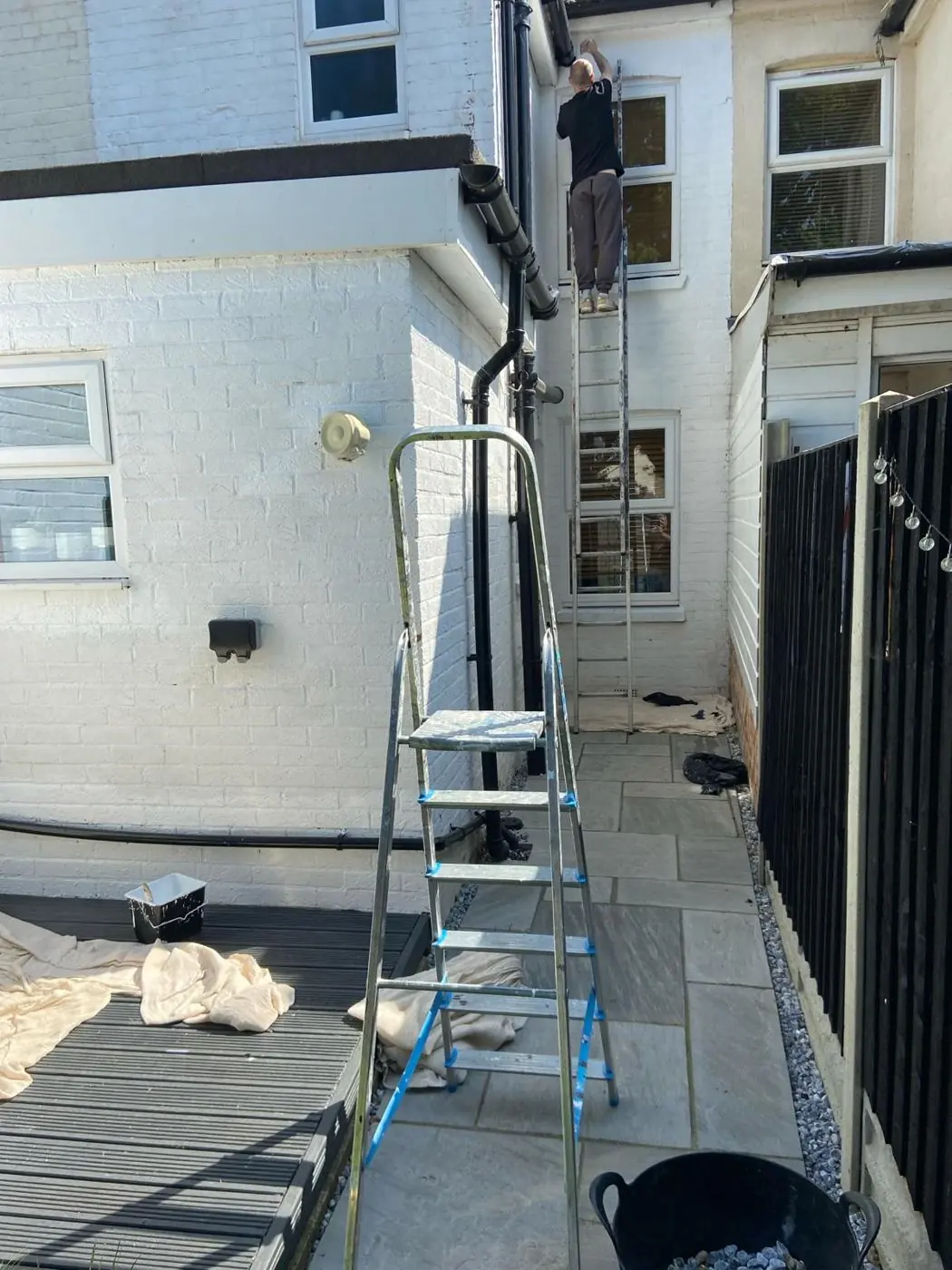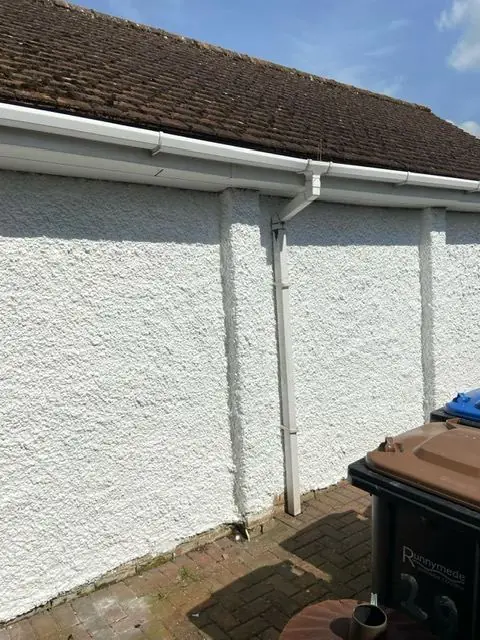
Dean paints house exteriors in Pattishall, NN12, a parish of small settlements about 6.5 miles south-west of Northampton town centre. On the 17th-century stone houses that means the joinery rather than the walls, while the 20th-century homes on the higher ground can take a fuller outside scheme.
Which hamlet, which street
An exterior quote in this parish starts with location, because the hamlets strung along the lanes between Watling Street and Banbury Lane are physically separate places. Let us know whether the house is in the village itself, Eastcote, Astcote, Dalscote, Cornhill or the Fosters Booth roadside. A cottage fronting Church Street or Astcote High Street means parking the van and setting ladders on a narrow village street, which is a very different morning from a driveway on the newer housing above the old village. Our Northampton base is about 6.5 miles north-east of the parish.
What gets painted on a limestone and ironstone house
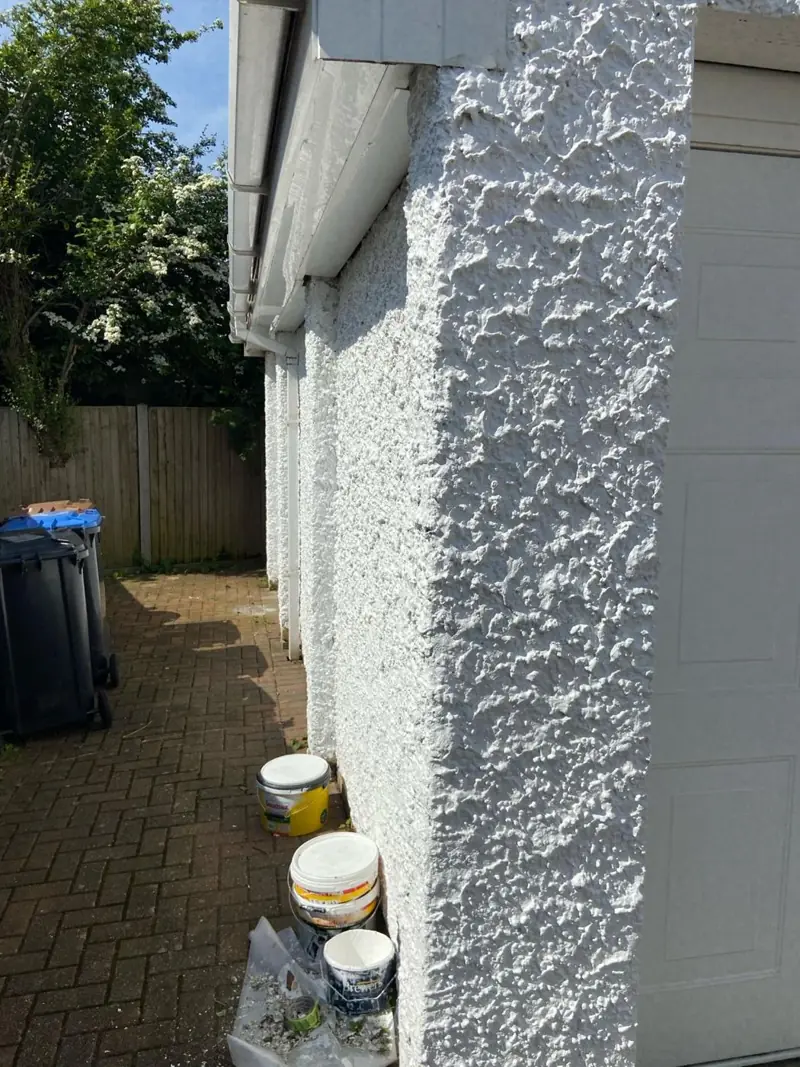
On the older properties the walls are not ours to paint. Kirkholme on Church Street, dated 1648, is coursed squared limestone. Cromwell House in Astcote is limestone rubble with ironstone dressings, and The Manor on Gayton Road has ironstone quoins. That cream-and-brown stonework is the look of the parish, and plastic masonry paint on rubble walls traps moisture inside them. So the exterior job on these houses is the timber:
- casements under wood lintels, including leaded ones, prepared by hand and brush-painted rather than sprayed
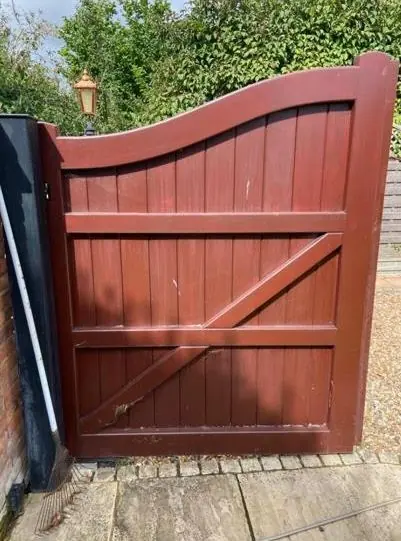
- part-glazed panelled doors and plank doors, eased so they still close once the new coats are on
- door hoods on brackets, like the one recorded at Kirkholme
- barge boards on stone-coped gables under slate or plain-tile roofs
The ironstone dressings and quoins sit tight against the window frames, so they are masked before any paint goes near the joinery. A stray brushmark on ironstone is far harder to put right than one on a painted wall. For old frames we use microporous or linseed-type paints that let the timber breathe; the reasoning is set out on our exterior painting service page.
Listed walls, unlisted freedom
Of the 22 listed entries in the parish, the Grade II* Church of Holy Cross is the oldest, and Eastcote alone has a string of listed farmhouses and outbuildings. Changing the colour or finish on a listed building may need listed building consent from West Northamptonshire Council, so on those houses we repaint like for like unless you already have the council’s agreement. The council’s appraisals list shows no conservation area anywhere in the parish, so unlisted homes, including the 20th-century houses on the higher ground, have normal permitted-development freedom over their exterior colours.
Hillside weather and A5 traffic
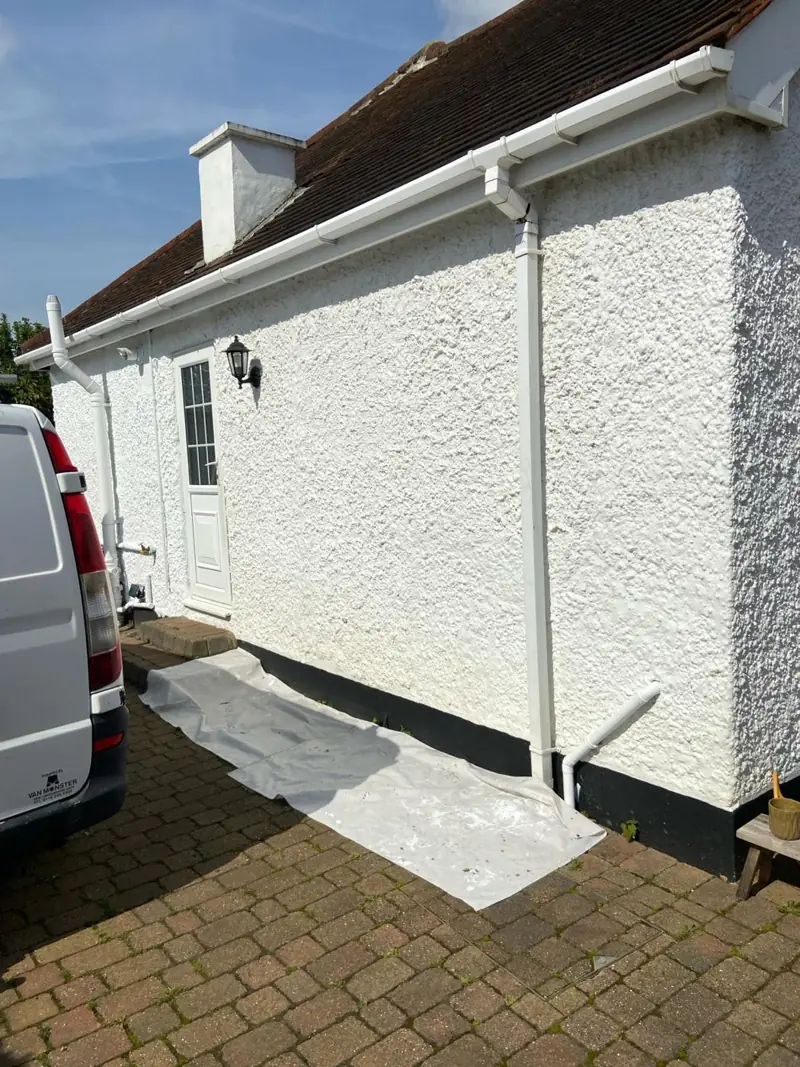
Two local conditions shorten the life of outside paintwork here. The first is exposure. The newer housing sits on higher ground above the older part of the village, and open, hilly elevations take more wind and driven rain, so the most exposed windows and fascias usually need attention before the sheltered sides do.
The second is Watling Street. Buildings fronting the A5 at Fosters Booth collect traffic dirt and spray, and paint will not bond to a film of road grime. Those elevations are washed down and rinsed before any sanding starts, and owners should expect a shorter repaint cycle than the same house would have on Banbury Lane. Working on the roadside face also means planning ladder positions with passing traffic in mind, which we agree with you before the start date.
Fitting the work around the seasons
Exterior work needs dry spells and temperatures that let paint cure, which in practice means late spring to early autumn. Our guide on when to paint outside in the UK explains the limits. For a wider look at the parish’s housing, from the 17th-century farmhouses to the post-war homes, see our Pattishall area page.
Last updated by Dean, DH Painter & Decorator.