DH Painter & Decorator paints the outside of homes across Paulerspury, a village about 9.8 miles south of Northampton town centre in the NN12 postcode. Dean deals mainly with timber casements, sashes and doors on old limestone houses, and with painted stone fronts that need a breathable paint system.
Most of the outside work here is joinery, not walls
Paulerspury’s older houses are built from coursed limestone rubble or squared limestone, and most of that stone was never meant to be painted. So an exterior job in the village usually centres on the timber: two- and three-light casements under timber lintels on the 18th-century cottages, front doors, and the multi-pane sashes on the bigger houses. Bare stone walls stay as they are. We’ll tell you plainly if a wall should be left alone rather than coated.
That shifts where the hours go. Small-pane casements take far longer per window than a modern single pane, because every glazing bar has to be scraped, filled, primed where bare and cut in by hand. Exposed timber lintels above the openings are often the most weathered piece of wood on the front, and they need checking for soft spots before any microporous coating goes on.
Sashes on the Hunt House, the Rectory and the Barley Mow
The early 19th-century houses carry 12-pane and 16-pane sashes. On a sash window, the painting is only part of the job. The sashes are eased so they slide, failed glazing putty is cut out and replaced, and paint is kept off the runners and parting beads so the window doesn’t seal shut. Where stone dressings sit around the frame, as with the ironstone sills, jambs and heads on the Hunt House, we decorate only the joinery and leave the ironstone unpainted.
Painted stone and the breathability question
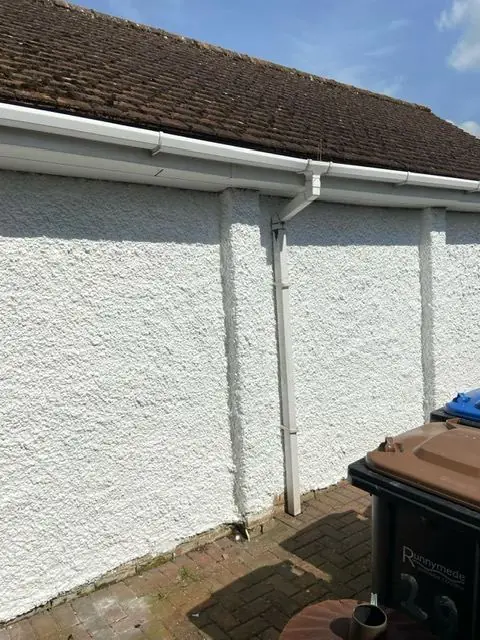
Some fronts in the village are already painted. The Barley Mow and No. 55 on High Street is painted limestone rubble with a datestone of 1801, and that’s the pattern to keep in mind for any painted stone house here. Before recoating, the first step is to find out what is already on the wall. Modern acrylic masonry paint over old stone holds moisture in, and the damage shows up later as blown paint and crumbling faces. A vapour-open mineral or lime-compatible paint lets the wall dry out. For rendered elevations, see our render and masonry painting service.
Listed status, thatch and five separate ends
Listing here runs from the Grade I Chain Gate on the A5 down to Grade II thatched cottages on the village lanes. A like-for-like repaint of joinery is routine, but changing the colour or the material on a listed building may need listed building consent from West Northamptonshire Council. Check this before a new colour is chosen, not after.
Thatched cottages bring their own rules. Low eaves and eyebrow dormers make ladder work awkward, and we don’t use heat guns anywhere near thatch. Paint is removed by hand scraping and sanding instead.
Then there’s the layout. Paulerspury is spread over several ends: Pury End, Tew’s End, Plumpton End, the main village by the church, plus Pury Hill and Heathencote. A cottage on Lumber Lane or Lower Street sits on a narrow village lane, while a farmhouse at Heathencote may have a yard. Parking and ladder or scaffold space vary a lot, which is why Dean visits before quoting.
| Feature | Where you’ll find it | How it’s treated |
|---|---|---|
| 2- and 3-light casements | 18th-century cottages across the ends | Hand prep on every bar, microporous finish |
| 12- and 16-pane sashes | Rectory, Hunt House, Barley Mow | Eased, re-puttied, runners kept clear |
| Painted limestone | Barley Mow and No. 55 | Existing coating checked, vapour-open repaint |
| Ironstone dressings | Hunt House | Left unpainted |
Timing a job in a rural village
Open farmland surrounds Paulerspury, and stone walls on Boulder Clay can hold moisture at the base. We wait for timber and stone to be properly dry before coating. A settled spell in late spring or summer is ideal, and our guide to timing exterior painting explains why. For the general process, see the main exterior painting page, and for other work in the village, the Paulerspury area page.
Last updated by Dean, DH Painter & Decorator.