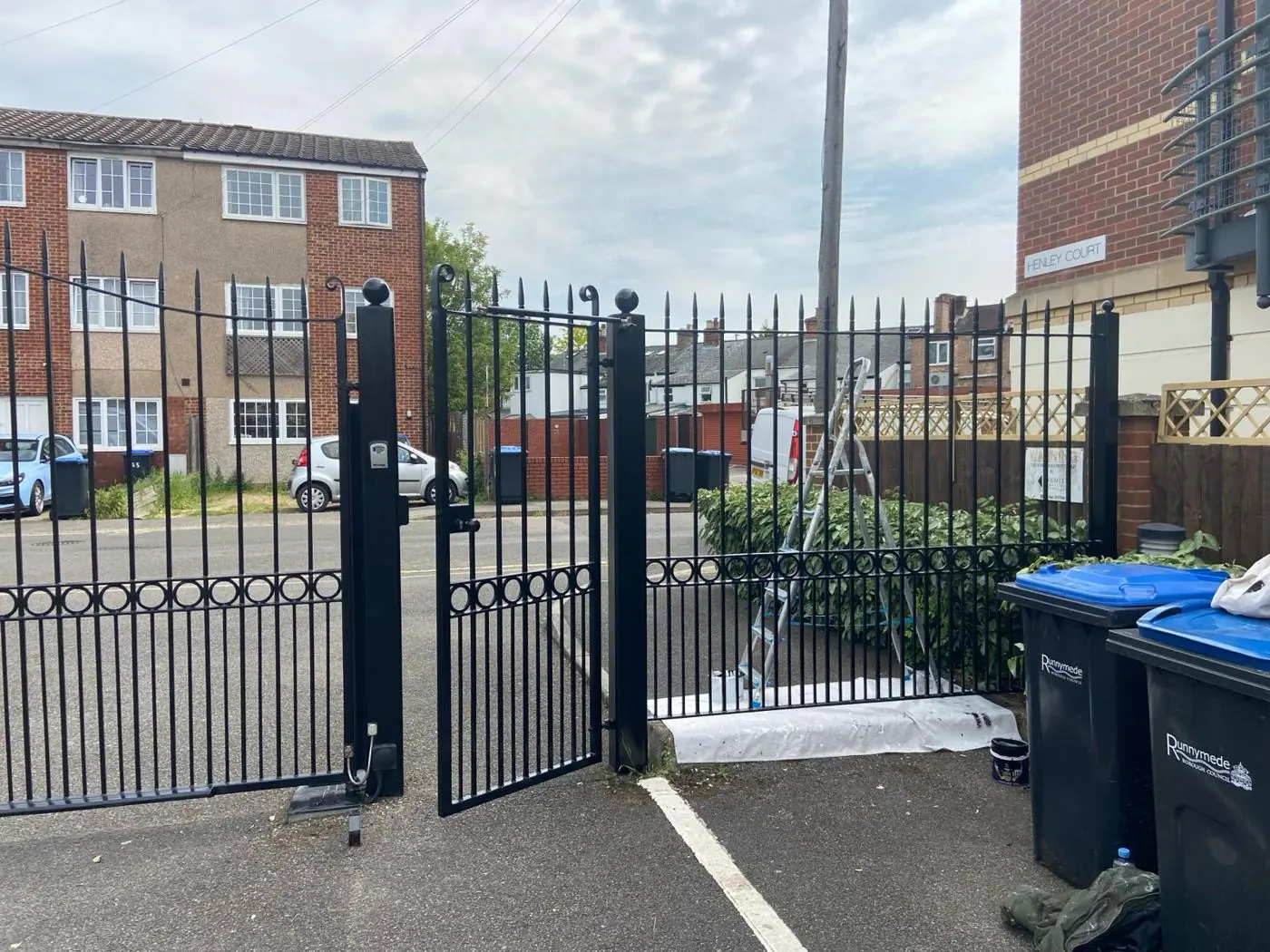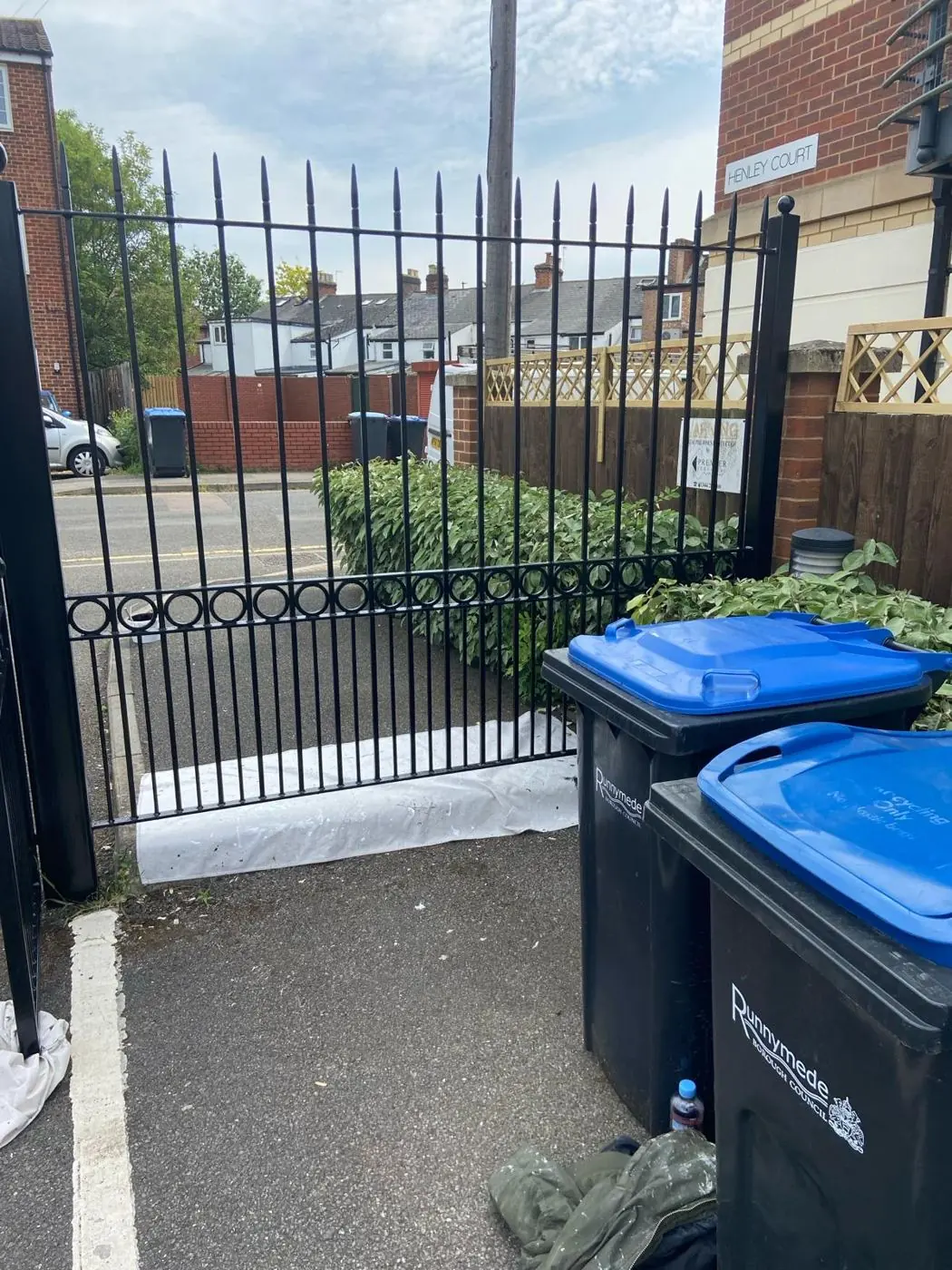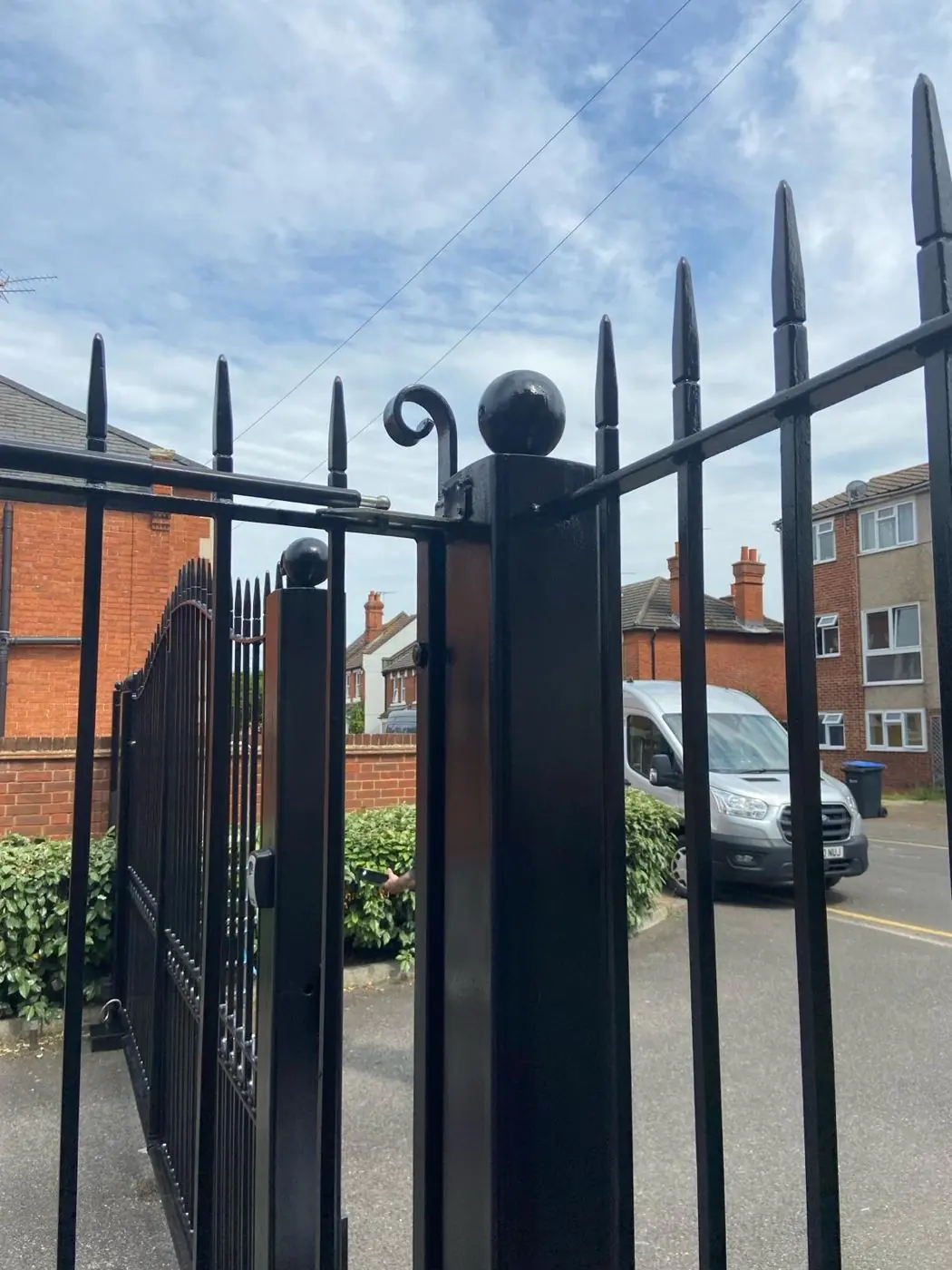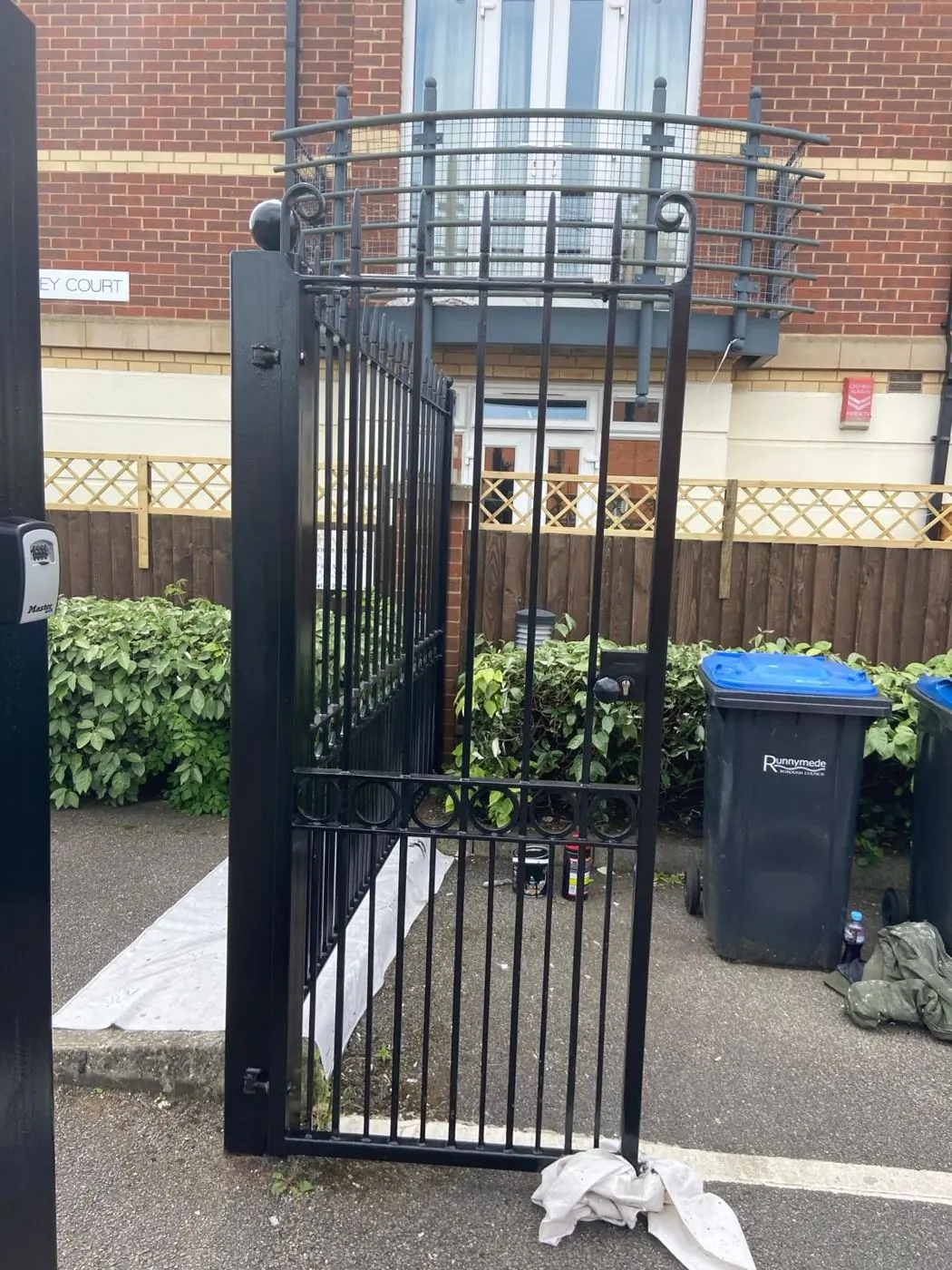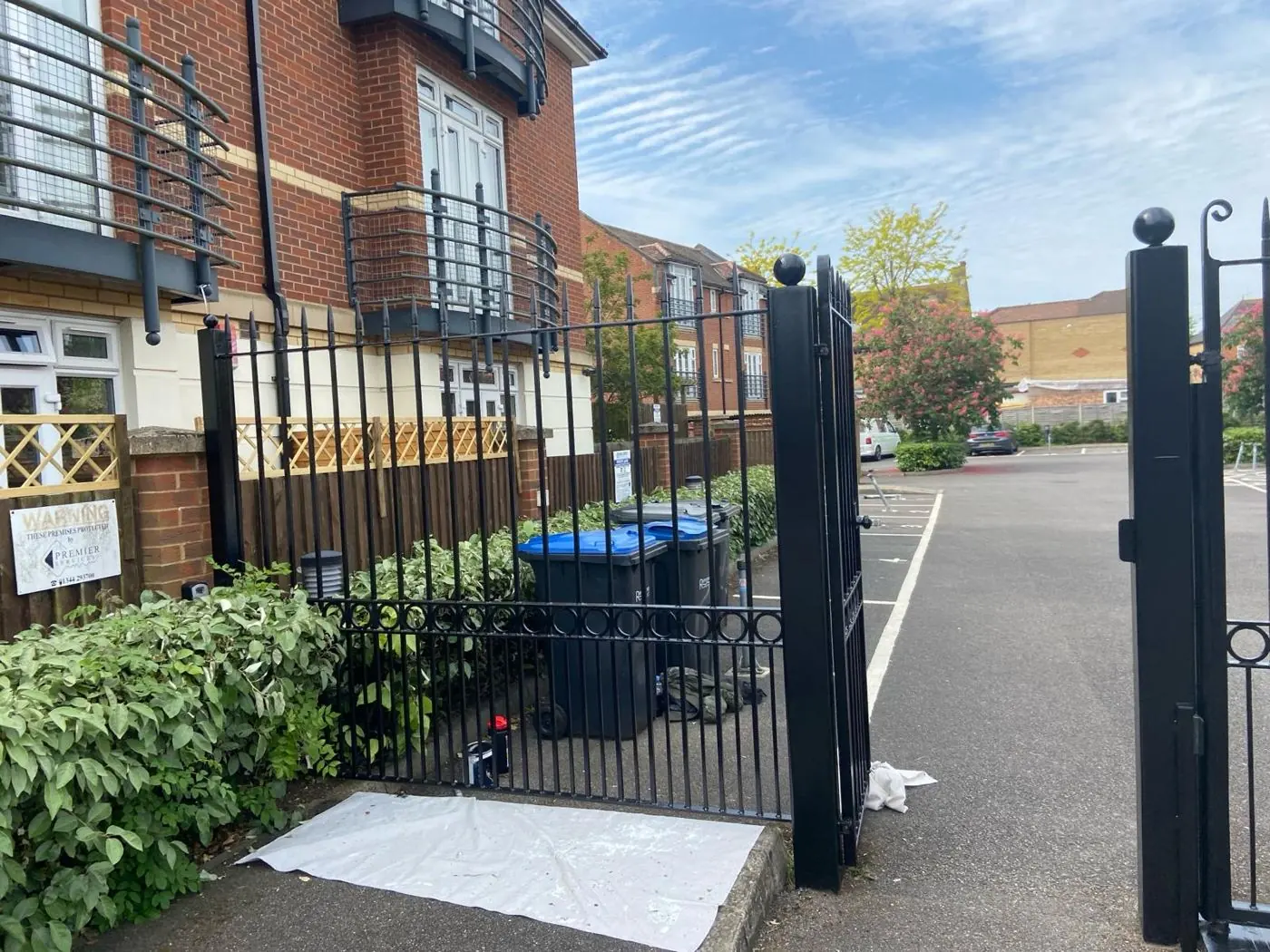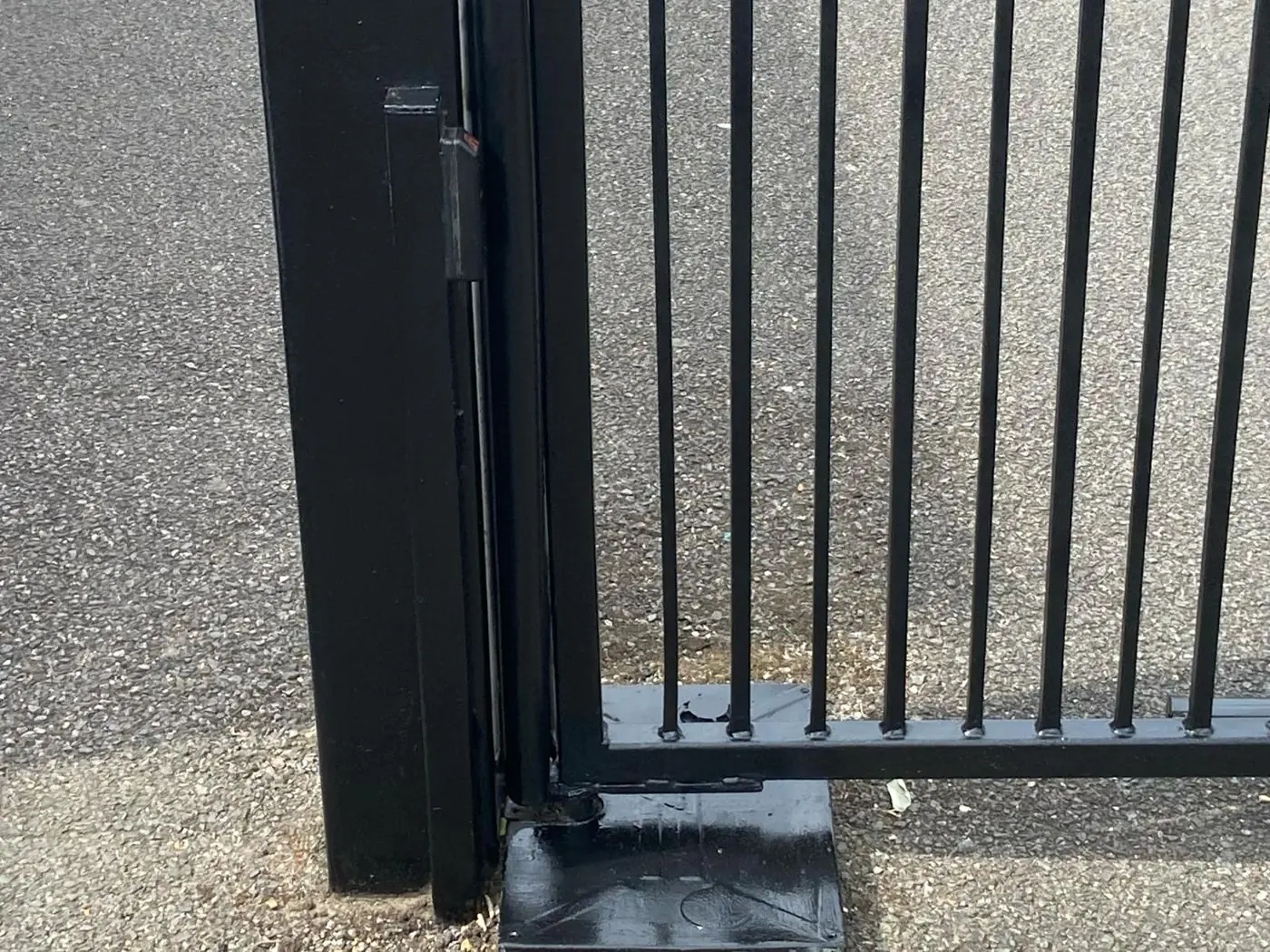
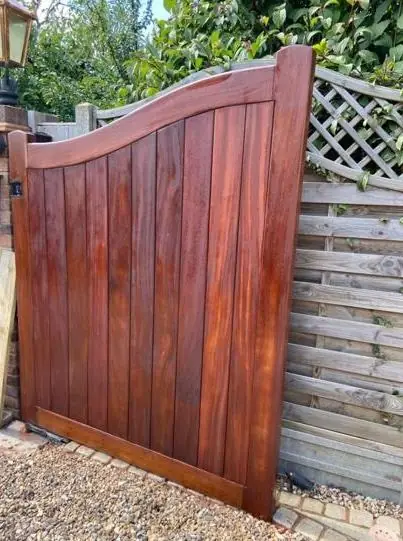
We paint metal gates and railings in Greens Norton, NN12, about 8.5 miles south-west of Northampton. Most ironwork in the village is fixed into limestone or ironstone, so we treat rust at the fixings, keep run-off off the stone, and handle old paint layers safely.
Ironwork fixed into stone
In a stone village like Greens Norton, older metal gates and railings are typically fixed into stone: leaded into the coping of a rubble wall, pinned into a gatepier or set into a plinth. That changes what neglect costs. Once rust gets going inside a fixing, the iron expands and can split the stone around it, so a railing left too long can mean a mason’s bill as well as a painter’s. Some listings here take in walls and piers as well as houses: Bengal Manor on Bengal Lane, dated 1695, is listed together with its attached forecourt wall and gatepier. Where there is ironwork on walls and piers like these, the first thing we check is the foot of each upright and every point where metal meets stone.
Our main metal gate and railing painting page covers identifying wrought iron, cast iron and mild steel and treating each. This page focuses on what the village’s stone setting adds.
Keeping rust off pale limestone
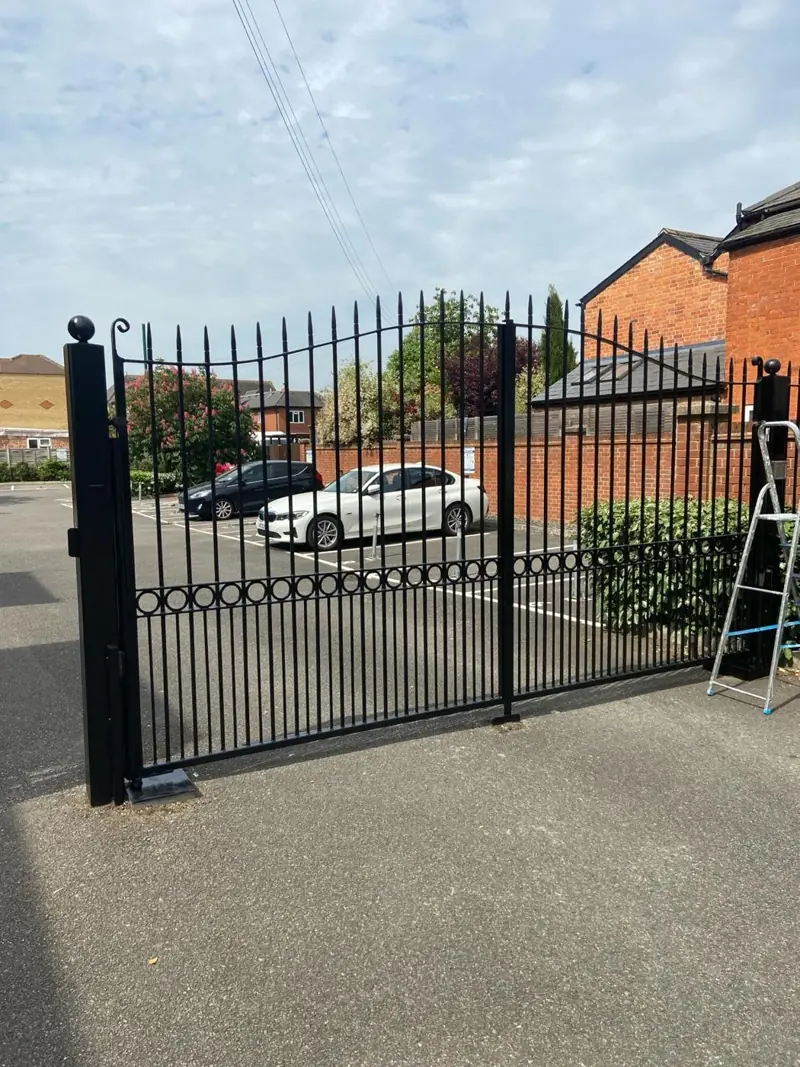
Rust run-off shows badly on limestone. An orange streak below a railing on a honey-coloured wall is hard to shift once it has soaked in, and abrasive cleaning damages the stone face. So we:
- sheet and mask the coping and wall face before wire brushing, and collect the debris
- wash rust dust off the stone the same day, before rain carries it in
- cut in by brush at fixing points so primer and paint stay off the stone
- seal the junction at the foot of each bar so water doesn’t sit in the socket
Ironstone hides staining better, but its surface can be soft, so we treat it gently too.
Old paint on old metal
Railings and gates on the village’s 17th- to 19th-century houses may carry many layers of paint, and older layers can contain lead. Before heavy preparation we test, and if lead is present we work wet, avoid dry power sanding and bag the waste. That matters in a garden used by children and pets, or on ironwork beside a path people walk every day. Sound old layers can often stay and be overcoated once loose material and rust are dealt with, which is gentler on the metal and the stone it sits in.
Steel and galvanised gates on the farms
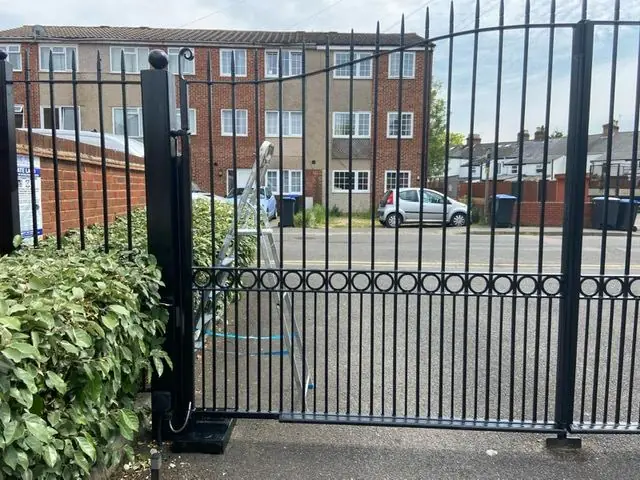
Around Caswell, Duncote and Field Burcote, metal is more likely to mean galvanised field and yard gates or fabricated steel driveway gates than fine cast ironwork. Galvanised steel needs a primer made for zinc, or the paint will peel off in sheets. Older galvanised gates where the zinc has worn through need the rust treated first. Farm gates also take knocks from vehicles and machinery, so we build up a tougher finish on the lower rails. On an exposed farm entrance facing open fields, the weather side of a gate usually fails first, and we spend most of the preparation time there, including the undersides of rails where water and mud collect.
Consent and colour
Greens Norton has 27 listed buildings, from the Grade I church of St Bartholomew to its Grade II neighbours, and no conservation area. Repainting railings attached to a listed building in their existing colour is usually treated differently from changing the colour or removing fixtures, which may need consent from West Northamptonshire Council. Black is common on historic ironwork; check before switching to something else. We cover the village from our Northampton base, about 8.5 miles to the north-east. Our Greens Norton page has more on the village and the other work we cover there.
Last updated by Dean, DH Painter & Decorator.