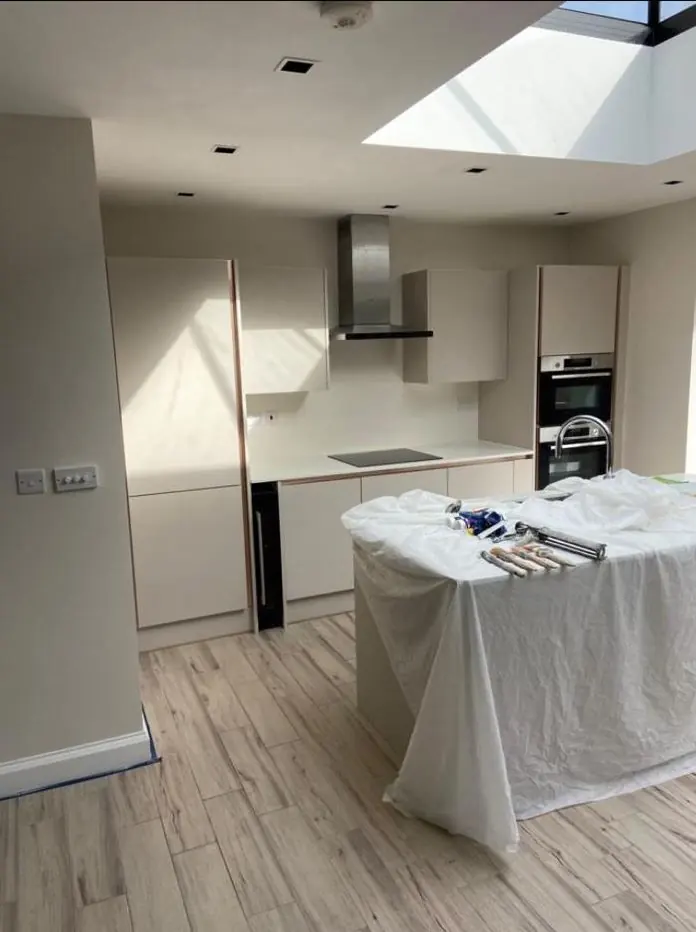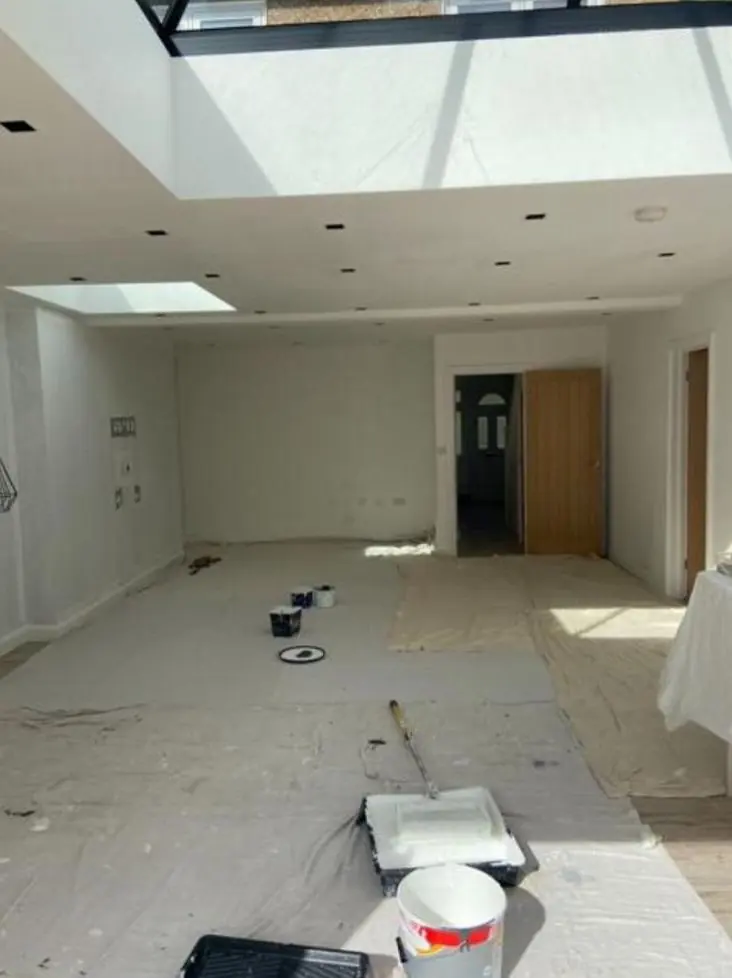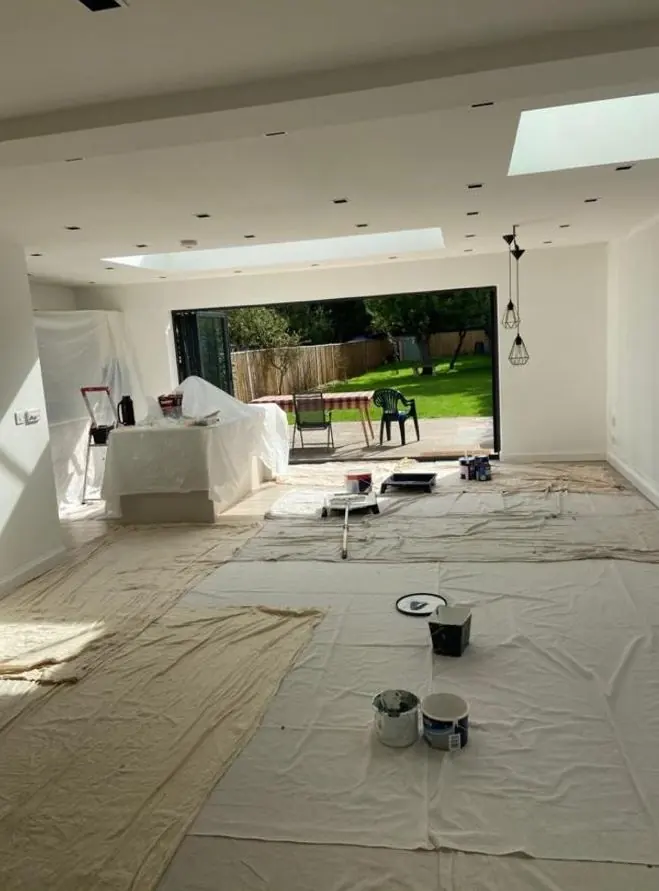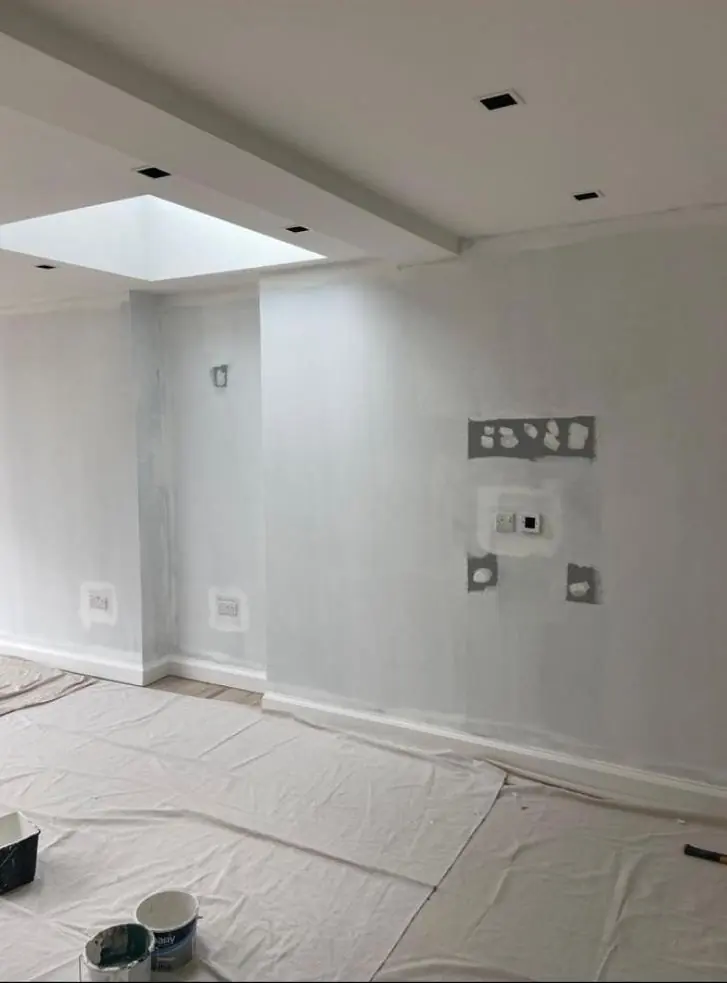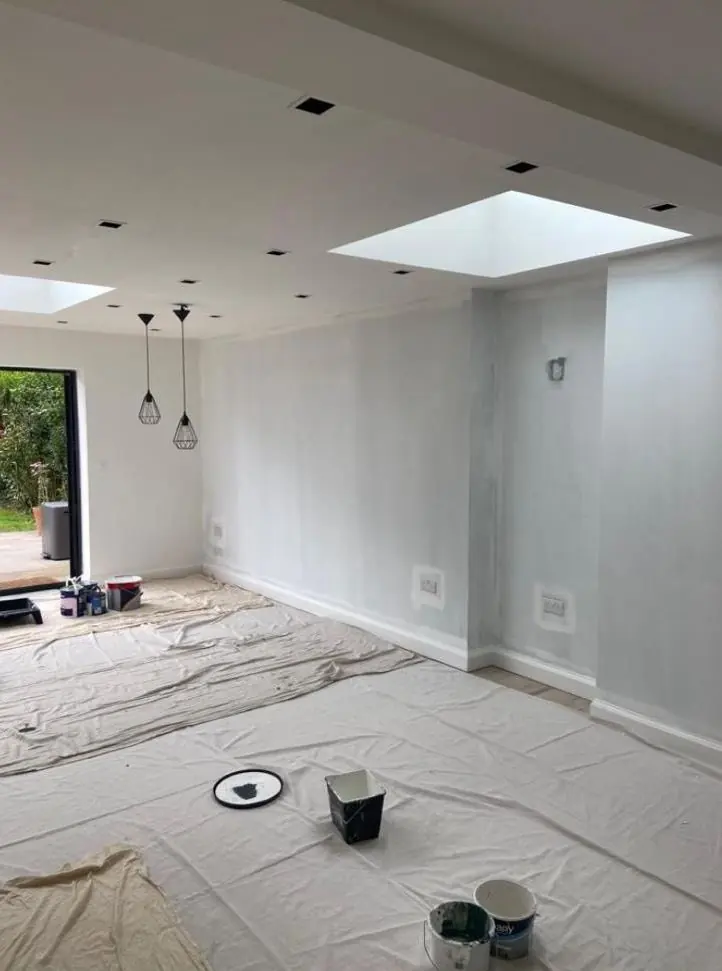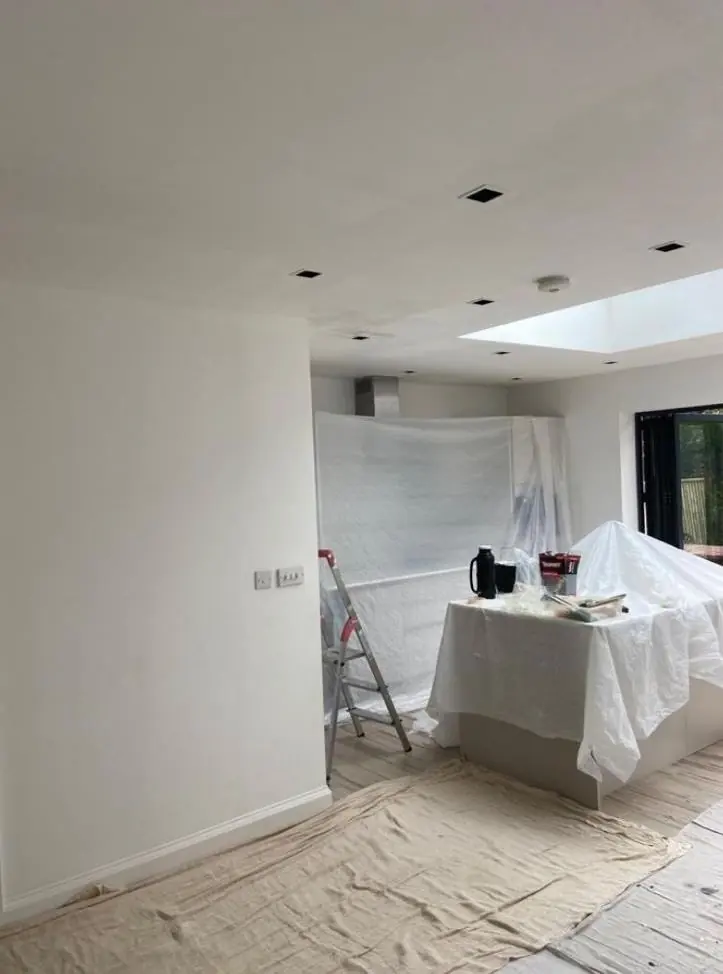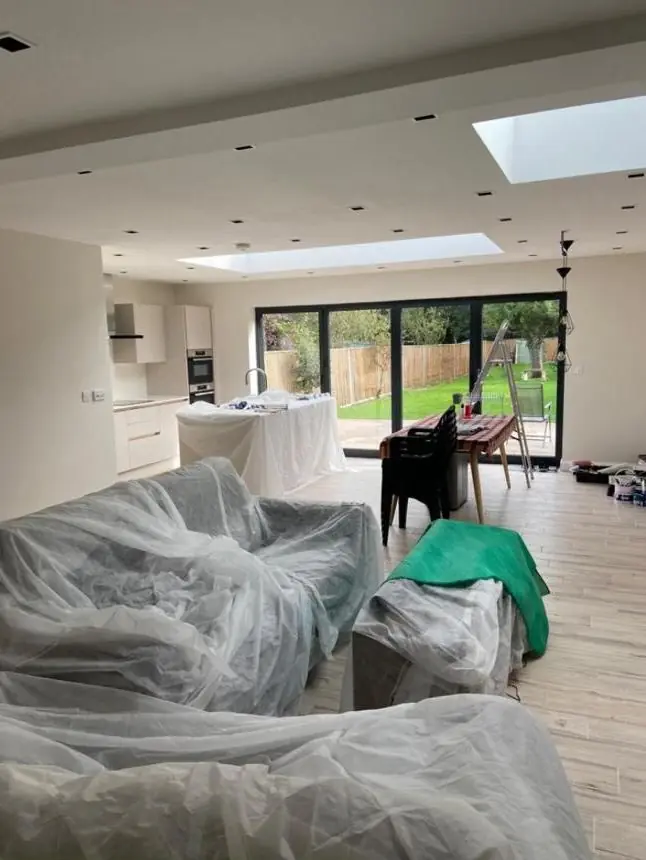
Dean decorates new plaster, re-skimmed rooms and extensions in Greens Norton, 8.5 miles south-west of Northampton and just over a mile from Towcester. Many jobs here join a modern extension to a historic limestone or ironstone cottage, so the new and old walls are prepared and painted with different systems.
Where new plaster meets very old walls
Much of Greens Norton was built between the 1650s and the early 1800s in coursed limestone and ironstone rubble, and 27 of its buildings are listed. Over the 20th century some of these cottages gained additions, and the listing records note red-brick extensions on houses such as Overbeck House on Bengal Lane. The Butchers Arms, reopened by volunteers in 2017, has since been overhauled and enlarged too. The result is a common situation in the village: a freshly plastered extension, or a newly skimmed room, sitting right next to original solid walls that may still carry lime plaster.
Those two surfaces behave in opposite ways. New gypsum skim is thirsty and needs sealing. Old lime plaster on rubble needs to keep breathing. Treating the whole house with one product is where problems start.
Getting the new work right first
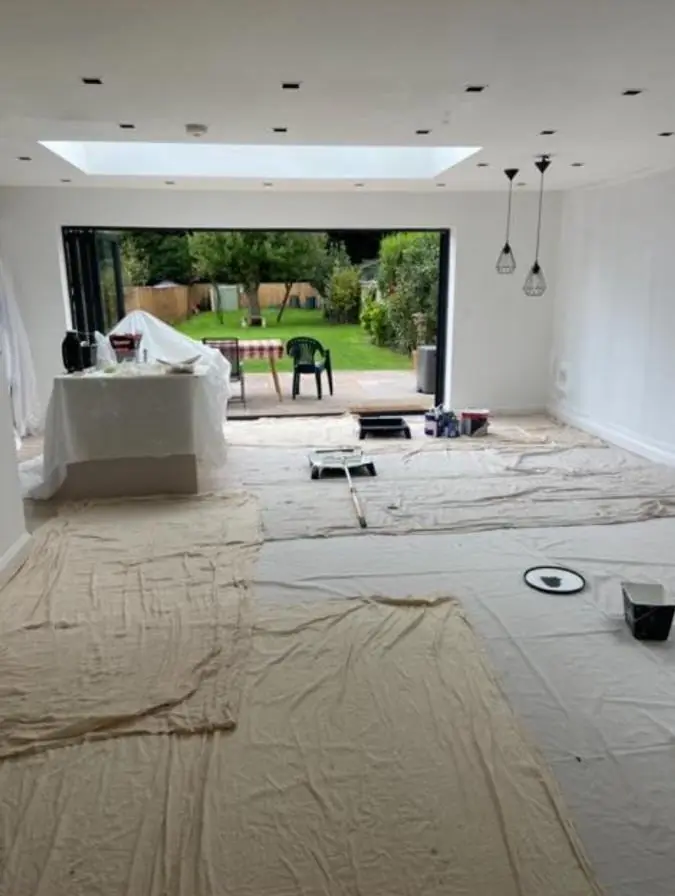
On fresh plaster the first job is to confirm it has dried. Even, pale colour across the wall, with no darker patches in corners or behind where radiators will go, is the sign we look for. Then comes a mist coat, a diluted breathable emulsion that soaks into the surface and gives the finish coats something to grip. Our mist coat guide explains the reasons in more detail. After that we fill and sand any trowel marks or dings that the first coat shows up, caulk new skirtings and architraves, and apply two finish coats.
Extensions to older cottages often have vaulted ceilings or roof lights where the new roof meets the old one. We use a tower or podium for those, never a ladder on a new floor.
The join between old and new
The line where an extension meets the original house is the part that needs most thought in Greens Norton. Expect these things at that junction:
- A visible step or crack where new plaster abuts old lime plaster or bare stone, which needs flexible filling rather than a hard skim over the top.
- Different paint for each side: a standard emulsion system on the new gypsum, and a breathable emulsion on solid rubble walls so moisture can escape.
- Colour that matches across both, even though the two surfaces absorb paint differently. We test a patch on each before committing.
- New softwood or MDF joinery butting up to old plank doors or beams, which we protect while sanding and priming the new timber.
If the extension is on a listed cottage, the building work will have gone through its own consent process. Decorating the new rooms is normally straightforward, but if you also want to change the finish on the historic side, such as replacing limewash or distemper with modern paint, it is worth asking West Northamptonshire Council before anything changes.
Planning the decorating around the build
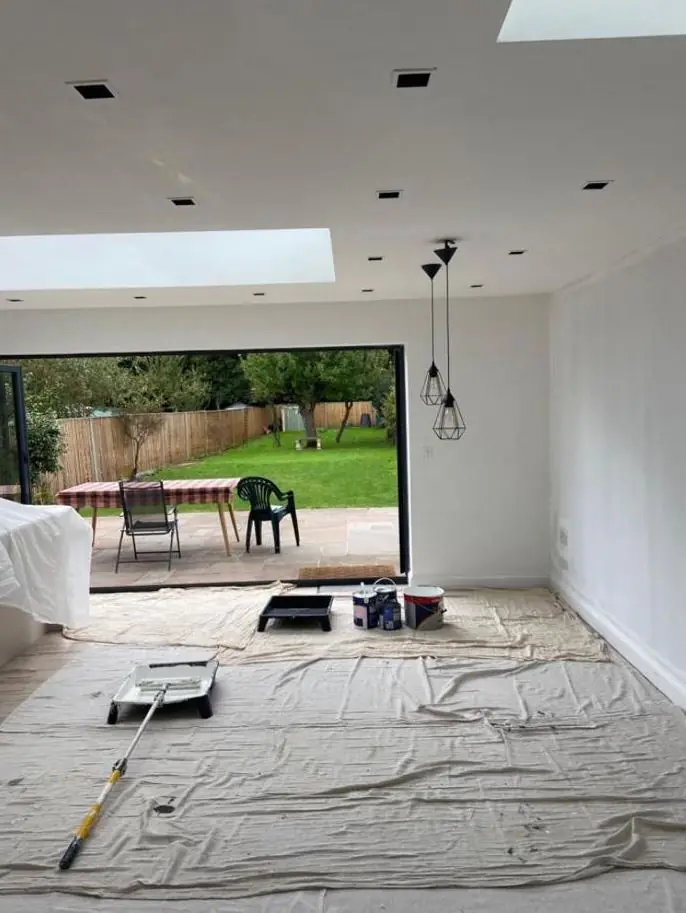
Extension projects here sit on village or farm plots, and the cottage rows on Blakesley Hill and High Street may have limited rear access. Builders’ materials, skips and our own equipment all compete for the same space. The plaster also needs time to dry before we can seal it, which can run to several weeks after a full skim, longer in a cold extension with no heating on yet. We work with your builder’s programme so the decorating follows the plasterer at the right moment, not before.
Modern houses in the village with a simple re-skim are more routine: same drying check, same mist coat, no breathable-wall complications.
For the full stage-by-stage process, see our new plaster and extension painting page, or go back to our Greens Norton area page.
Last updated by Dean, DH Painter & Decorator.