Dean at DH Painter & Decorator gives colour and finish advice as part of decorating jobs in Greens Norton, 8.5 miles south-west of Northampton. He tests samples against the village's limestone and ironstone and flags where a change of colour on a listed house may need consent.
Two stones, two sets of undertones
Greens Norton is built from two local stones that often sit in the same wall: pale, honey-coloured limestone and orange-brown ironstone. St Bartholomew’s church is coursed squared ironstone with limestone dressings. Bengal Manor on Bengal Lane turns that round, with limestone walls and ironstone dressings. Many cottages along High Street mix both in their rubble, and Falcon Manor is coursed squared ironstone. Any colour on a door, casement or lintel is seen against that background, so the stone sets the palette before a chart comes out.
- Against ironstone: the stone already carries rust and brown. Warm off-whites, deep greens and dark earth colours settle in. Brilliant white and cold blue-greys tend to look harsh beside it.
- Against limestone: creamier stone gives more room. Soft greys, sage and stone shades work, and a darker door gives the front some weight.
- Mixed rubble: pick out the stronger of the two stones in that wall and choose for it. Trying to suit both usually ends in a beige that suits neither.
Joinery colours on listed houses
There is no conservation area in Greens Norton, but 27 buildings in the parish are listed, the church at Grade I and the rest Grade II. On a listed building, changing the exterior colour of windows, doors or painted stonework may need listed building consent from West Northamptonshire Council. Repainting existing joinery in the same colour is generally treated differently, so it pays to know exactly what is on there now.
Before any change, Dean photographs the existing colours in daylight and keeps a note of them. If you want something different on a listed cottage, we suggest putting a sample panel on a board, not the house, and sharing that with the council. Painted stone dressings need the same thought. Falcon Manor’s stone lintels and keyblocks are recorded as painted, and on houses with painted dressings the colour has to work with the unpainted ironstone around them, in a breathable masonry paint that stays off the bare stone.
Inside: thick walls, small windows
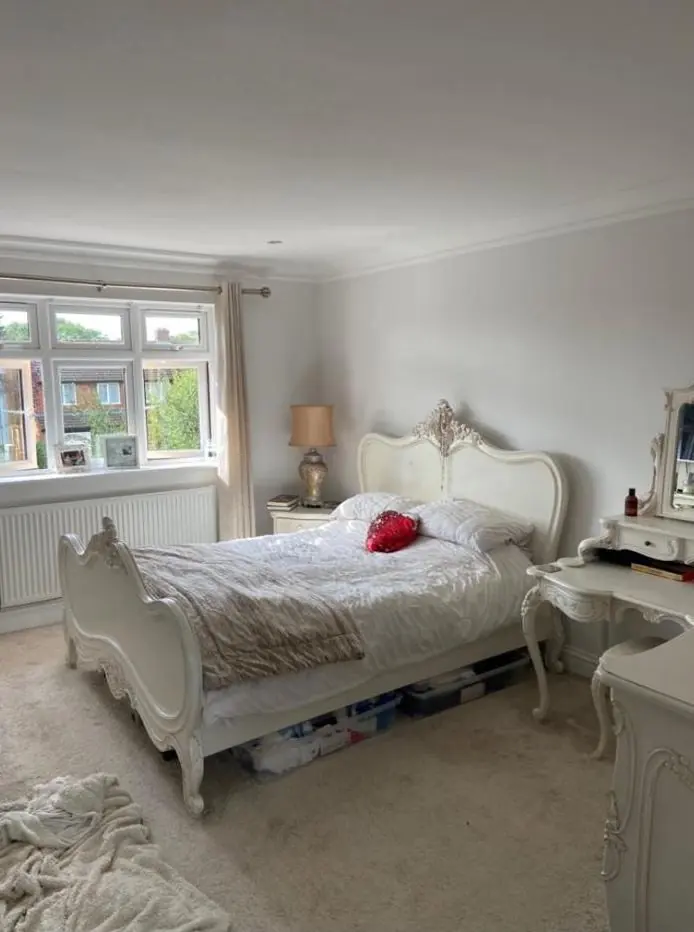
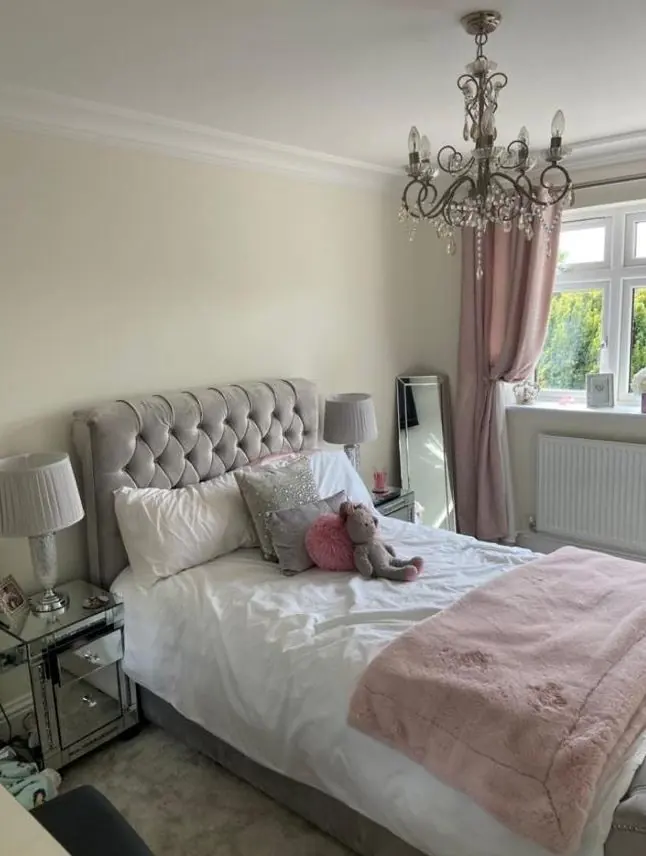
The cottages’ two- and three-light casements sit in deep walls, so daylight falls off quickly across a room, and attic rooms under thatch, such as the eyebrow dormers at Brookside Cottage, get even less. Colours read a shade or two darker indoors here than on the card. Dean tests samples on the wall itself, on the side of the room furthest from the window, and looks at them at the time of day you use the room.
Finish matters as much as colour. Breathable mineral and clay paints, which suit solid stone walls, come in smaller ranges than vinyl emulsions and give a softer, flatter result. Choosing from the range that suits the wall is better than matching a vinyl colour that would trap moisture.
Linking old cottages with newer extensions
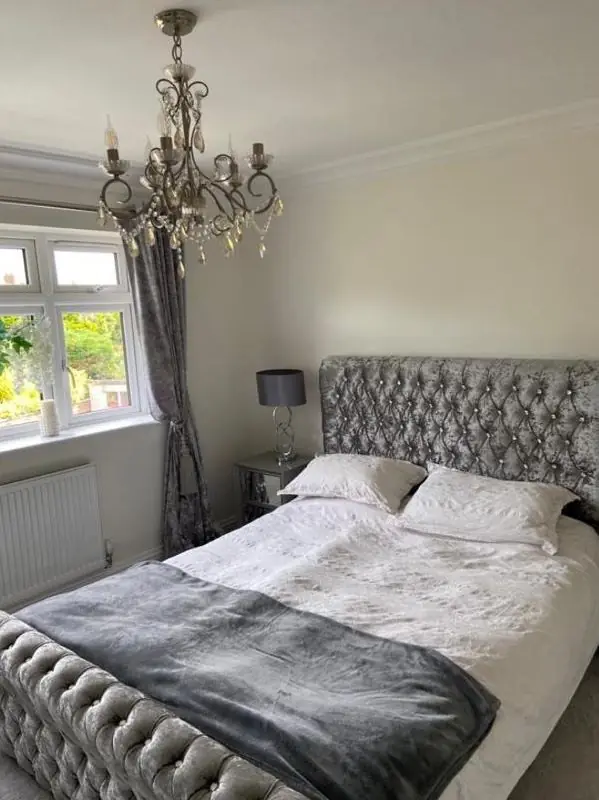
Several listed cottages have 20th-century red brick additions, and the village has modern houses alongside its stone core. Inside, carrying the same woodwork colour through old and new rooms ties them together even when the wall colours change. Outside, painting extension joinery to match the cottage’s windows helps the brick sit back behind the stone.
Getting colour advice in Greens Norton
Colour advice comes with the decorating work, and we cover Greens Norton and its hamlets of Caswell and Duncote from Northampton, about 8.5 miles away. Our colour and finish advice page explains how light direction and sheen change a colour, and our Greens Norton area page covers the village’s houses in more depth.
Last updated by Dean, DH Painter & Decorator.