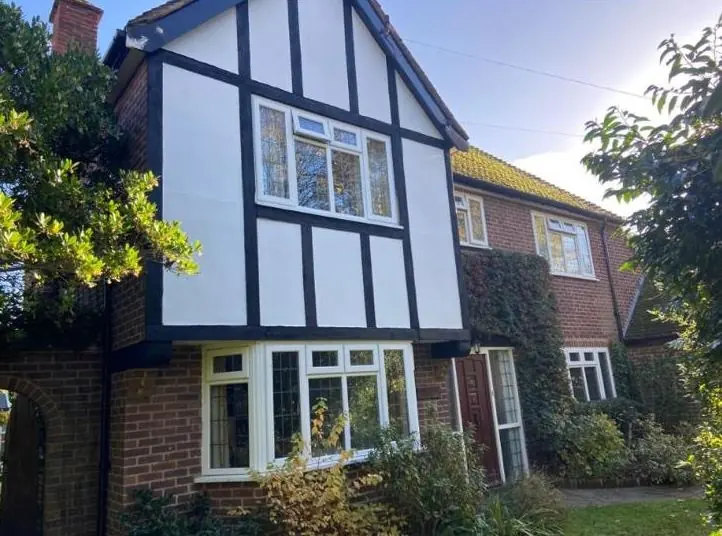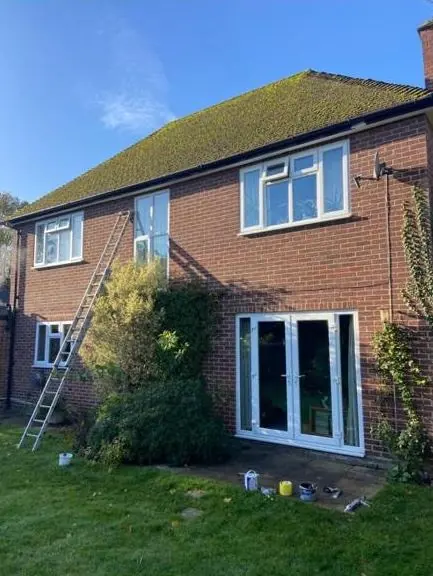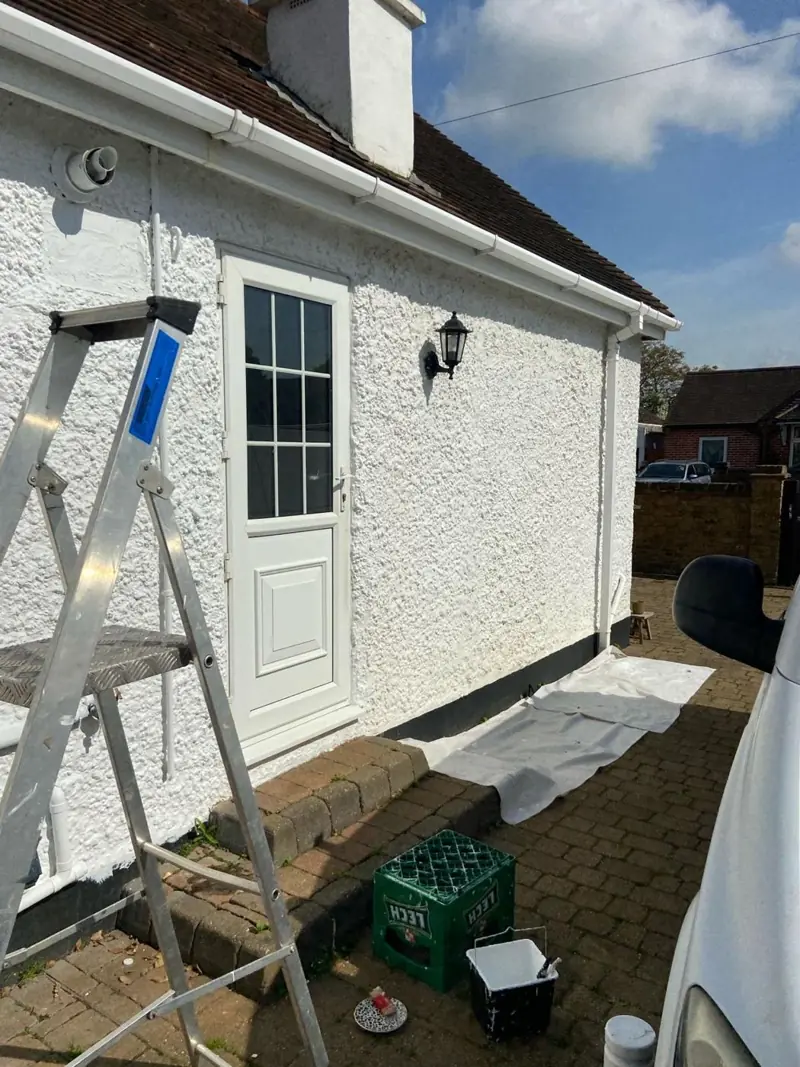
Dean paints house exteriors in Gayton, NN7, a ridge-top village about 4.8 miles south-west of Northampton town centre. Because most older fronts are bare limestone with ironstone dressings, the work is mainly the joinery: sashes, panelled doors and surrounds, dormers and bargeboards, with heritage colours inside the conservation area.
Stone fronts, painted joinery
Up on its ridge, just under five miles from our Northampton base, Gayton’s historic core is built mostly of coursed limestone rubble or squared limestone with ironstone dressings and quoins. On houses like these the walls are left as bare stone, so exterior painting in Gayton is mostly a joinery job: sash windows, panelled front doors and their surrounds, gabled dormers, bargeboards and the odd porch or outbuilding door. The stone itself is not something we paint, and we would talk you out of it.
The newer homes are different. Thirteen high-value homes went up on infill and brownfield plots in the five years to 2026, with a dozen more consented, one of them a barn being converted. Their outside surfaces vary from house to house, so we look at what is actually there before suggesting a system rather than assuming.
Multi-pane sashes and pedimented doorcases
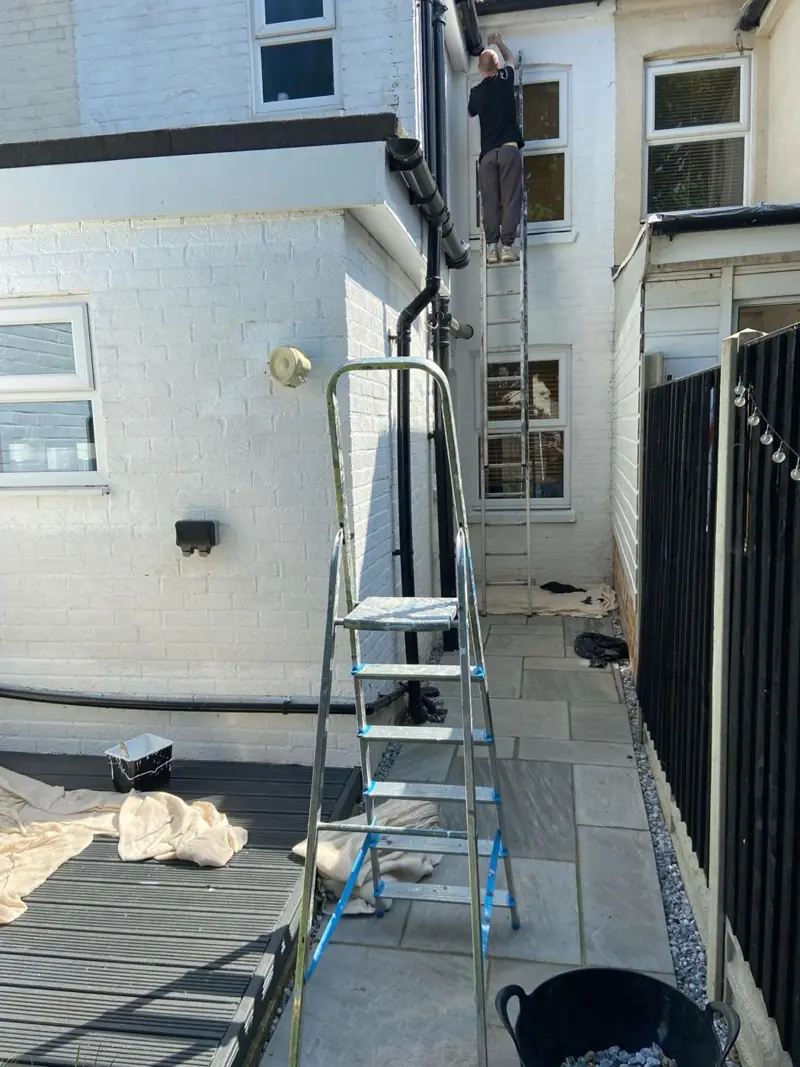
The 18th-century houses carry joinery that is slow to prepare. Beech House on Deans Row and Evergreen Farmhouse on High Street are recorded with 16- and 20-pane timber sashes, which means a lot of glazing bars, a lot of putty and a lot of corners where water sits. Each pane edge is checked for loose or missing putty, cracked beads are made good, and bare timber is spot-primed before any undercoat. On windows of this age we normally use a microporous or linseed-based finish that lets the old timber breathe rather than trapping moisture in it.
Doorcases take the most care. The listings for Evergreen Farmhouse and the farmhouse at 16 Baker Street describe front doors framed by timber pilasters, with a dentilled cornice and pediment over the top. Over the years paint builds up in the dentils until the detail softens. We ease off loose and over-thick layers by hand, keeping the mouldings crisp, and cut in each block separately.
- Sashes: putty and bead checks, glazing bars sanded by hand, breathable finish
- Panelled doors: layered paint eased off, panels and mouldings painted in order
- Dormers and bargeboards: worked from a tower where a ladder cannot stand safely
- Stone mullion windows on the oldest houses: only the timber casements are painted, never the stone
Conservation area and listed building rules
Gayton’s conservation area was designated in 2000 and last amended in 2016. It covers the historic core, including the church, the Manor House, the Gayton House gates and The Weir on High Street, and the parish’s Neighbourhood Development Plan expects new work to keep that character intact. For exterior joinery that points towards heritage palettes and muted colours rather than bright modern shades.
On top of that, the Manor is Grade I and four of the older village houses are Grade II. Keeping the same colour and finish is ordinary upkeep, whereas switching either on a listed front may require formal consent. Ring the council’s conservation officer at West Northamptonshire before anything is booked, and we can write out the paint specification for you to send them.
Weather on the ridge and getting a van in
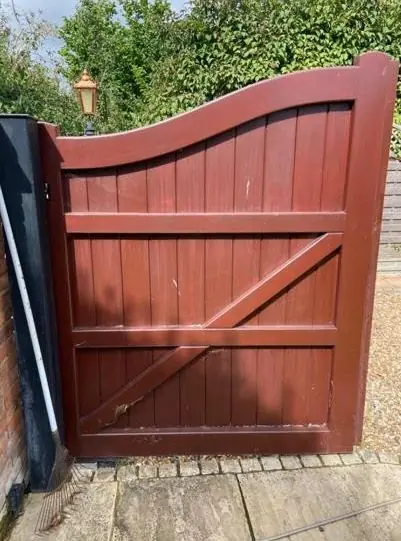
The village’s raised position leaves north-west and north-east elevations open to wind and driving rain, and those are the sides where paint gives up first. Mature tree groups around the village add leaf drop, sap and shaded walls that stay damp, so washing down and treating algae on timber is often part of the preparation. Picking a settled spell matters more up here than on a sheltered town street; our guide to the right time of year for exterior painting explains the temperature and drying limits.
Access needs thought too. The village roads were laid out for far less traffic, on-street parking is already tight and verges are getting damaged, so we ask early whether there is room on a drive for the van and any tower. Depending on the address, the van comes in along Blisworth Road, Milton Road or Bugbrooke Road. For everything an outside job can include, see our exterior painting service, and our Gayton area page covers the village’s interiors as well.
Last updated by Dean, DH Painter & Decorator.