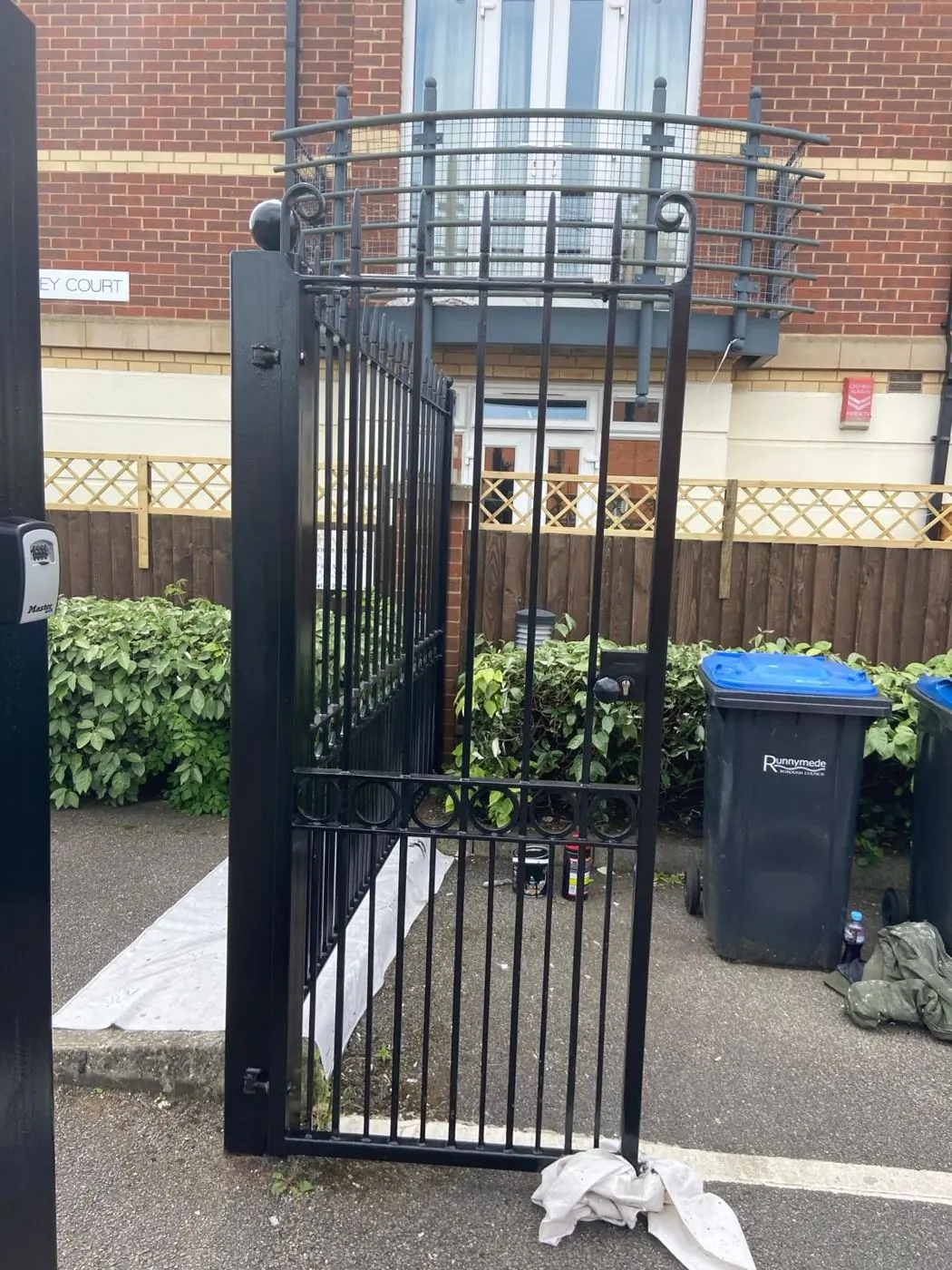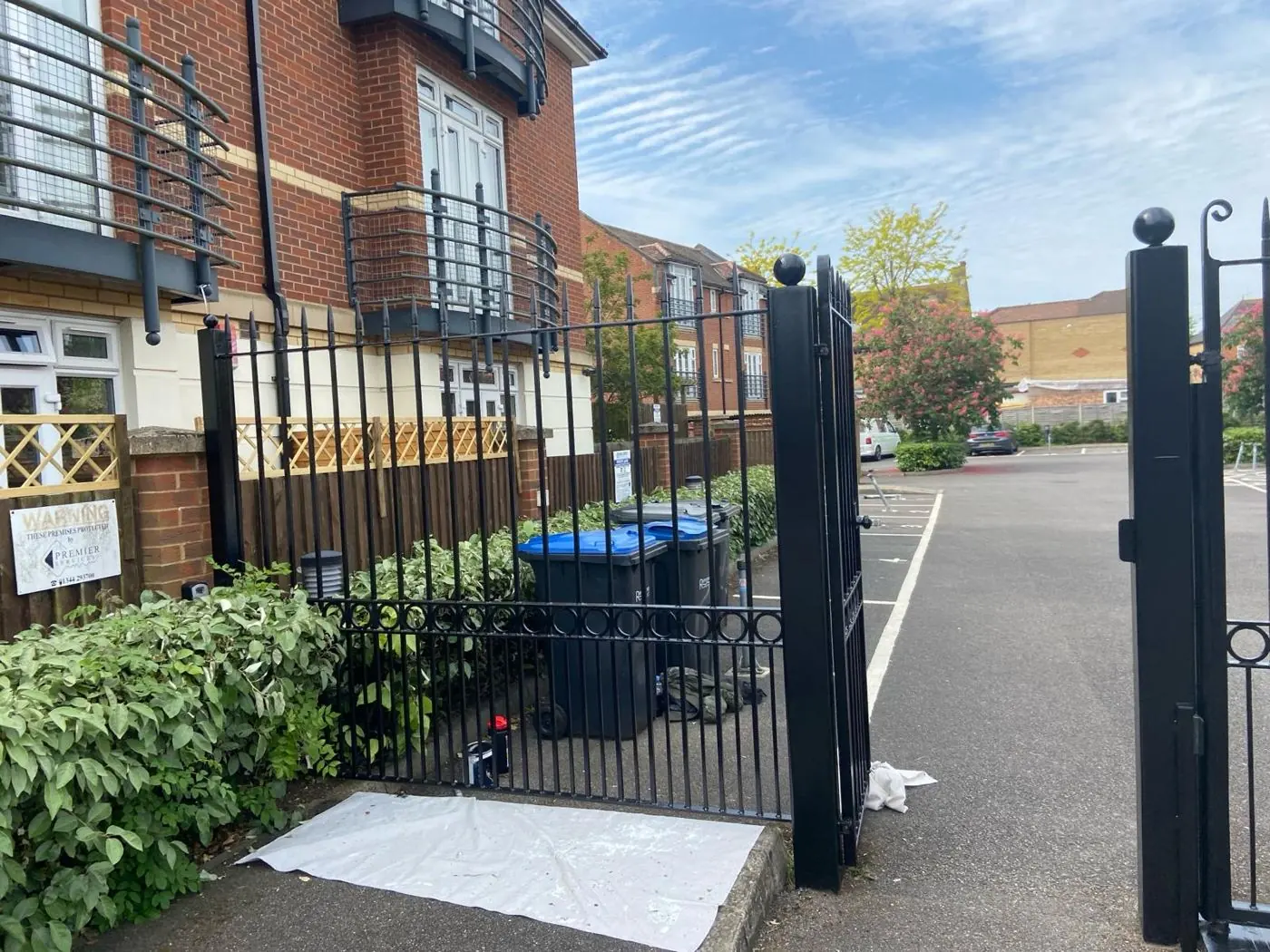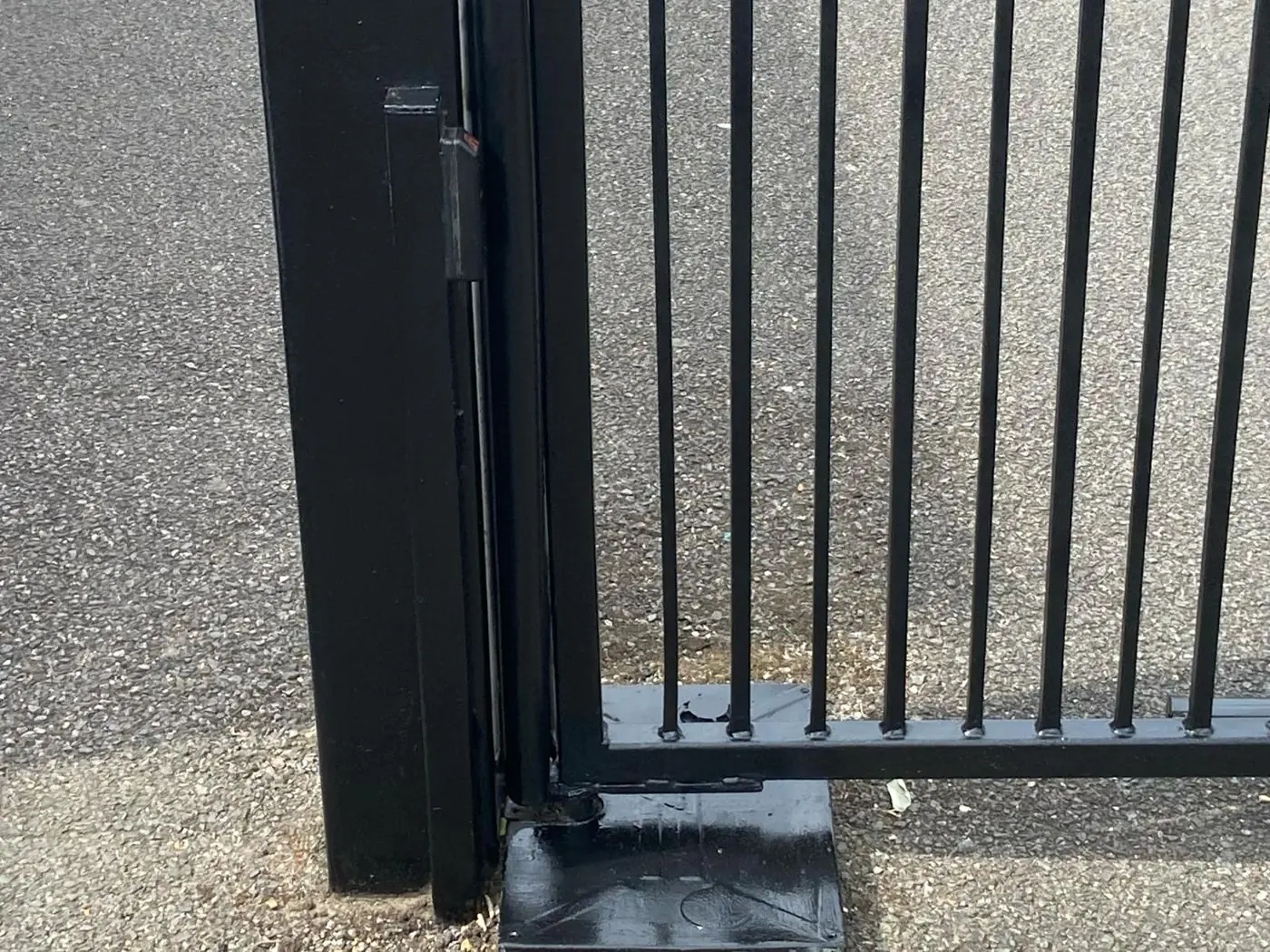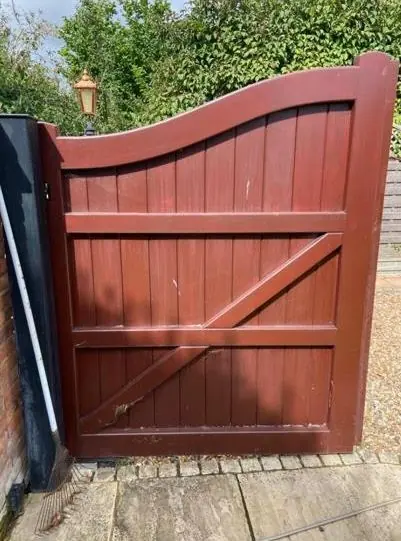
We strip, treat and repaint metal gates, railings and handrails in Hanslope, the MK19 village about 8.9 miles south of Northampton. Most of the metalwork here is single gates on older properties and farm entrances, and Dean identifies the metal before choosing a primer.
Where the metalwork is
Hanslope is not a village of long railed terraces. Its older streets are edged more by hedges, mature trees and grass verges than by ironwork, and Policy HAN3 treats those green edges as part of the conservation area’s character. The metal that does need painting tends to come one piece at a time: a wrought iron pedestrian gate on an older property, a pair of driveway gates on an older house, a handrail beside a step, or a steel gate across a farm entrance out on the lanes.
Because each job is usually small, it is often sensible to group it with other outside work. A gate repainted at the same visit as a front door, a stretch of fascia or a fence avoids a separate trip, and the gate can be prepared on the first day and top-coated on a later one as the other work dries.
Iron fixed into soft limestone
Many of the older properties in the village are built of yellow oolitic limestone, and that matters for any gate or railing set into it. When iron rusts it swells, and a rusting hinge pin, gate stop or railing foot leaded into a stone pier can crack the stone around it. So we pay close attention to the points where metal meets masonry:
- Loose rust and flaking paint are scraped and wire brushed back to sound metal, with the joint to the stone cleaned out as far as is safe.
- Pitted areas that cannot be cleaned fully get a rust treatment before priming.
- Paint is cut in tightly at the base so it does not spread onto the limestone, which should be left to breathe.
If the stone around a fixing has already cracked, we will point it out, because that is a repair to sort before or alongside the painting.
Field gates and farm-building steel
Around the parish, farm entrances, paddocks and the converted farm buildings at Cuckoo Hill Farm bring a different kind of metal. Modern field gates and many steel components are galvanised, and ordinary paint will not hold on a zinc surface. These need degreasing and a primer made for galvanised metal. Older mild steel gates rust quickly wherever the coating is broken, typically along the bottom rail and around the hinges, and need taking back to bright metal in those spots.
The units at Cuckoo Hill are business premises, so steel doors, handrails or frames there can be scheduled to suit whoever is working in them. Farm buildings often combine steel with blockwork, and where a steel frame or door meets block we mask the join and keep the metal primer off the masonry. On field gates out along the rural lanes to places like Tathall End or Pindon End, we ask how the gate is used before we start, because a gate that has to be opened for vehicles or livestock while the paint dries needs to be planned around, sometimes by painting one face on each visit.
Damp mornings and exposed gates
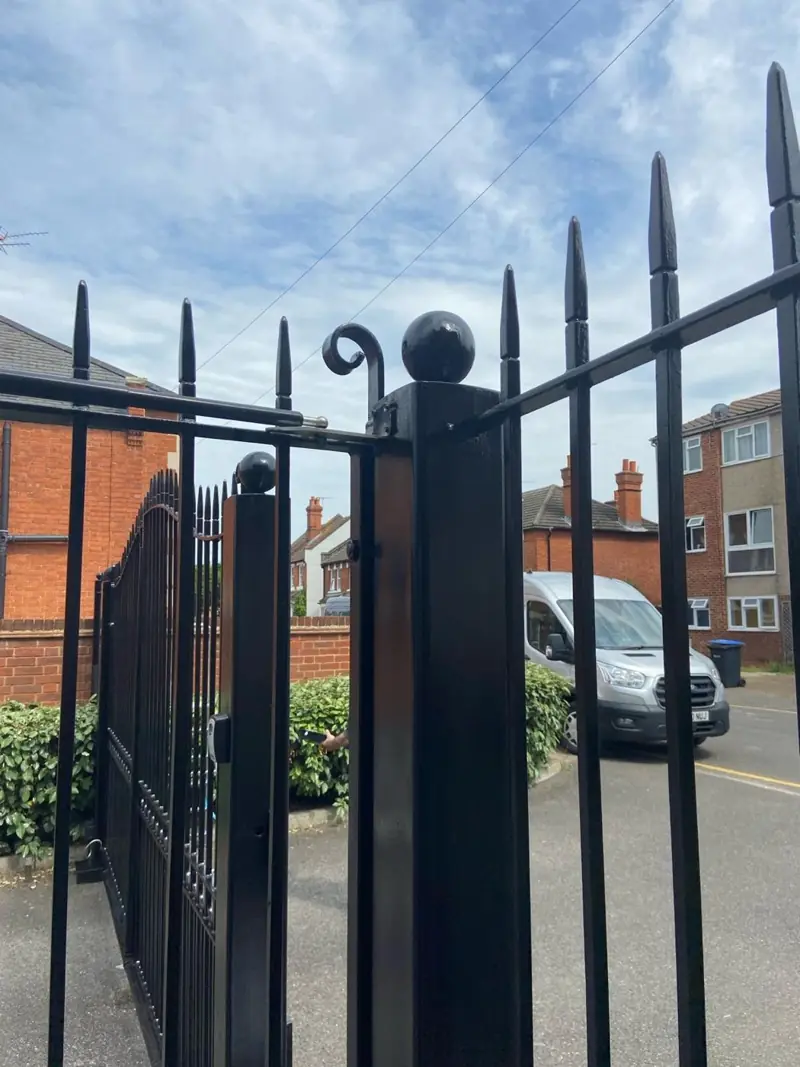
Metal is quick to collect condensation. On the ridge, and beneath the old core’s big trees, gates can stay wet well into the morning even on a dry day, and paint applied over a film of moisture will fail early. We wait until the metal is dry and comfortably above the dew point before priming, and we avoid the cold, damp end of the year. If you are changing the colour of a gate on a listed building or in the conservation area, it may be worth checking with Milton Keynes City Council first.
The full rust treatment and paint process is on our main metal gate and railing painting page. For other services in the village, see the Hanslope area page.
Last updated by Dean, DH Painter & Decorator.