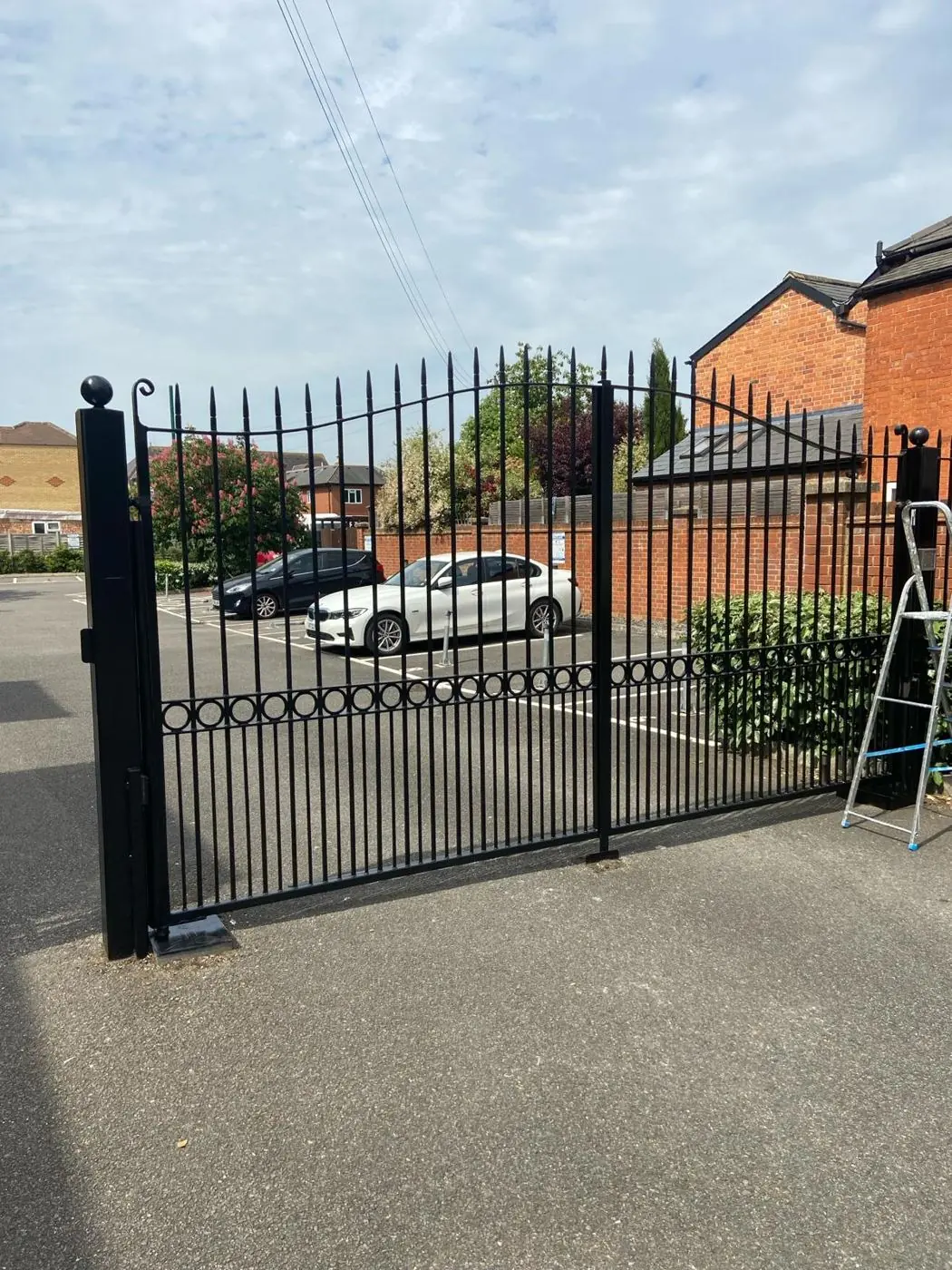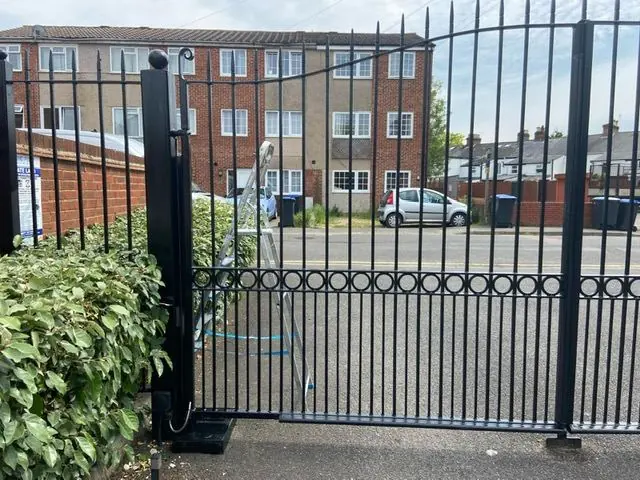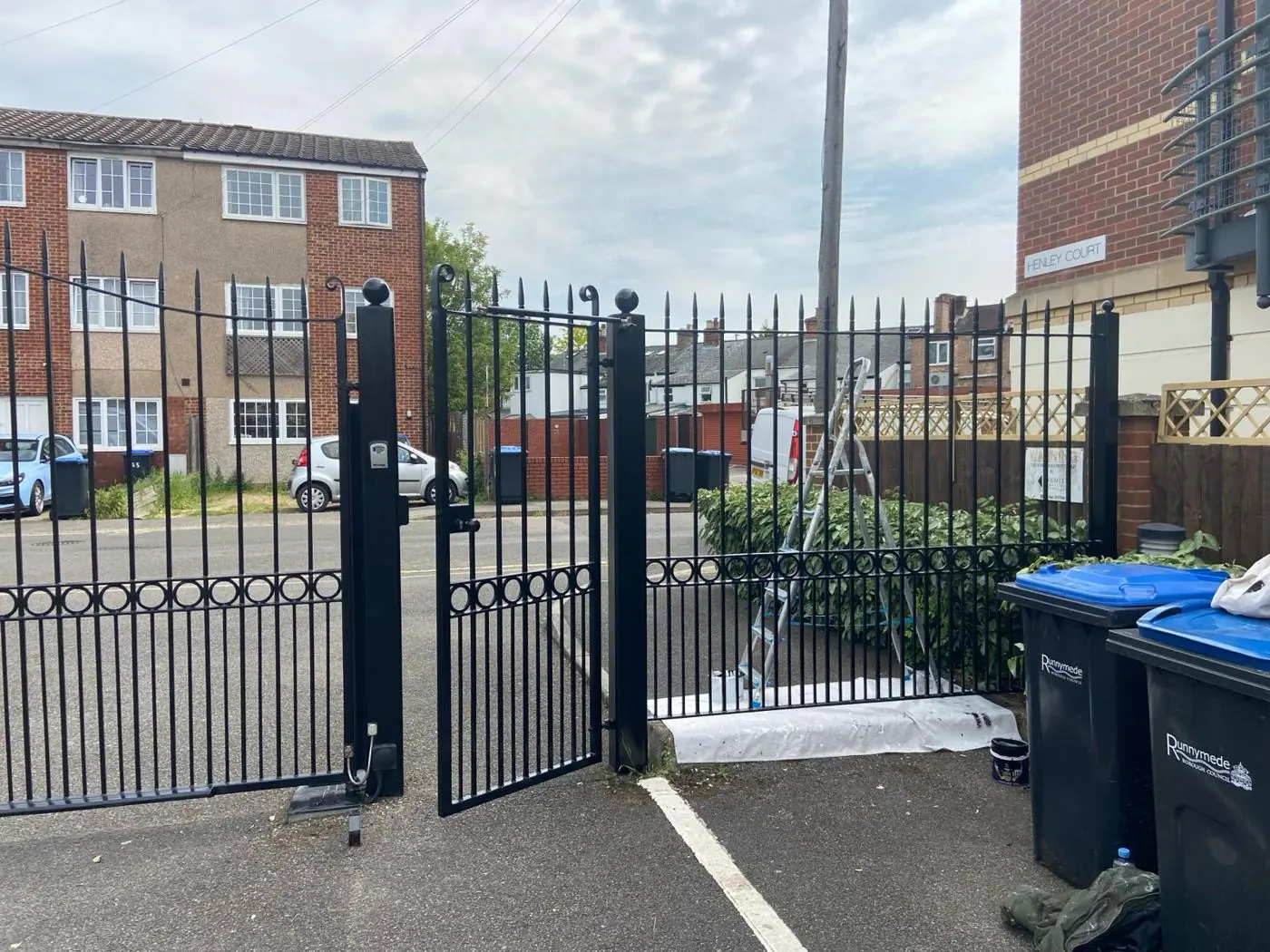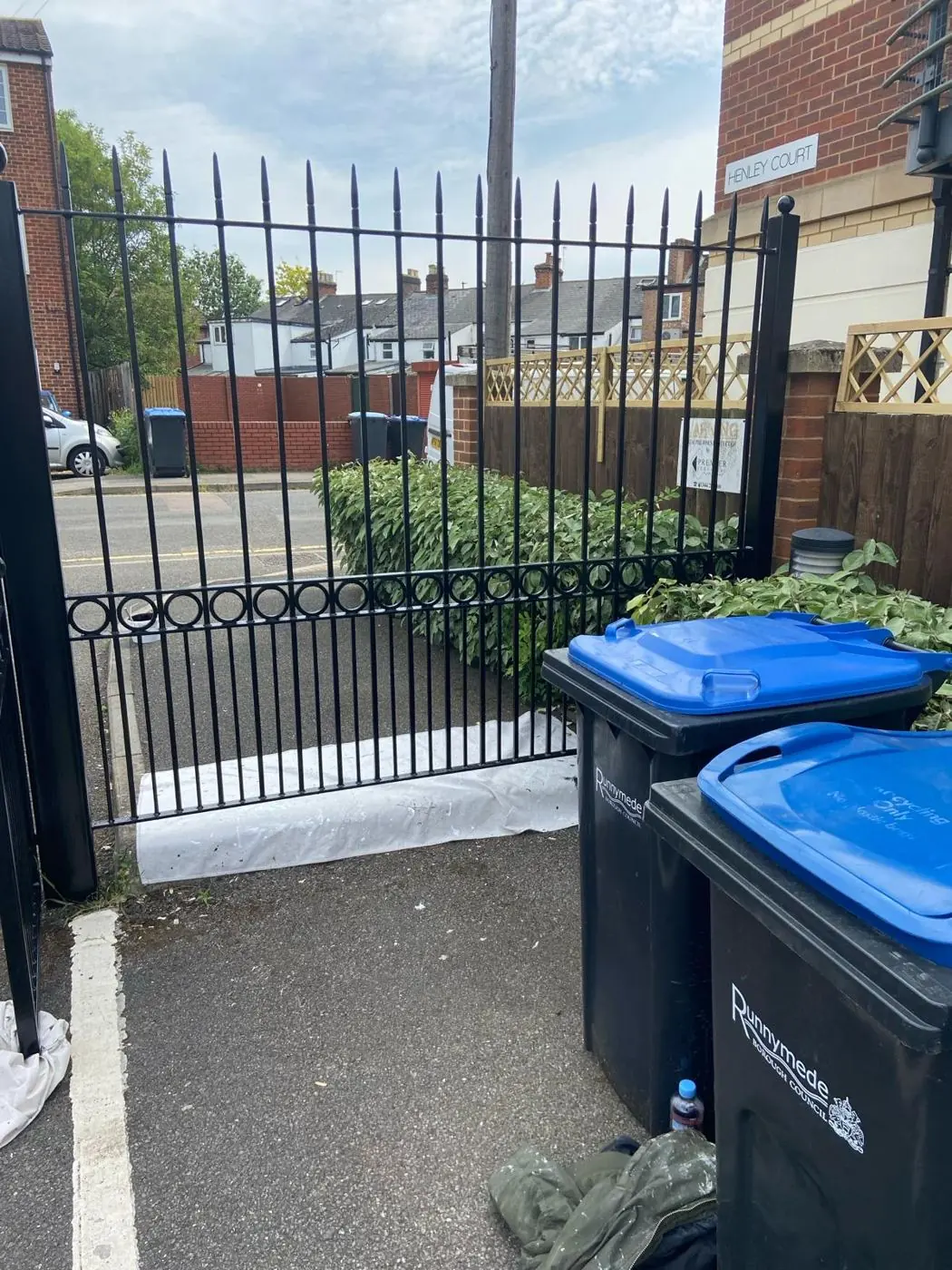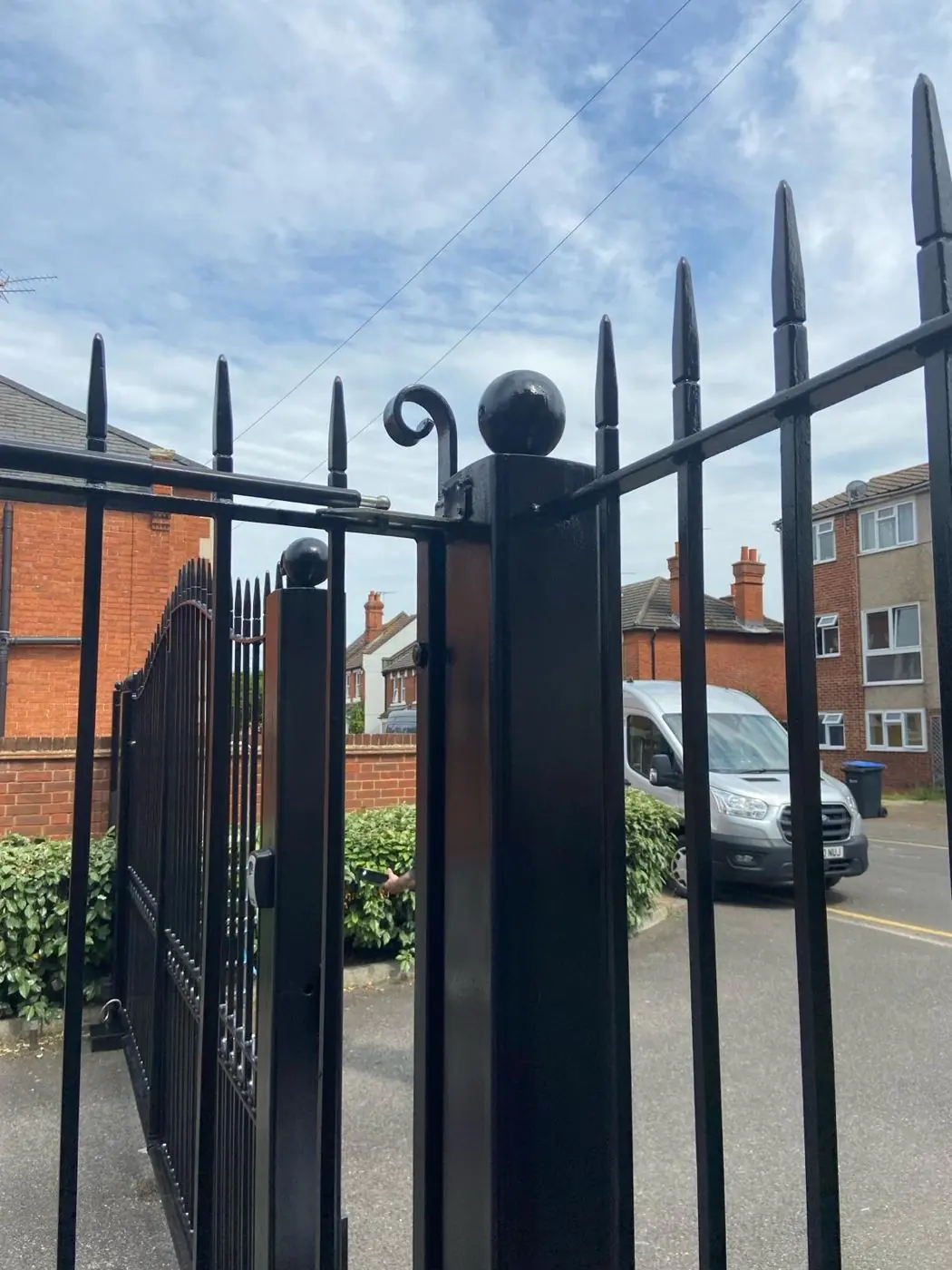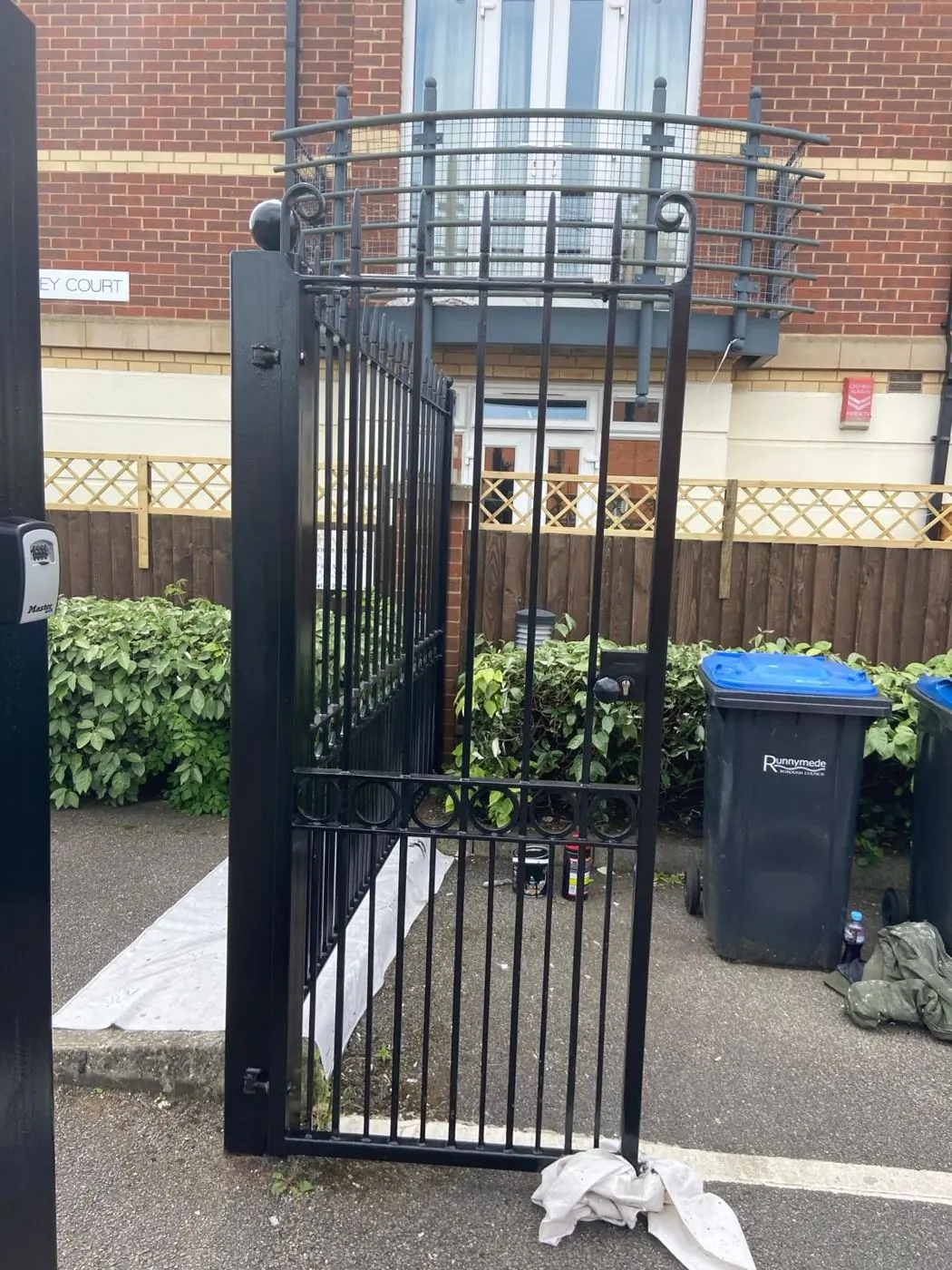
Dean repaints metal gates and railings in Roade, NN7, about 5.4 miles south of Northampton town centre. The work covers domestic gates and railings, ironwork at the village's churches and premises, and any metal on listed buildings, always de-rusted and primed before topcoats.
Iron in a railway village
Roade’s history is tied up with metal. When the London and Birmingham Railway was driven through the village in a cutting up to 65 ft deep, opened in 1838, a cast-iron aqueduct on sandstone piers was built to carry a stream over it. That aqueduct is now Grade II listed and is railway infrastructure, not something a decorator touches, but it is a good reminder of how long cast iron lasts when it is cared for.
The ironwork that lands on our list is closer to home: front railings, garden and side gates, handrails by steps, and the gates and railings at churches and village premises. Old ironwork in a village with houses going back to the late 1600s can carry years of paint layered over spots of rust, and that is where the trouble starts.
Working out what each gate needs
The first job is identifying the metal, because each one takes different preparation:
| Metal | Where you might find it in Roade | Main concern |
|---|---|---|
| Cast iron | Older railings and finials around period houses and chapels | Brittle, so cleaned without heavy impact |
| Wrought iron | Older gates and handrails | Thick old paint build-up hiding rust |
| Mild steel | Driveway and side gates on the 20th-century closes | Rusts quickly once the coating breaks |
| Galvanised steel | Newer gates and railings | Needs a primer made for zinc |
Rust is then taken back to sound metal by wire brushing and abrading, bare spots get a rust-inhibiting metal primer the same day, and two topcoats follow. The detail of that process is on our main metal gate and railing painting page.
Roadside and field-edge ironwork
Two parts of Roade are harder on metal than the rest. Railings and gates along the A508 pick up a film of traffic grime that has to be washed and degreased off, or the primer will not bond. Gates on the edge of the village that open onto farmland take more rain and wind, and their hinges, latches and bottom rails are usually the first places to rust through. We pay particular attention to the bottom rail and the points where bars meet the ground or a stone plinth, since water gathers there.
Railings on listed and conservation-area buildings
Within Roade Conservation Area, around Church End, the High Street and Hartwell Road, metalwork forms part of the setting of listed buildings including the Grade II* Church of St Mary the Virgin and the Grade II Baptist Church. Railings attached to a listed building are normally covered by its listing, so repainting in the existing colour, usually black or a deep traditional shade, is the safe approach. If you would like a different colour, talk to West Northamptonshire Council first.
Where railings are set into stone, rust expanding in the socket can crack the stone around it. We clean and seal the base of each bar carefully and point out any split stone that needs a mason.
For a church, chapel or village hall, the work is usually arranged with whoever looks after the building and timed around services, bookings and events. If railings near Roade Primary School on Hartwell Road need painting, we work when children are not arriving or leaving, with wet paint signs on every section until it has hardened. See our Roade area page for the other services we offer in the village.
Last updated by Dean, DH Painter & Decorator.