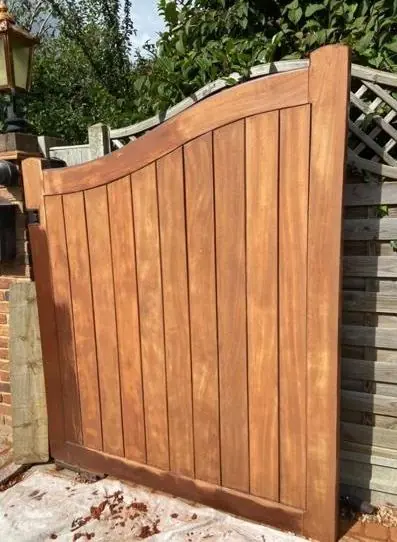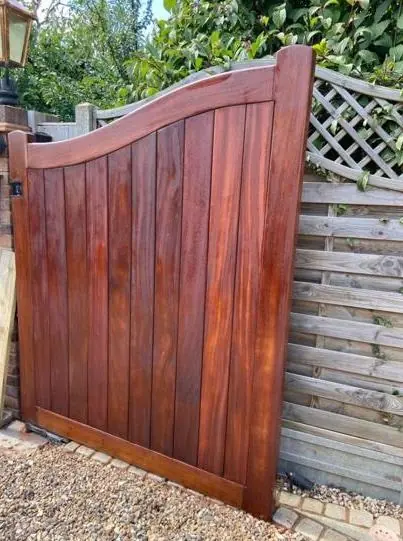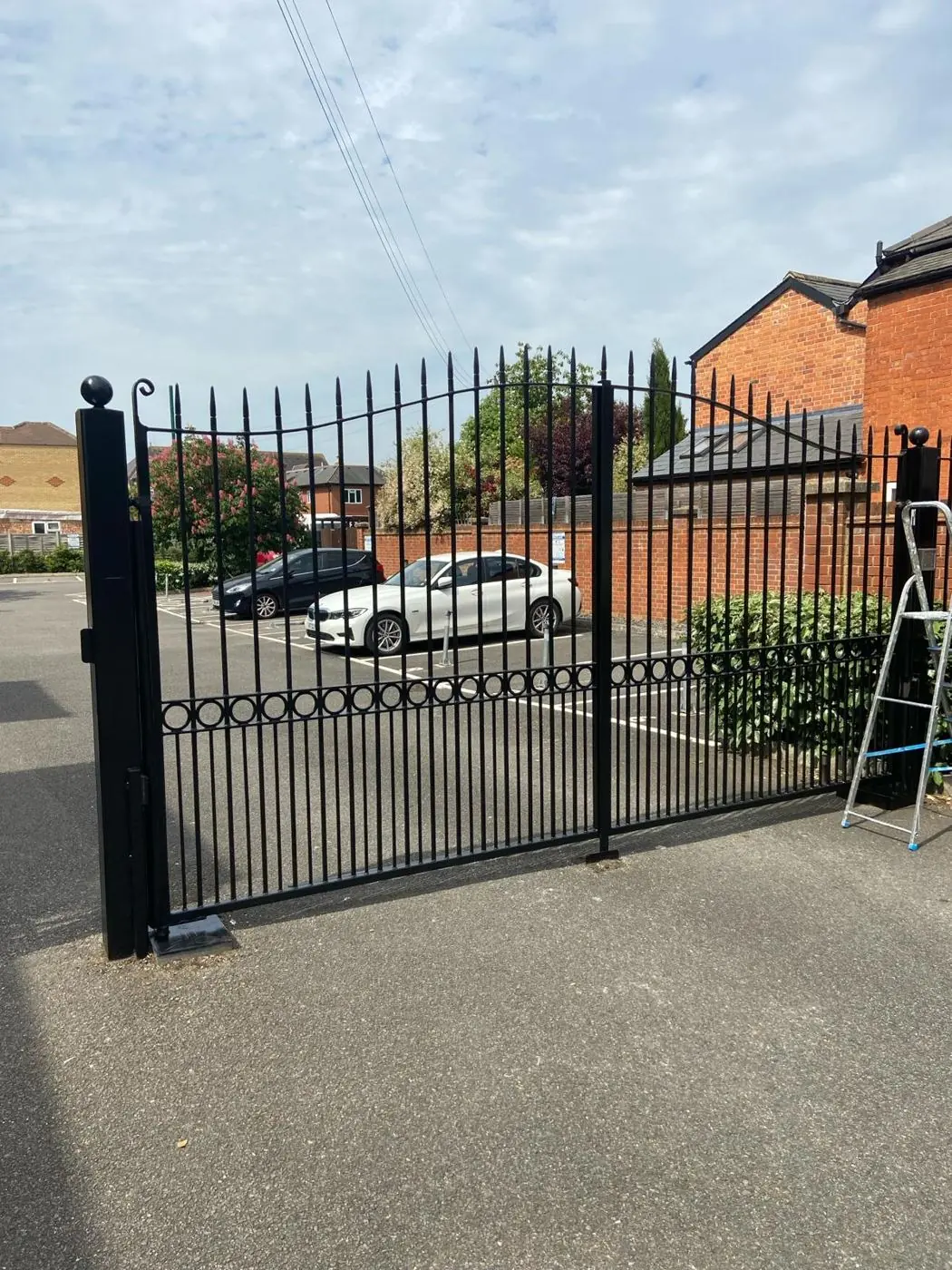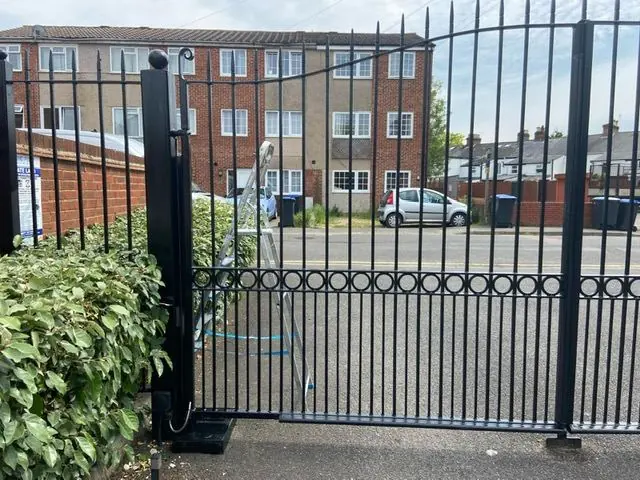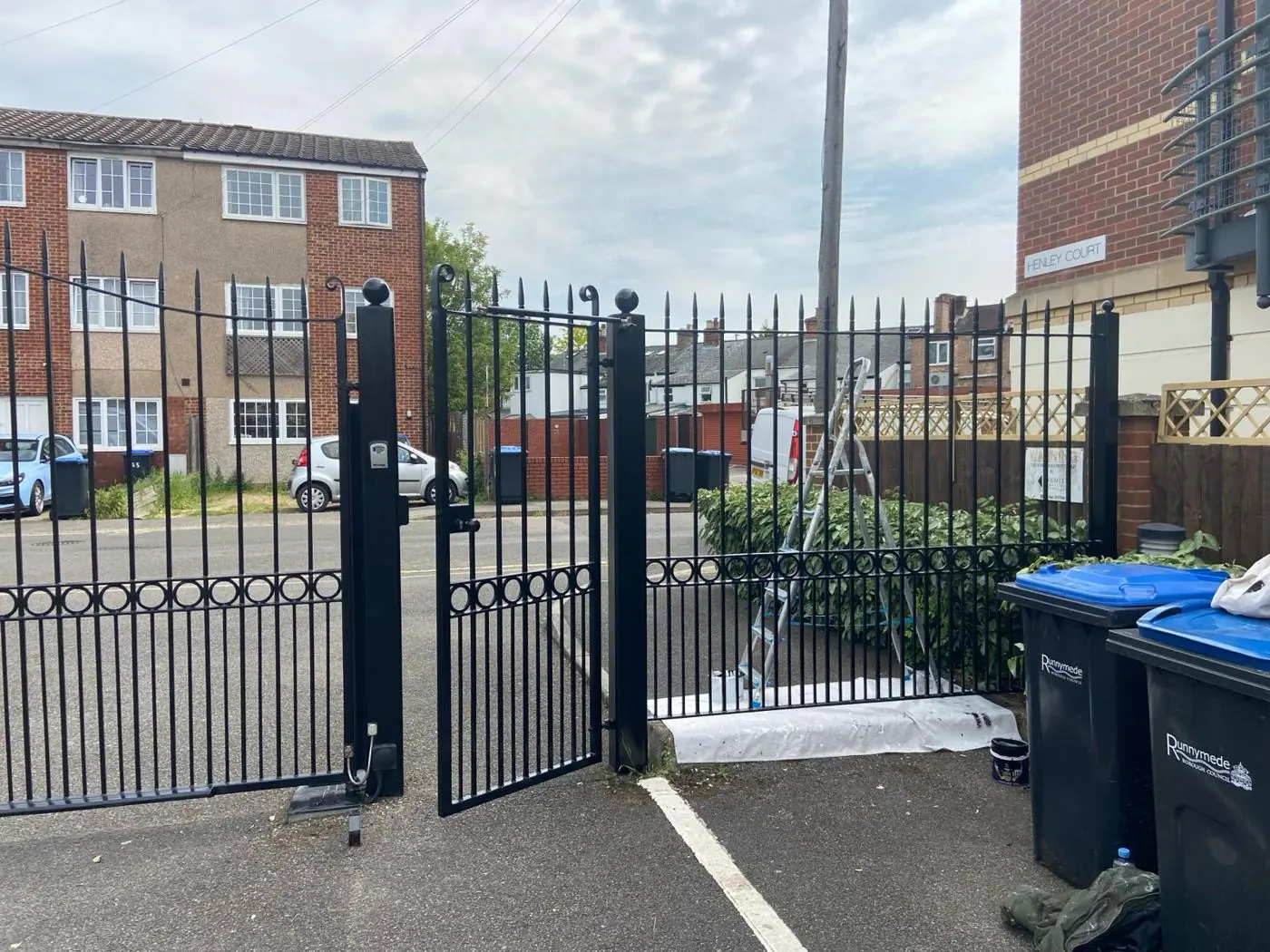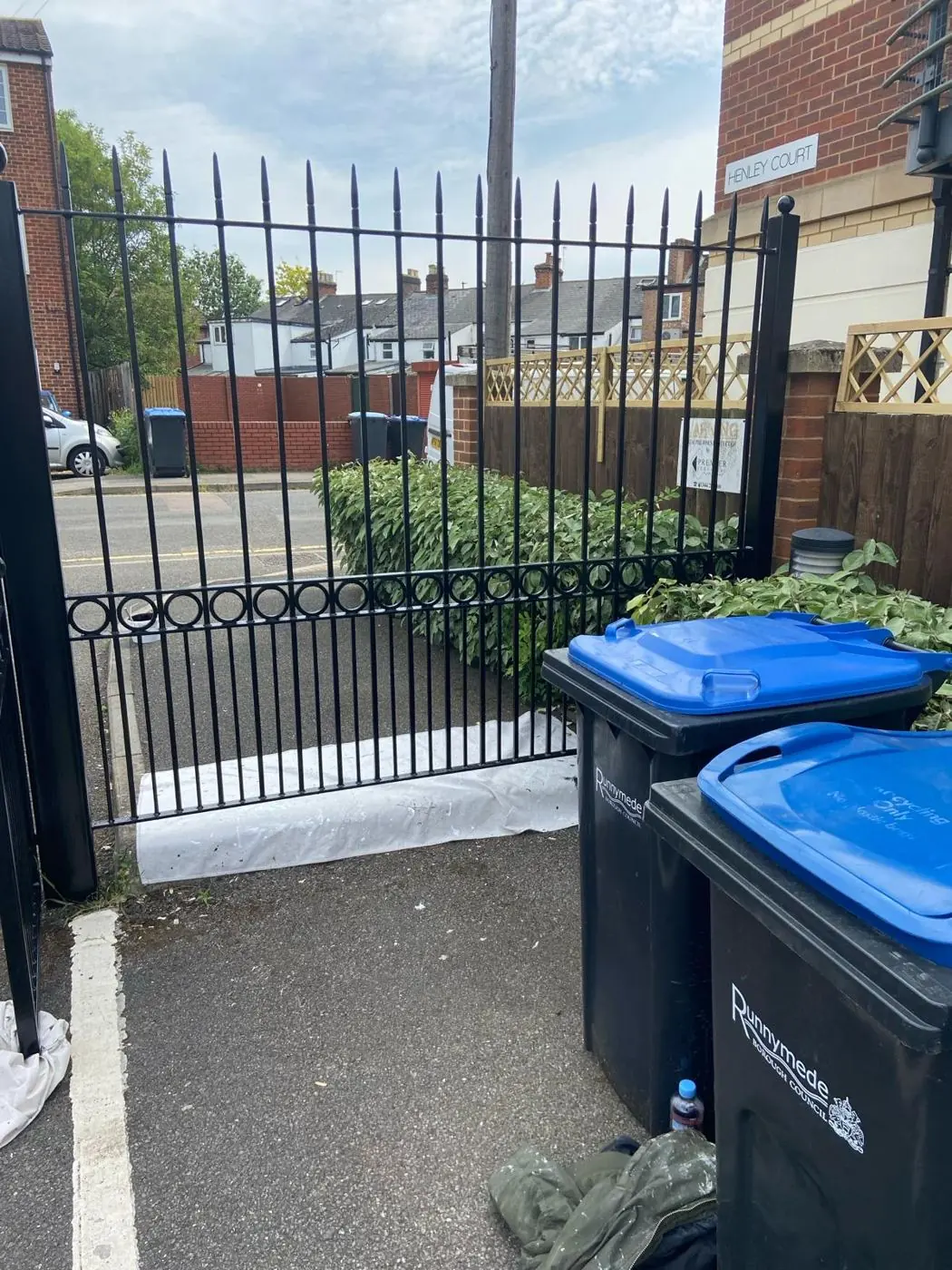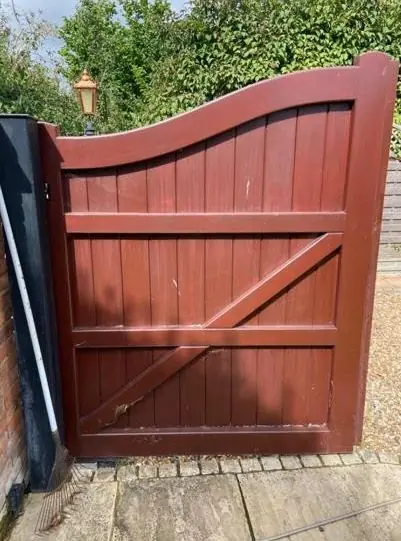
We stain and paint fences, gates and outdoor timber in Hanslope, about 8.9 miles south of Northampton in MK19. The parish is full of horse paddocks, stable blocks and field-edge gardens, so the work ranges from a short run of garden panels to rails, five-bar gates and stable doors.
Paddocks, stables and field gates
Hanslope parish is ringed by farmland, bridleways and horse paddocks, with stable blocks scattered around it and an equestrian centre off Castlethorpe Road. That means a lot of timber that is not a garden fence: post and rail paddock fencing, five-bar field gates and the half doors of stables. Rural boundaries along the lanes out to the hamlets add more.
Timber around horses brings its own considerations. Horses chew and lean on rails, so the finish needs to be one the manufacturer states is suitable for use around animals once dry, and the horses need to be kept off it until then. Stable doors take knocks and scrapes on the lower leaf, so we put more effort into the bottom rail and hanging stile. Field gates are stained on every face, including the tops of the rails, where rain sits longest.
New boundaries on the new estates
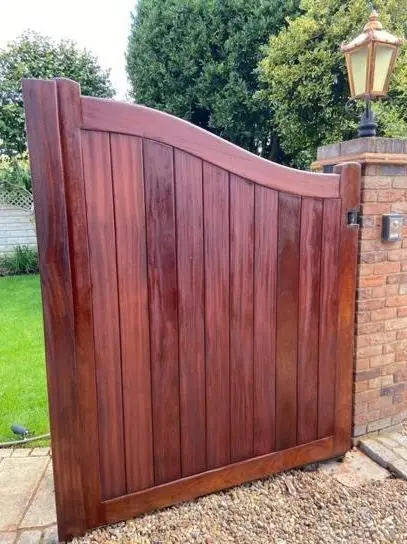
The recent estates at Hayfield, Hanslope Fields, The Wheatfields, Cuckoo Hill and off Long Street Road added hundreds of gardens, many backing onto open fields. Most of those fences are pressure-treated softwood that left the builder untouched. Freshly treated timber holds moisture, so we usually suggest letting new panels dry out for a while before the first stain, following the product guidance.
On field-edge plots, the open side of the fence is often the only side we can reach, and the inside face is shared with a neighbour on the side boundaries. We stain the side that is yours and only touch the other face with your neighbour’s agreement. Choosing a shade that sits comfortably against the farmland behind is worth thinking about, especially where the fence is visible from a footpath.
Shade from the forest and the old village trees
Salcey Forest borders the parish to the north-west, and the conservation area around the church is known for its mature trees and large shrubs. Fences under heavy canopy stay damp, grow algae and lichen, and soak up stain unevenly. Fences on the open western edge of the ridge, by contrast, are bleached and dried by sun and wind.
| Setting | What we usually find | What we do first |
|---|---|---|
| Under trees or hedges | Green growth, soft grey surface | Fungicidal wash, brush down, dry out |
| Open, west-facing | Silvered, dry, split boards | Remove loose fibres, extra coat |
| New treated timber | Damp, smooth, untouched | Allow to dry before the first coat |
Fitting a fence day into village life
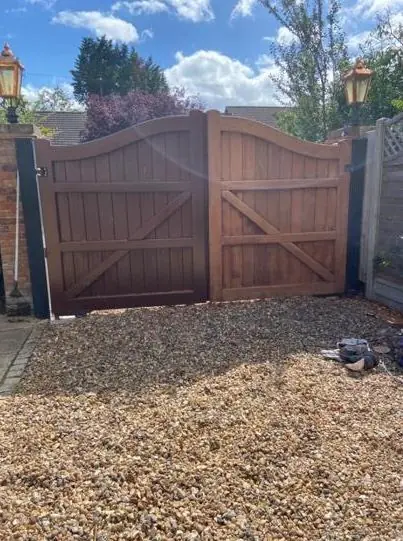
On the 1960s estates around Western Drive and Eastfield Drive, an older fence or side gate may well have been stained over and over with different products. Before adding another coat we check what is on there, because a solvent-based stain and a water-based one do not always sit well on top of each other, and a heavily built-up surface may need sanding back on the gate at least. Gate hinges and latches are masked or removed so they keep working.
Staining needs a dry spell and a day without rain forecast afterwards, so we book outdoor timber in the warmer months and keep an eye on the forecast; our guide on when to paint outside explains the conditions. For paddocks and hamlet properties reached by rural lanes, tell us where the van can park and whether gates need to be left closed for livestock. The main fence and gate staining service page covers stain versus paint in detail, and our Hanslope page lists everything else we do in the village.
Last updated by Dean, DH Painter & Decorator.