We hang wallpaper and lining paper in Hanslope, about 8.9 miles south of Northampton in the MK19 postcode. Dean has over 30 years of hanging paper, and in Hanslope the job swings between the uneven walls of the 17th-century stone cottages and the flat, modern walls of the new estates.
Why the old village is hard on patterned paper
The cottages and farmhouses along the main street and around Market Square were built of yellow limestone from the 16th and 17th centuries onwards, with later work in brick and stone. Their walls bow, lean and change thickness, and corners are seldom square. Patterned wallpaper shows every one of those faults. A stripe will run off true within a couple of lengths, and a large repeat can end up visibly stepped across a chimney breast.
The way round it is planning before the first drop goes up. We find the most visible wall, usually the one you see as you walk in, and set the pattern from there, so any mismatch falls in a corner behind a door or above a cupboard. On a wall that is badly out, a small or random pattern is kinder than a bold geometric, and Dean will say so before you order the rolls.
Lining first on solid stone walls
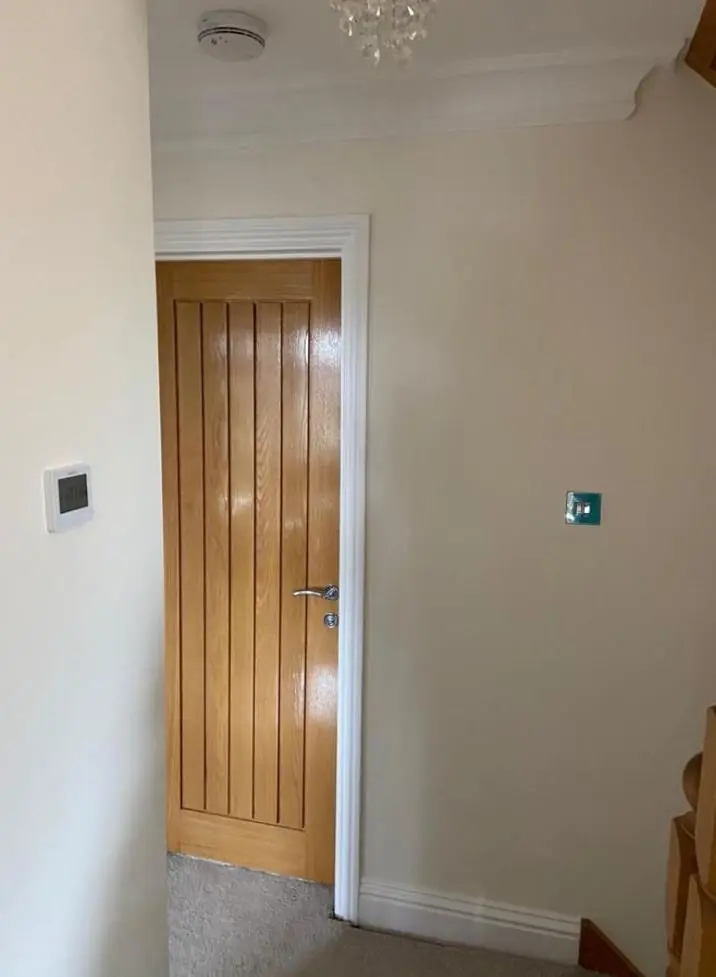
On the older houses we nearly always hang lining paper first, cross-lined where the face paper allows. It covers hairline cracks and patching, gives the paste an even surface to grip and reduces the risk of seams opening as the wall moves through the seasons. Solid walls in old stone houses can hold more moisture than modern cavity walls, so paste choice matters too. We use a paste suited to the paper and the wall rather than whatever is quickest, and we look for signs of damp before hanging anything heavy. Where a wall is too damp to paper, we will tell you that rather than hang over it.
Some houses in the old village are listed, and it is worth knowing that removing historic finishes can need consent. If you are stripping very old paper from a listed interior, check with Milton Keynes City Council before work starts.
Feature walls in the new estates
Hayfield, Hanslope Fields, The Wheatfields, Cuckoo Hill and Malt Mill Farm, and the homes off Long Street Road are a different job. Walls are straight, corners are close to square and ceilings are level, so a bold repeat or a large mural panel goes up cleanly. These are the houses where a feature wall makes most sense: a chimney breast or alcove in the lounge, the wall behind a bed, or a dining-room wall in an open-plan ground floor.
The one thing to watch in a new home is the plaster. Bare skim needs sealing with a sizing coat or a mist coat before paper goes on, or the paste soaks in unevenly and the paper may later be impossible to strip without taking plaster with it. Settling cracks are filled and sanded first so they do not ridge through a thin paper.
Flats, closes and everything between
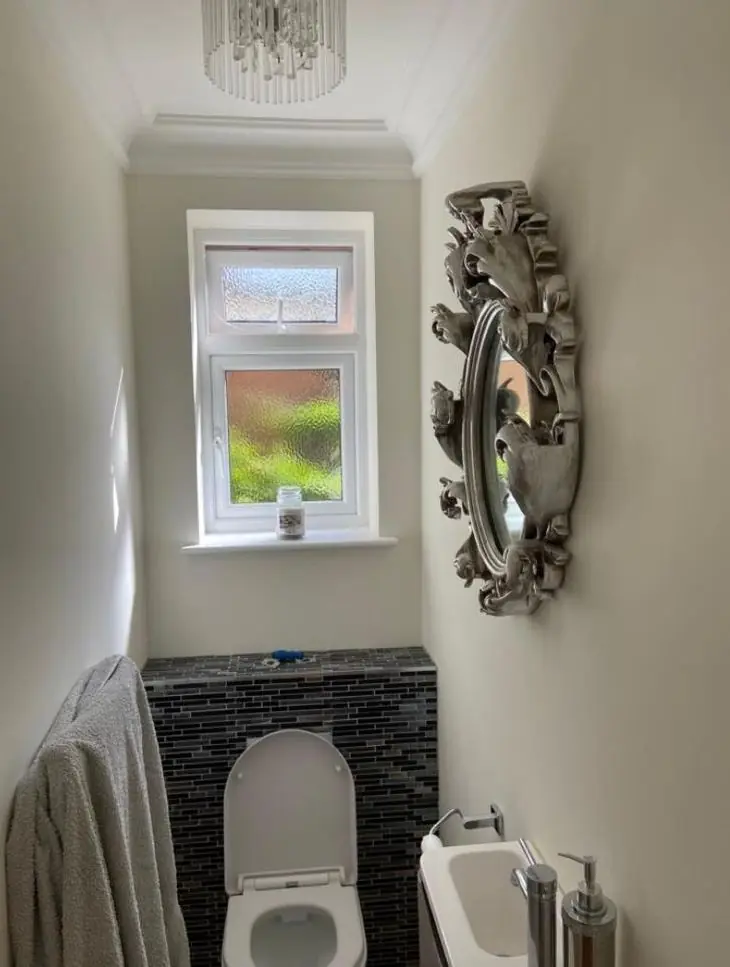
The 1960s houses on Western Drive, St James Close and Eastfield Drive, and later closes like Carriers Close, Kitelee Close and Saxon Close, sit in the middle. Houses of this age often carry several layers of old paper, sometimes painted over, which come off with a steamer and scraper before the wall is made good. Vicarage Court on Park Road, a Victorian vicarage converted into flats in the 1990s, is likely to combine original solid walls with later partitions, and the two take paper differently.
| Hanslope house type | Usual wall condition | What we normally do |
|---|---|---|
| Stone cottage or farmhouse | Uneven, solid, often patched | Line first, choose a forgiving pattern |
| 1960s estate house | Old layers of paper or paint | Strip, repair, then line or hang direct |
| Recent new-build | Flat skim, settling cracks | Fill, size and hang feature papers |
Read more about the full process on our main wallpaper hanging page, or see everything we cover in the village on our Hanslope page. For a written quote, call Dean on 07539 779 036.
Last updated by Dean, DH Painter & Decorator.