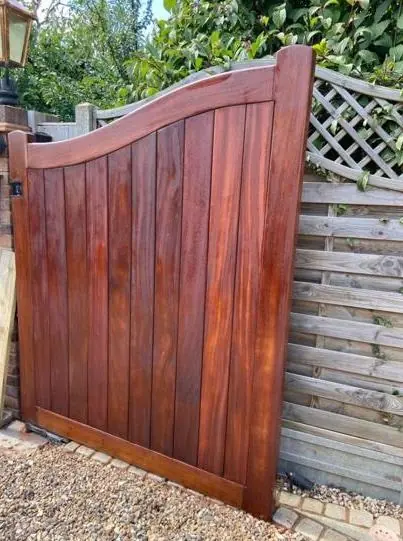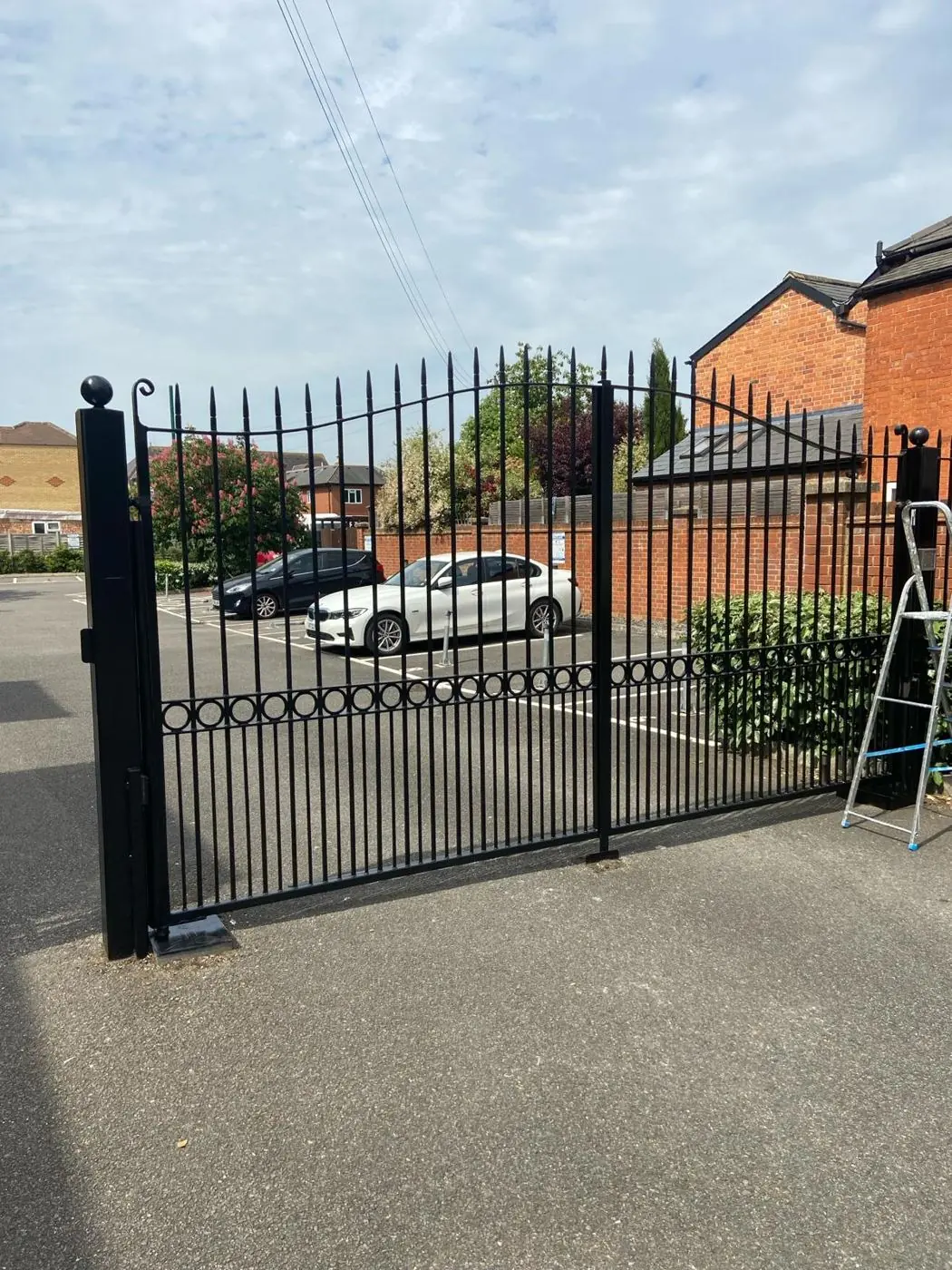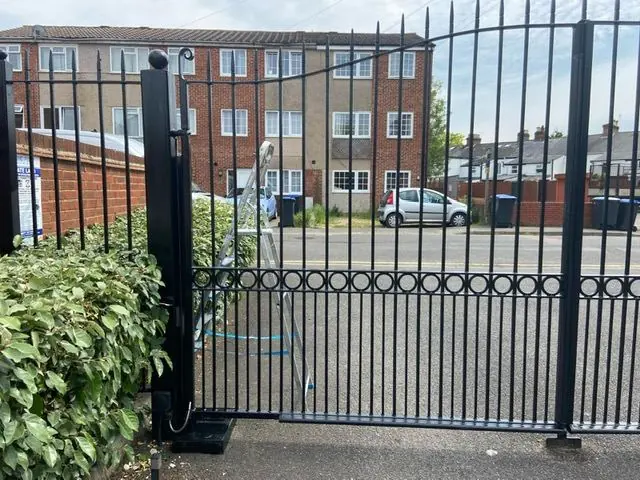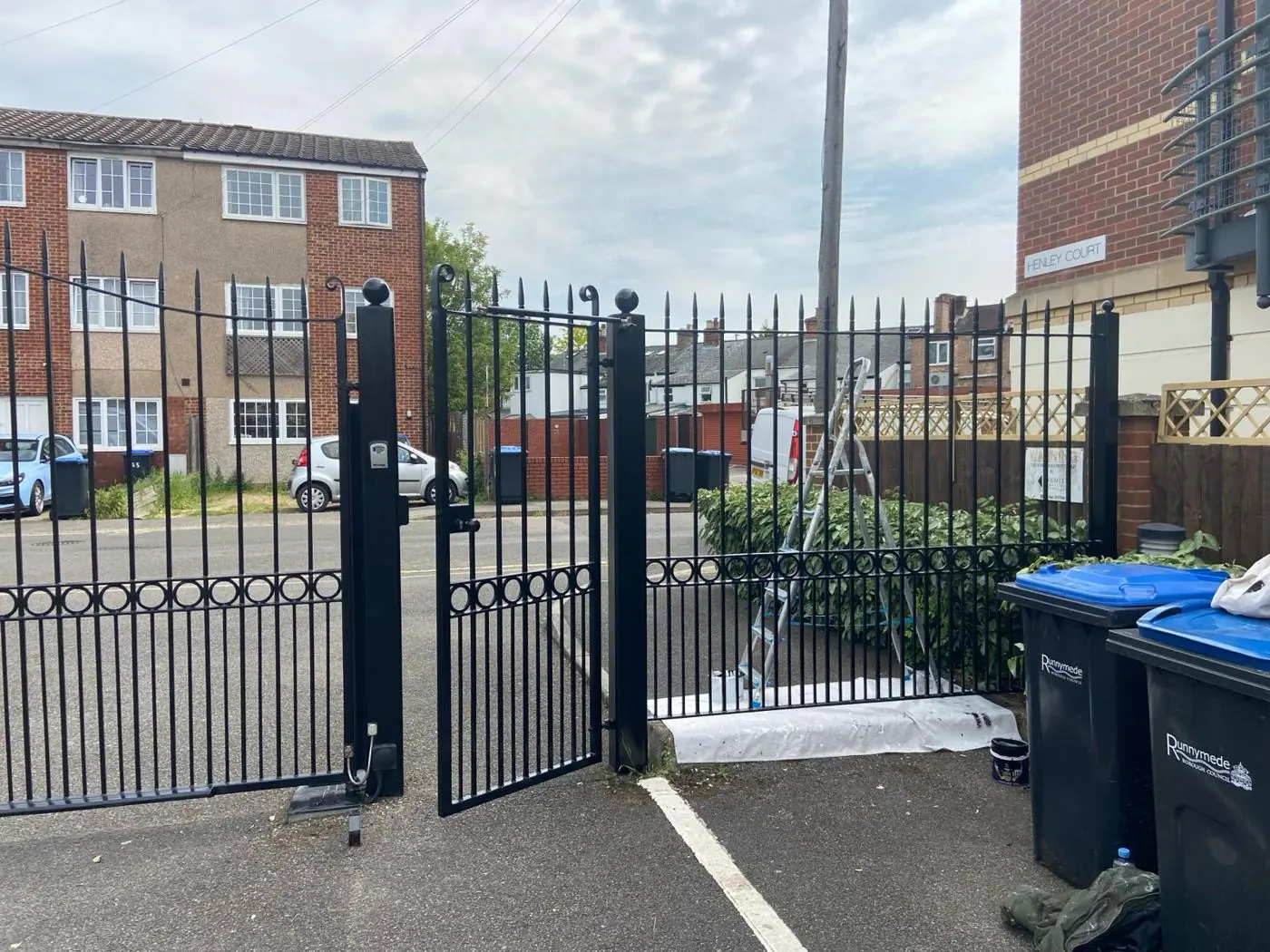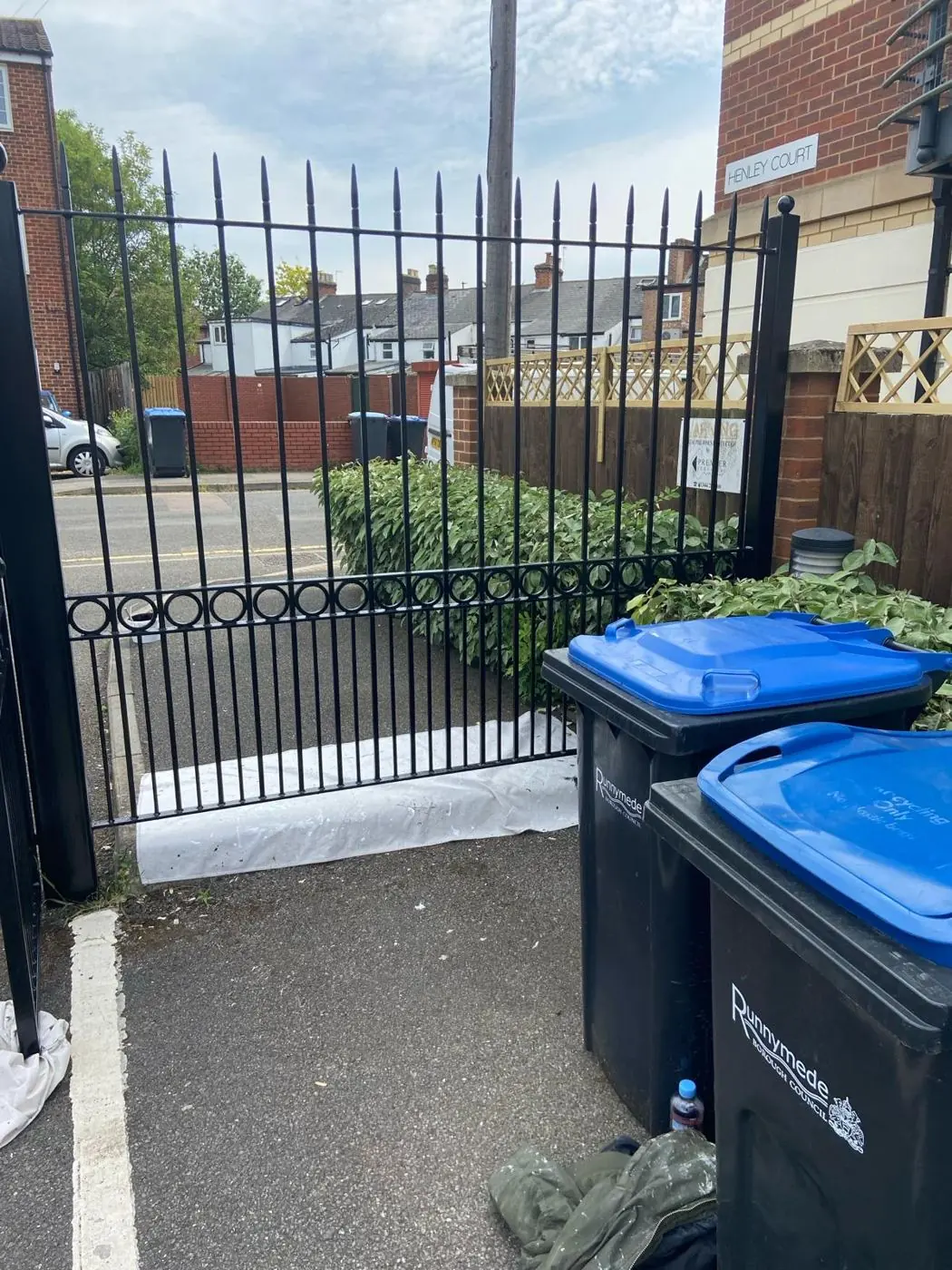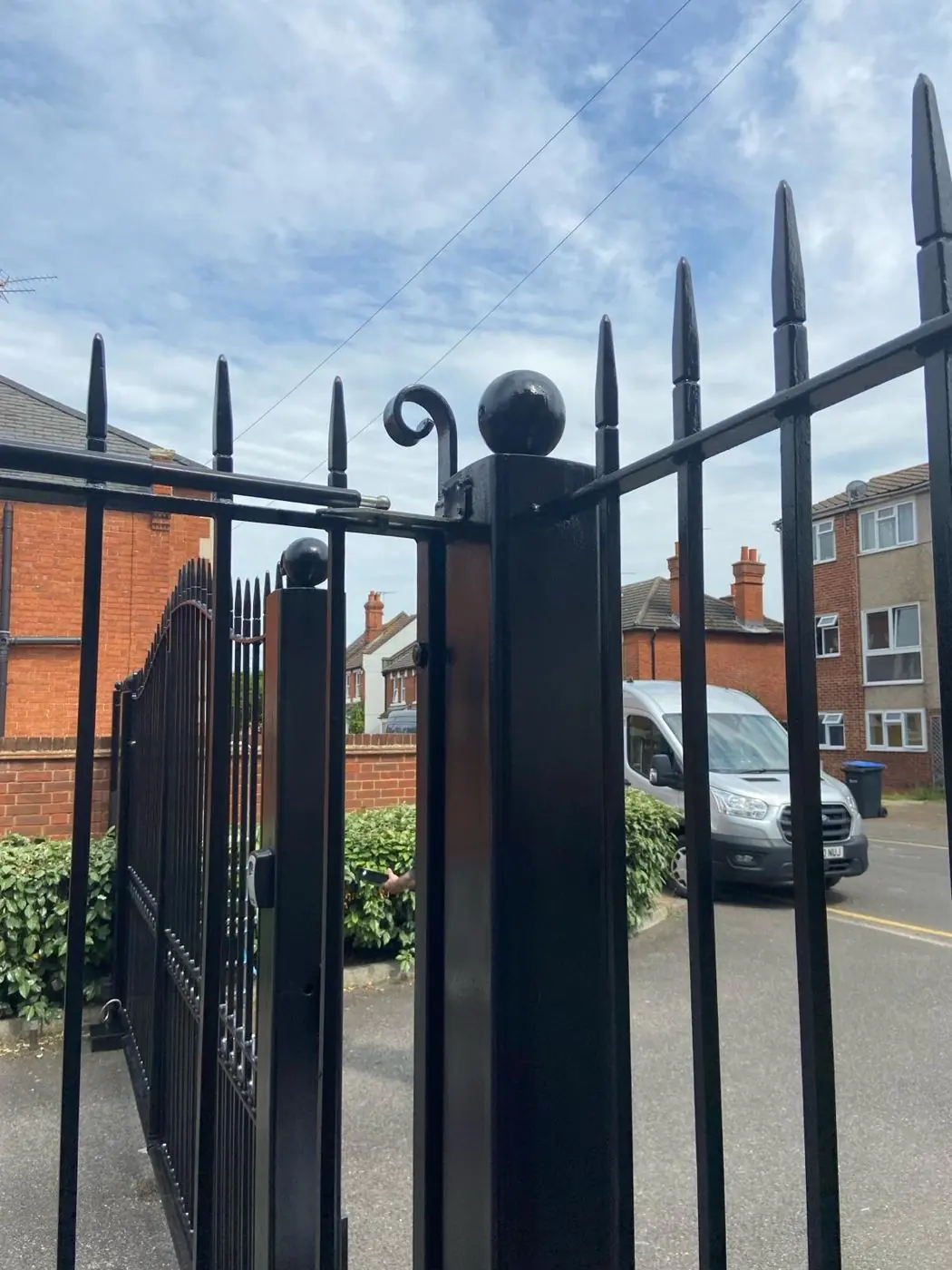
DH Painter & Decorator paints metal gates and railings in Paulerspury, a village about 9.8 miles south of Northampton in NN12. Old cast iron on period houses is wire-brushed back to sound metal by hand and primed with compatible products, not blasted.
The Chain Gate and Paulerspury’s estate ironwork
The most notable ironwork in the parish is the Chain Gate on the A5, the old Watling Street. It was built in 1822-3 by John Raffield for the third Earl Pomfret as the main entrance to the Easton Neston park, and it is listed Grade I. Its cast-iron gates, railings and chain standards sit between limestone ashlar piers and lodges. Domestic gates and railings on the village’s period houses are much smaller, but old cast iron on a cottage or farmhouse needs the same careful approach.
Why old cast iron isn’t blasted
Heritage cast iron is brittle compared with modern steel, and decorative castings carry fine detail that shot or grit blasting can wear away. Old railings may also hold many coats of paint, some of them lead-based. So on period ironwork the preparation is done by hand:
- Loose and flaking paint scraped off with hand tools.
- Rust wire-brushed back to firm metal, paying close attention to joints, finials and where bars enter stone or a plinth.
- Bare areas spot-primed the same day with a primer suited to the existing coatings.
- Undercoat and a gloss or satin topcoat built up to full thickness, so the edges and castings are fully covered.
Where old paint may contain lead, we use wet sanding and dust control rather than dry power sanding.
Where iron meets limestone
In a limestone village, period railings are usually set into stone copings or plinths, and that joint is where trouble starts. Rust expands as it forms, and a corroding bar can crack the stone it’s leaded into. While preparing the ironwork, we look at those fixings and point out any that are lifting or splitting the stone. Paint protects the bar, but a cracked plinth needs a stonemason.
We also keep paint off the stone. On a house like the Hunt House, with limestone ashlar and ironstone dressings, iron paint smeared onto the stone is very hard to clean off without marking it.
Listed houses, farm gates and colour
Paulerspury has 23 listed entries, and gates and railings attached to a listed building can be part of the listing. Repainting in the same colour is maintenance. Changing the colour of historic railings may need listed building consent from West Northamptonshire Council. Black is the usual choice for period railings, though some estate ironwork was originally painted in other colours, and the council can advise on that.
Not every metal gate in the parish is historic. Farmhouses at Heathencote and around the ends may have galvanised or mild steel field gates and newer driveway gates. Galvanised steel needs a specialist primer before paint will stick, and mild steel gates need rust treated and an anti-corrosive primer. We’ll tell you which type you have at the visit.
Arranging a visit
Dean prices ironwork after seeing it, because the time depends on how much rust there is, how ornate the castings are, and access along lanes such as Lower Street or Scriveners Lane. A plain run of railings and a detailed cast gate on a stone plinth are very different jobs. Gates that still swing also need their hinges and latch checked, because a gate that drags on the ground will scrape new paint off its bottom rail within weeks. We’ll point that out before painting, so any adjustment can be made first. The main metal gate and railing painting page explains the full process, and the Paulerspury page lists other work in the village.
Last updated by Dean, DH Painter & Decorator.