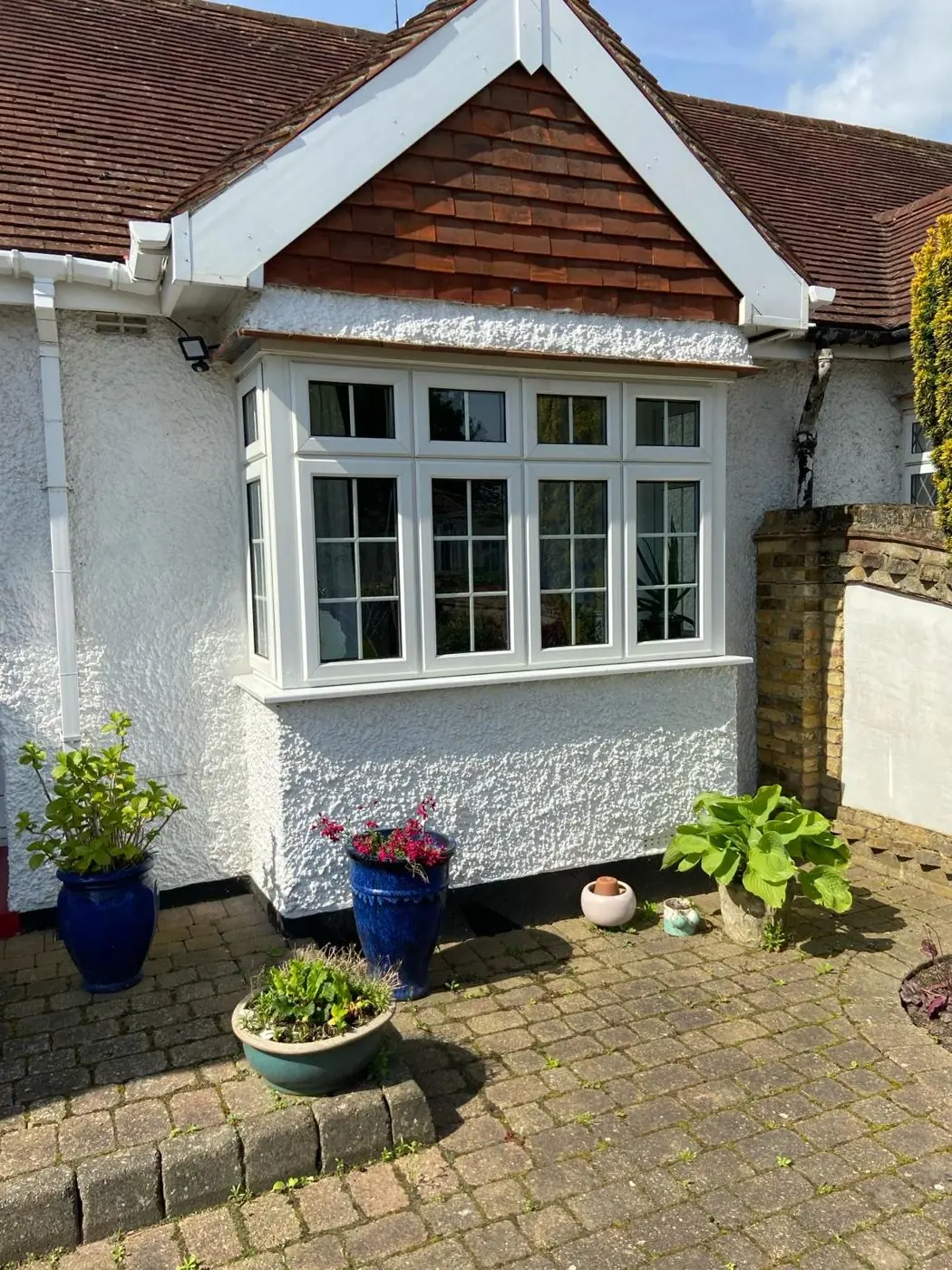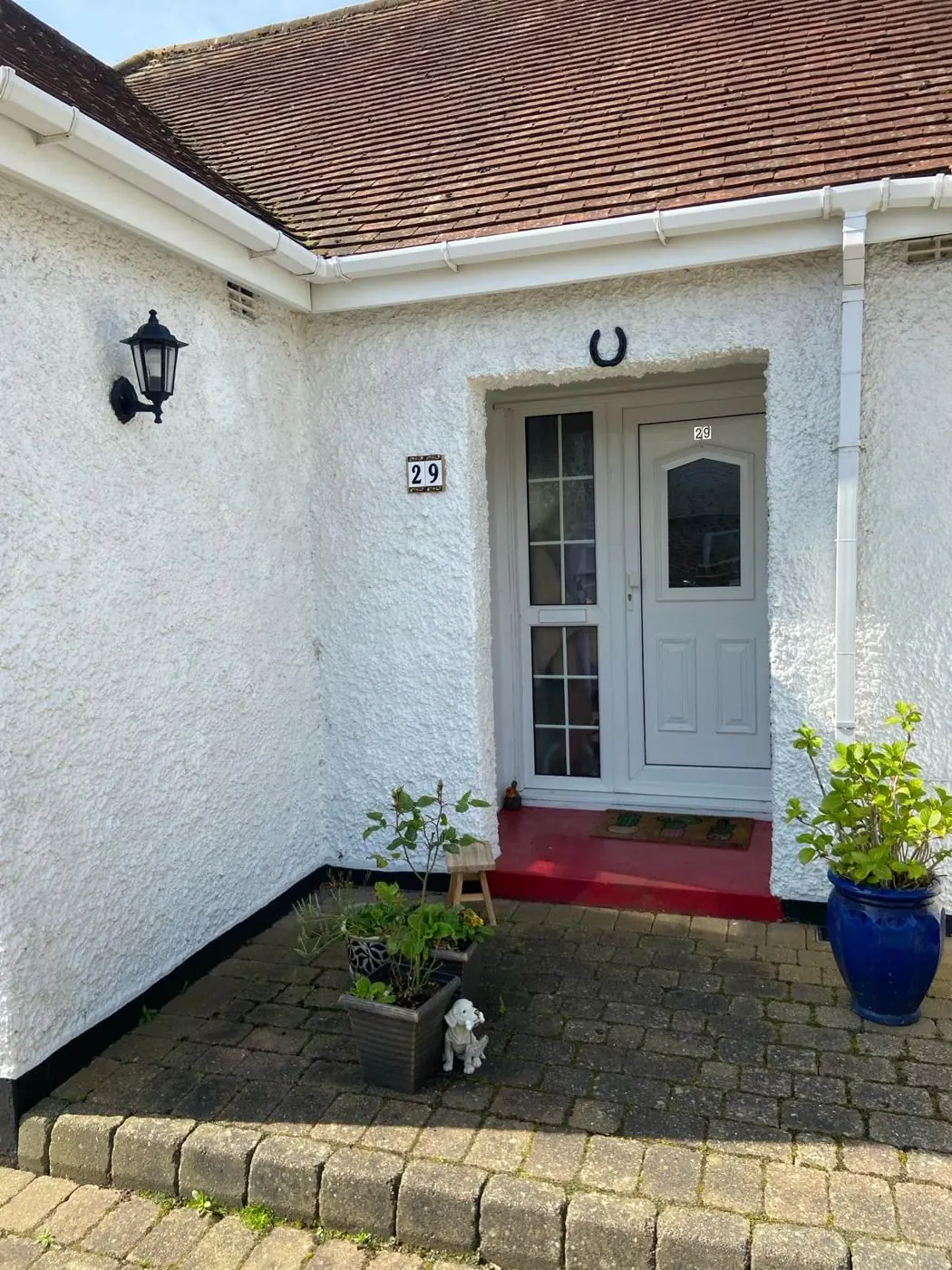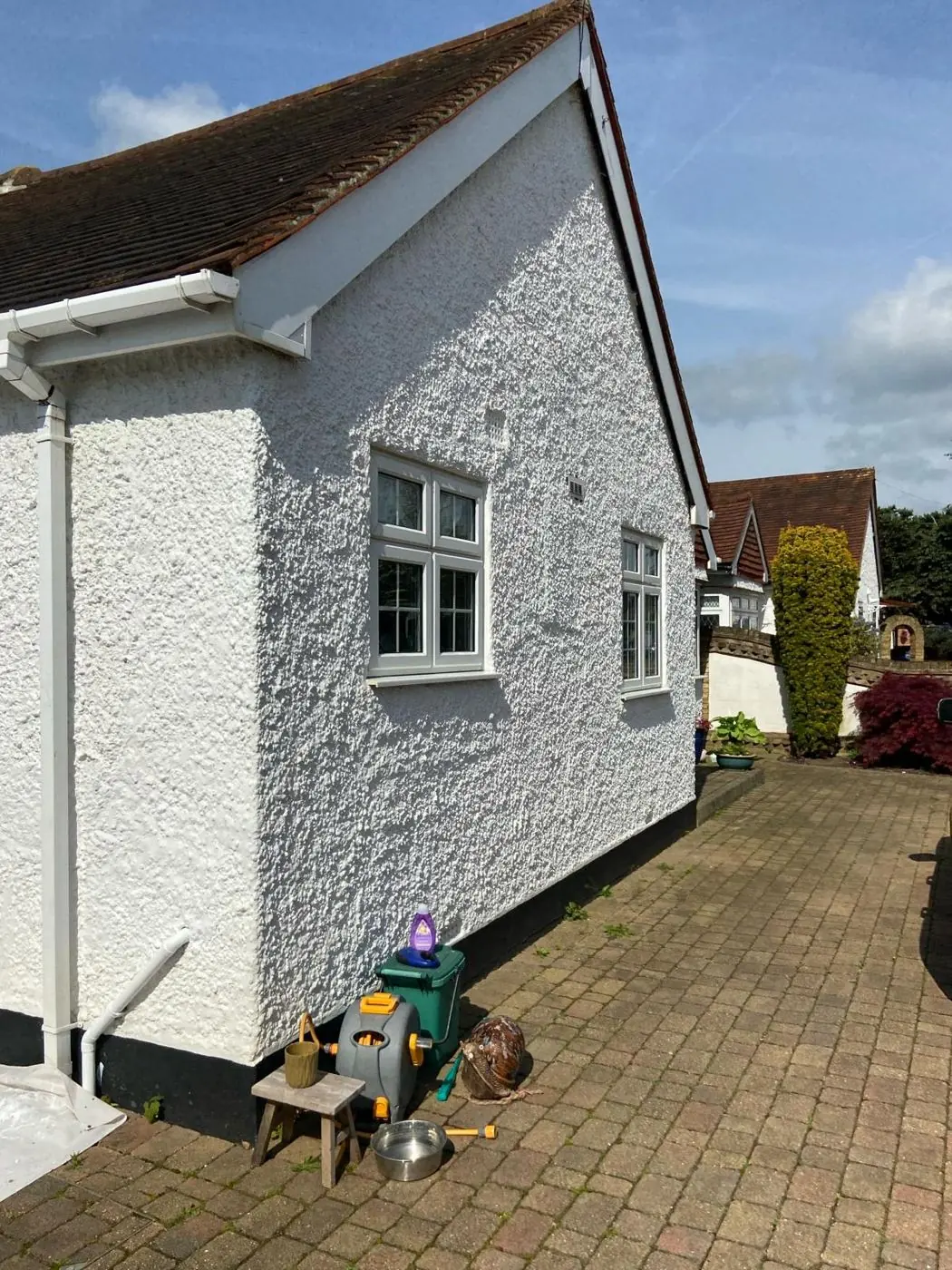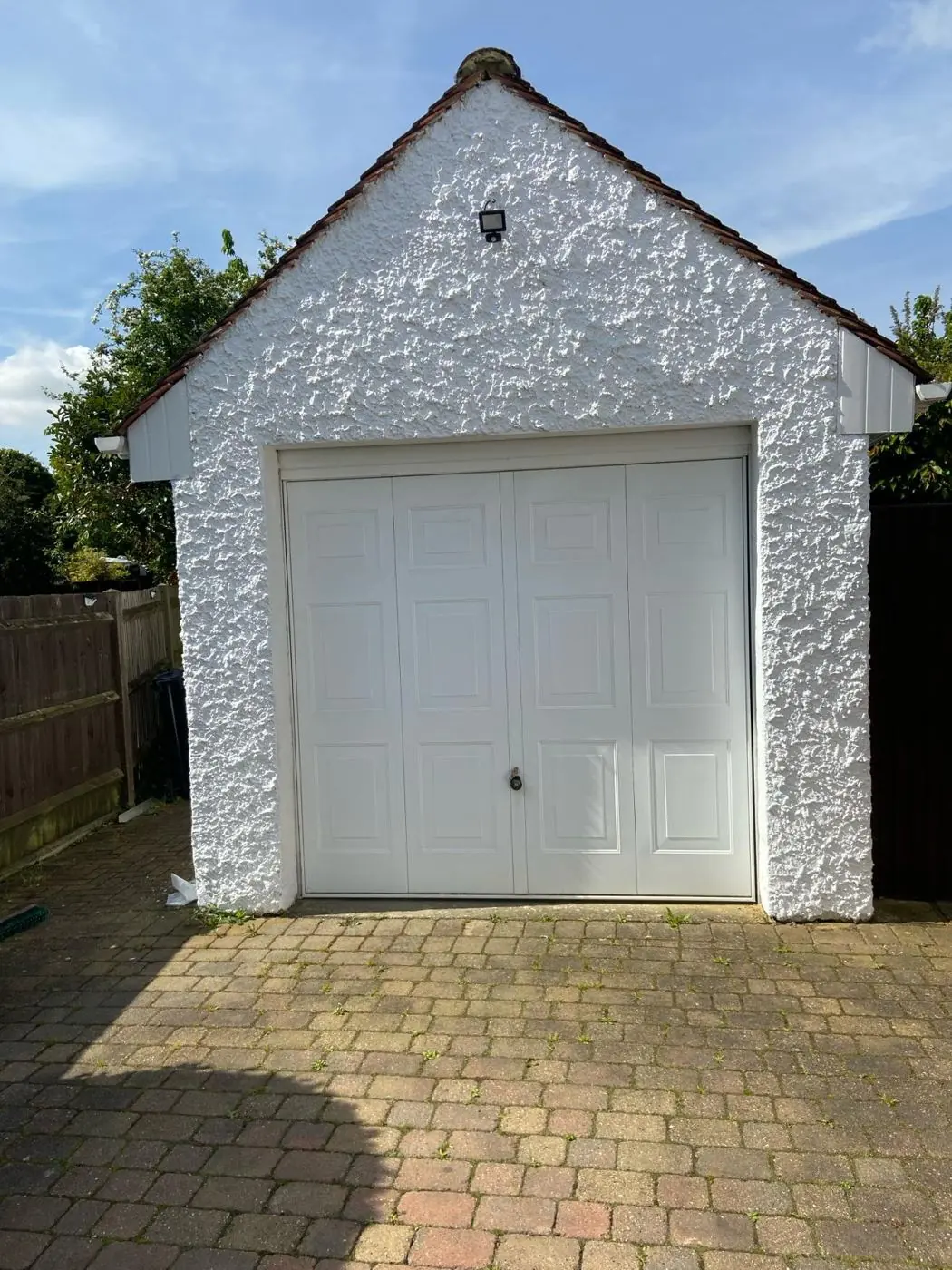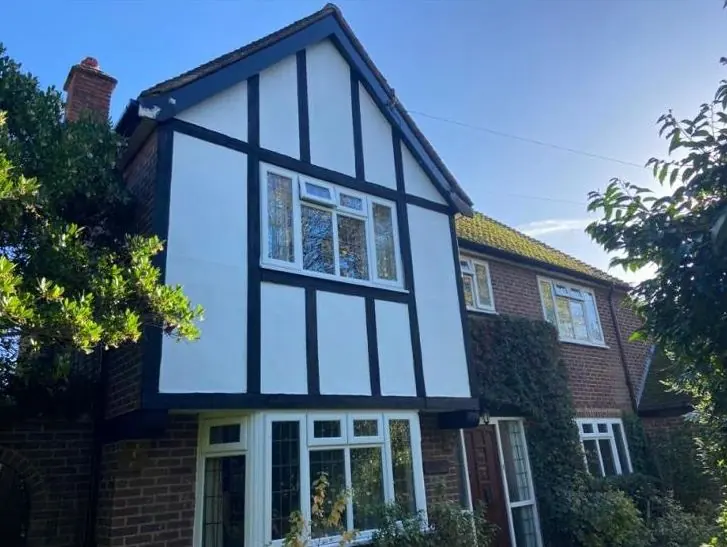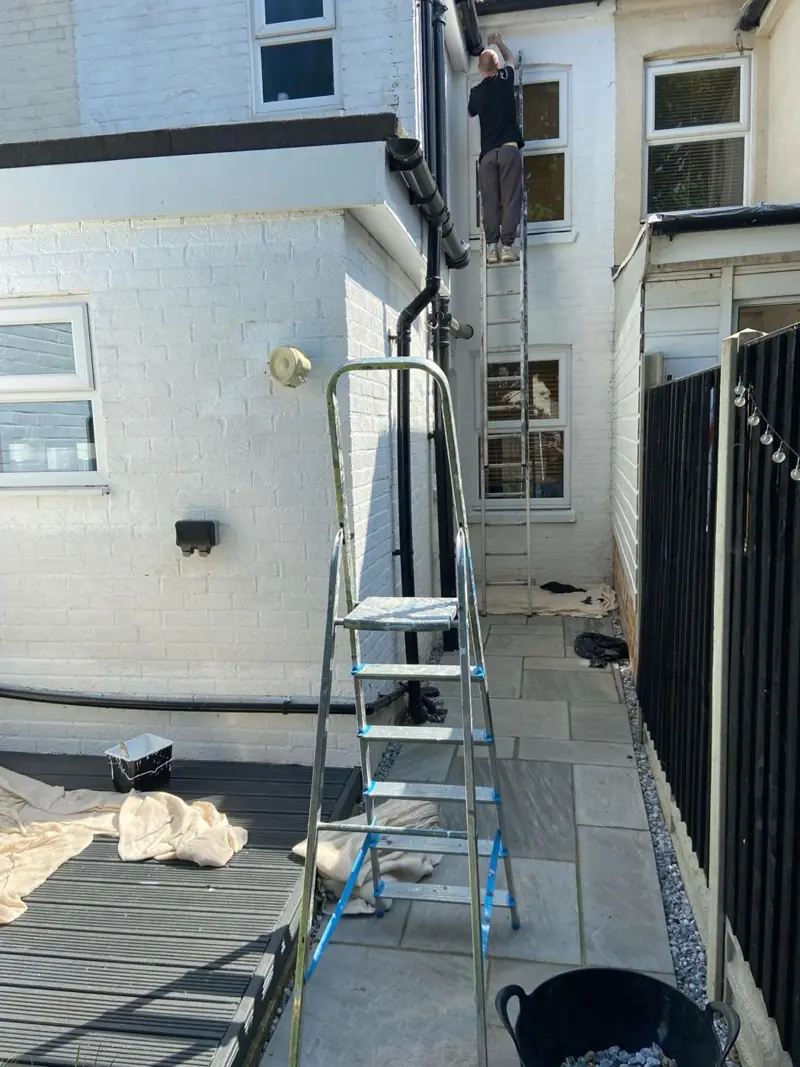
We paint fascias, soffits, bargeboards and gutters in Hanslope, about 8.9 miles south of Northampton in the MK19 district. Much of the demand is on the 1960s estates, where original timber rooflines have now faced around sixty years of weather on an exposed ridge.
Sixty years of weather on Western Drive, St James Close and Eastfield Drive
In the 1960s the Hesketh estate sold land bordering the old village, and the estates around Western Drive, St James Close and Eastfield Drive were built on it. They are buff brick under dark cement tile roofs, and the timber at the eaves is now around sixty years old. Boards of that age have usually been painted many times, and by now some have had water sitting behind failed paint for years.
On these houses we begin with the timber, not the tin. Every fascia and bargeboard is probed, with extra care at board ends, joints and the corners behind gutter outlets, where water collects. Small soft areas can be cut out and filled with a resin repair. Long runs of rotten board are a joiner’s job, and we will tell you honestly if a section is past painting rather than coat over it. Sound boards are scraped, sanded to feather the edges of old layers, knotted, spot-primed, undercoated and finished.
What the ridge does to a roofline
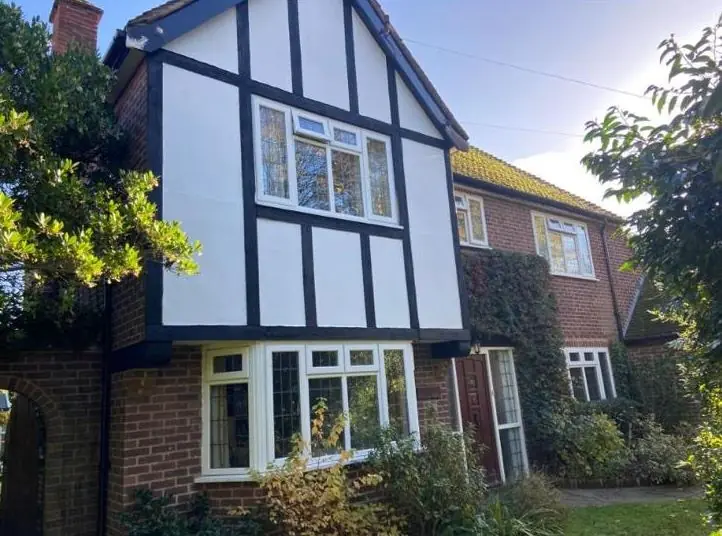
Hanslope stands on high ground at about 112 metres, with the Tove valley open to the west. Fascias and bargeboards are the highest painted timber on a house and the most exposed, so on the westerly side of the village they dry out and crack sooner than they would in a sheltered valley. Gable bargeboards facing that way are often the first part of the house to show bare wood.
- We look along each run from the ground and from the ladder, because splits and lifted paint on the top edge are easy to miss from below.
- Gutters, brackets and downpipes are checked for leaks, since an overflowing joint will strip new paint from the board behind it within a season.
- On the most exposed elevations we allow extra coats on end grain and on the bottom edge of the board.
Older houses with thatch, slate and clay tile
Roofs in the historic core are a mix of clay tile, slate and, on a few buildings such as Horseshoe Cottages on Market Square, thatch. Not every old house has a painted eaves board at all, but where one has, the access is different. Under a thatch we cannot lean ladders into the eaves, so we use stand-offs or a small tower where the ground allows and keep paint well away from the reed. Older timber on cottages near the trees of the conservation area often carries green growth too, which we wash and treat before preparation starts.
Newer homes and a first repaint
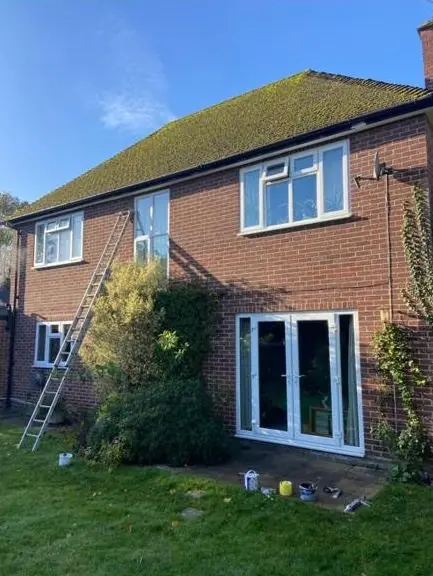
On the closes built between the 1970s and 2000s, such as Carriers Close, Kitelee Close, Saxon Close and Faith Terrace on Castlethorpe Road, the houses are mostly red brick under tiled roofs (as at Carriers Close and Faith Terrace), and those rooflines are now roughly twenty to fifty years old themselves. They usually need less repair than the 1960s houses but benefit from a full sand and two coats before the paint has broken through to bare wood. On the large recent estates such as Hayfield and Hanslope Fields, the question is first what the boards are made of. Painted timber is prepared as above. Factory-finished boards can sometimes be painted with the right primer, and we will say whether it is worth doing on your house. Our main fascia and soffit painting service page explains the full preparation sequence, and the painter and decorator cost guide covers what affects the price of roofline work. Other services in the village are listed on our Hanslope area page.
Last updated by Dean, DH Painter & Decorator.