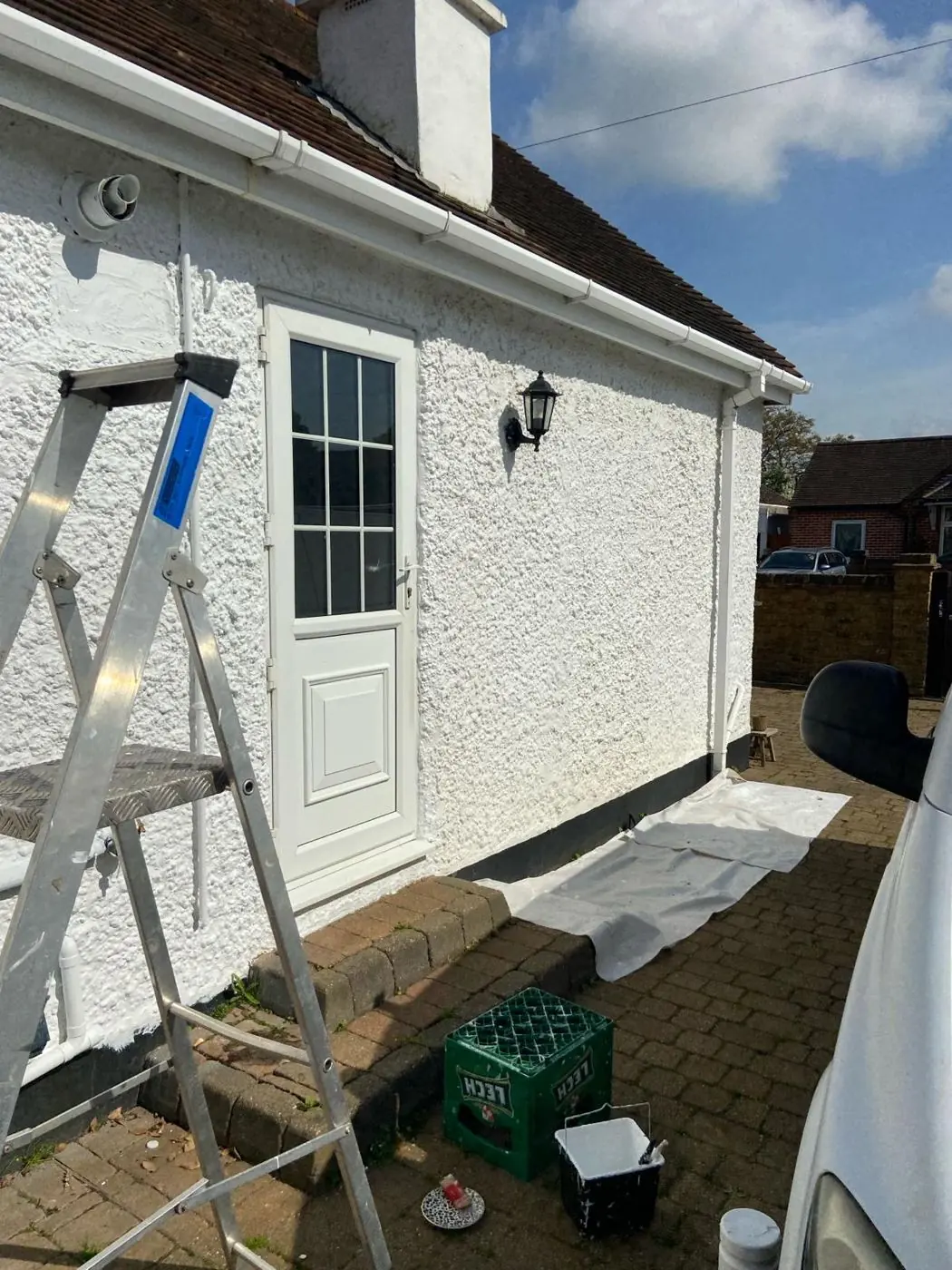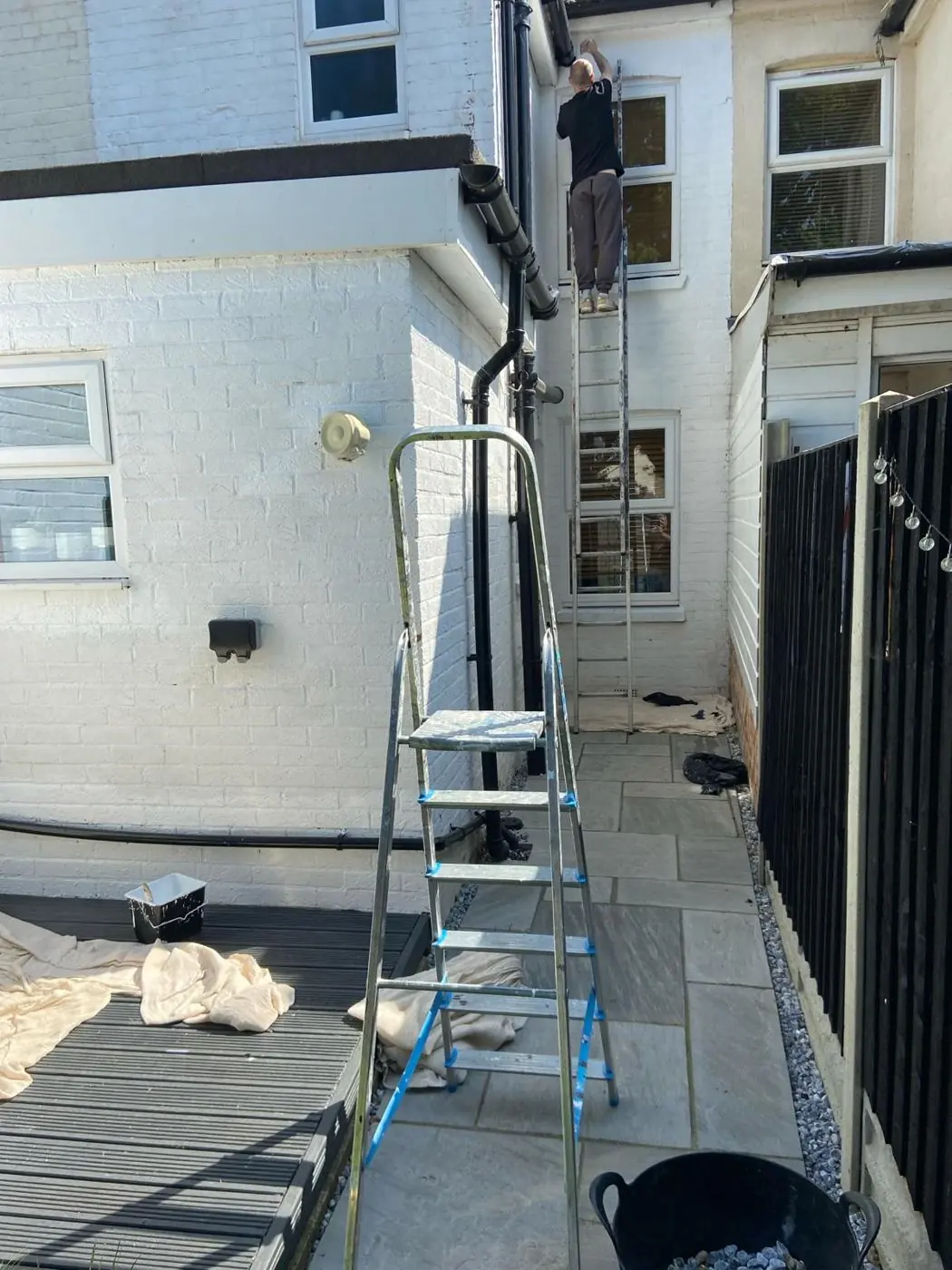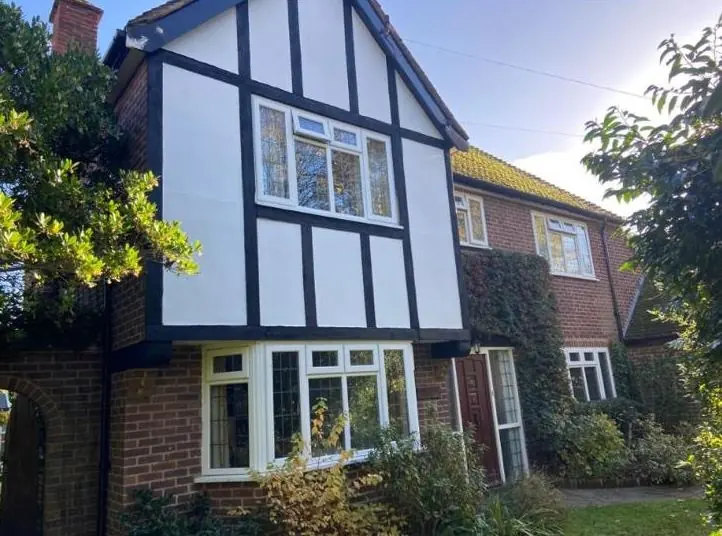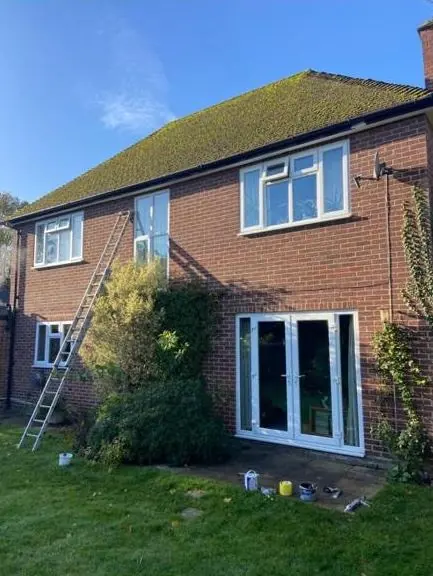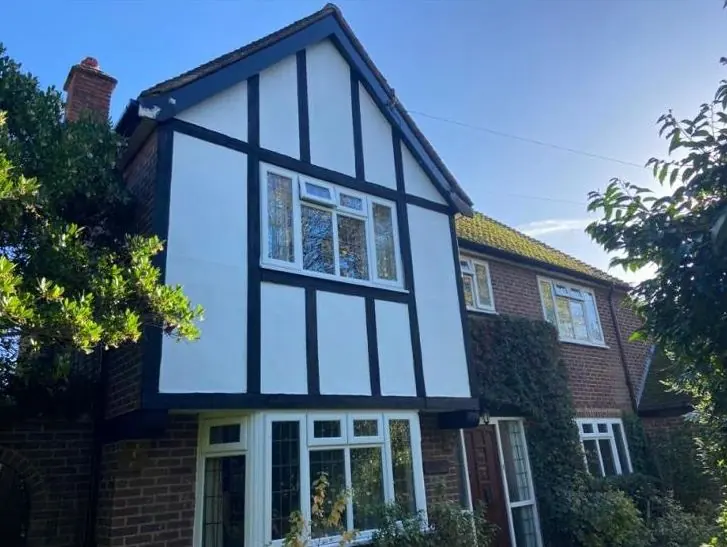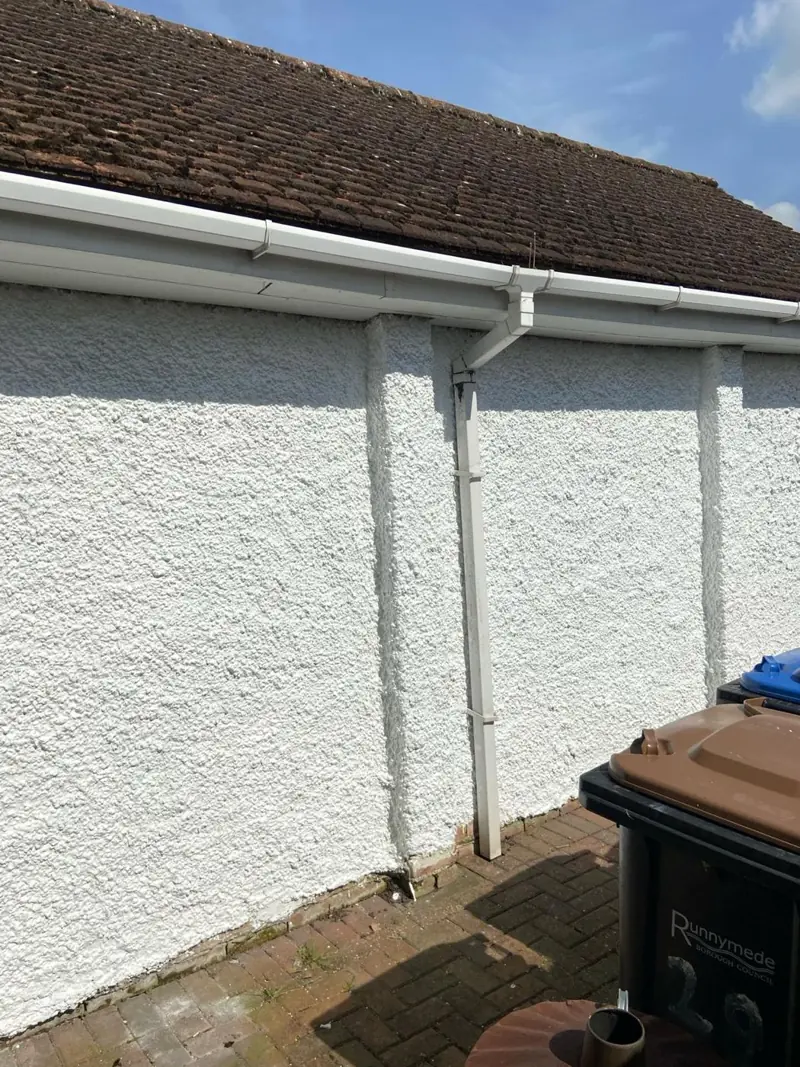
We paint render, stone and brick walls across Hanslope, which lies on the Buckinghamshire side of the county border roughly 8.9 miles south of Northampton. Dean works out what each wall is made of first, because the soft yellow limestone of the old village needs a breathable finish that modern masonry paint does not always give.
The stone Hanslope is built from
The older houses, farmhouses and inns of Hanslope are built mostly of yellow oolitic limestone from the Great Oolite, laid both as rough rubble and as dressed blocks. Maltings Farmhouse, dated 1624, the row of stone cottages by the village green, Stafford House at the foot of Church End lane and the Gold Street Gospel Hall of 1809 all belong to this tradition. Some of that stone has been painted over the years and some has been left bare.
Oolitic limestone is fairly soft and porous. It takes in moisture and needs to let it out again. Seal it under an acrylic masonry paint and the water that gets in through joints, ground or rain has nowhere to go, so it pushes at the face of the stone and the paint blisters, then the stone itself starts to flake. Where stone is already painted, we look at limewash or a mineral silicate paint instead. Where it has never been painted, our usual advice is to leave it that way and deal with any repointing or cleaning rather than coat it.
Two materials on one wall
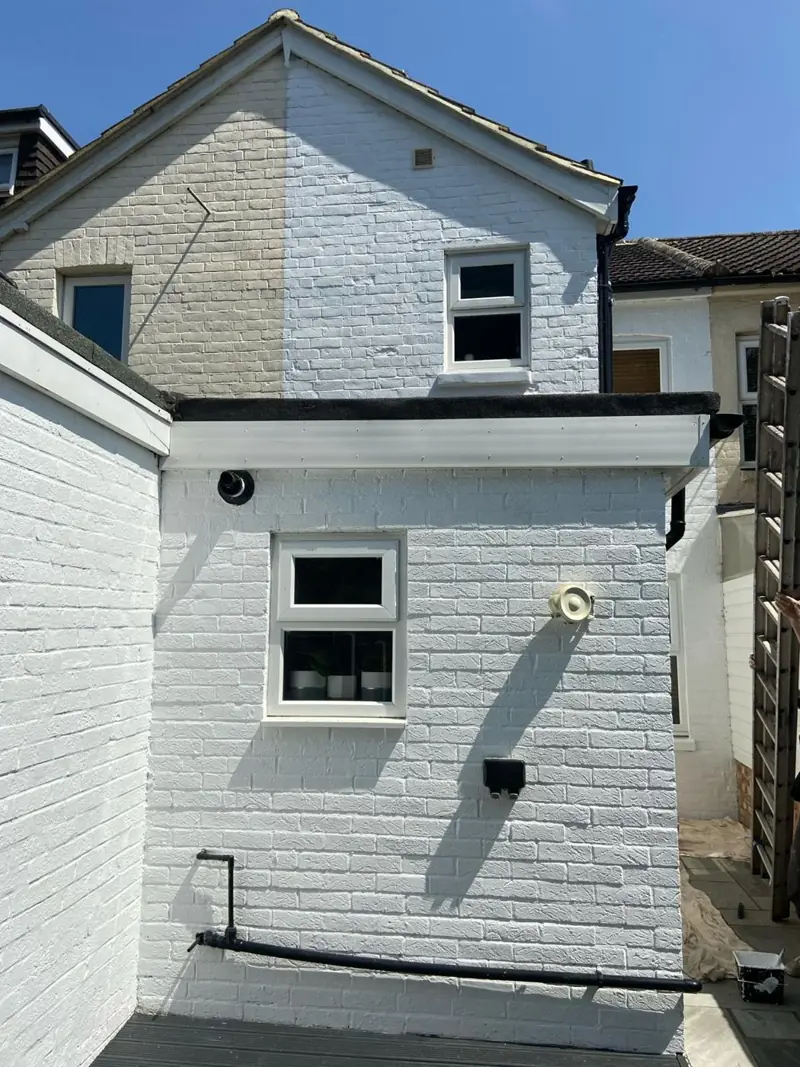
Neighbourhood plan Policy HAN3 lists full or part rendered frontages among the common features of the village, alongside red brick and Jurassic yellow stone. In practice that means an elevation where a rendered panel sits next to exposed stone, or a brick front rendered on one storey only. Each part needs its own approach:
| Surface | What we check | Usual finish |
|---|---|---|
| Older lime render | Hollow patches, texture, earlier coatings | Limewash or mineral paint |
| Cement render | Hairline and settlement cracks, chalking | Breathable masonry paint |
| Painted limestone | Spalling faces, type of old paint | Limewash or silicate paint |
| Painted red or buff brick | Failed patches, salts, pointing | Masonry paint matched to existing |
Repairs come before paint. Where a patch of render has been lost, the new render has to match the surrounding texture, whether smooth, floated or rough, or the repair will show through every coat. We cut the line between render and stone neatly so the painted area finishes on a clean edge and the stone beside it stays clean.
Damp walls under trees and on clay
The parish geology is Great Oolite limestone over Upper Lias clays, and residents have raised drainage and flooding as concerns. Around the old core, mature trees and grassed verges keep some walls shaded and slow to dry. Both point the same way: before painting a masonry wall in Hanslope, we look at the base of it for rising soil levels, blocked drains, splashback and green growth. Paint will not fix a wall that stays wet, so we point those problems out first. Growth is killed with a fungicidal wash and brushed off once it has worked.
Listed fronts and the conservation area
With around 31 listed buildings and a conservation area designated in 1979 and updated in 2023, a lot of Hanslope’s masonry is protected in some way. A switch from one paint type to another, or a new colour on a historic frontage, may need checking with Milton Keynes City Council. Removing an unsuitable modern coating from listed stone is specialist work that should be agreed with the council first, and we will say so plainly if that is what a wall needs.
Our main render and masonry painting service page sets out the full process, and our guide to painting render and roughcast covers cement render in more depth. For the other work we cover in the village, see the Hanslope page.
Last updated by Dean, DH Painter & Decorator.