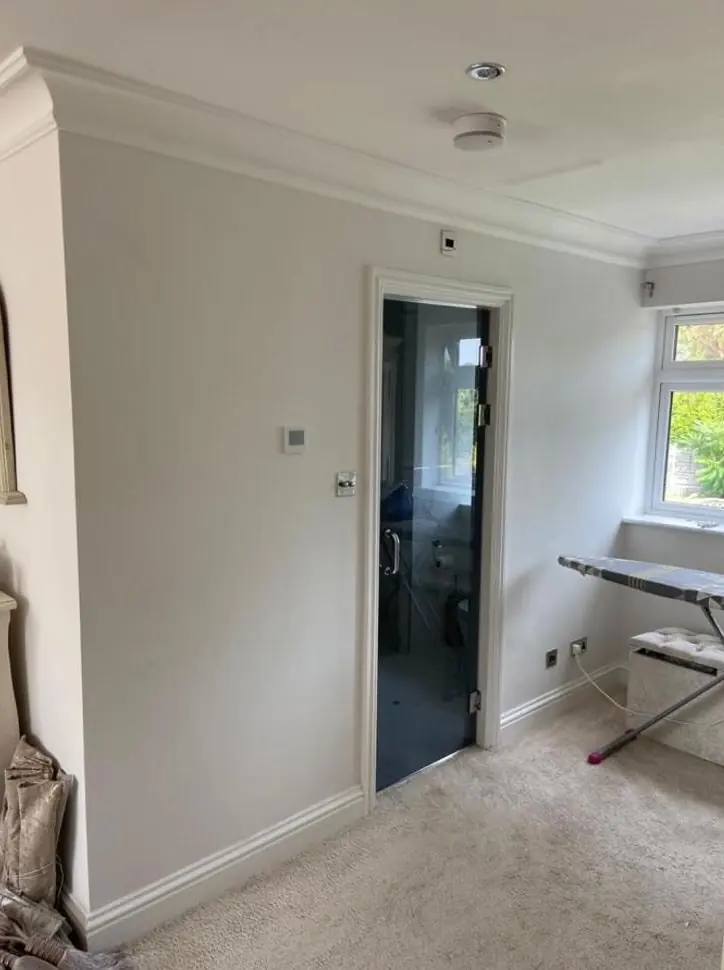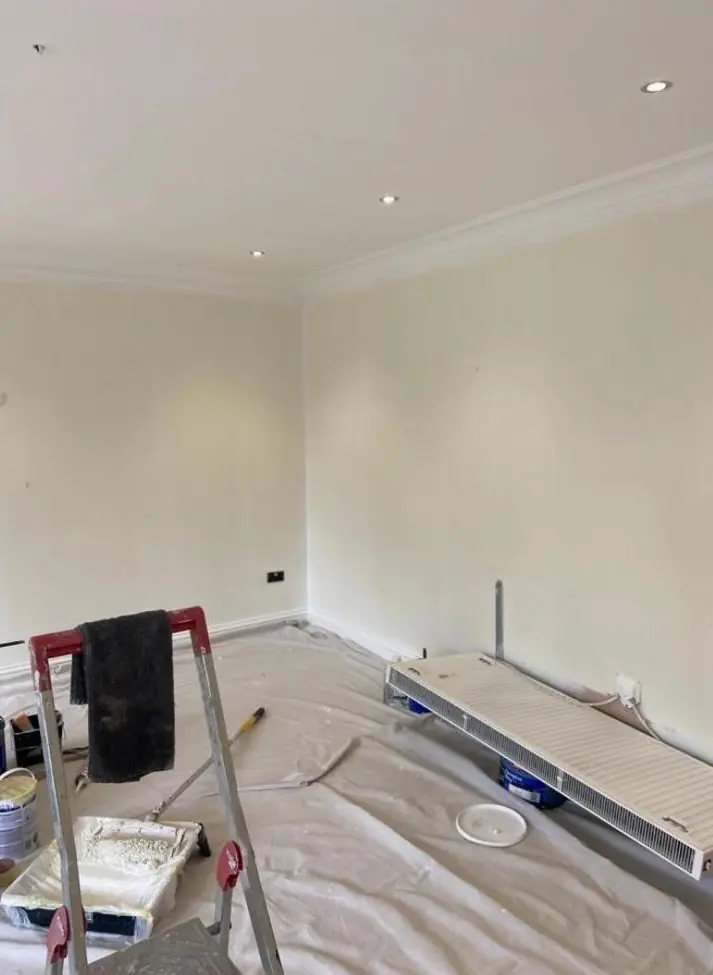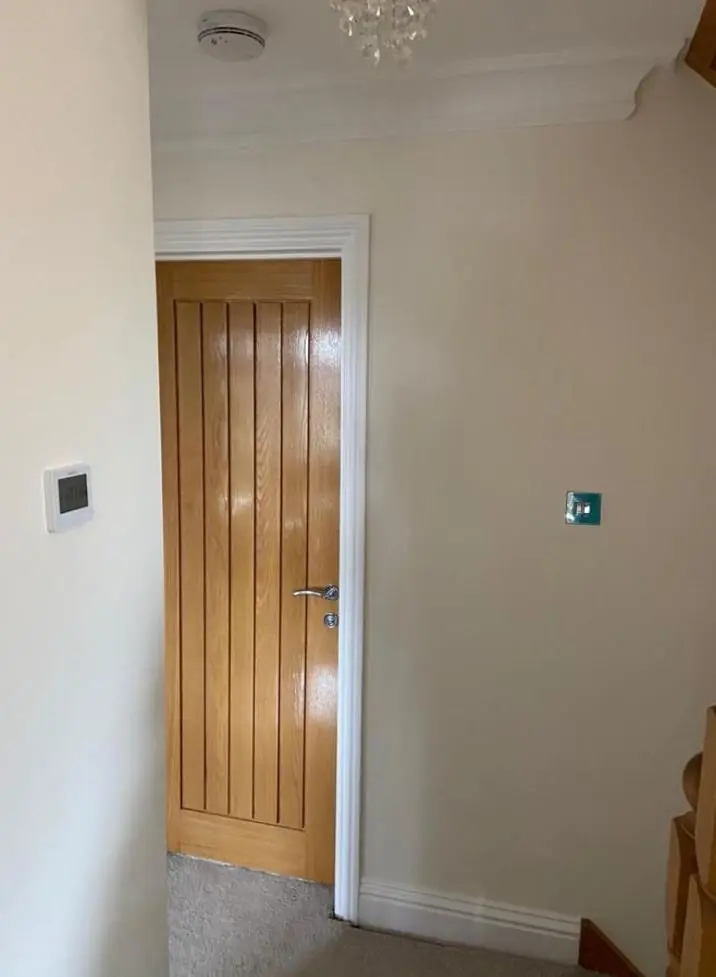
We provide decorative paint finishes in Hanslope, the MK19 village about 8.9 miles south of Northampton. Dean has over 30 years in the trade and adapts the work to the building, from limewash on old limestone to painted panelling in the village's newest houses.
Limewash on Hanslope’s limestone
Much of the old village is built from yellow oolitic limestone, the Great Oolite that underlies the ridge. Some of it is left bare, some is painted, and a few buildings, such as Green Manor on Market Square, are painted stone. Where stone or lime plaster is already coated, limewash is often the most suitable finish. It is applied in several thin coats, soaks into the surface rather than sitting on top as a film, and lets the wall breathe. It also gives the soft, slightly uneven depth of colour that old Hanslope buildings have always had.
Limewash behaves differently from modern paint. It goes on almost translucent and dries much lighter, so the true colour only shows after the coats are built up. It needs damp, not hot, conditions while curing, and the surface has to be free of acrylic or vinyl paint, which it will not bond to. On the exposed ridge, where wind and sun dry walls quickly, we mist the work and avoid hot afternoons. Inside, limewash and lime-based paints suit solid stone walls in farmhouses of the age of Maltings Farmhouse (1624), and are kinder to them than plastic emulsion.
Picking out period detail in the older houses
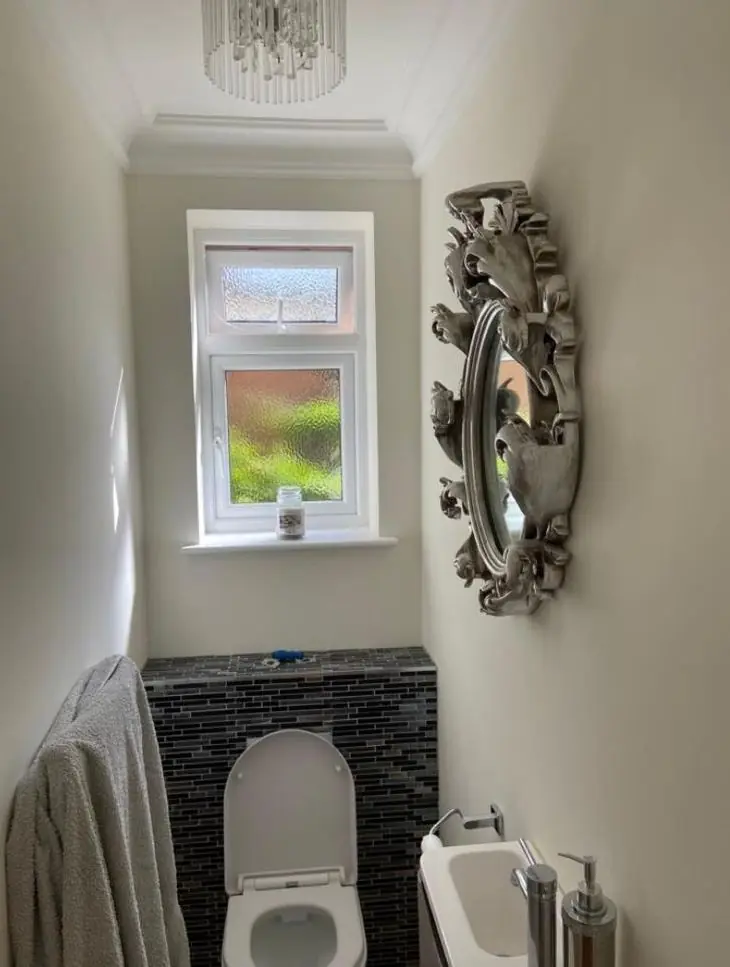
Beyond the 17th-century core, Hanslope has a run of 18th and 19th-century buildings with more formal interiors. Stafford House at the foot of Church End lane was an 18th-century workhouse. Vicarage Court on Park Road was the vicarage before becoming flats in the 1990s, and the Old Vicarage by the village green is 19th-century red brick. Houses of this period often keep cornicing, ceiling roses, panelled doors and fireplace surrounds.
Picking these out takes a steady hand and time. A cornice painted a shade off the ceiling, a dado rail in a contrasting tone, or shutters and panel mouldings finished in an eggshell can bring back a room’s proportions. In a listed interior we work with the existing features rather than adding new ones, and anything that changes the historic fabric should be cleared with Milton Keynes City Council first. The mullioned windows at Manor Farm are the kind of detail that is cut in by brush, never sprayed.
Panelling and feature work in Hanslope’s newest homes
The newer houses at Hayfield, Hanslope Fields, The Wheatfields, Cuckoo Hill and off Long Street Road start with plain rooms and white walls, which suits a different kind of decorative work. Common requests include:
- MDF wall panelling in a hallway or bedroom, filled, caulked and painted so joints and pins disappear
- Two-tone walls split at dado height
- Painted stair spindles or a colour-blocked landing
- A textured or colour-washed effect on a single wall
The preparation is as important as the effect. New plaster needs a proper mist coat, and settling cracks need flexible filler, or the finish will crack along with them.
Where effects are, and are not, worth it
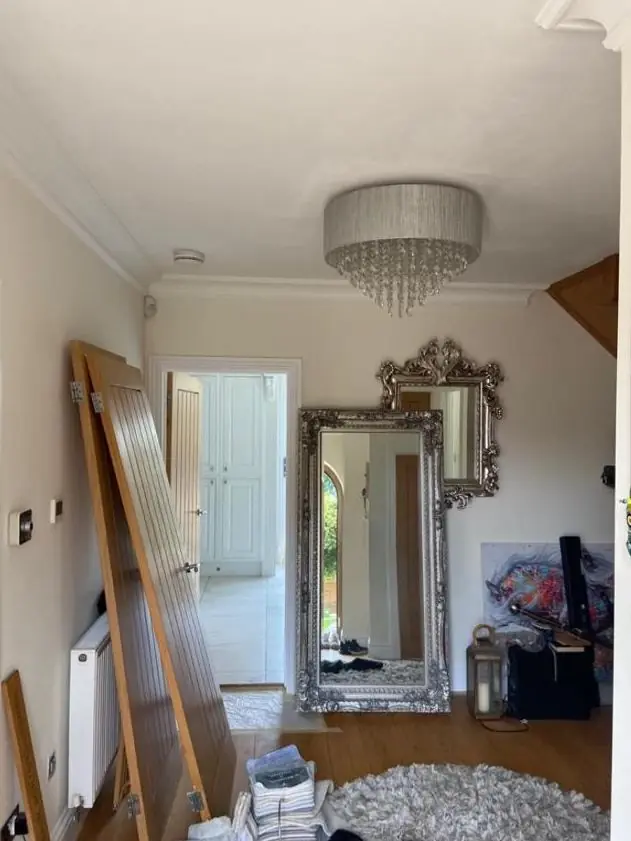
Not every room suits a decorative finish. A low cottage room with small windows can feel smaller under a dark, heavily textured wall, and a busy faux effect can sit badly next to genuine old stone. In those houses honest, breathable finishes usually look better than imitation ones. Dean will tell you plainly where an effect will work and where plain paint is the better choice.
Read more about what we do on the main decorative finishes page, see our other local services on the Hanslope page, or call 07539 779 036 for a quote.
Last updated by Dean, DH Painter & Decorator.