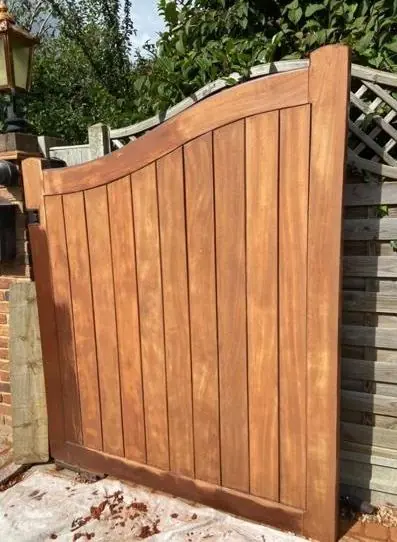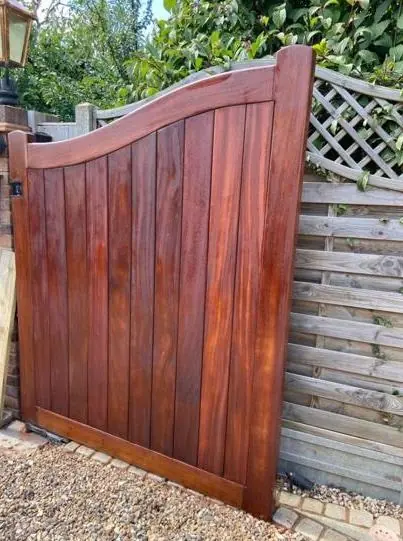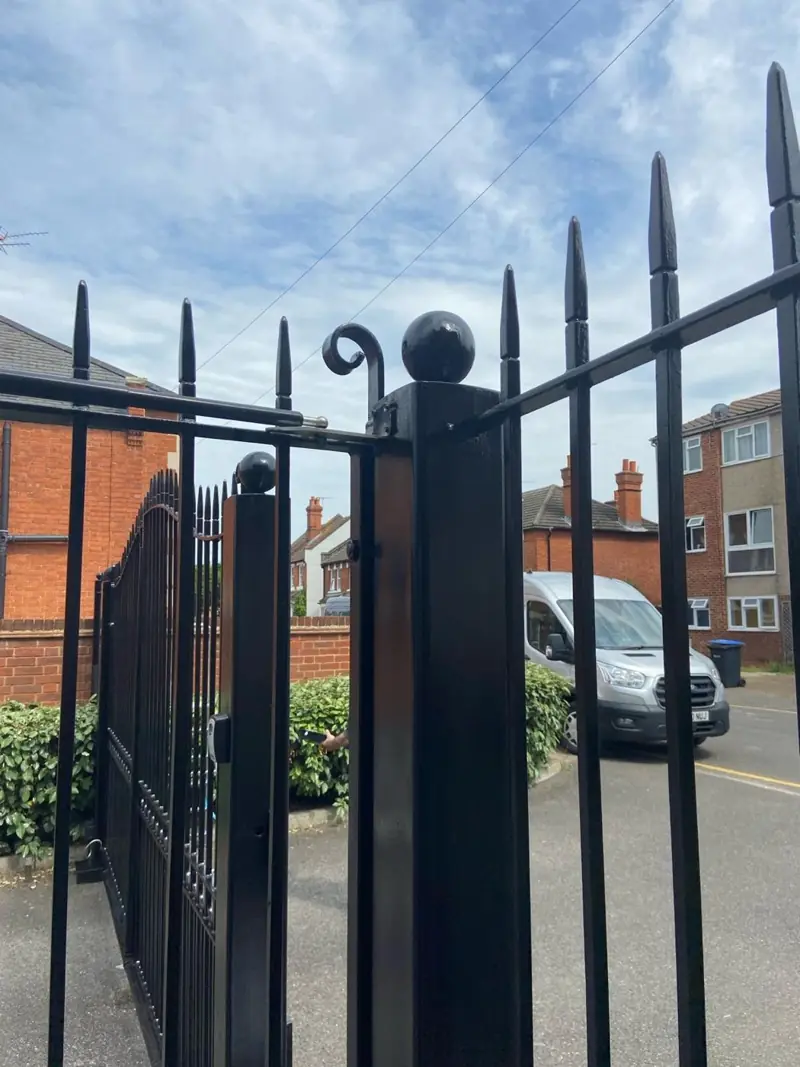
Dean paints metal gates, railings and handrails in Hackleton, about 4.7 miles south-east of Northampton on the B526. Most of the village's metalwork is on homes built since 1939, plus any gates or rails at its school and community buildings, and each piece is de-rusted and primed for its metal before topcoats go on.
Where the ironwork is, and isn’t
Some places around Northampton have rows of Victorian houses with cast-iron railings along the front. Hackleton is different. The listed records for Main Road’s 17th and 18th-century houses, including Hackleton House, the White Hart and the cottages at 43 and 76 Main Road, describe stone, timber windows and doors, but no railings. Many of the old cottages stand on the back edge of the footway, leaving no front area for a railing at all. Hackleton’s metalwork is therefore mostly modern. The metal painting we expect to see here is more everyday:
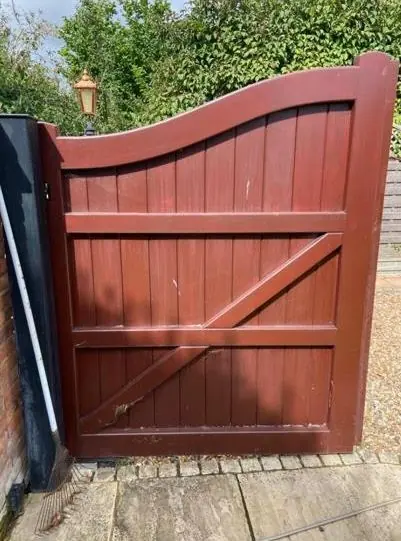
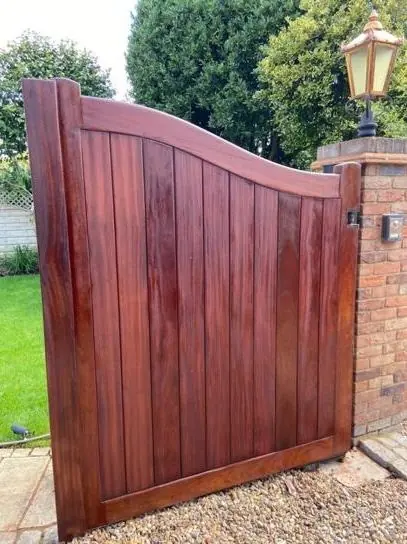
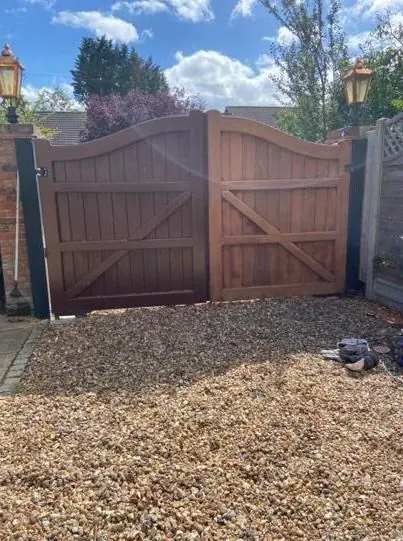
- wrought-style or steel driveway and side gates on the semis and detached houses of the cul-de-sacs
- low front railings and garden-wall infills where owners have added them
- steel handrails beside steps and ramps, including at bungalows
- metal gates, rails or fencing at community buildings, where fitted
Damp air, wet ground and rust
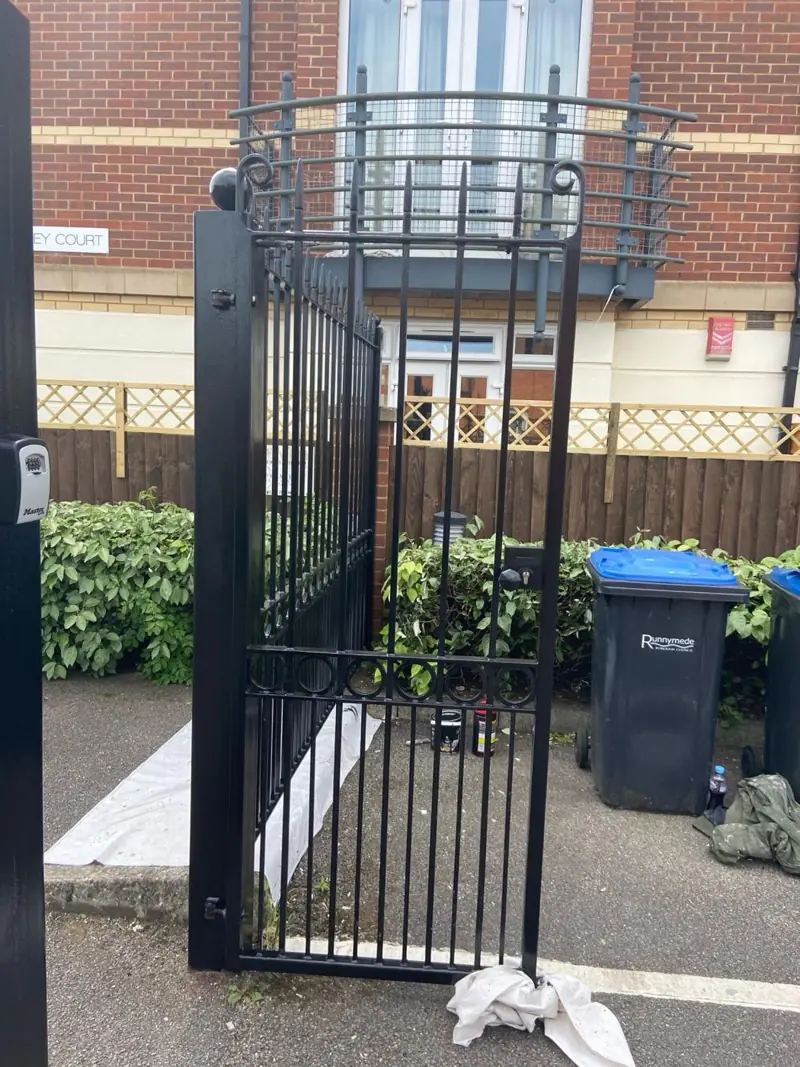
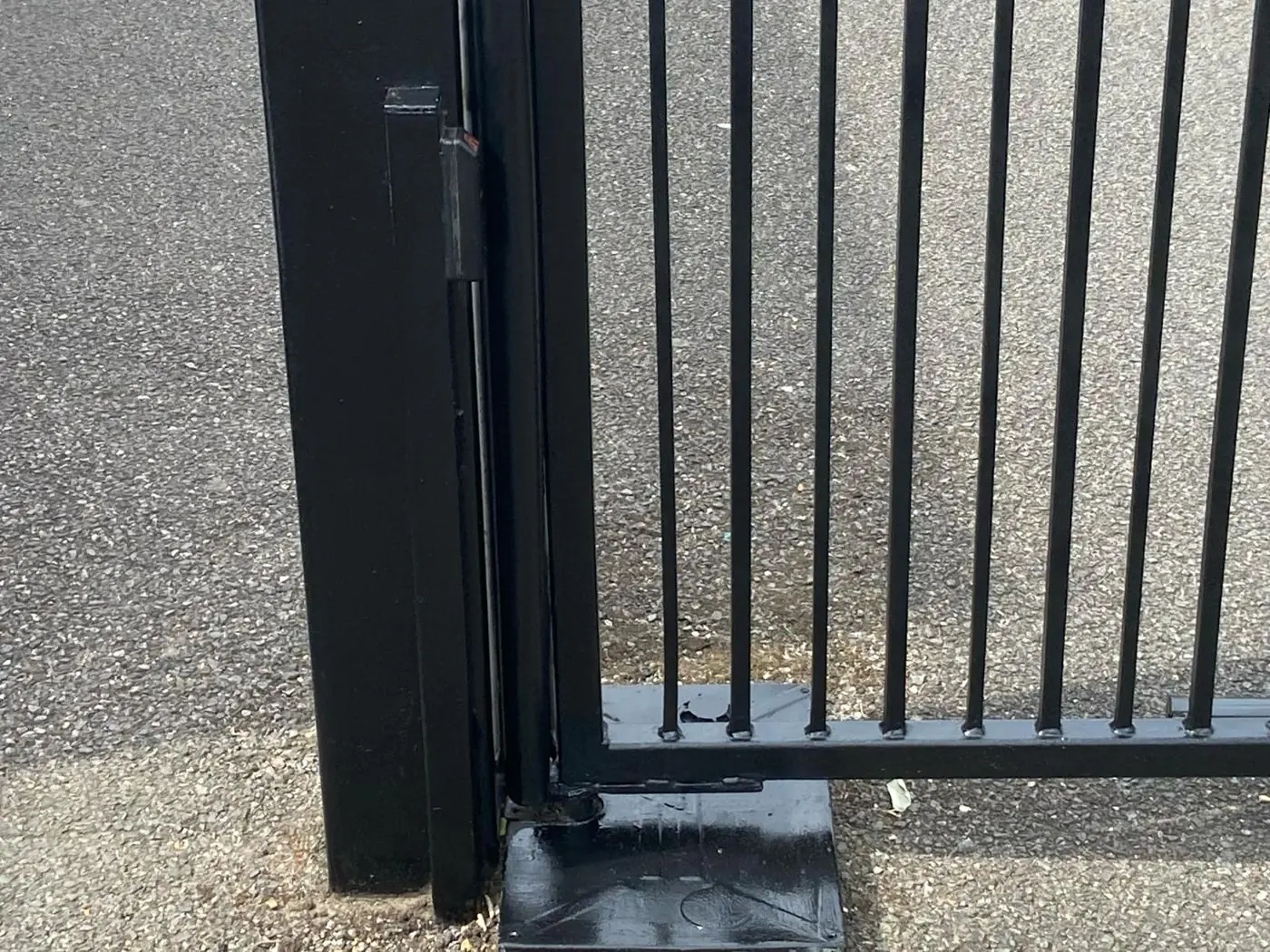
The village sits among open fields, beside brooks in the Upper Nene catchment that are prone to flooding; in early 2020 the fields either side of the B526 flooded. The ground is marl and clay, which stays wet. Metal that stands in or near that ground suffers in the same places every time: the feet of gate posts, the bottom rail of a gate, and the hinge pins and latch keeps where water collects. Rust starts there and creeps up under the paint, so a gate can look sound at eye level and be flaking at the foot.
Our approach is to find all of that first. We wire-brush and scrape back to firm metal, treat any rust that is left with a suitable converter or rust-inhibiting primer, prime bare spots, and then build up the topcoats. Bottom rails and post feet get an extra coat. If a gate post is badly corroded at ground level or a hinge has seized, you will hear from us that it needs a fabricator, because paint cannot fix a structural problem. Galvanised gates need a primer made for galvanised steel, or the paint will peel off in sheets within a season.
Schools, halls and shared sites
Hackleton’s primary school, the village hall on Chapel Lane and the Carey Memorial Baptist Chapel are all in use through the week. If any of them have metal gates, rails or fencing that need repainting, the work has to be planned around term times, hall bookings and services, with wet paint signed and the area kept clear. We can work in short sections so an entrance is never out of use for long, and we plan the drying times around when people will be passing through.
Picking a finish
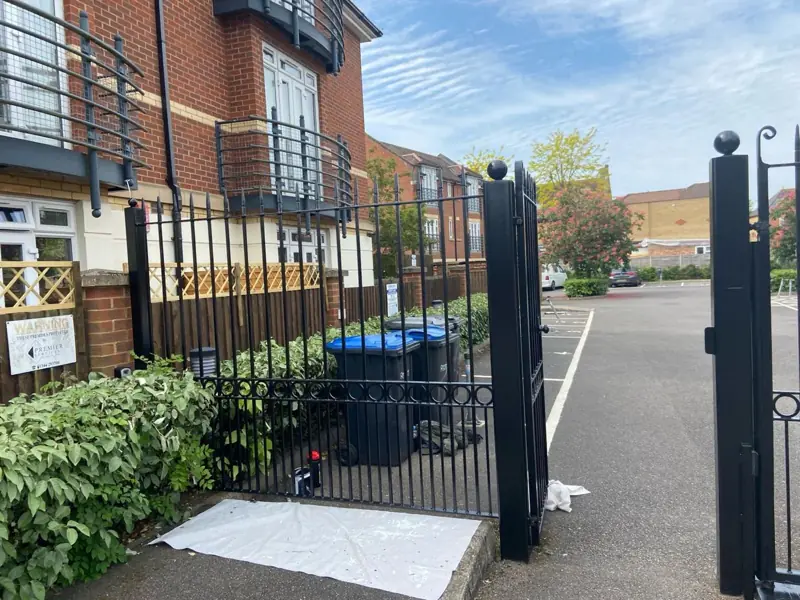
On the estates, black satin or gloss suits most gates and is easy to touch up later. There is no conservation area in the village, so on a privately owned home the colour is up to you. Housing association homes may have a landlord policy on colours for gates and handrails. Handrails get the most hand contact, so we use a hard-wearing finish on them and let them cure before they are used again. Gates on the open-field side of a garden take more weather than those facing the street, and are worth checking each spring for fresh rust spots, which are far quicker to treat while still small.
The rust treatment and primer choices for each type of metal are covered on our main metal gate and railing painting page. Our Hackleton area page covers how we approach the village’s other property types, and the exterior painting service covers gates painted alongside doors and windows.
Last updated by Dean, DH Painter & Decorator.