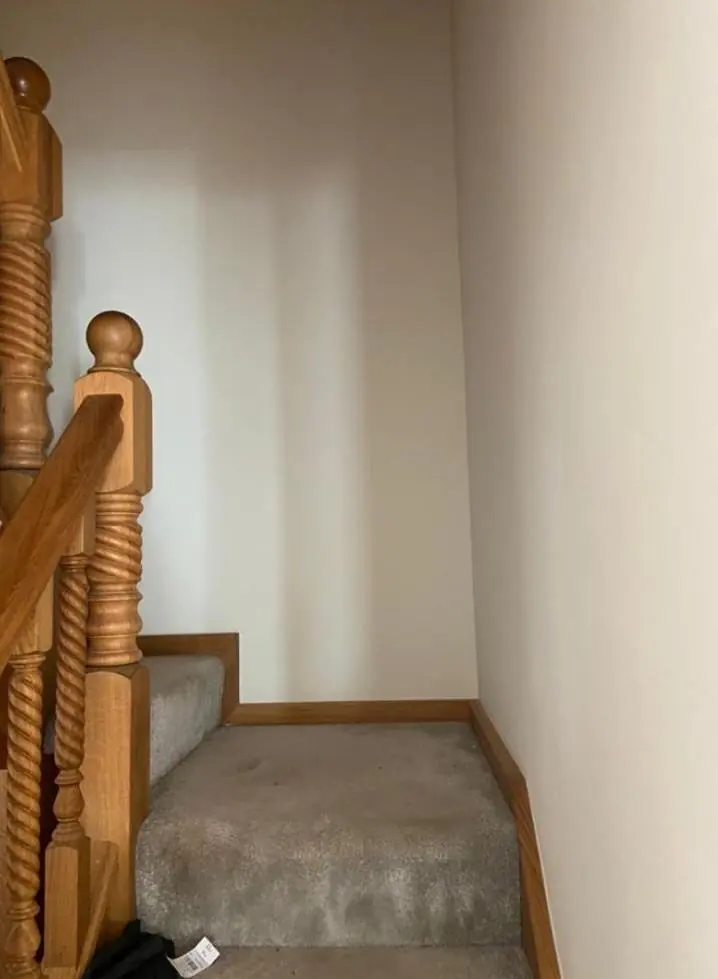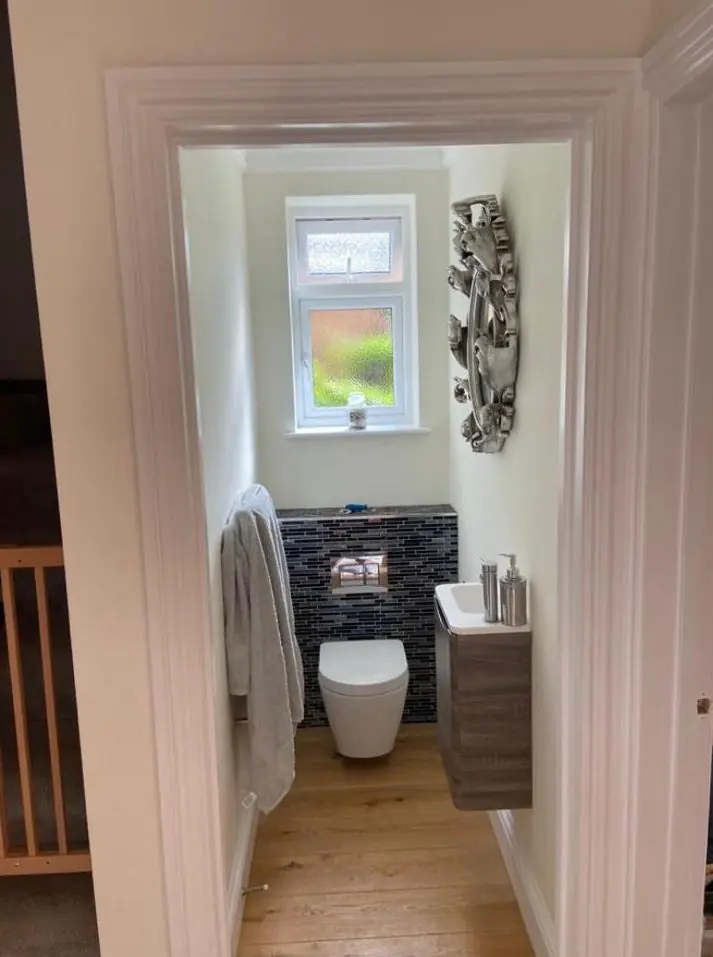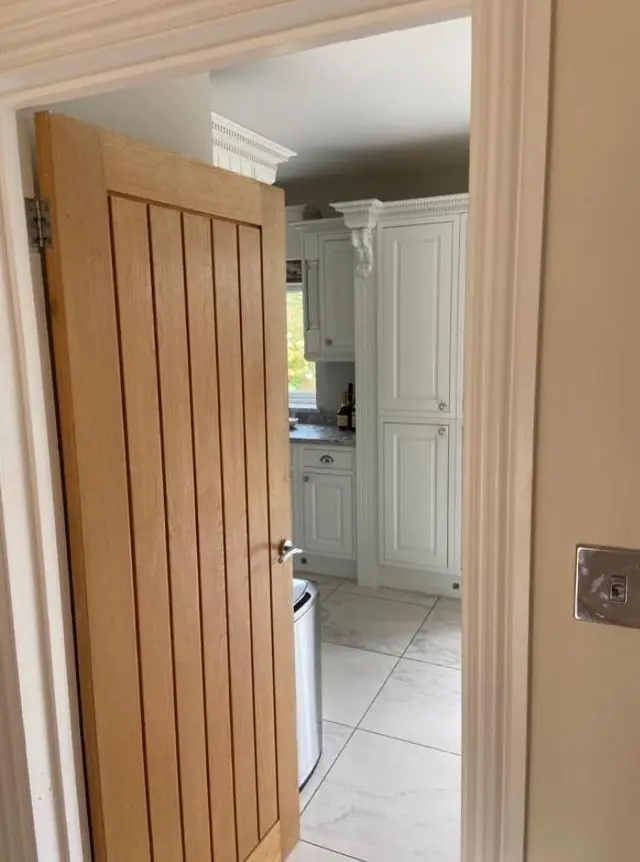
Dean applies decorative finishes in Hardingstone, which sits 1.8 miles south of central Northampton in NN4. Its period houses suit limewash, distemper-style flat finishes and picked-out detail, while the modern homes south of the core suit feature walls and two-tone schemes.
Matching the finish to the age of the house
Hardingstone holds houses from almost every century since the 1500s, and the right decorative finish follows that age closely. A quick way to see it:
| House type in Hardingstone | Finishes that tend to suit |
|---|---|
| 16th to 18th-century stone cottages, such as those on Back Lane and around The Green | Limewash, soft flat finishes, soft colour on old timber joinery |
| Early 19th-century Neo-classical houses, like the Grade II* pair at 26 and 28 Back Lane | Distemper-style flat walls, picked-out mouldings, traditional paint effects |
| 1930s and 1950s houses on Glebe Avenue and the western approach | Two-tone walls, painted picture rails, period-inspired colour blocking |
| Modern homes on the southern estates | Feature walls, colour-drenched rooms, painted panelling, glaze effects |
Limewash on soft walls
Limewash is the traditional finish for lime-plastered stone cottages like those on Back Lane, and still one of the most useful. It soaks into lime plaster rather than sitting on top, builds up in several thin coats, and dries to a chalky surface whose colour shifts slightly with the light. Because it breathes, it copes with the moisture that old walls on Hardingstone’s spring line pick up from below far better than a modern emulsion.
It has firm limits. Limewash only bonds to absorbent, mineral surfaces, so it cannot go over existing vinyl or acrylic paint. Returning a room to limewash means removing those layers first, which is slow and, in one of the 41 listed buildings, may count as an alteration needing consent from West Northamptonshire Council. It also rubs a little on clothes when new and suits rooms that are not heavily knocked about.
Colour in limewash comes from earth pigments, so tones run to soft ochres, warm whites, greys and muted pinks rather than sharp modern shades. Each coat dries lighter than it goes on, and the finish varies gently across the wall, which is part of its appeal in a room with uneven plaster. We mix and test a patch first so you can see it dry before committing to a whole room. Where a cottage has been decorated in modern emulsion for decades and you are happy with that, a breathable flat emulsion is a practical middle route that keeps much of the soft look without the stripping.
Flat finishes and picked-out detail in the grander houses
The larger houses on The Green, such as Hardingstone House of about 1830, and the stucco-fronted Neo-classical houses on Back Lane come from the period when distemper was the usual wall finish. A modern flat or dead-matt paint gives a similar soft, non-reflective look while being far easier to live with. Where rooms keep cornices, panelled doors or shutters, picking out mouldings in a slightly deeper or lighter tone of the wall colour, rather than a hard contrast, tends to look right for the age. Traditional effects such as dragging or stippling can suit a hall or dining room; we keep them restrained in houses of this character.
Feature walls for the newer streets
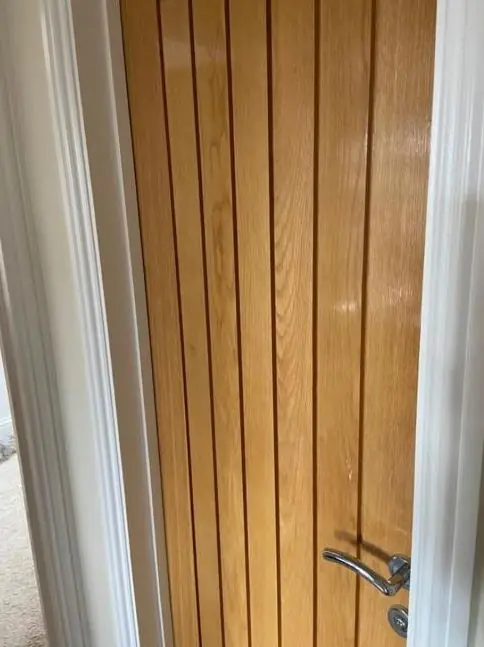
The homes on streets like Gardeners View, Ilex Close and Middle Greeve have flat plasterboard walls, which is exactly what crisp modern effects need. A two-tone split at dado height, a colour-drenched snug where walls, ceiling and woodwork share one shade, a painted arch behind a bed or new MDF panelling all come out sharp on board that is straight and true. Glaze-based effects work well too, because there is no old surface movement to crack them.
The finishes we offer, and how each is built up, are described on our main decorative finishes service page. Help choosing the shades is on our colour advice page, and our Hardingstone page gives the wider picture of the village. For a free quote, ring 07539 779 036.
Last updated by Dean, DH Painter & Decorator.