Dean gives practical colour and finish advice as part of decorating jobs in Hardingstone, an NN4 village roughly 1.8 miles south of central Northampton. Within the conservation area that means shades that sit with brown ironstone, pale limestone and red brick; on newer homes there is more freedom.
Begin with what the village is built from
The old core of Hardingstone has a fixed palette that no paint chart can change. Walls are coursed brown ironstone, coursed yellow stone and brown ashlar, with early red brick laid in Flemish bond, its headers pink or grey. Many roofs are Welsh slate, with pantiles on cottages such as Millstone Cottages on The Green and thatch on the few that keep it. Any colour on a front door, sash window or stucco front is read against those materials, so we choose it standing outside with the stone in view, not from a fan deck at the kitchen table.
As a rough guide, warm off-whites and stone colours sit comfortably on stucco next to ironstone neighbours. Brilliant white often looks blue and harsh against brown stone. Deep greens, dark blue-greys and muted reds tend to work on doors in this setting, while very saturated modern shades usually fight the stone.
Where the conservation rules come in
The Hardingstone Conservation Area includes 41 listed buildings. On those, a change of exterior colour can count as a material alteration, so it should be checked with West Northamptonshire Council before work starts. Mulberry House at 32 The Green, red brick with painted stone quoins, shows that some painted detail here is historic and should be kept. Elsewhere the advice runs the other way: walling that has always been bare ironstone, limestone or brick should be left that way, and the council is likely to resist painting it.
For unlisted houses in the conservation area, the council’s current Article 4 page records no heritage direction for Hardingstone, although the 2009 appraisal said one might be considered. Even so, a colour that suits the street is the sensible choice, and we will tell you if a shade you like is likely to look out of place. On stucco and roughcast fronts the paint system comes first and the colour second; our render and masonry painting page explains why.
Shade from protected trees and a north-falling slope
The village sits on a gentle slope falling north towards the Nene valley, and mature trees overhang much of the street scene: the holm oaks at Hardingstone House and on Hardingstone Lane, the pines of Back Lane and The Warren, the churchyard limes. Many carry Tree Preservation Orders, so they are not going anywhere. Rooms and walls behind them get filtered, greenish light for much of the year. Cool greys and pale blues can turn flat and cold there, while a colour with a warm red or yellow base holds up better. We look at samples in the room at the time of day you actually use it before anything is decided.
Finish and product limit the palette
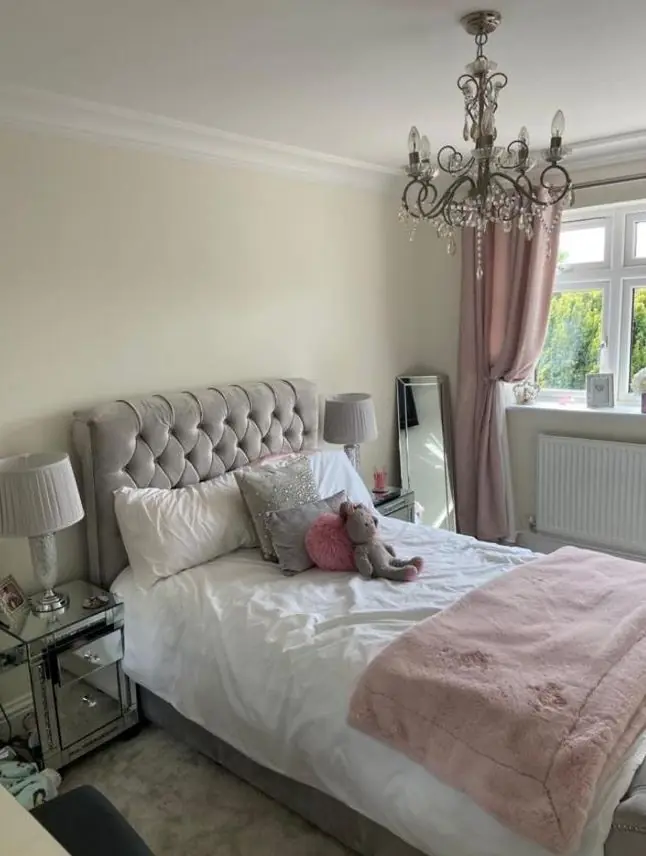
Breathable finishes suit Hardingstone’s old stone and lime plaster, and they bring their own colour range. Limewash and many mineral paints come in softer, earthier tones and dry with a slightly chalky, variable look; a crisp, uniform modern shade is not always available in them. On surviving timber sashes and casements, oil or linseed-based paints are the right system and again narrow the choice somewhat. We explain those trade-offs before you settle on a colour.
The modern houses south of the core, and the 1930s and 1950s homes on Glebe Avenue, have no such limits. Smooth walls take stronger colours evenly, and durable eggshell or satin woodwork comes in almost any shade.
How Dean approaches colour choices in general is on our main colour and finish advice page. Our Hardingstone page describes the village’s buildings in more detail. Call Dean on 07539 779 036 for a free quote that includes colour advice.
Last updated by Dean, DH Painter & Decorator.