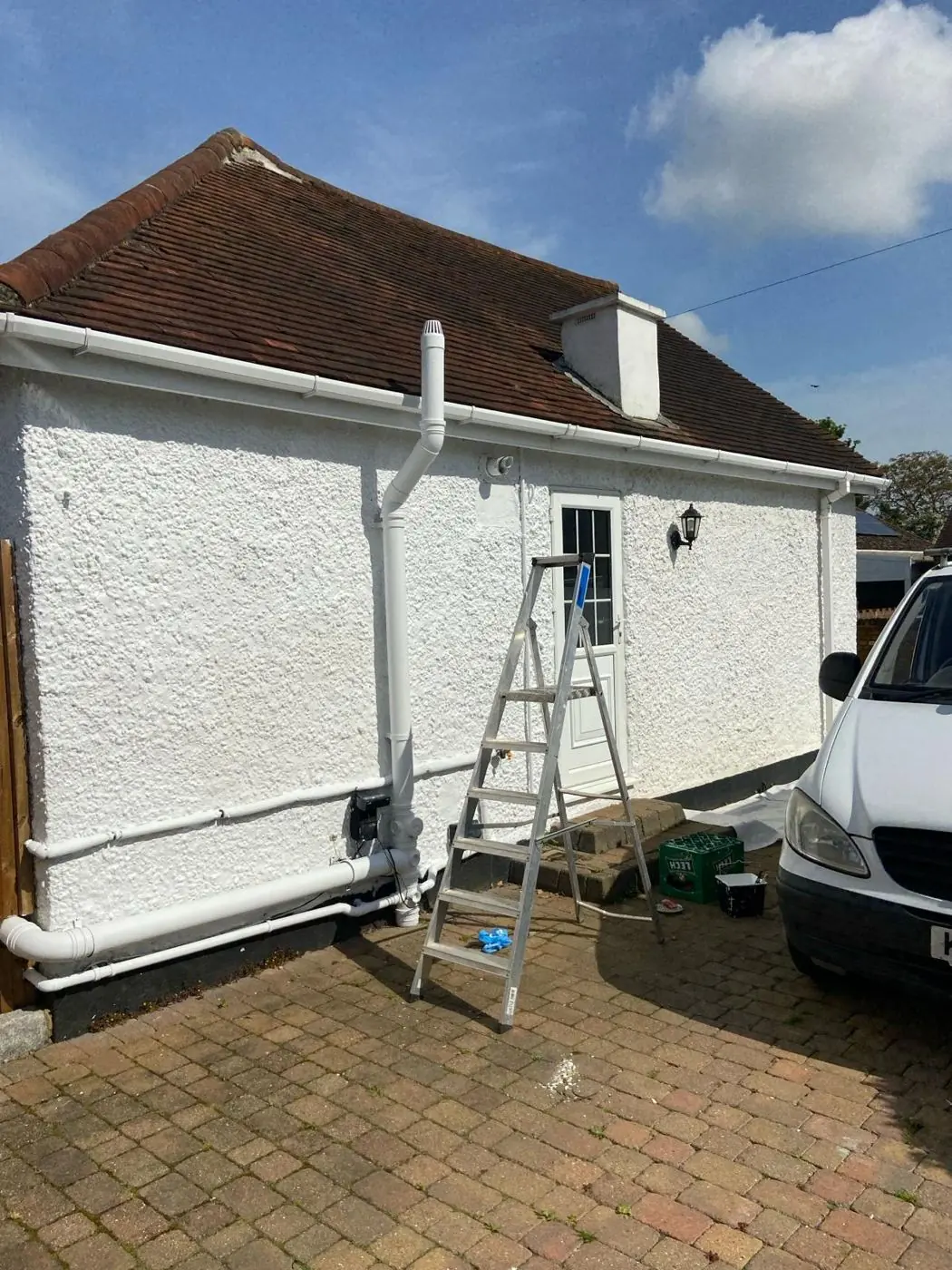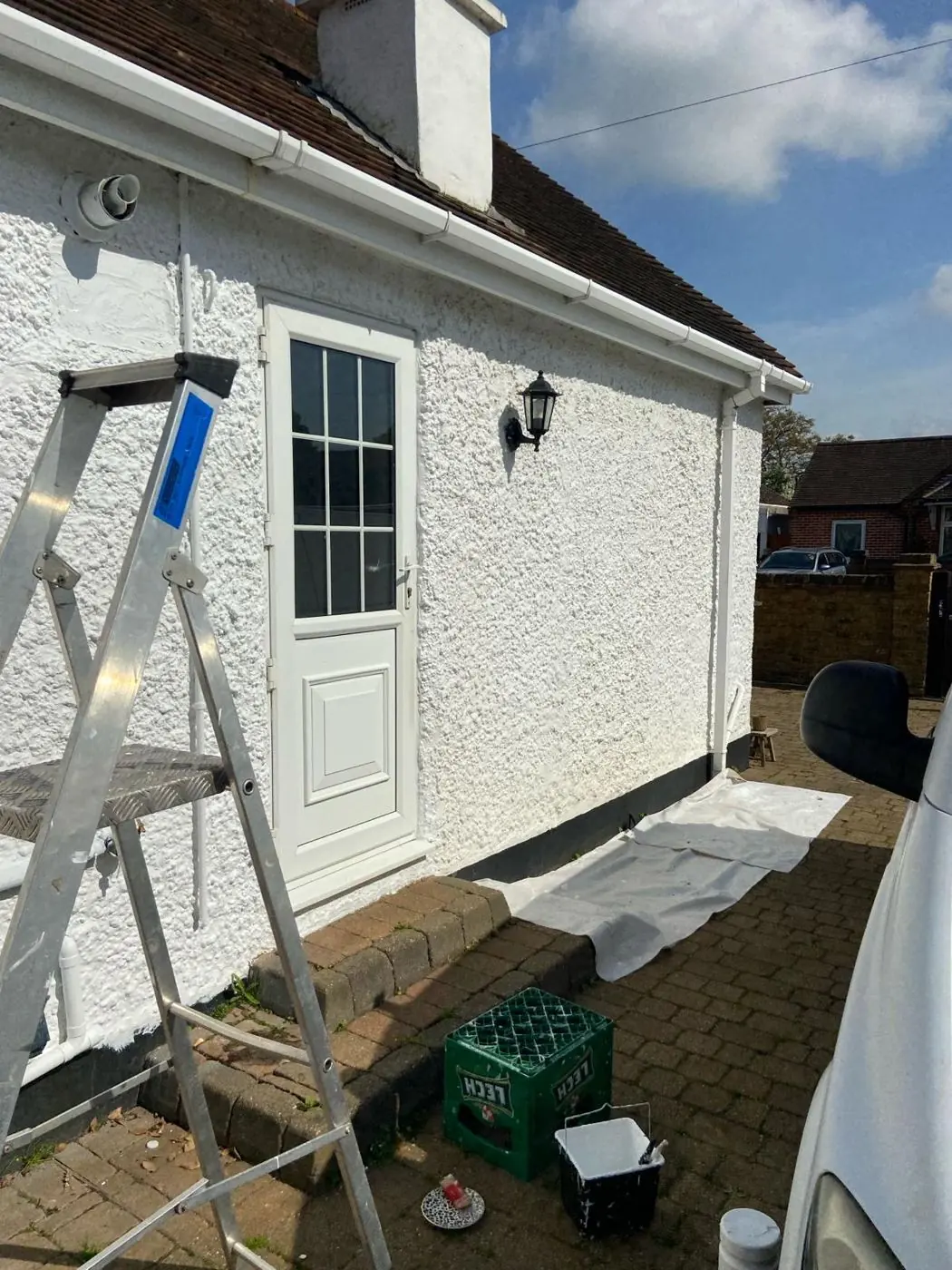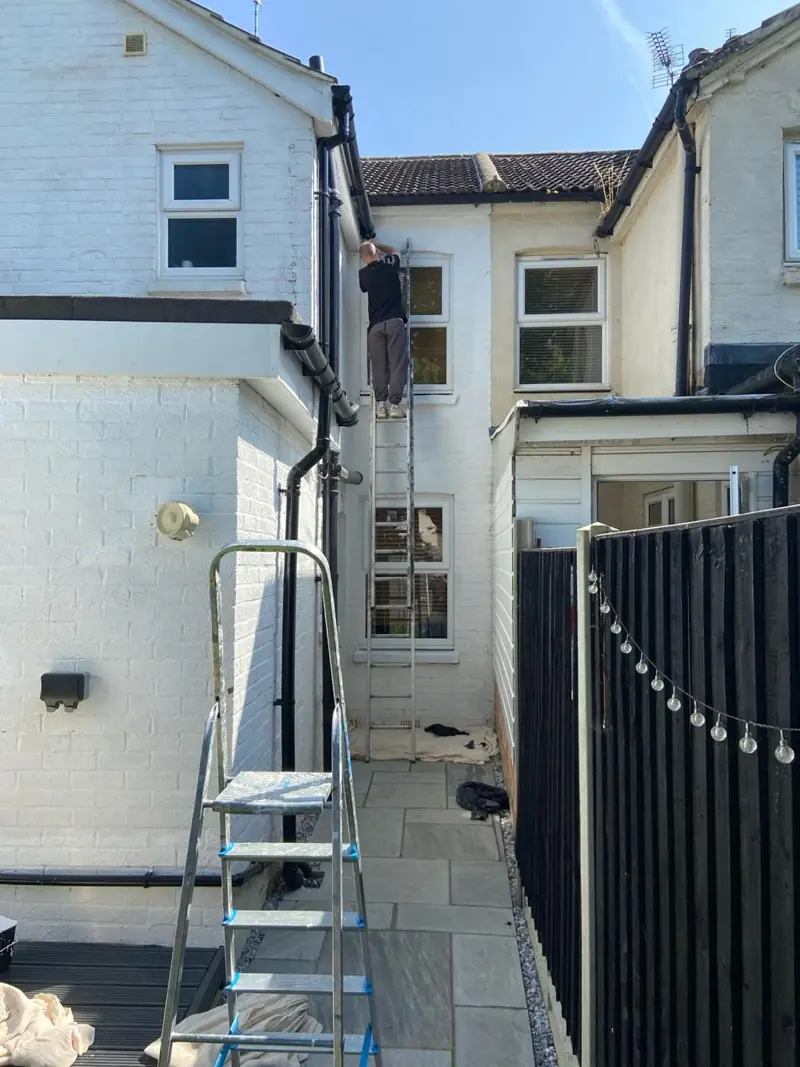
DH Painter & Decorator paints render and masonry in Hardingstone, NN4, a short way south of Northampton and about 1.8 miles from the town centre. Dean first works out whether a wall should be painted at all, then matches the coating to what it is made of: lime-compatible paint for historic stucco and roughcast, conventional masonry paint for 20th-century render.
Should this wall be painted at all?
Most of Hardingstone’s old core is built of coursed rubble in the local iron-rich brown sandstone, with yellow limestone, ashlar and early red brick laid in Flemish bond with pink or grey headers. Those walls were never meant to carry paint, and in the conservation area painting previously bare stone or brick is likely to be resisted. A coat of masonry paint would also hide the warm colour that gives The Green and Back Lane their look. If bare ironstone looks tired, the answer is usually cleaning or repointing by a stonework specialist rather than a painter.
Painted masonry does exist where it is historic. Mulberry House at 32 The Green, an early 18th-century red-brick house, has painted stone chamfered quoins, and keeping painted elements like those in good order is exactly the kind of masonry work we take on. Beyond that, our render work in the village falls into two groups.
Stucco and roughcast from the early 1800s
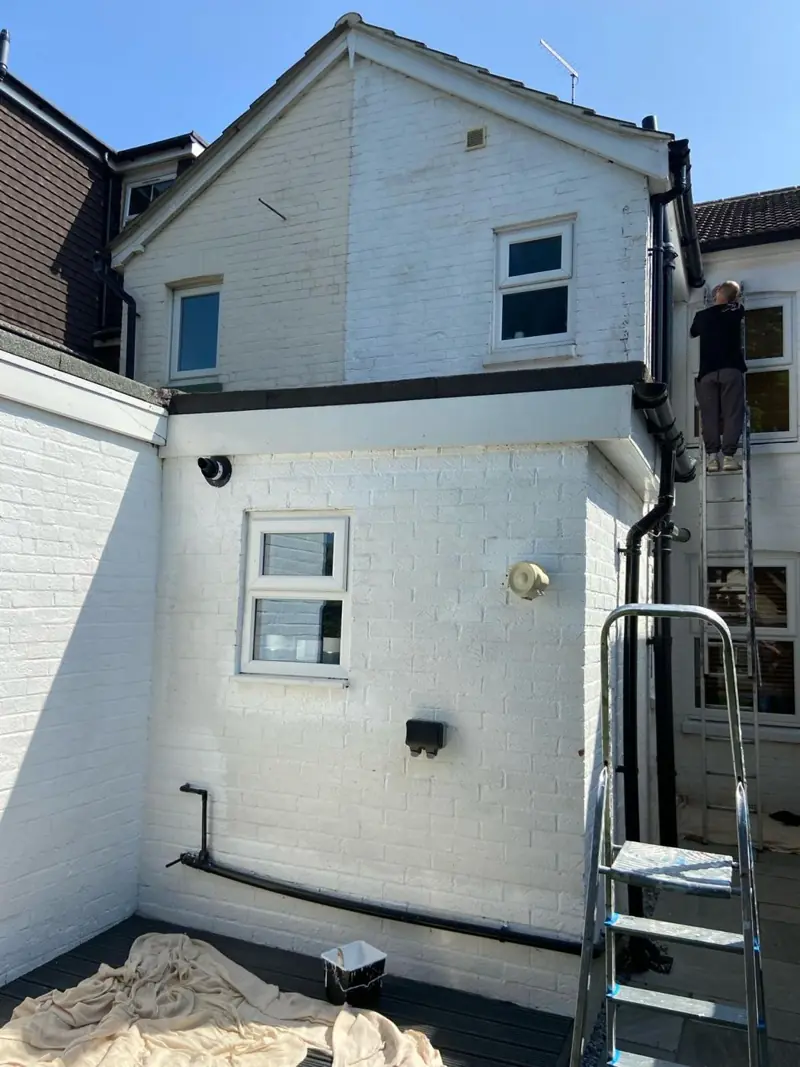
A number of early 19th-century houses were finished in render: the Grade II* Neo-classical pair at 26 and 28 Back Lane in stucco, 14-16 Back Lane in roughcast, Church House on the High Street in stucco, and 1, 10-16 and 18 Back Lane with a mix of stucco, ashlar and roughcast. Behind that render sit soft stone and lime mortar, and the village lies on the spring line where ground moisture never really goes away. A heavy acrylic or plastic masonry coating would hold that moisture in, and the usual result is blistering paint and render that loosens from behind.
On these fronts we use breathable systems that work with lime, such as mineral silicate paint or limewash, and deal with cracks by patching in a matching material rather than sealing them with flexible filler. Where a previous owner has already applied a modern plastic paint, we talk through whether to remove it, which can be slow, or to maintain it for now, and we are straight about the trade-offs. Because several of these houses are listed, any change of colour or specification should be cleared with the council first.
Matching the coating to the wall
| Wall type | Where you find it | Our approach |
|---|---|---|
| Bare coursed ironstone or limestone | Cottages on The Green, Back Lane and High Street | Leave unpainted; protect from drips when painting joinery |
| Historic stucco and roughcast | 26-28 and 14-16 Back Lane, Church House | Lime-compatible breathable paint, like-for-like patch repairs |
| Painted stone dressings | Quoins at Mulberry House, 32 The Green | Gentle hand preparation, breathable paint, existing colour kept |
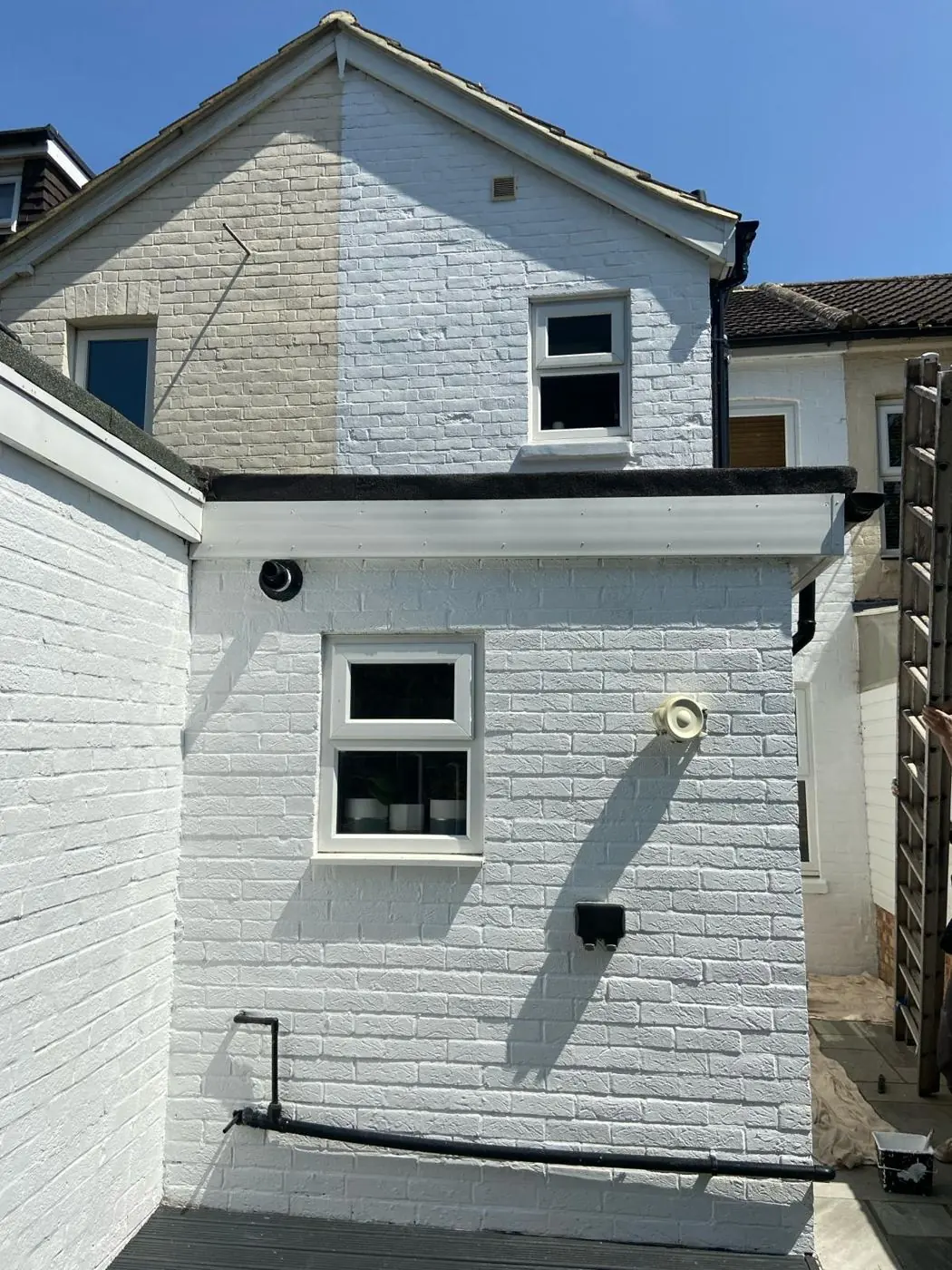
| 20th-century brick and render | 1930s and 1950s homes, Glebe Avenue, western High Street | Standard masonry paint after fungicidal wash and crack repair |
The 1930s and 1950s homes
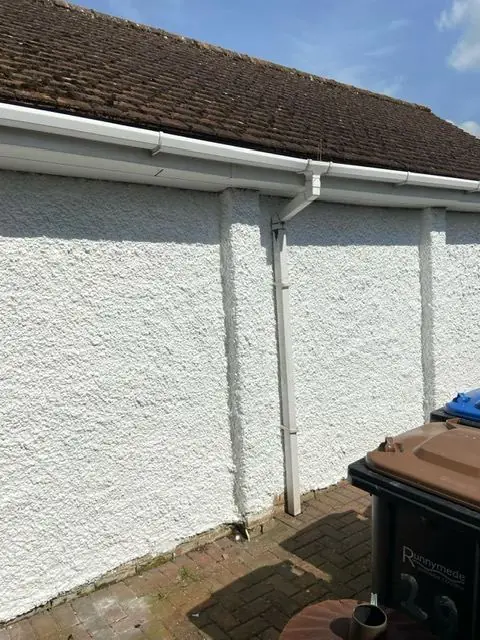
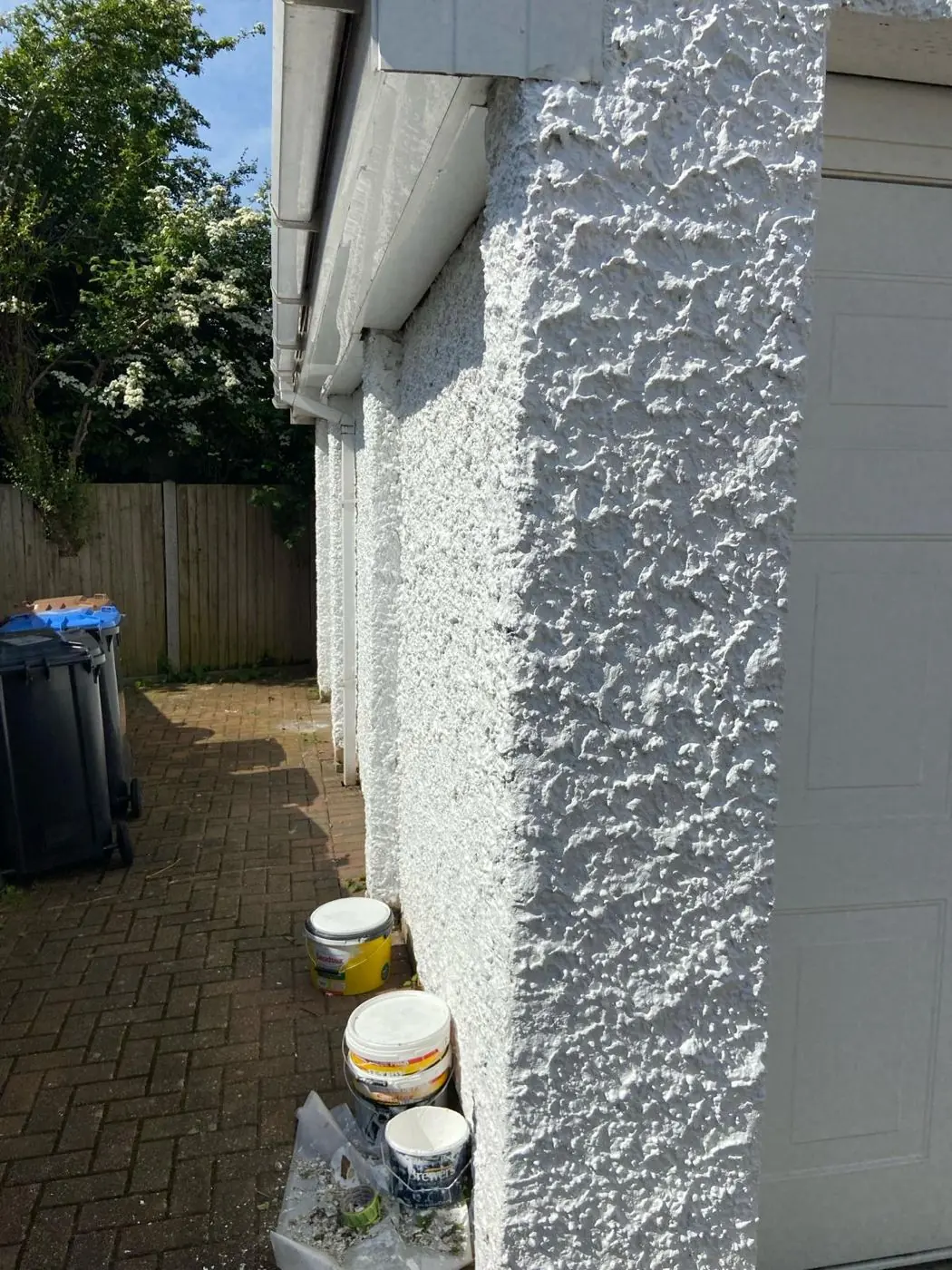
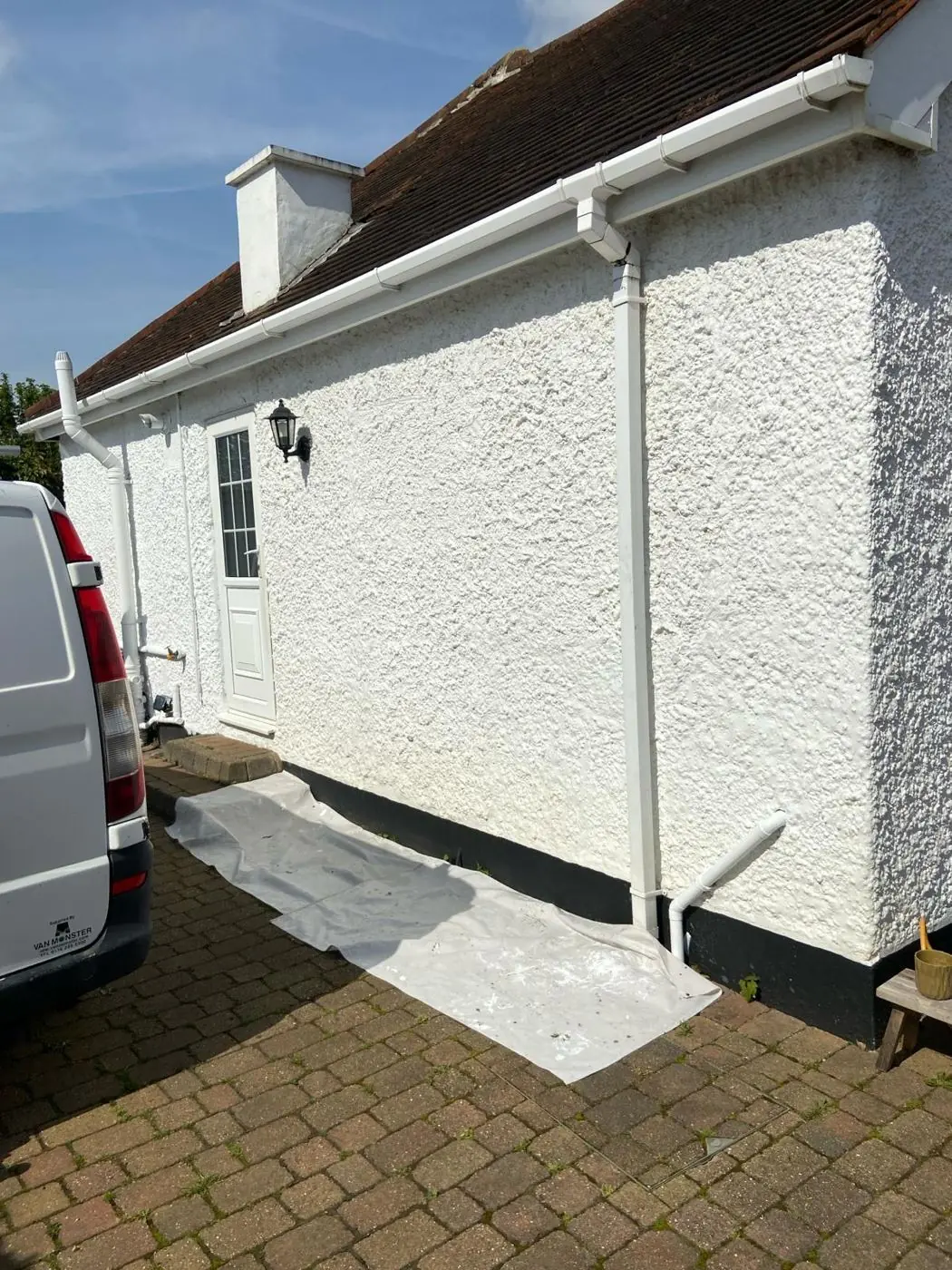
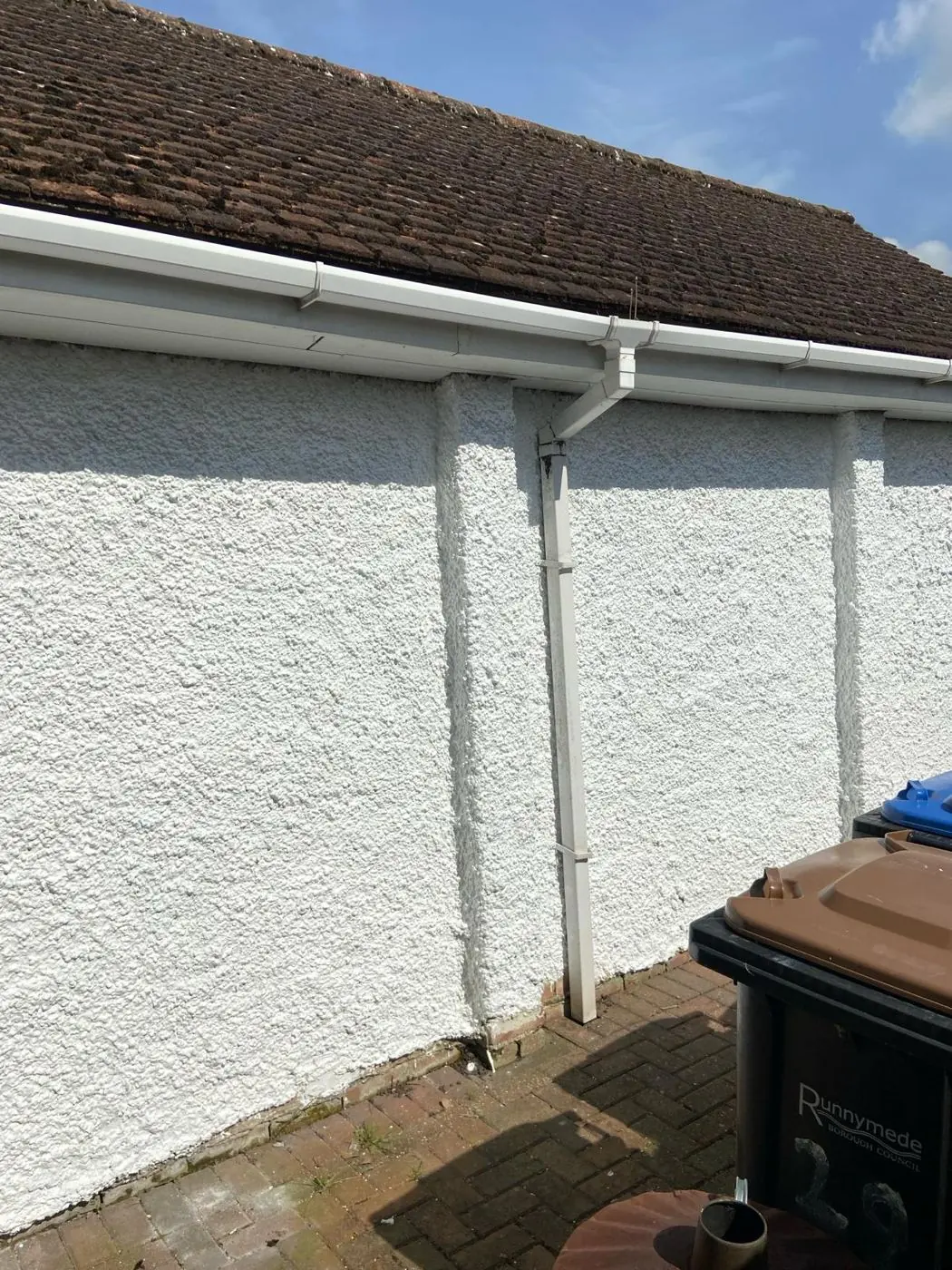
The detached and semi-detached houses and bungalows on the western approach and along Glebe Avenue are a different job altogether. Their render is usually cement-based and takes ordinary exterior masonry paint well, provided the surface is sound. Preparation still decides how long it lasts: green growth from overhanging gardens needs a fungicidal wash, hollow patches need cutting out and filling, and chalky old paint needs a stabilising coat before the first finish coat goes on. These houses sit behind front gardens, so ladders and towers can usually stand on your own ground rather than the footway.
Our guide to painting render and roughcast walks through that sequence, and the full process is on our main render and masonry painting page. You can see how this fits with other work in the village on our Hardingstone page.
Last updated by Dean, DH Painter & Decorator.