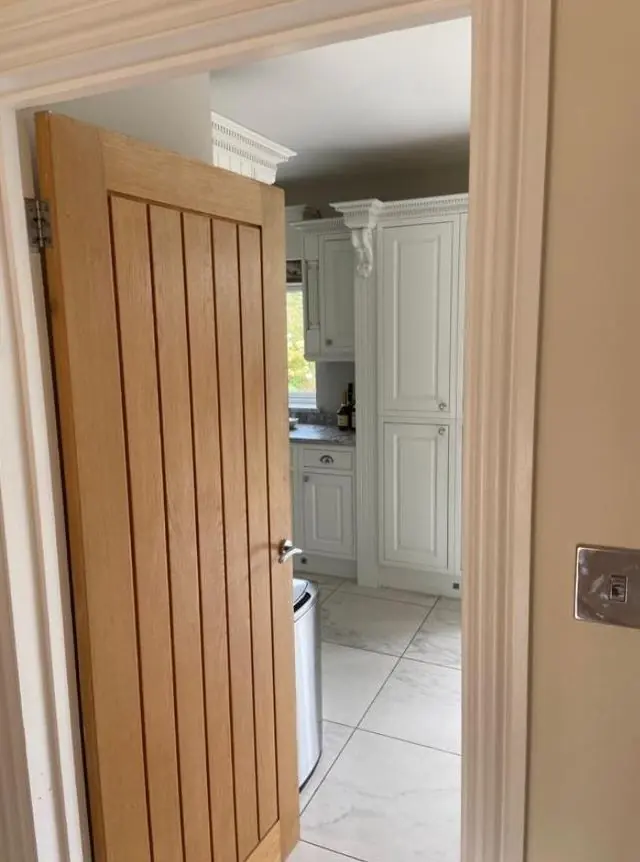
Dean decorates hallways, staircases and landings in Hardingstone, which lies across the A45 from Northampton, 1.8 miles south of the town centre. Old cottages in the conservation area usually have narrow, steep stairs and uneven walls that need filling and lining, while homes on the newer southern streets have standard stairwells.
Stairs that were never planned as hallways
Many of Hardingstone’s older houses were not built with a hallway in the modern sense. Cottages from the 16th to the 18th centuries around The Green and Back Lane were in some cases built in pairs and have since been altered, extended and turned round from back-entry layouts. The stair tends to be a tight, steep flight squeezed between thick stone walls. Decorating it is mostly about access and wall preparation, not large areas of paint.
Our main hallway, stairs and landing page describes how a stairwell job runs. In a Hardingstone cottage there are a few extra things to plan for.
Getting a platform into a narrow stair
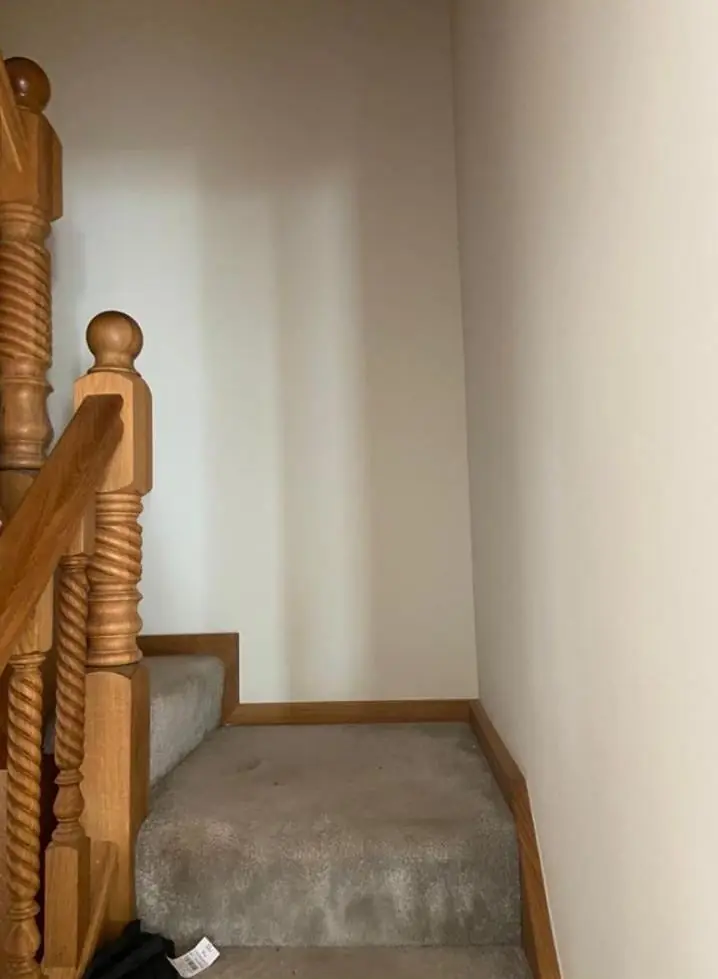
A standard stairwell platform assumes a straight flight with room to set a ladder on the half-landing. Cottage stairs here rarely give you that. We use adjustable stair ladders and short staging boards that can be set up on a narrow flight. Each board is placed so it does not rest on old balusters or a handrail that may be loose from age. Low ceilings and beams over the top step need the same care, both for safety and to avoid marking the plaster.
Getting equipment to the door is a separate problem. Many houses on the High Street and Back Lane open straight onto the footway, yellow lines run through the core, and the council’s plan discourages parking on The Green’s grass verge. We plan unloading in advance and carry boards and ladders in by hand, so nothing is left blocking a narrow pavement for longer than it takes to bring it inside.
Walls that lean, bow and hold moisture
The walls of an old stairwell in the village are usually lime plaster on stone, and they follow the stone. They bow, lean and meet the ceiling at a slight angle. Hard modern filler on a long crack in lime plaster tends to break away again, so we rake cracks out and fill them with something more flexible. Where the surface is rough but sound, cross-lining with a breathable lining paper gives an even base without trying to make the wall flat.
The village sits on the spring line, and ground-floor walls in old cottages can carry damp and salts. The bottom few feet of a stair wall is where that tends to show. Vinyl papers and wipeable acrylic paints seal the surface and push the moisture elsewhere. For lower stair walls in these houses we use breathable mineral or clay-based paints. If the walls need extra protection from knocks and scuffs, we suggest a painted dado-height band in a harder-wearing finish on the timber, not on the plaster.
- Cottage stairs: filling and lining, breathable wall paint, often oil-based paint on the handrail and strings.
- Listed houses: changes to historic balustrades, panelling or stair joinery may need consent, so we check before stripping anything.
- Estate homes: standard plasterboard, wipeable matt or eggshell on the walls, satin on the spindles.
The newer stairwells south of the core
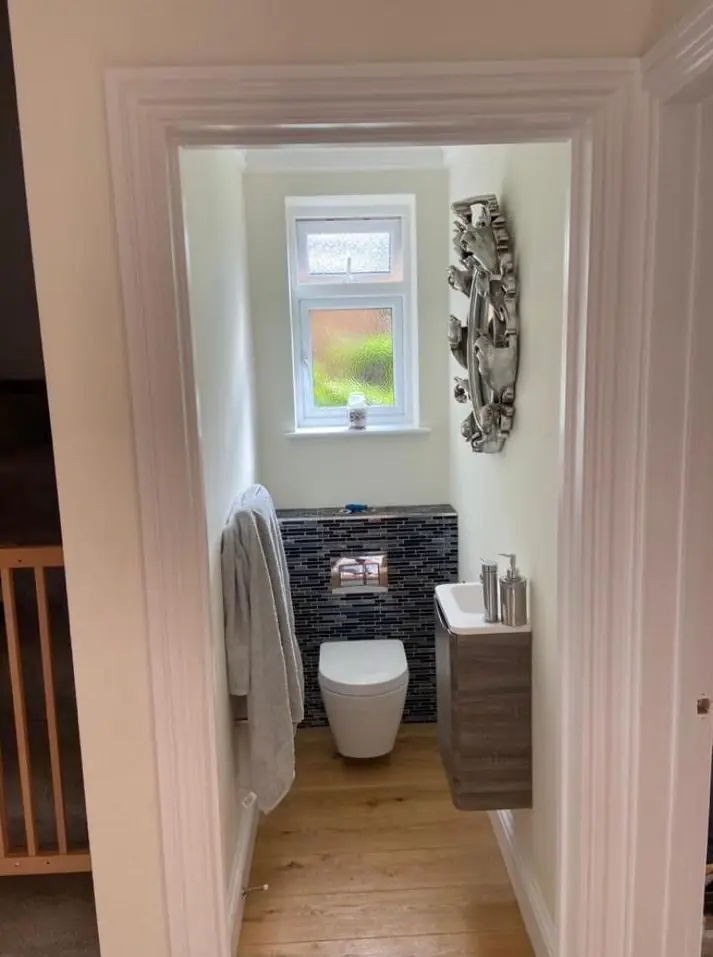
In the modern houses on streets such as Glebe Way, Elm Tree Drive and Falcon Way, the stairwell is a predictable shape with a tall wall above the flight. Here the job follows the usual pattern. We set up a platform over the stairs, mask the treads and keep the stairs open for the household between coats. The plaster is usually smooth plasterboard, so preparation is about filling settlement cracks where the walls meet the ceiling and the stair stringer. On newer houses those cracks are common in the first few years.
The 1930s and 1950s semis on the western approach sit in between. They have conventional stairs and solid walls, and the plaster is often older and harder than modern skim. It generally takes standard emulsion well once any loose areas are cut back and made good.
For other rooms in the village, see the Hardingstone area page.
Last updated by Dean, DH Painter & Decorator.