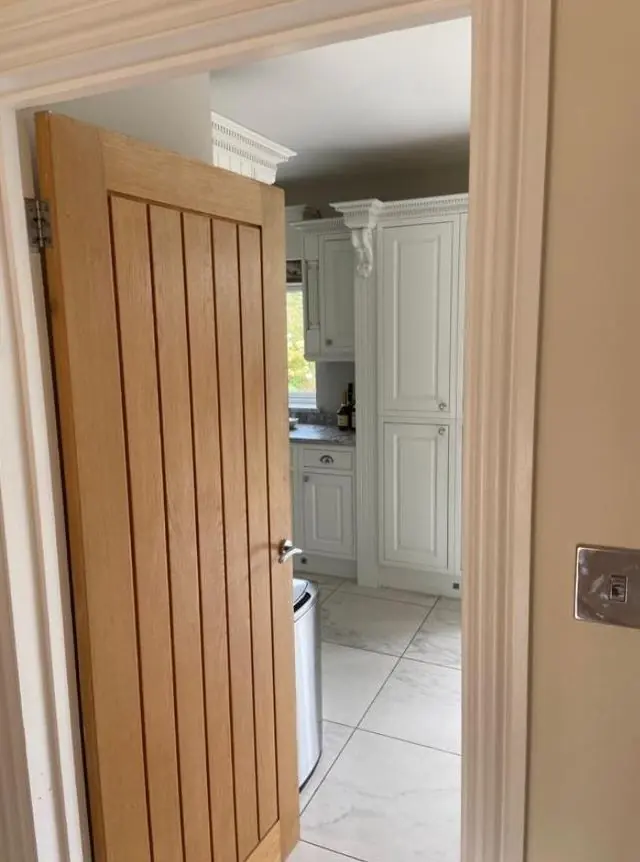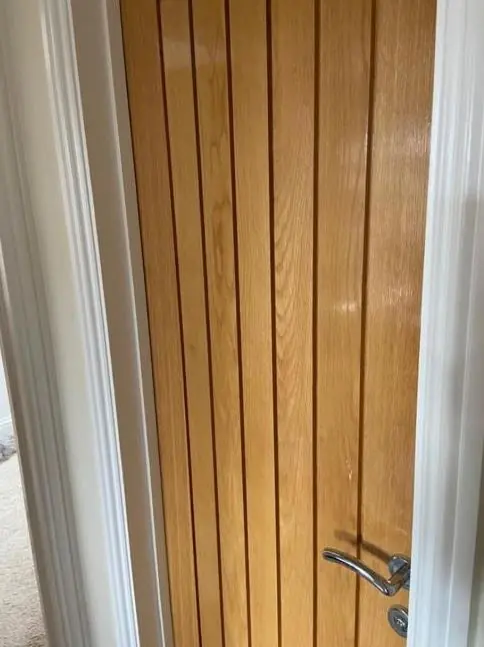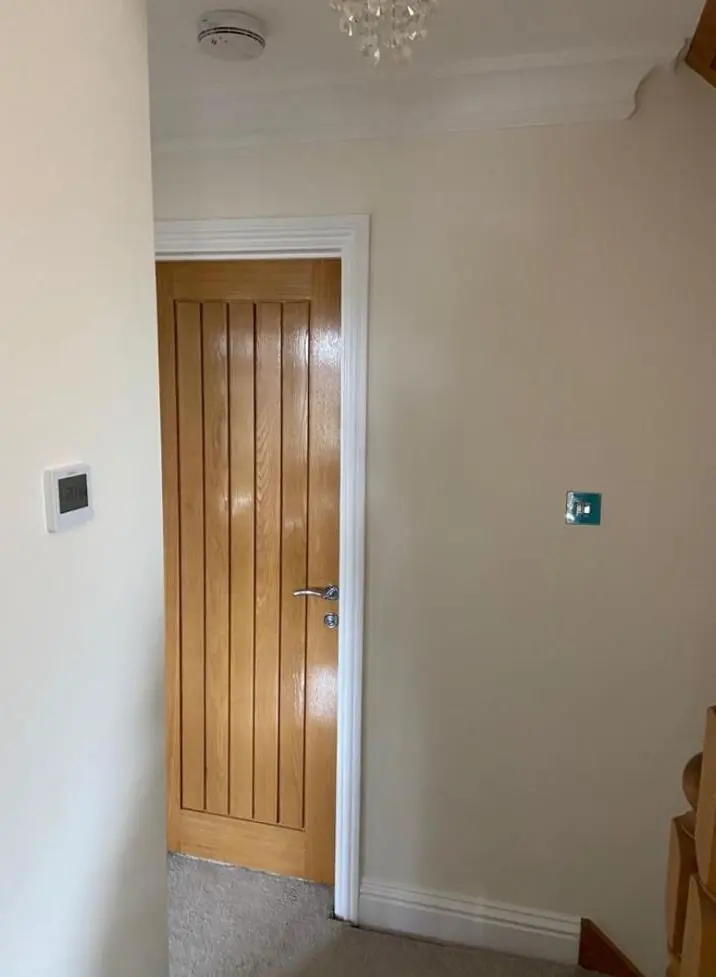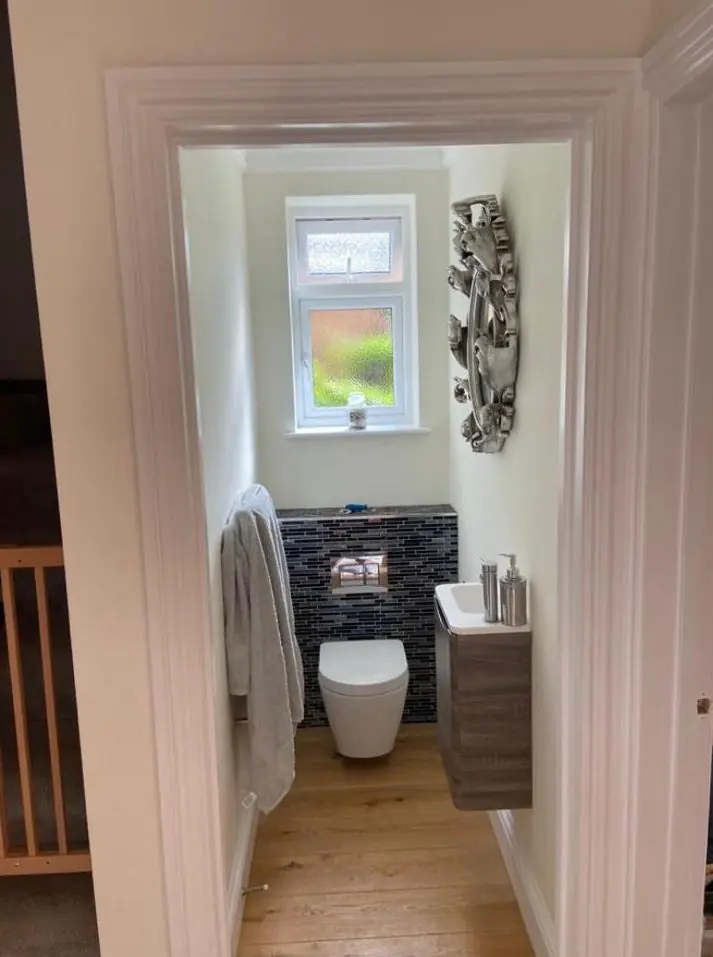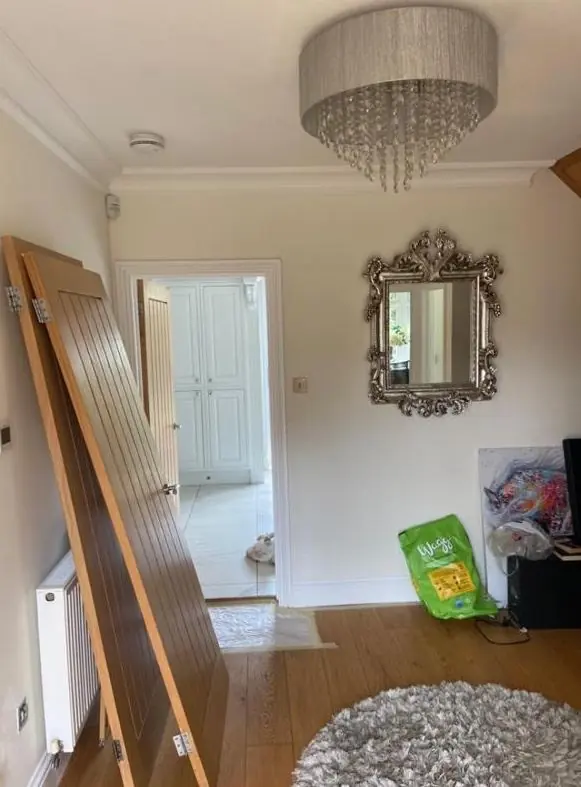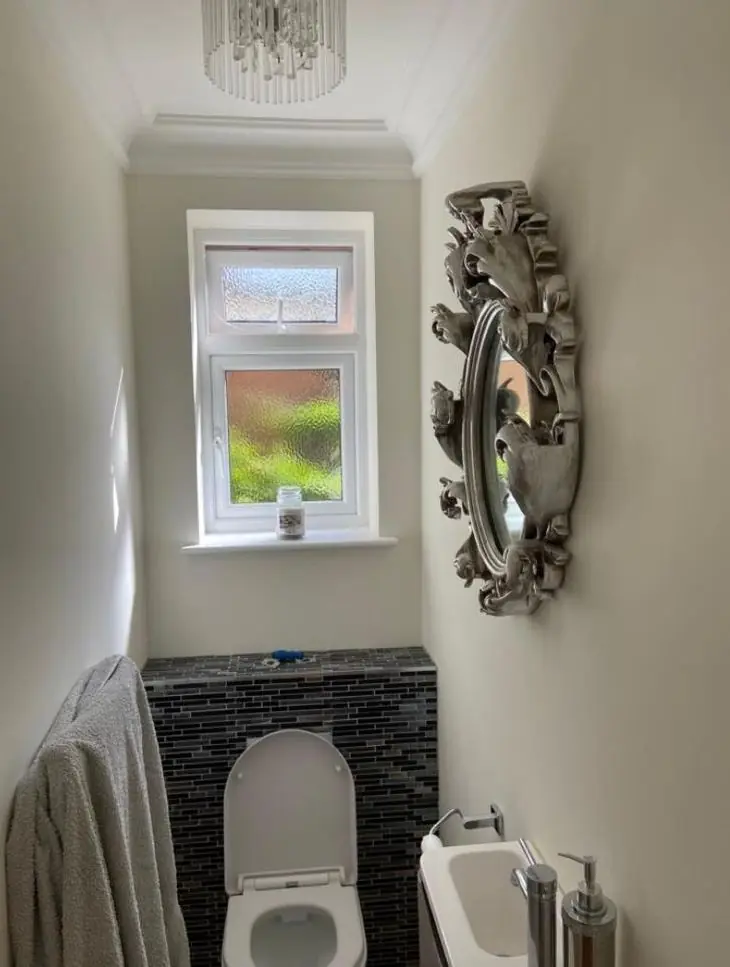
Dean paints internal doors, skirtings, architraves, front doors and timber windows across Hardingstone, 1.8 miles south of the centre of Northampton. In the conservation area the priority is repairing and repainting old joinery with the right paint; on the newer southern streets it is a cleaner, quicker woodwork refresh.
Three kinds of joinery in one parish
Hardingstone’s woodwork falls into three clear groups, and each needs a different approach. The stone cottages and village houses around The Green, Back Lane, Coldstream Lane and the High Street date from the 16th to the 19th centuries. Where their original timber doors, casements and sashes survive, they deserve more care than any other woodwork in the parish. The 1930s and 1950s semis and bungalows along Glebe Avenue and at the west end of the High Street have ordinary softwood doors, frames and skirtings from their period. The modern homes on streets such as Tate Grove, Middle Greeve and Ilex Close usually have factory-primed or pre-finished doors and MDF skirting, and these mostly need a careful refresh rather than any repair.
Our main door and skirting painting service explains the general sequence of preparation and finishing. Below is what changes when the job is in Hardingstone.
Keeping old casements and sashes in service
Back in 1937 the Victoria County History noted that in Hardingstone’s 17th-century ironstone houses the windows had nearly all been altered and the mullions taken out. The council’s 2009 conservation appraisal makes the same point from the other side: where original timber windows and doors do survive, they should be kept and repaired, not replaced. For a painter that means:
- cutting out soft or rotten timber and splicing in new wood, rather than filling a large void with resin and painting over it
- taking failed paint back to a sound edge and letting bare, weathered timber dry before priming
- using oil-based or linseed paint systems that move with old timber and can be patched in future, where an acrylic film would crack along the joints
- easing sashes and casements that stick through thick paint, so they open freely once the new coats are on
Hardingstone has 41 listed buildings. On any of them, stripping historic joinery back or changing the colour of external doors and windows can count as a material alteration, so we suggest a quick check with West Northamptonshire Council before work starts. The 2009 plan also floated an Article 4 direction for doors and windows on unlisted houses. The council’s current list shows no such direction for Hardingstone, but it is worth asking if you are planning a change of colour.
No heat guns under thatch
Four thatched roofs remain in the village, including those at 80-84 High Street and on Back Lane. On those cottages, and on their neighbours, we do not use a heat gun or open flame to remove paint from fascias, window heads or the top rails of doors close to the eaves. Paint there comes off with chemical strippers or by scraping and abrading. That is slower, and it is the only sensible way to work under a thatched roof. Old layers on joinery of this age may also contain lead, which is another reason to avoid dry sanding and burning off.
Inside the cottages: skirtings on uneven walls
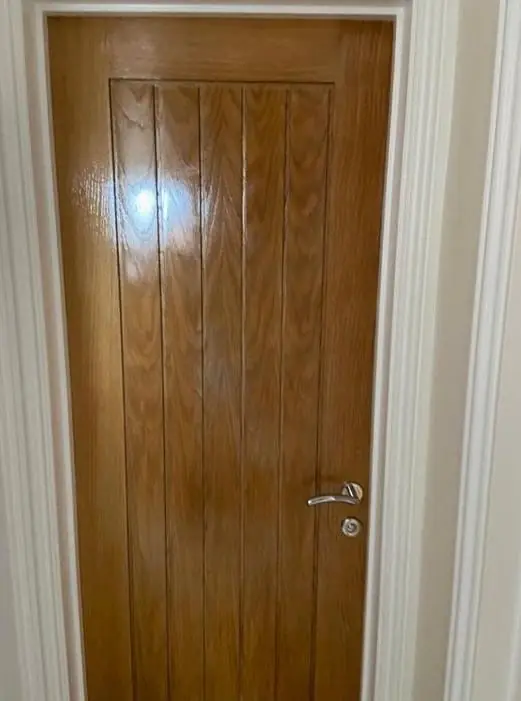
Hardingstone is a spring-line village, and in older ground-floor rooms the first sign of it is often the skirting. Timber fixed against thick stone walls can stay damp at the back, and the paint lifts along the top edge. Before repainting we check the timber with a moisture meter. If the skirting is wet, the cause needs dealing with first, because a fresh coat of gloss on top will simply fail again.
Lime-plastered walls in these cottages are rarely straight, so there is often a gap where the skirting or architrave meets the plaster. We fill those gaps neatly so the line looks deliberate, not forced. Doors in houses built as pairs or altered over the centuries often hang slightly out of square, and we paint them to suit how they hang rather than trying to make them look new.
Newer homes on the southern streets
In the estate houses south of the core, the usual request is to replace yellowed gloss with a water-based satin or eggshell, or to repaint white doors and skirtings that have been scuffed. The preparation is lighter: degrease, key, fill the dents, then two finish coats. It is a job we can often fit around a room being redecorated. If you want a figure, the cost guide explains what affects price, and our Hardingstone area page sets out how the village’s older and newer houses differ.
Last updated by Dean, DH Painter & Decorator.