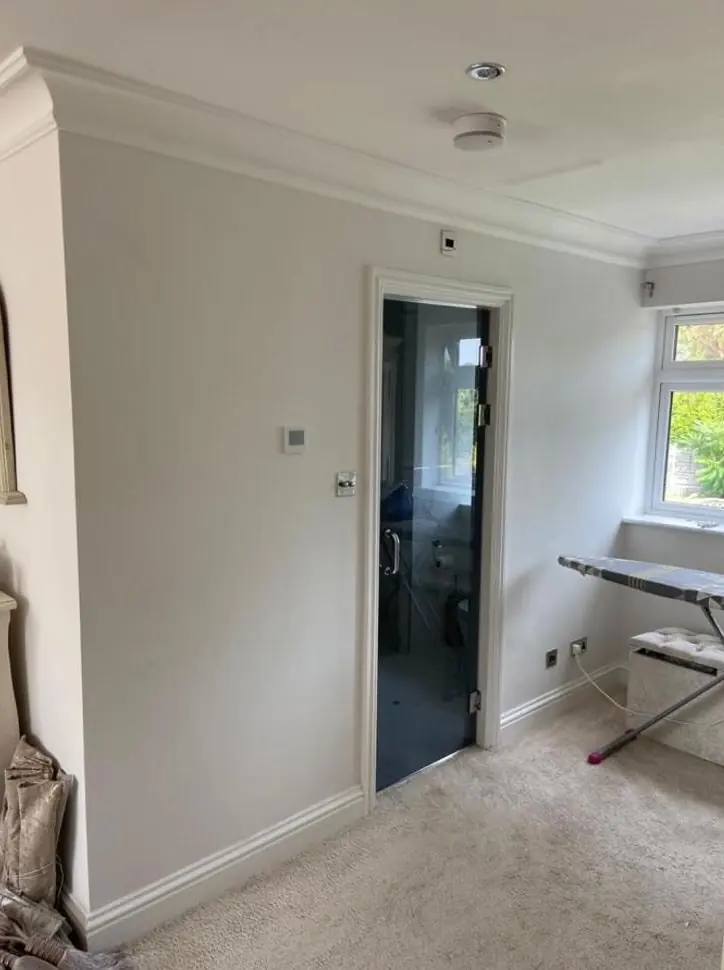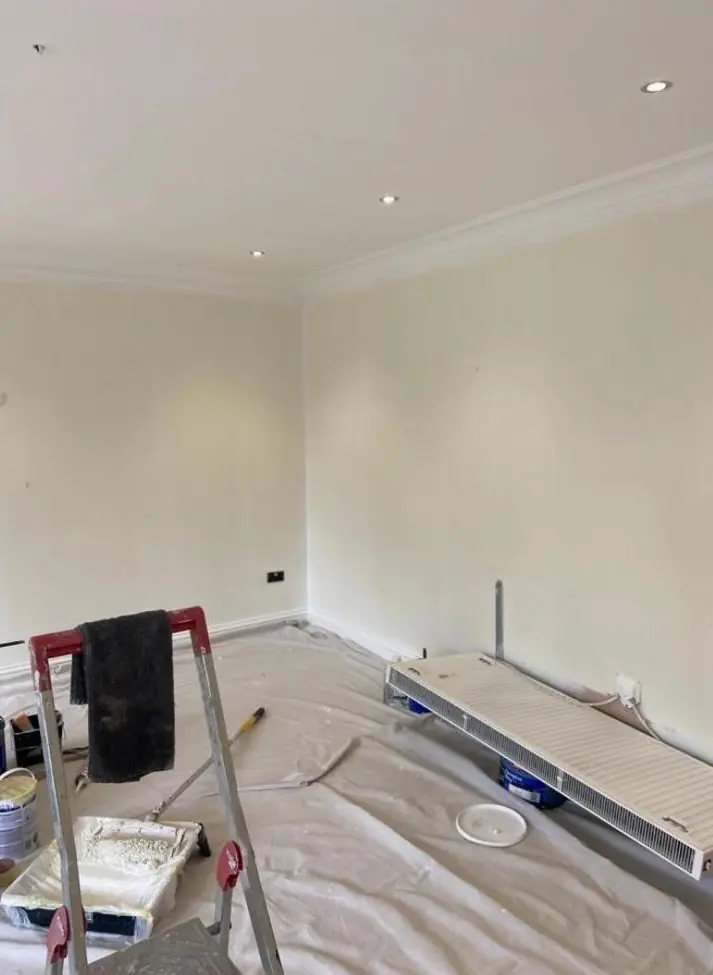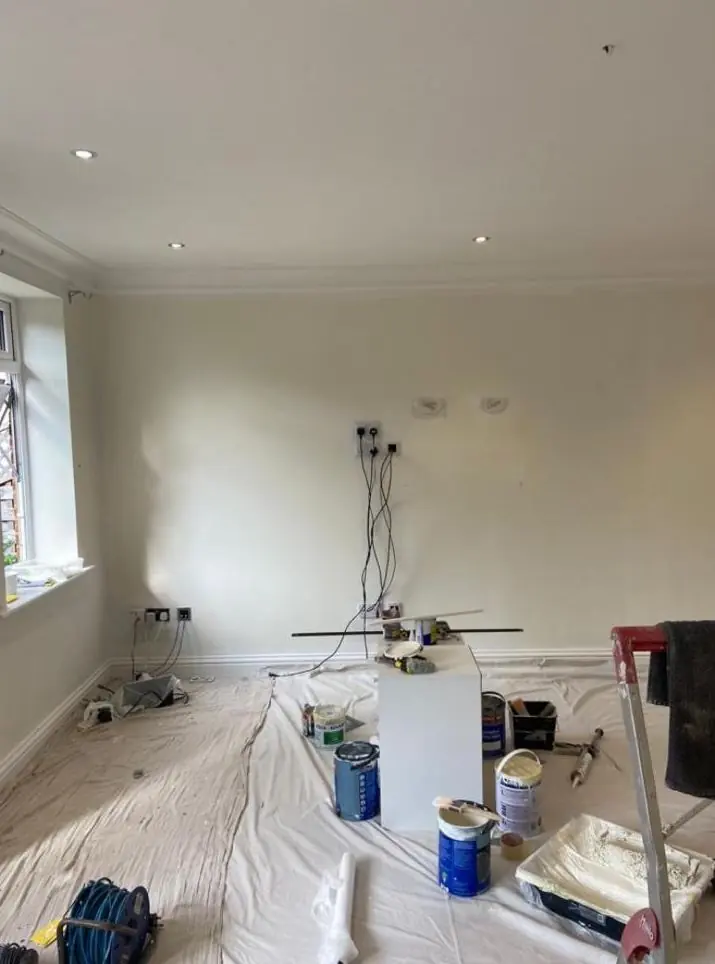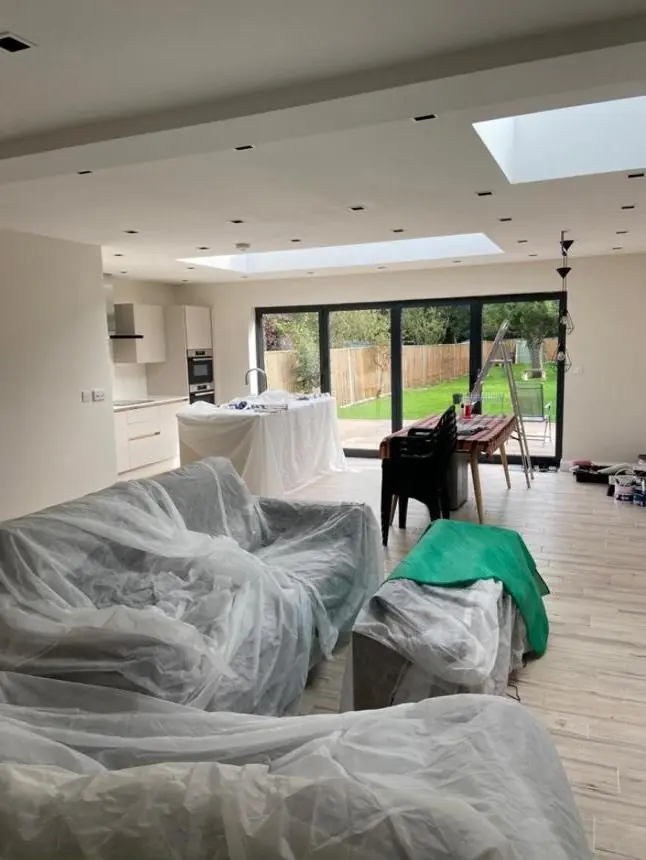
DH Painter & Decorator decorates new plaster in Kings Heath, NN5, on Northampton's north-west side about 1.7 miles from the centre. The work splits into two kinds: whole new houses, such as the 2025 town houses on Park Walk, and re-plastered rooms or extensions in the estate's original 1950s homes.
Two sources of new plaster on one estate
Most of Kings Heath dates from the early 1950s, when the estate was laid out around its central green. Fresh plaster turns up there in two different ways, and they need different handling.
| Situation | Where you see it | What it means for decorating |
|---|---|---|
| Brand-new house | Three-storey town houses on Park Walk (2025); newer terraces at Chadwick Gardens | Every wall and ceiling is new plaster or new-build finish, and the building is still drying |
| Re-skim or replastered room | Original terraces and semis on the river-named streets | New plaster sits next to walls with decades of old paint |
| Extension | Any older house that has been extended | New plaster plus a junction where old wall meets new |
The general method, from drying checks to mist coats, is on our main new plaster and extension page, and the mist coat guide explains why a thinned breathable coat goes on first.
The first year in a Park Walk town house
New houses are often handed over with a thin contract emulsion, or with plaster that has barely been sealed. Over the first year, as plaster and timber dry out, hairline cracks appear at ceiling junctions, around door frames and down internal corners, and skirtings pull slightly away from walls. Across three storeys that adds up to a lot of small snagging.
Our usual advice is to live with the builder’s finish through one heating season, then decorate properly: fill and sand the settlement cracks, mist-coat any bare or patchy plaster, caulk the opened joints and apply finish coats once. Doing it earlier means coming back to repaint over cracks. If you do want colour straight away, we can mist-coat and paint now and quote separately for a later snagging visit.
Re-skimmed rooms in the older houses
In the estate’s original houses, the usual reason for new plaster is a room being re-skimmed after old plaster has failed, a wall being opened up, or rewiring and heating work leaving chases to make good. The new plaster is easy to deal with on its own. The difficulty is the edge where it meets the next wall or ceiling, which may carry seventy years of paint layers.
- We let the new plaster dry to an even pale colour before anything goes on it.
- The mist coat goes on the new plaster only, not over the old painted surfaces.
- The joint between new and old is filled and feathered so it does not show as a ridge under the finish.
- Old painted walls in the same room are washed, keyed and spot-primed so the finish coat looks even across both.
Extensions on compact post-war plots
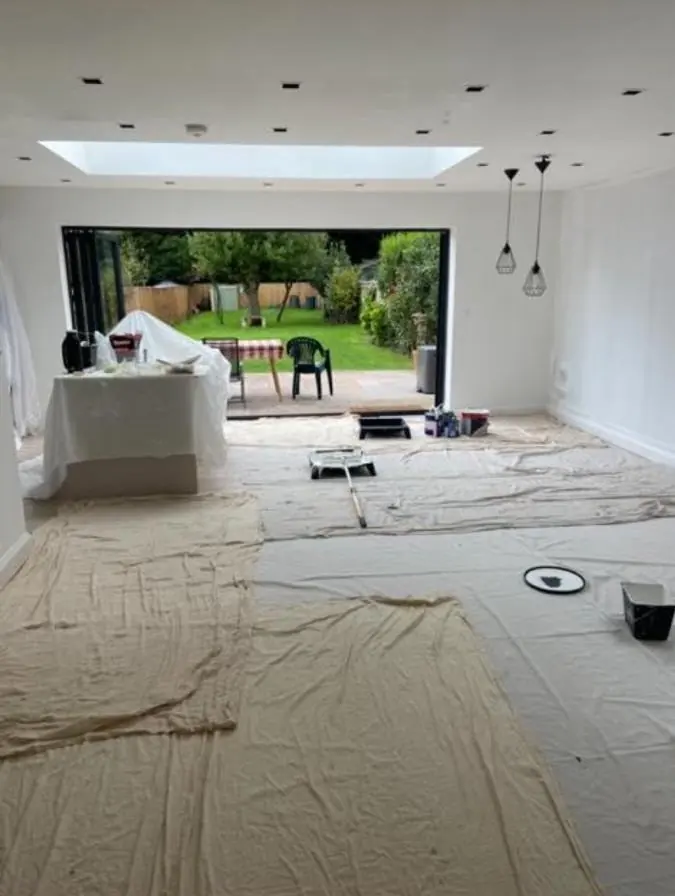
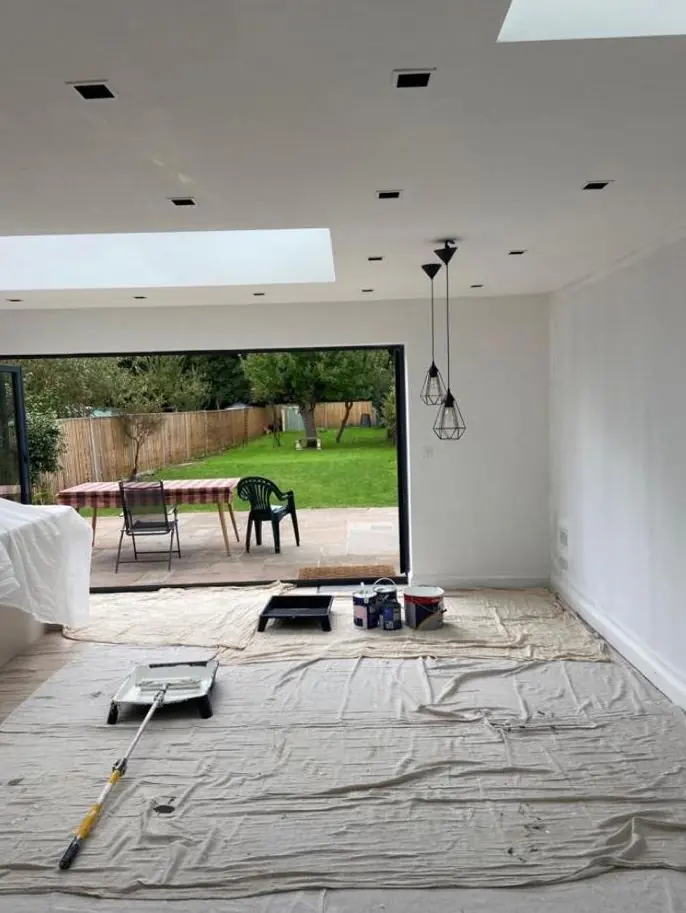
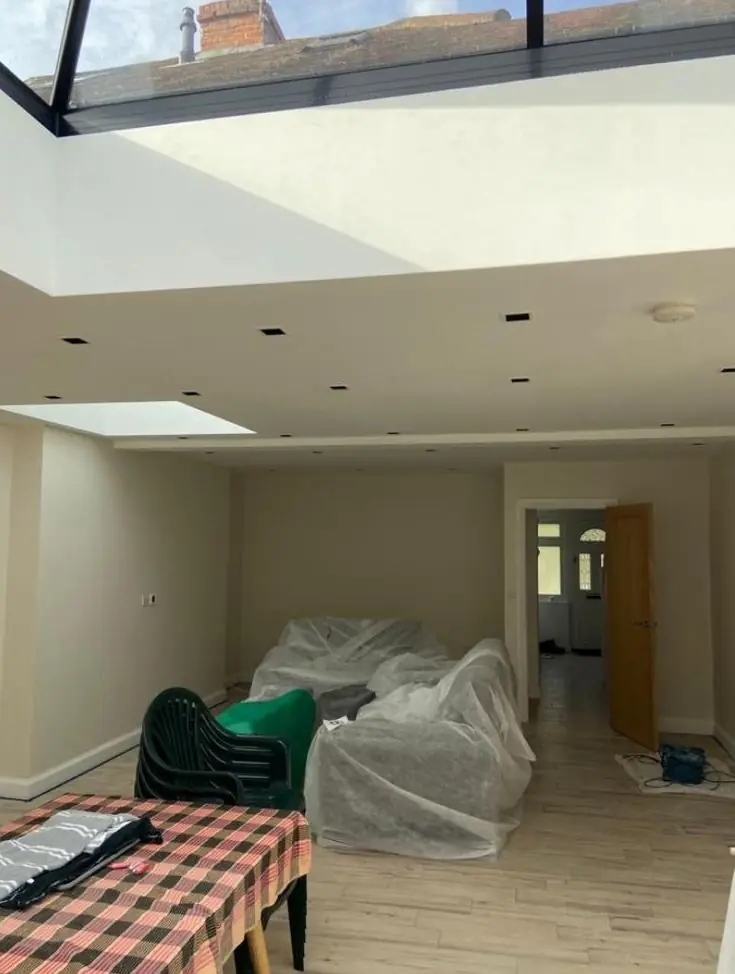
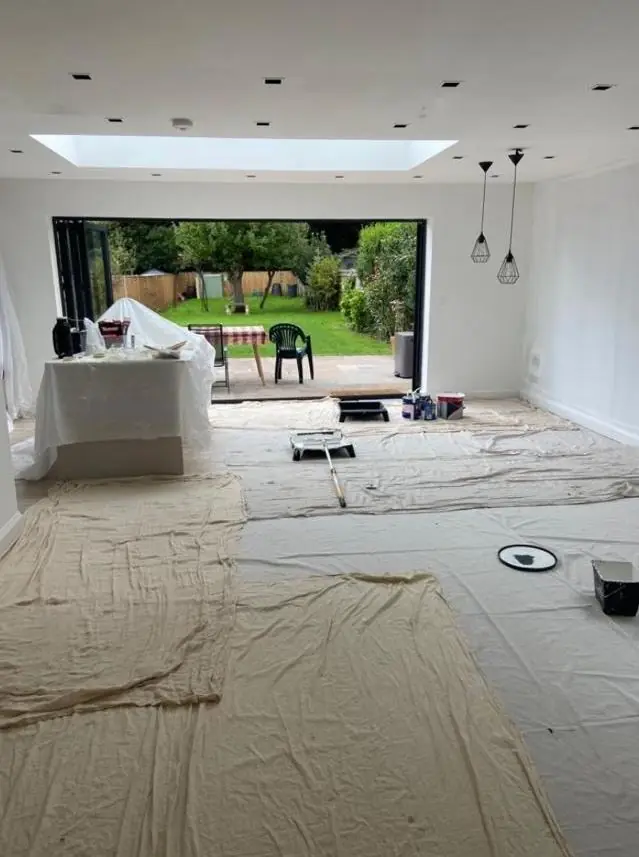
Where an original house has been extended, new plaster ends up meeting the old rear wall, often around a widened opening into a kitchen. The same old-against-new junction applies, plus new MDF skirtings and frames that need sealing and painting. With no side passage on a mid-terrace house, a rear extension is usually reached through the hall, so we agree a sheeted route through the house before starting.
Because the original houses were built to one design along streets like Nene Drive and Windrush Way, an extension on one house often sits next to an unextended neighbour. Inside, that changes nothing about the decorating, but it is worth choosing a colour for the new room with the light from any new glazing in mind, which can be very different from the original rear rooms. Bare plaster looks darker and patchier than it really is, so we put sample patches on the mist-coated wall rather than judging colour on raw plaster.
Other work on the estate, from Park Square to the industrial units, is listed on our Kings Heath area page.
Last updated by Dean, DH Painter & Decorator.