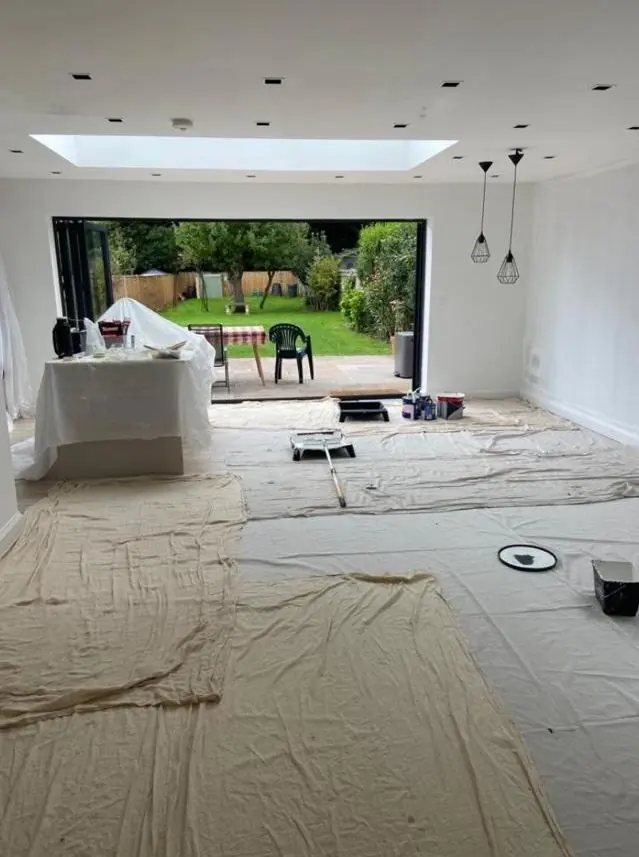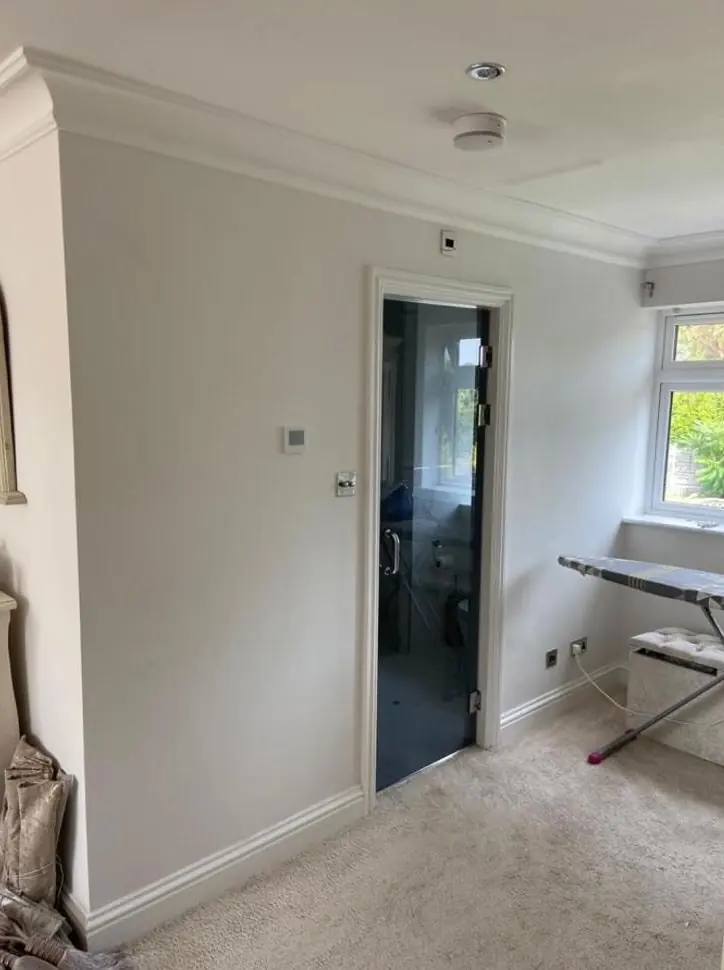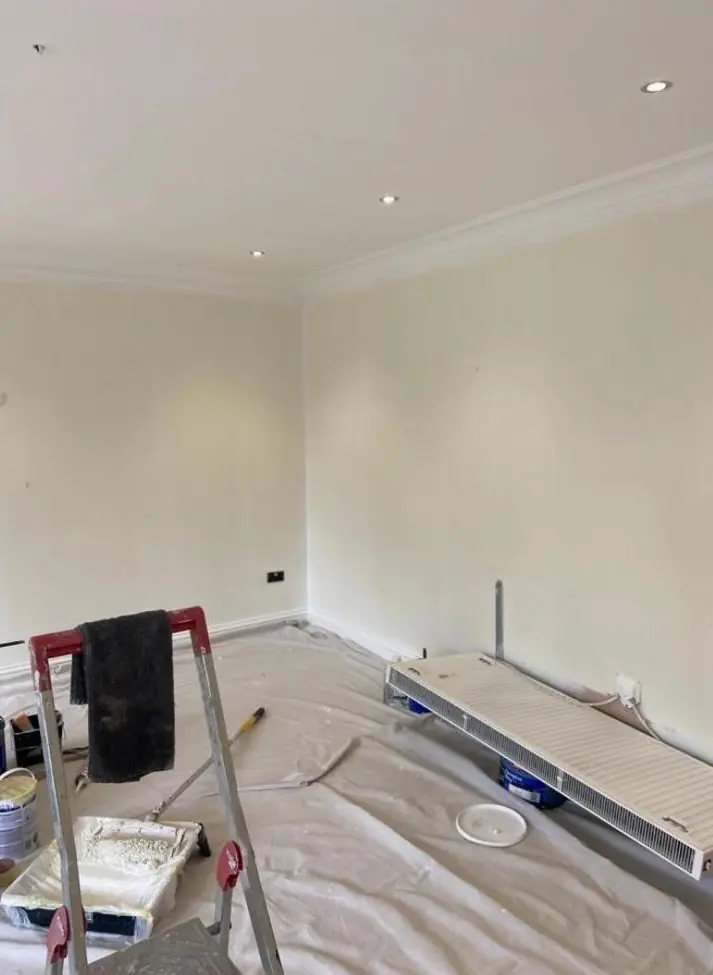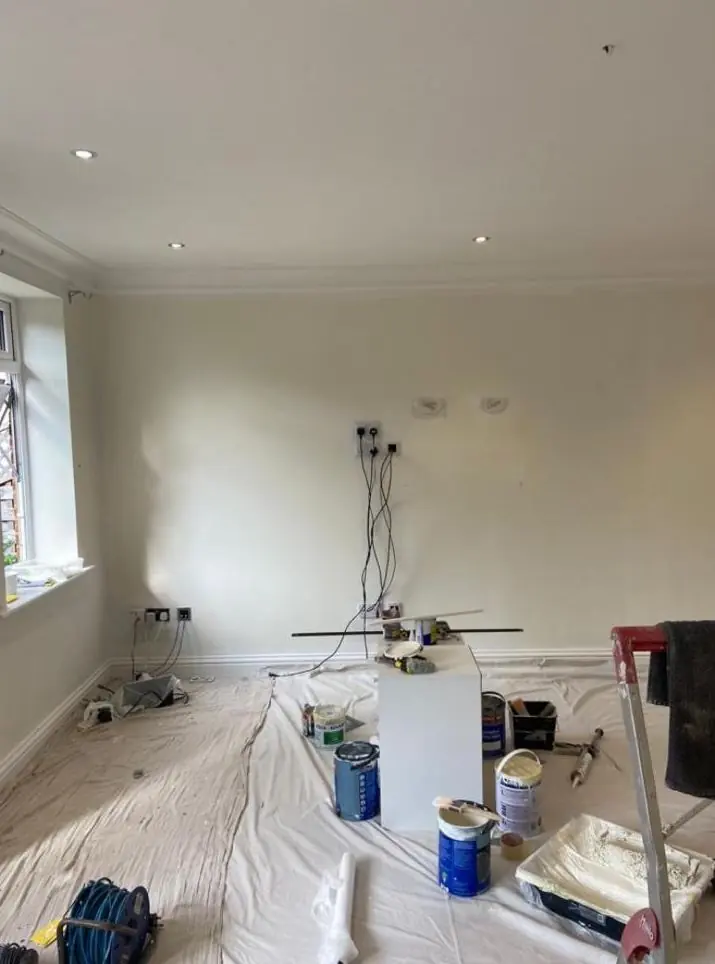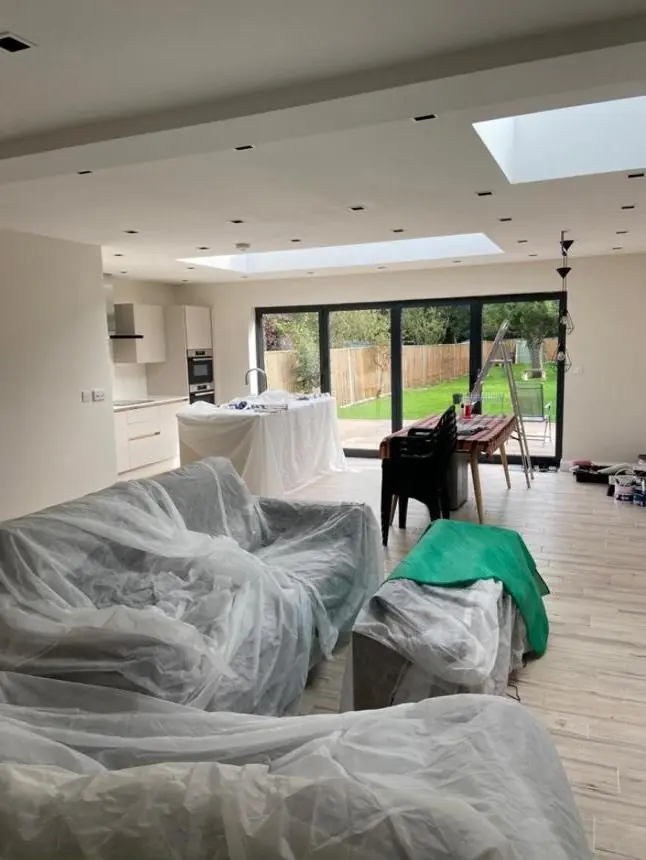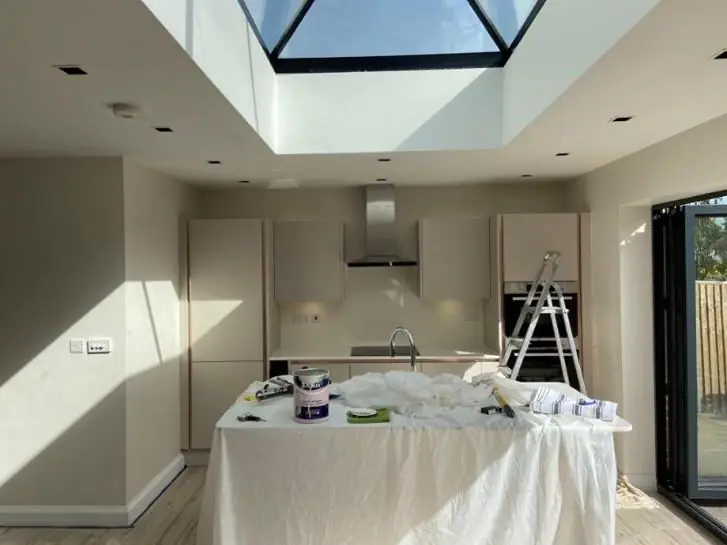
DH Painter & Decorator decorates new plaster in St David's, NN2, about 1.9 miles north of Northampton town centre. Once the plasterer or builder has finished, Dean checks the walls are dry, applies a breathable mist coat and finish coats, and paints new woodwork in extensions, kitchen refits and re-skimmed rooms.
Where fresh plaster comes from in St David’s
Very little in St David’s is new build. The housing is mostly interwar terraces from around 1939, 1950s semis and bungalows, and 1970s flats, so new plaster here almost always means work on an existing home rather than a new estate. The common sources are:
- rear extensions and kitchen refits on the interwar terraces and the post-war semis, with Eastern Avenue North, where most homes in the sample are owner-occupied, a likely source of owner-led building work;
- whole-room re-skims where the original plaster on pre-war streets has cracked or blown;
- patch plastering after rewiring, new heating or a damp repair;
- refurbished flats in the Newnham Road and Drayton Walk blocks.
Each brings its own decorating issue, but the rule underneath is the same: new plaster has to be dry, sealed with a thinned coat that it can soak up and breathe through, and only then painted. The step-by-step reasoning is in our guide to painting new plaster and the mist coat.
Fresh gypsum beside old lime on the pre-1920 streets
Some of the oldest stock in the district is on St Davids Road, where 1914 is the most common EPC build year, and on Langdale Road, which reaches back to 1900. In houses of that age, the original walls may be lime-based plaster, and a modern repair is usually gypsum. The two behave differently. Gypsum dries to an even pale pink and takes a mist coat well; old lime needs to stay breathable, and sealing it with heavy vinyl paint can trap moisture and lead to flaking.
Where a room has both, we treat them as two surfaces. The new patch gets its mist coat, the old wall gets a breathable emulsion, and the join is filled and feathered so the line does not show through. If the repair has been finished proud of the old wall, we will say so before painting, because paint will only make the step more obvious.
Drying time against a tenancy deadline
With social and private renting so common from Dorset Road to Drayton Walk, re-plastering often falls inside a void period with a re-let date already set. That puts pressure on the most important part of the job: waiting for the plaster to dry. A full skim usually needs at least a week in reasonable conditions, longer in winter, before a mist coat goes on; painting too soon can lead to blooming and poor adhesion within months.
For landlords on a tight schedule, we suggest getting the plasterer in as early as possible in the void, keeping the heating on and windows cracked open, and letting us decorate the rooms that were not re-skimmed first. That way the newest walls get the longest to dry. For changeovers more generally, see our landlord decorating service.
Extensions on interwar and 1950s houses
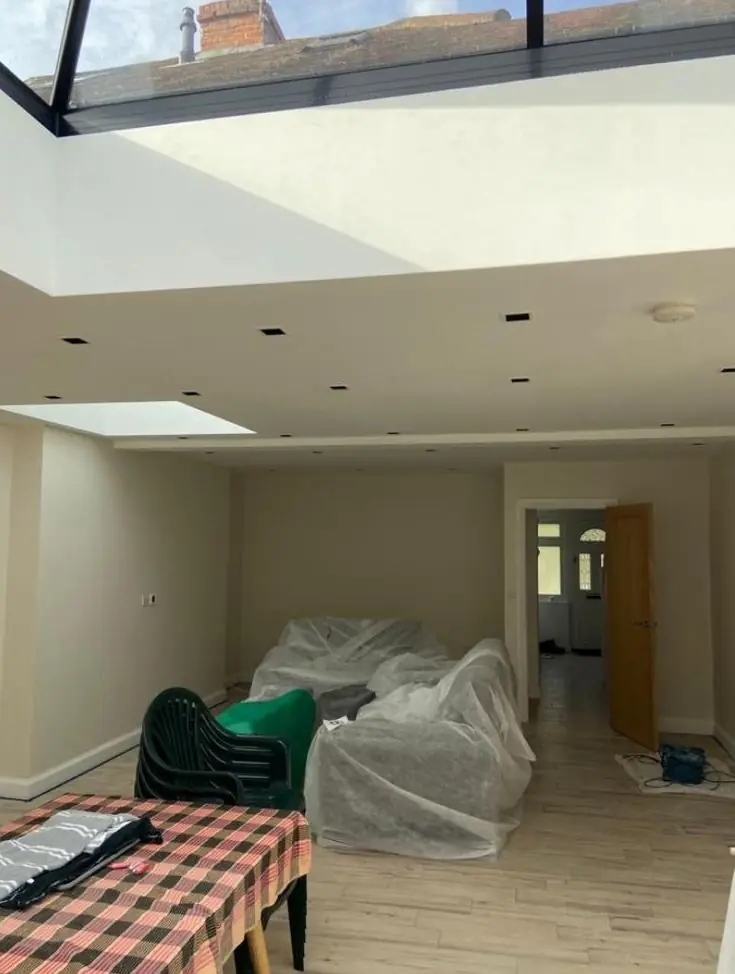
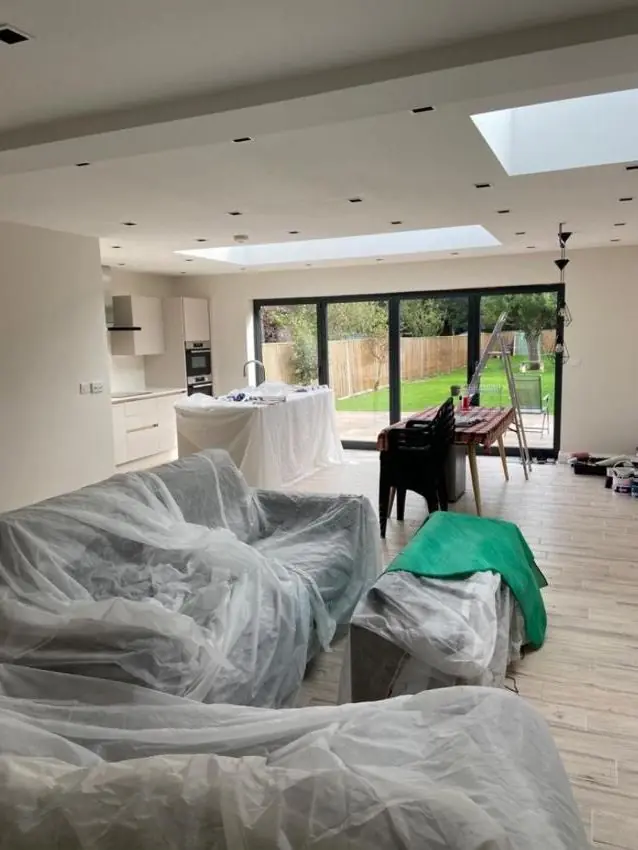
A rear extension on a mid-terrace means new plaster meeting the back wall of a house built around 1939, often with a new opening knocked through. Cracks along that junction are common as the new structure settles, so we fill them with a flexible filler after the mist coat shows them up, rather than before. New MDF skirtings and architraves are sealed and primed so they do not raise or swell.
Many terraced roads here have no direct rear access other than shared passages, so the builder may have brought materials through the house. We check hall and stair walls for knocks before starting, so we can add them to the quote if you want them done in the same visit. On-street parking is normal on those roads, and we plan for it.
Our main new plaster and extension painting page lists everything a typical extension quote covers. Our St David’s area page covers other services in the neighbourhood.
Last updated by Dean, DH Painter & Decorator.