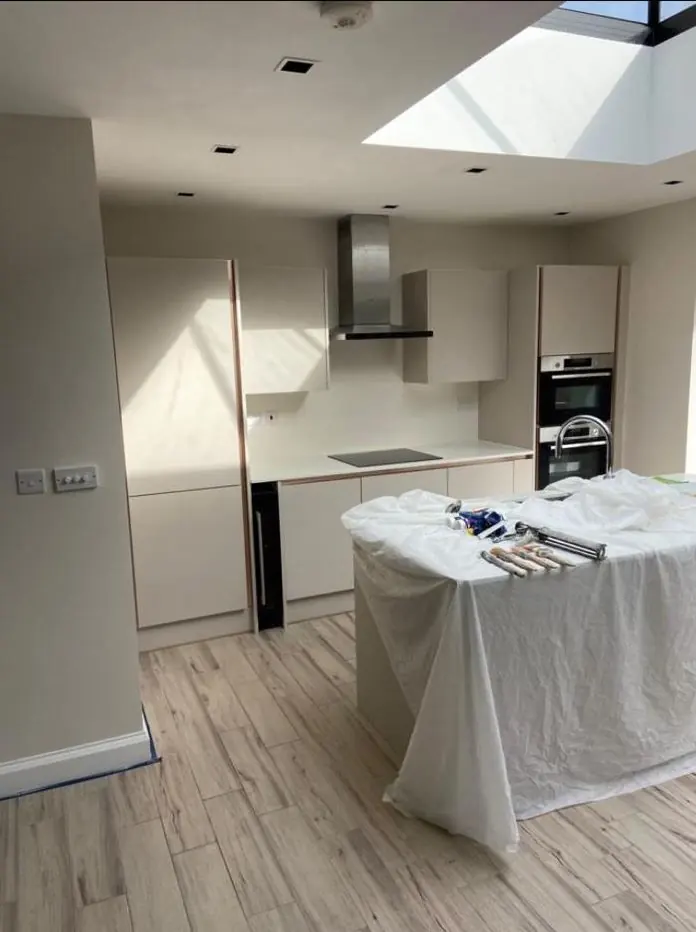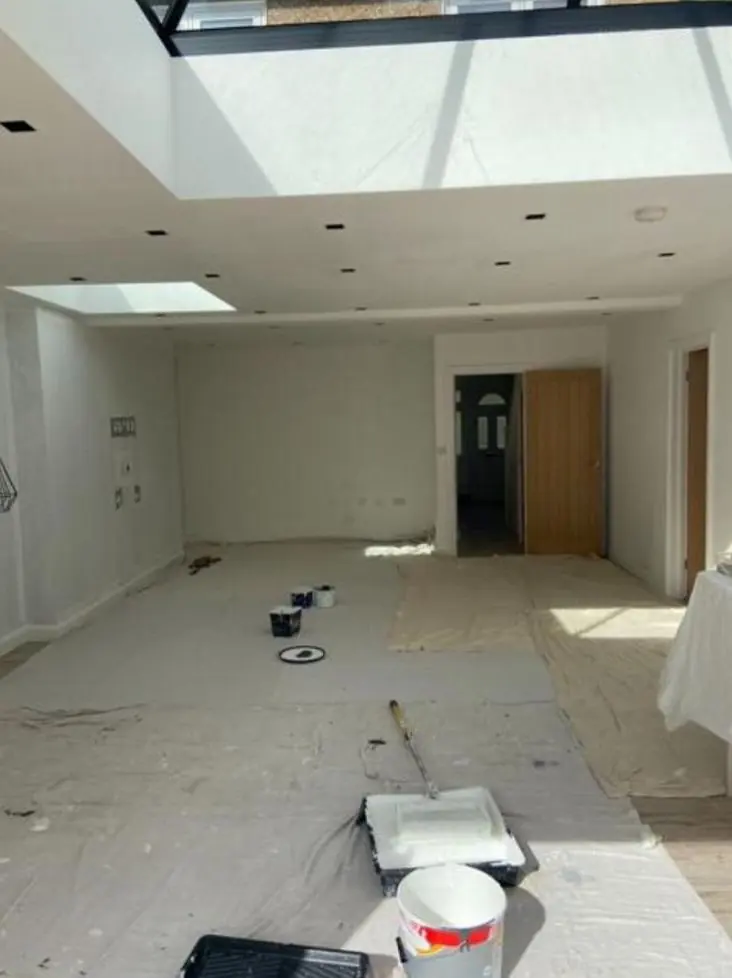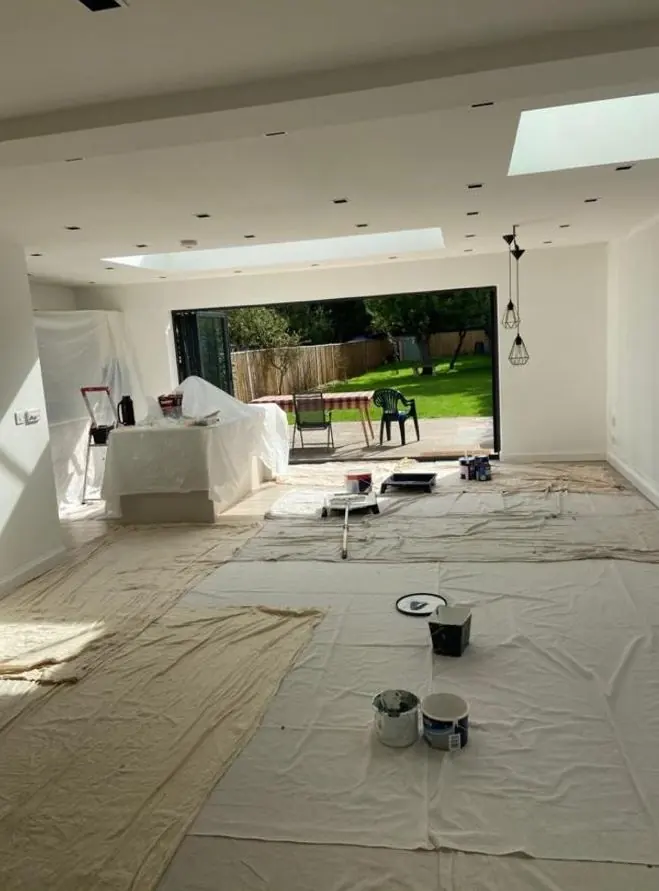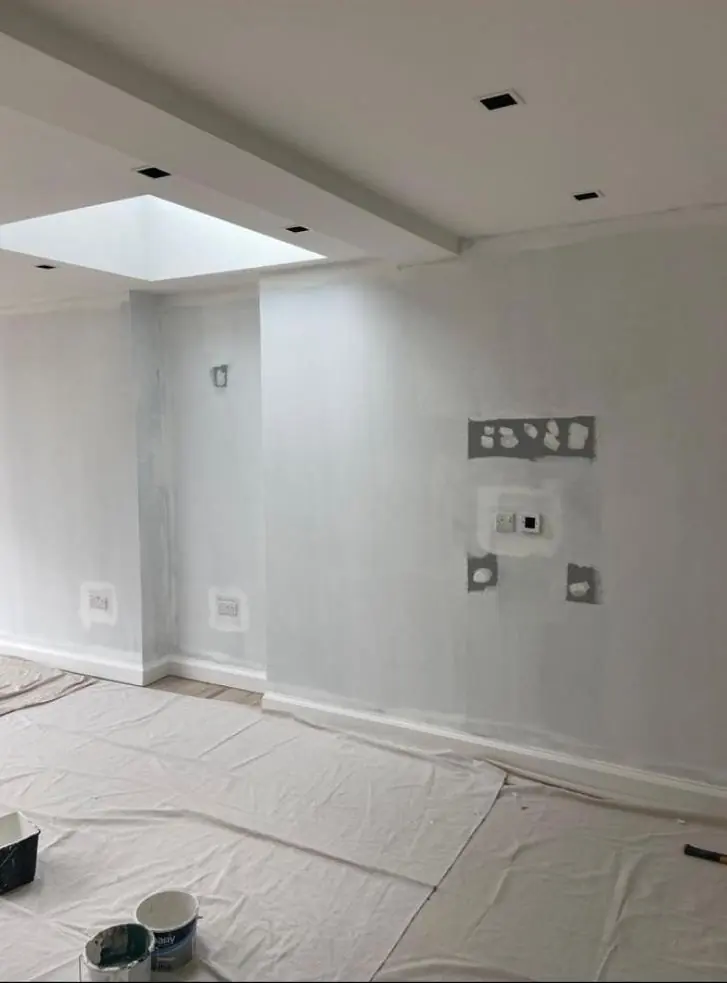
Dean decorates rented homes in Kislingbury for landlords and letting agents, mainly repaints between tenancies, travelling about 3.6 miles west from Northampton town centre. Kislingbury is largely owner-occupied, so lettings here are occasional and often involve period cottages that need more care than a standard rental repaint.
A small, mostly owner-occupied lettings market
Kislingbury is not a student or shared-house area. At the 2001 census, 79.5% of homes in the village were owned outright or with a mortgage, and we found no evidence of an HMO market. So rental decorating here is occasional: a cottage or later house let out for a while, or a property turned round between one tenancy and the next.
That shapes the work. Instead of a quick magnolia refresh across a block of flats, a Kislingbury let is more likely to be a single house with character features, and the landlord often wants it kept in condition because it may go back to being a family home.
Letting a listed cottage
The village has 27 listed buildings inside its conservation area, many of them ironstone cottages from the late 1600s and 1700s on The Green, Church Lane, School Lane, Mill Road, High Street and Hodges Lane. If your rental is one of them, a few things change.
- Listed building consent can cover interiors. A like-for-like repaint of already painted walls and woodwork is normally maintenance, but stripping original joinery, painting bare timber or changing an external colour may need consent first. Check with West Northamptonshire Council.
- Old lime-plastered walls need breathable paint. A durable vinyl emulsion, the usual rental choice, can trap moisture on lime and lead to blistering and complaints of damp from the next tenant.
- Exposed beams, bressumers and old plank doors are cut in by hand, which takes longer than a modern box room.
Damp, the river and tenant complaints
Kislingbury’s flood risk from the Nene, and the damage several houses took in 1998, mean a riverside let may have re-plastered ground-floor walls. In a let property, mould spotting and bubbling paint on cold, damp-prone walls are a frequent end-of-tenancy problem. We wash down and treat mould before painting, and on walls that need it we suggest a breathable or mould-resistant finish suited to the plaster, rather than piling more coats on. Where there is an active damp problem, we will say so rather than paint over it.
Outside the let: windows and doors
Many lettings in the old core have timber casements under wooden lintels or multi-pane sashes, and these are often the part of a rental that is left too long. Flaking paint on old softwood lets water in, and a rotten sill becomes a joinery bill rather than a painting one. We can check the outside of a let at the same visit as the inside. Work is booked for a dry spell, because sheltered elevations in this low-lying village dry slowly, and flexible microporous paint suits old softwood. On a listed cottage, keep the existing colour unless consent for a change has been confirmed.
Making the next turnaround quicker
For later houses around the village core, the standard rental approach works well: one neutral wall colour and one woodwork colour throughout, in a wipeable finish, with the product names and colour codes written down for the file. Next time, touch-ups match and fewer rooms need a full repaint. We will tell you honestly which rooms need full coats and which only need attention.
Agents can arrange access and keys with us directly. Parking on the narrow walled lanes in the old core is tight, so we plan where the van goes before work starts. The landlord and letting agent decorating page sets out what an end-of-tenancy repaint usually covers.
Last updated by Dean, DH Painter & Decorator.