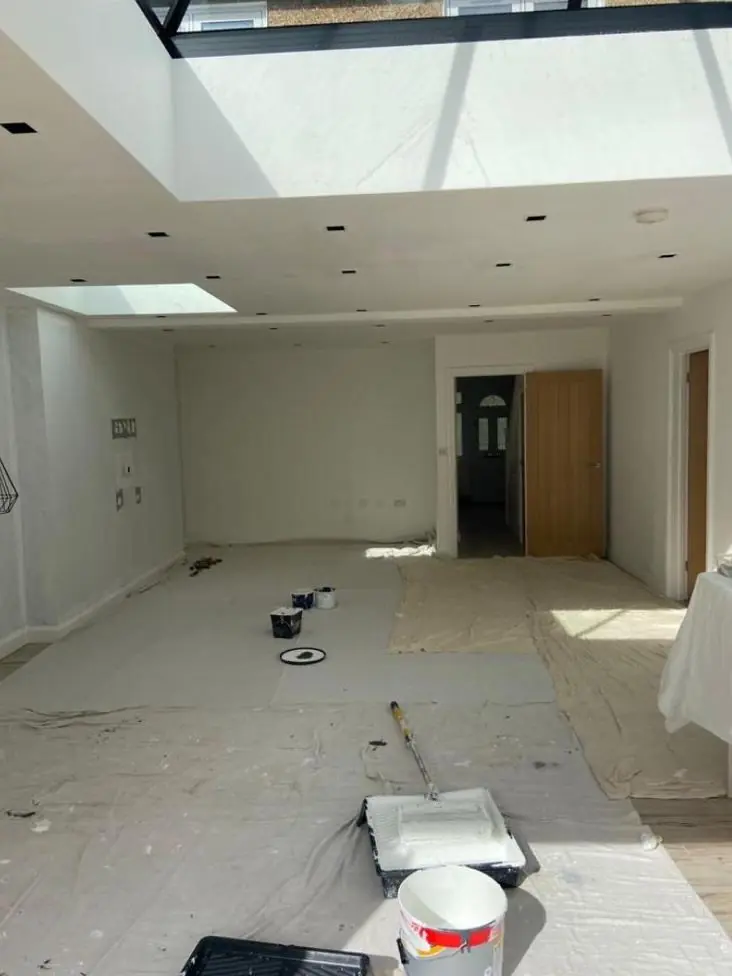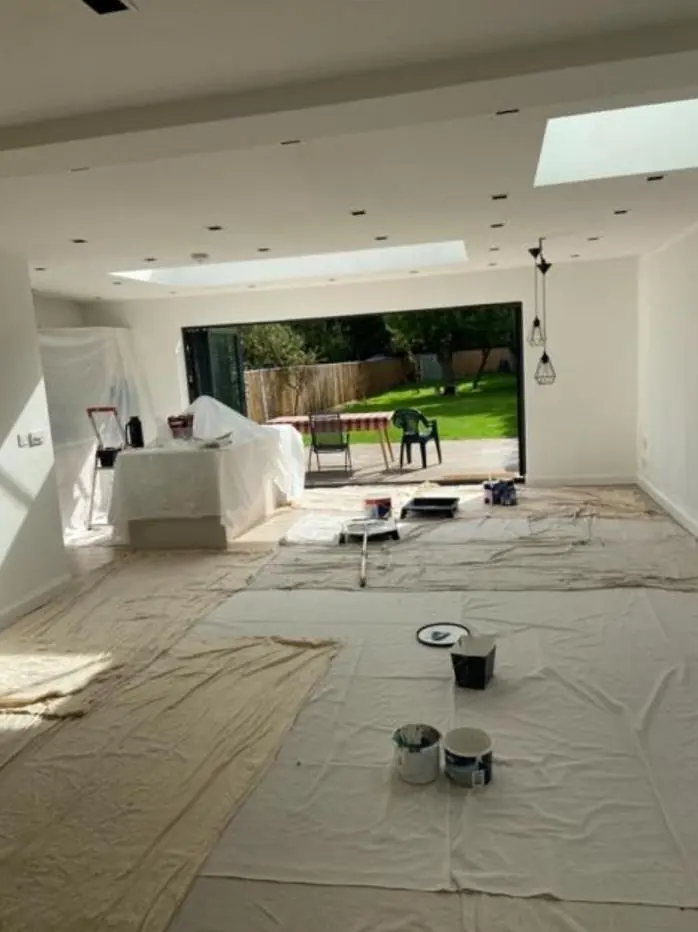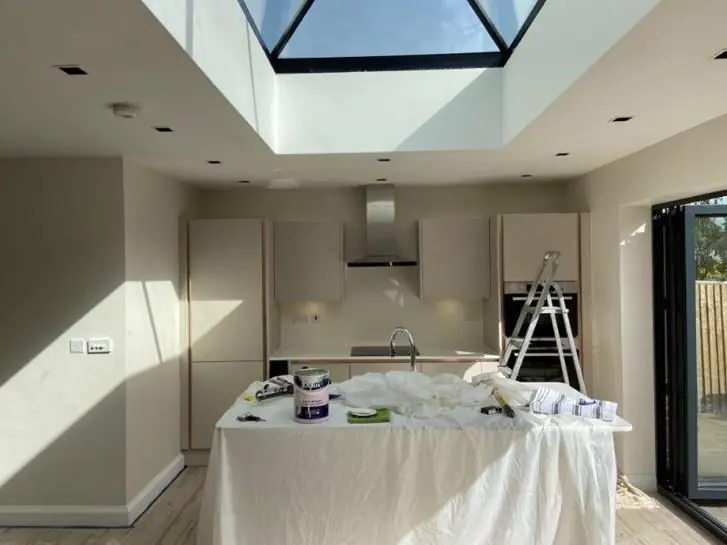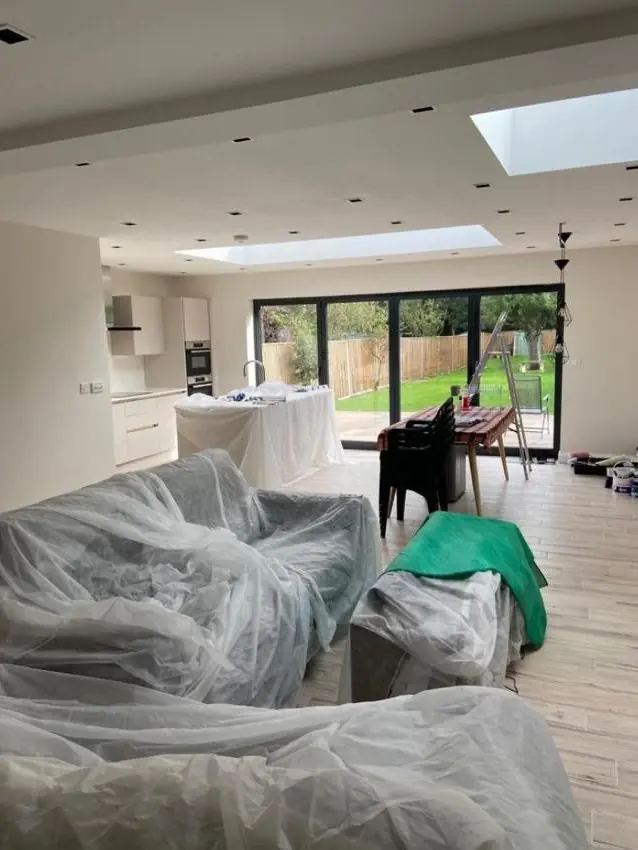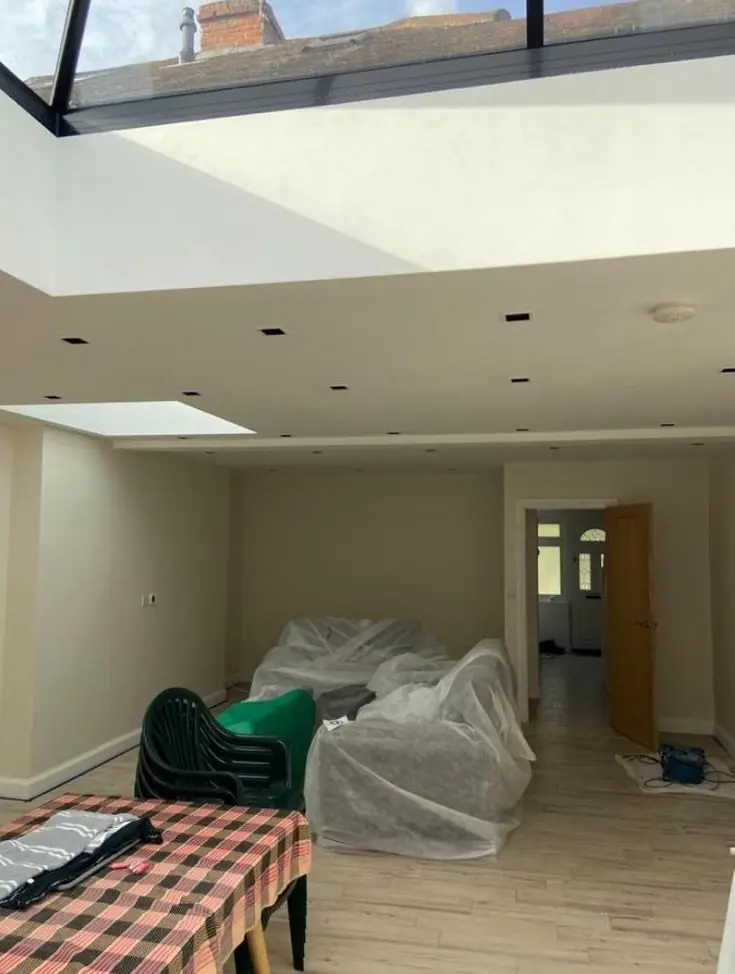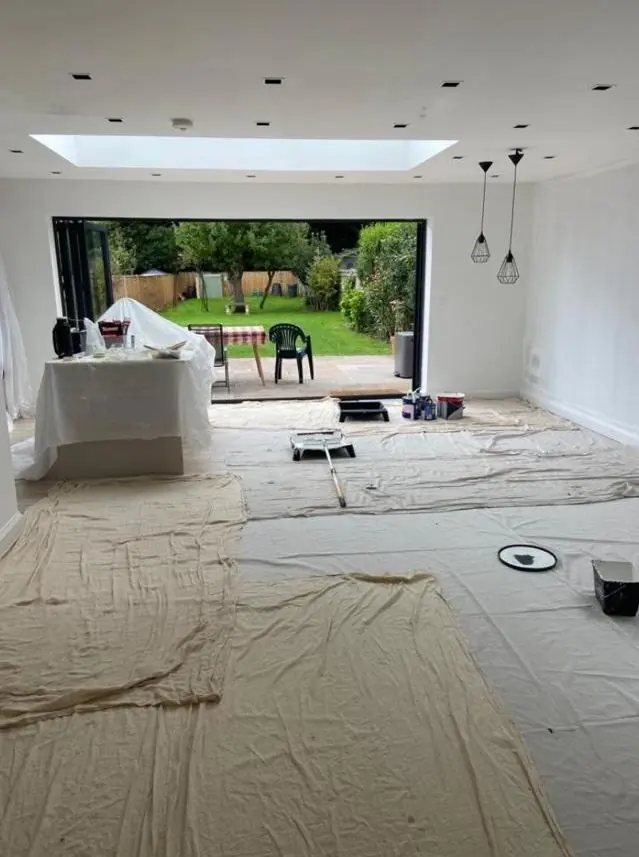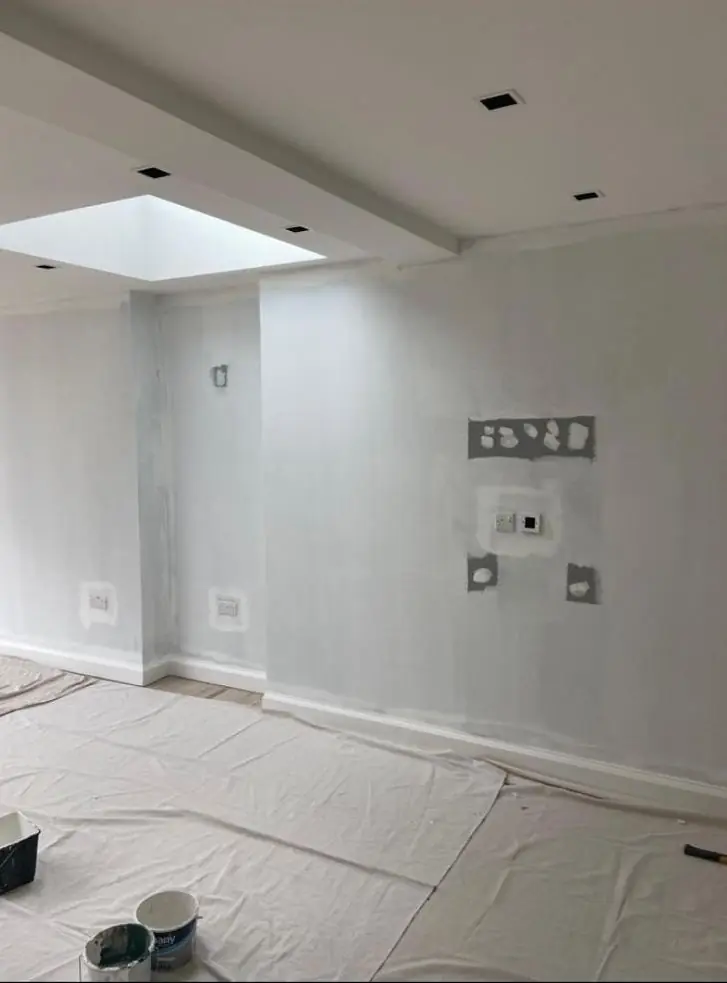
We decorate fresh plaster and new extensions in Kislingbury, NN7, which is 3.6 miles west of Northampton. Two jobs are most likely here: an extension meeting an old ironstone cottage, or a room re-plastered after damp or flooding near the river. Both need full drying time and the right first coat.
Where old walls meet new ones
Several listed entries for Kislingbury note 20th-century extensions added to 17th and 18th-century cottages. That is the classic Kislingbury new-plaster job: a modern gypsum-skimmed extension butting up against old walls that were finished in lime. The two materials behave differently. Gypsum wants a mist coat of thinned contract matt so the finish coats grip. Old lime plaster needs to keep breathing, and a vinyl emulsion over it can trap moisture and start to blister.
So on these jobs we treat the two sides of the join separately. New gypsum gets its mist coat and full finish. Original lime walls get a breathable paint, and the junction between them, where a crack almost always opens up, is filled with a flexible filler and painted last. Colours are matched across both so the room still reads as one space.
Rooms re-plastered after river flooding
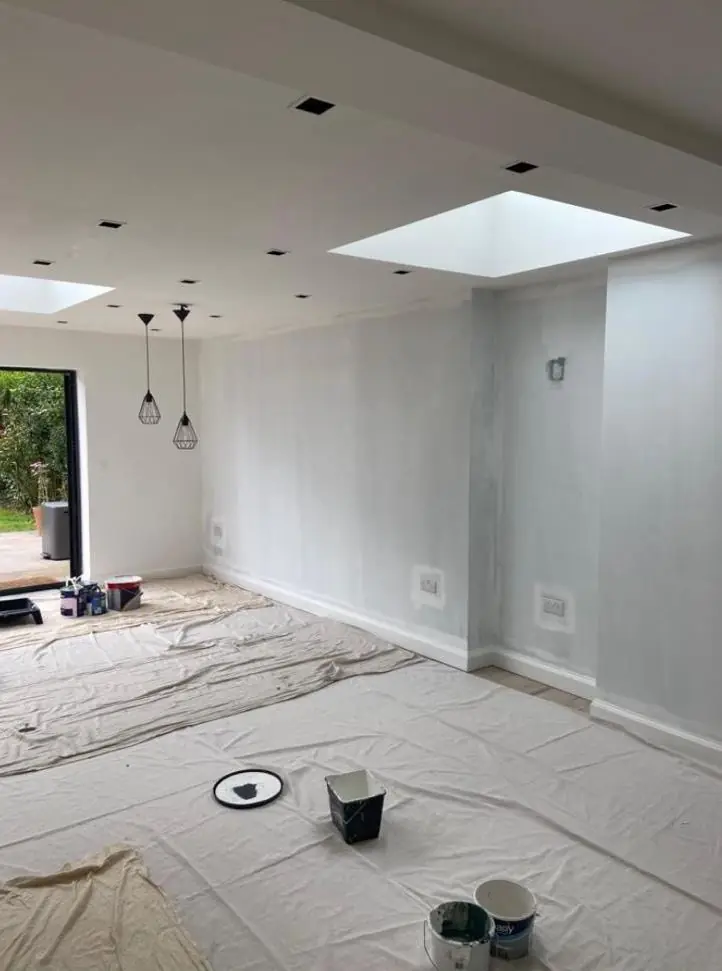
The River Nene runs along the north of the village and often floods. A serious flood in 1998 damaged several houses, and flood attenuation work has been done since. Ground floors in the lower part of the village may have been re-plastered once or more, sometimes with modern renovating plasters over old walls.
Plaster laid on a wall that has been soaked dries slowly, and the village sits low in the valley at about 66 metres above sea level, with damp air that slows drying further. We check walls with a moisture meter before any paint goes on. If a wall is still giving off moisture, painting early traps it and the finish fails. Where the plasterer has used a specialist damp-resistant plaster, we use the coating the manufacturer recommends rather than a standard mist coat.
Drying times we work to
| Situation | What we look for before painting |
|---|---|
| Fresh skim on plasterboard in an extension | Even pale colour with no dark patches, and a dry meter reading, usually after a few weeks with heating and ventilation |
| Backing plaster and skim on old solid walls | Longer drying, especially on north-facing or ground-floor walls near the river |
| Lime plaster repair in a cottage | Fully carbonated and dry, then a breathable paint only, no vinyl mist coat |
| Renovating plaster after flood or damp work | The plaster maker’s drying advice and approved paint system |
The first winter matters as well. New plaster in a heated extension often shows fine hairline cracks as it settles, most often at ceiling angles and around the junction with the old wall. We fill and touch those in as part of the snagging, and suggest keeping trickle vents open while the room dries, because a low, damp valley site holds moisture in the air longer than higher ground.
The full method, from mist coat ratios to snagging, is in our guide to painting new plaster with a mist coat.
New woodwork and the rest of the extension
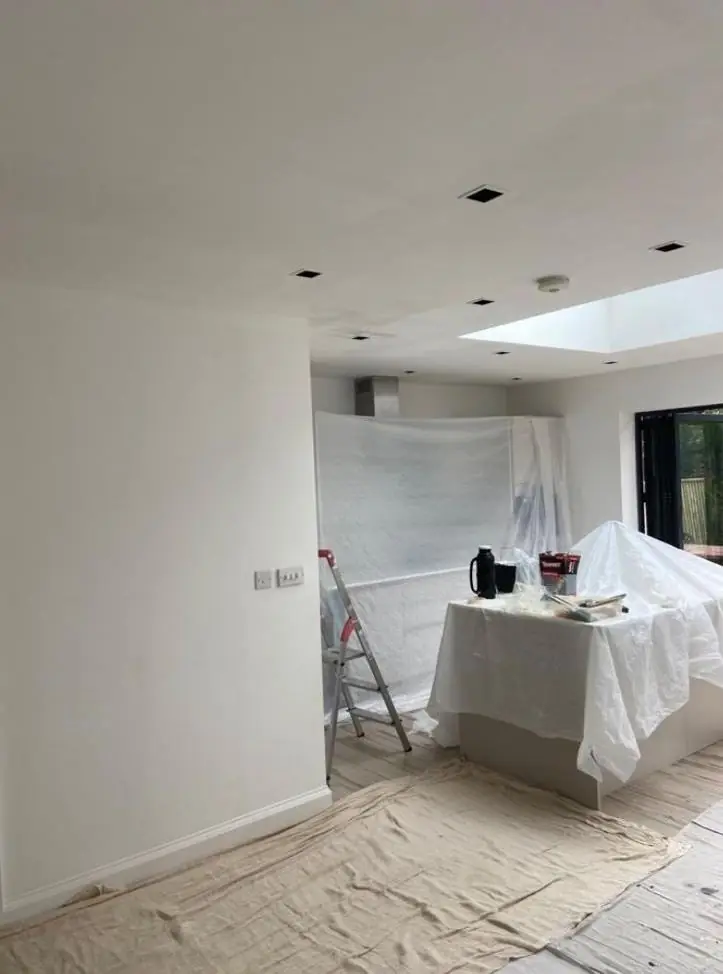
An extension brings new skirtings, door linings and architraves as well as plaster. Bare timber is knotted, primed and undercoated before the top coats. In the cottages it often sits beside centuries-old joinery, so we suggest a slightly warmer white or a soft heritage shade that does not make the old woodwork look tired. Our new plaster and extension painting page covers what a typical quote includes.
If you are adding to a listed building in the conservation area, any consent questions belong to the build stage and your builder or architect. We pick up once the plaster is on, and we cover Kislingbury from our Northampton base, around 3.6 miles away.
Last updated by Dean, DH Painter & Decorator.