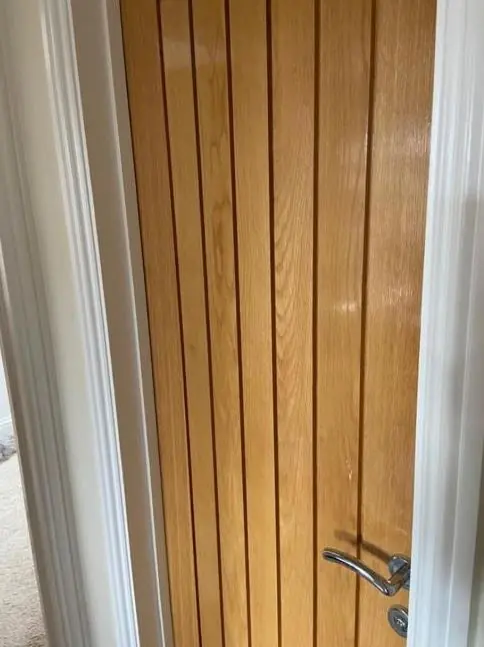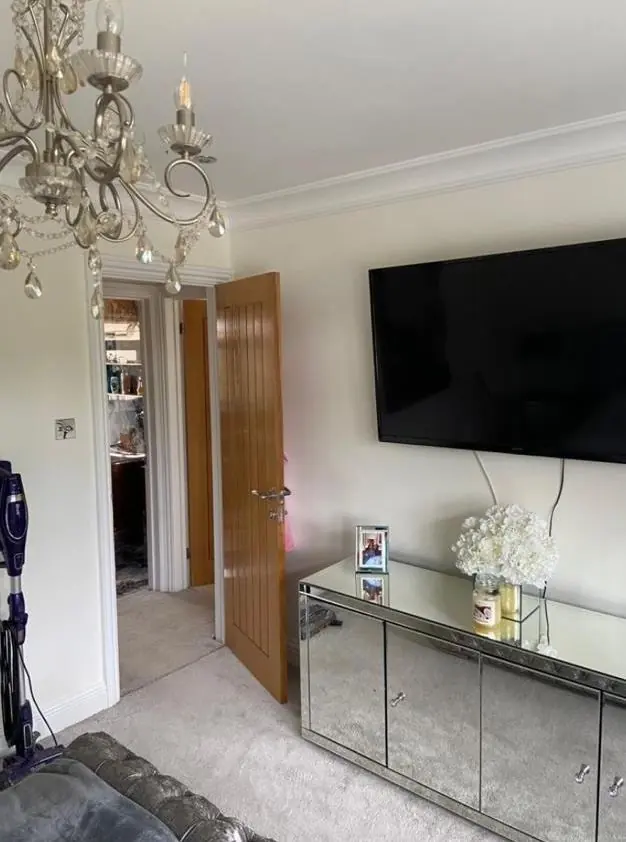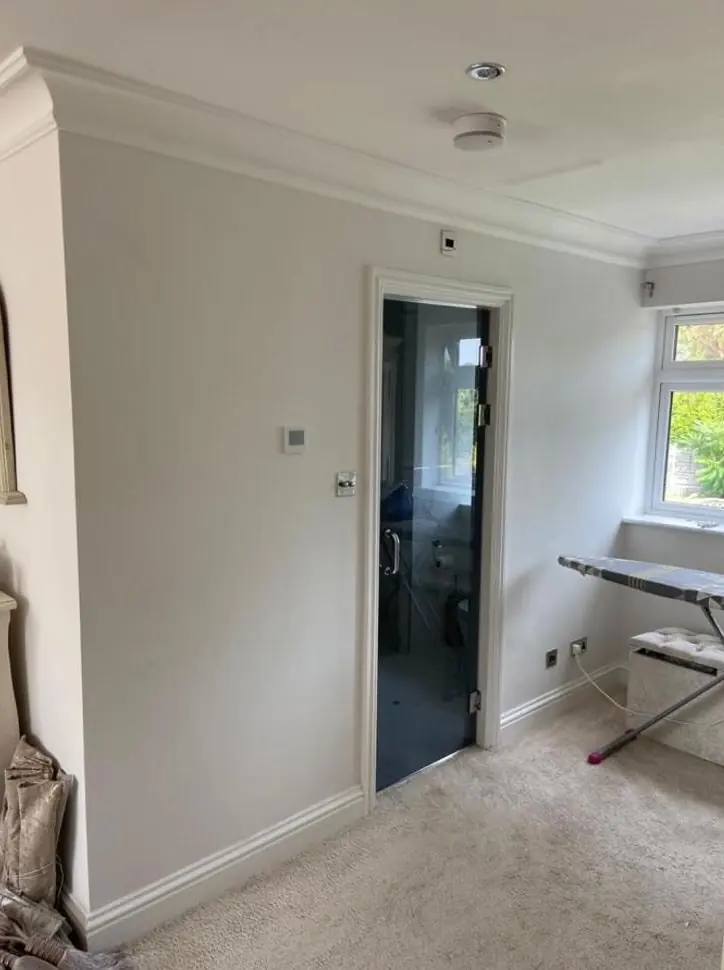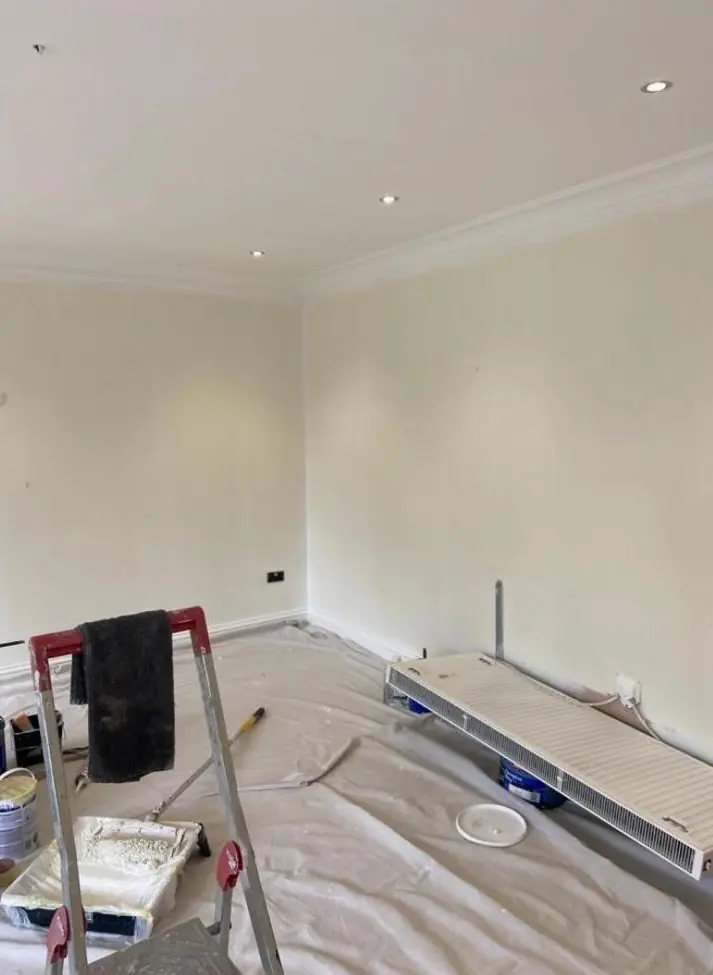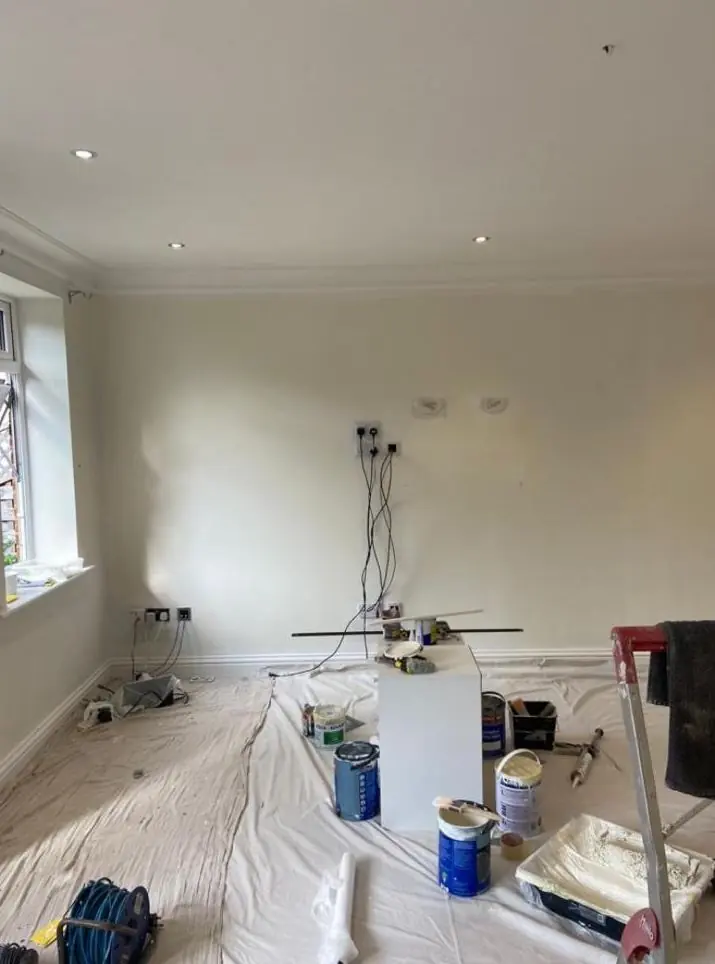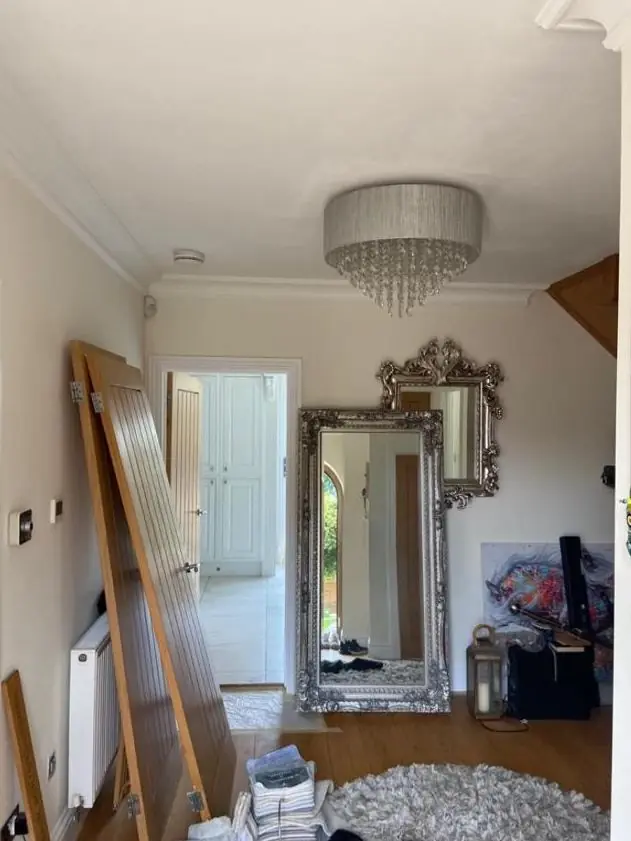
Dean paints decorative finishes in Kislingbury (NN7, 3.6 miles west of Northampton): picking out panelling and period mouldings in the village's older houses, and feature walls or paint effects in later homes. Every job starts with a free written quote.
Period joinery in the 18th-century houses
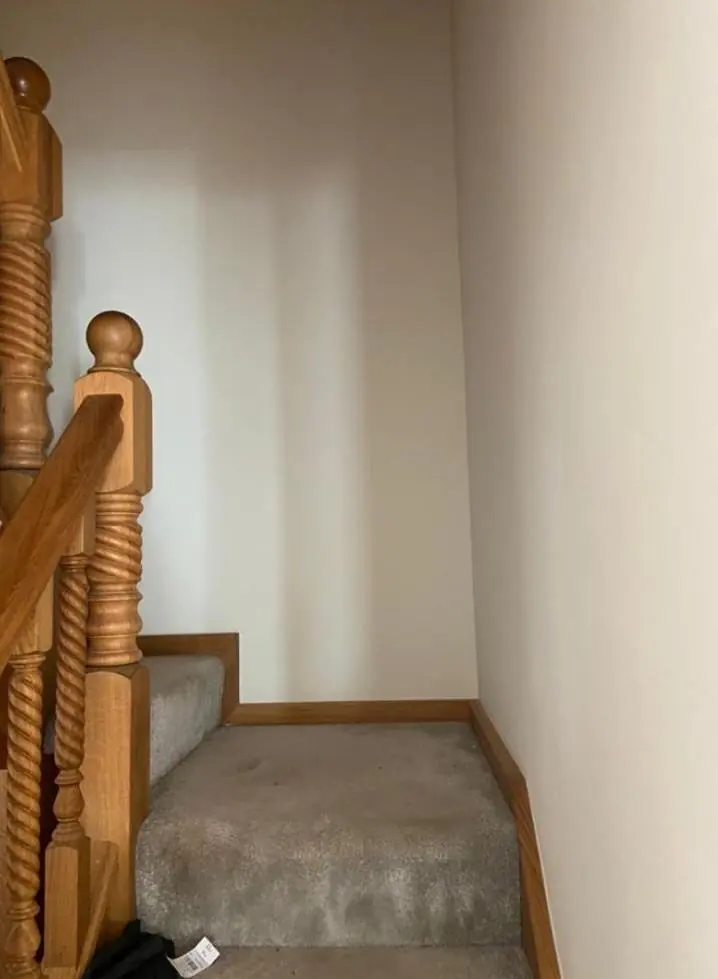
The larger houses in Kislingbury’s conservation area, built between the early 18th and early 19th centuries, carry the kind of joinery that decorative painting suits. The Old Rectory’s listed interior includes fielded panelling and a staircase with barley-twist balusters around an open well, and other polite houses on The Green and High Street have stone doorcases and multi-pane sashes. In rooms like these the aim is usually restraint: a panelled room in one carefully chosen colour, with field, moulding and frame given slightly different sheens, or a dado picked out in a deeper shade below a lighter wall.
Old panelling often carries many layers of paint that have softened its profiles. Before anything goes on, we decide with you whether to work over them or take some back by hand to sharpen the mouldings. We do not use heat on old joinery in listed houses, and anything beyond like-for-like redecoration in a listed building is worth checking with the council first.
Cottage rooms where less is more
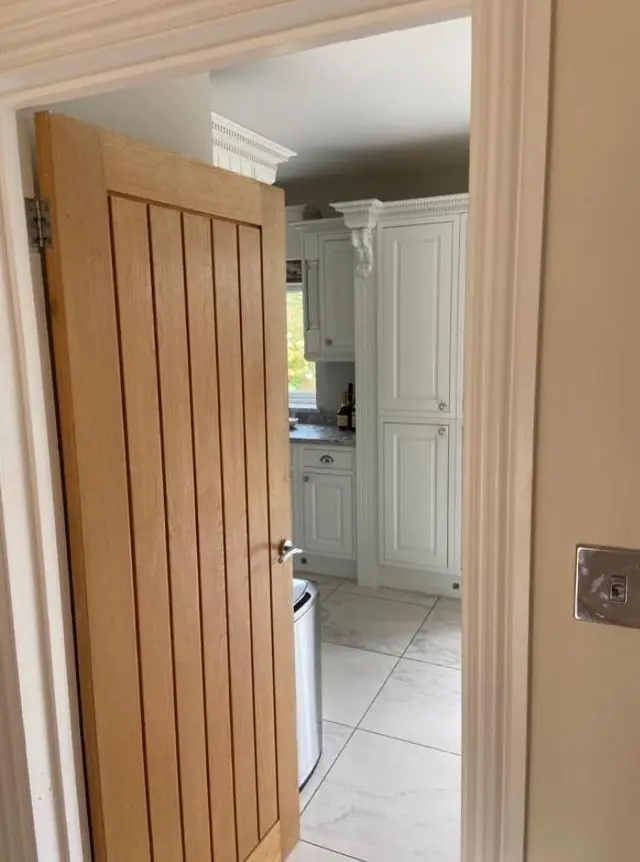
The two-storey-and-attic cottages have a different character. Chamfered spine beams, bressumers over fireplaces, plank doors and uneven lime walls already decorate the room. What suits them is usually limewash or a soft flat colour with some natural variation, rather than a faux effect that fights the texture. Where a 20th-century extension has been added to one of these cottages, as several listing entries record, a quieter finish in the old rooms and a bolder one in the new part can mark the join honestly. A painted fireplace surround, or a contrast colour on plank doors and deep window reveals, adds interest without hiding the age of the room.
Feature walls and effects in newer homes
The later housing around the historic core has flat modern plaster, so effects that need a smooth base work well there: colour-washed walls, two-tone splits, half-height panelling built from new mouldings, painted stripes, or a single feature wall in a deep shade. New MDF panelling needs every pin and joint filled and sanded so the finished wall reads as one surface rather than a kit of parts.
Because these later houses sit around a stone conservation-area core, a painted panel scheme or a heritage colour can borrow some of the old village’s character, without the consent questions that come with a listed interior.
Matching the finish to the house
| Setting | Finishes that tend to suit | Things to check first |
|---|---|---|
| Panelled room in a listed house | One colour with varied sheen, picked-out mouldings, traditional eggshell | Whether the work touches historic fabric |
| Beamed cottage room | Limewash, soft matt colour, painted plank doors | Breathable paint on lime plaster |
| Staircase with turned or twisted balusters | Contrast handrail and spindles, darker string and skirting | Access on narrow or tall stairs |
| Later house | Feature wall, colour wash, new painted panelling | Sound, smooth plaster underneath |
Any decorative finish depends on the surface beneath it, which is why preparation takes most of the hours. The full range of effects is on the main decorative finishes page, and the other work we cover in the village is on the Kislingbury area page. If you want to understand what drives the price of detailed work, the painter and decorator cost guide sets it out.
The village is just off the A4500. Decorative work runs over several visits because layers need to dry, so on the narrow walled lanes we agree van parking once at the start rather than each morning.
Last updated by Dean, DH Painter & Decorator.