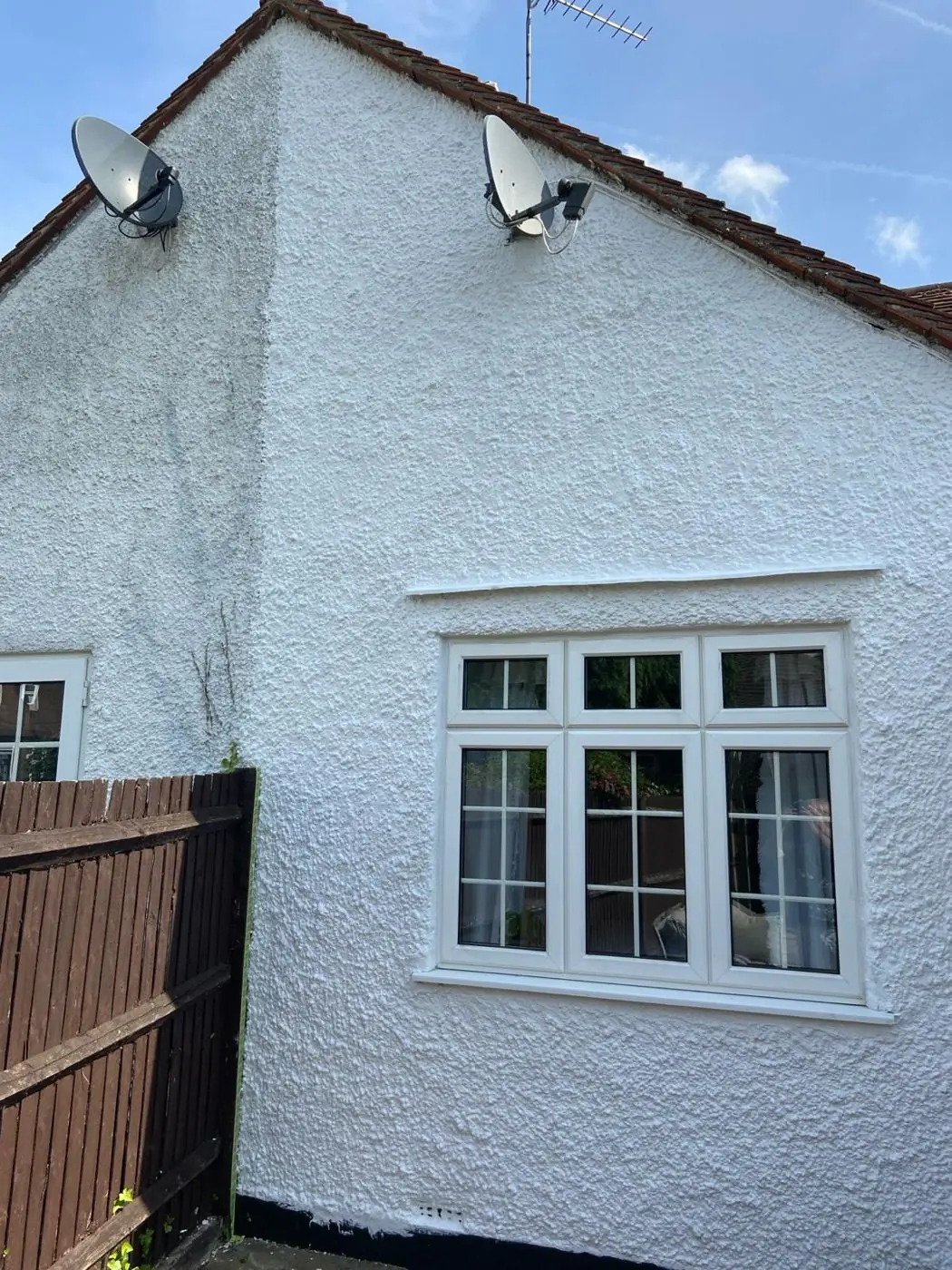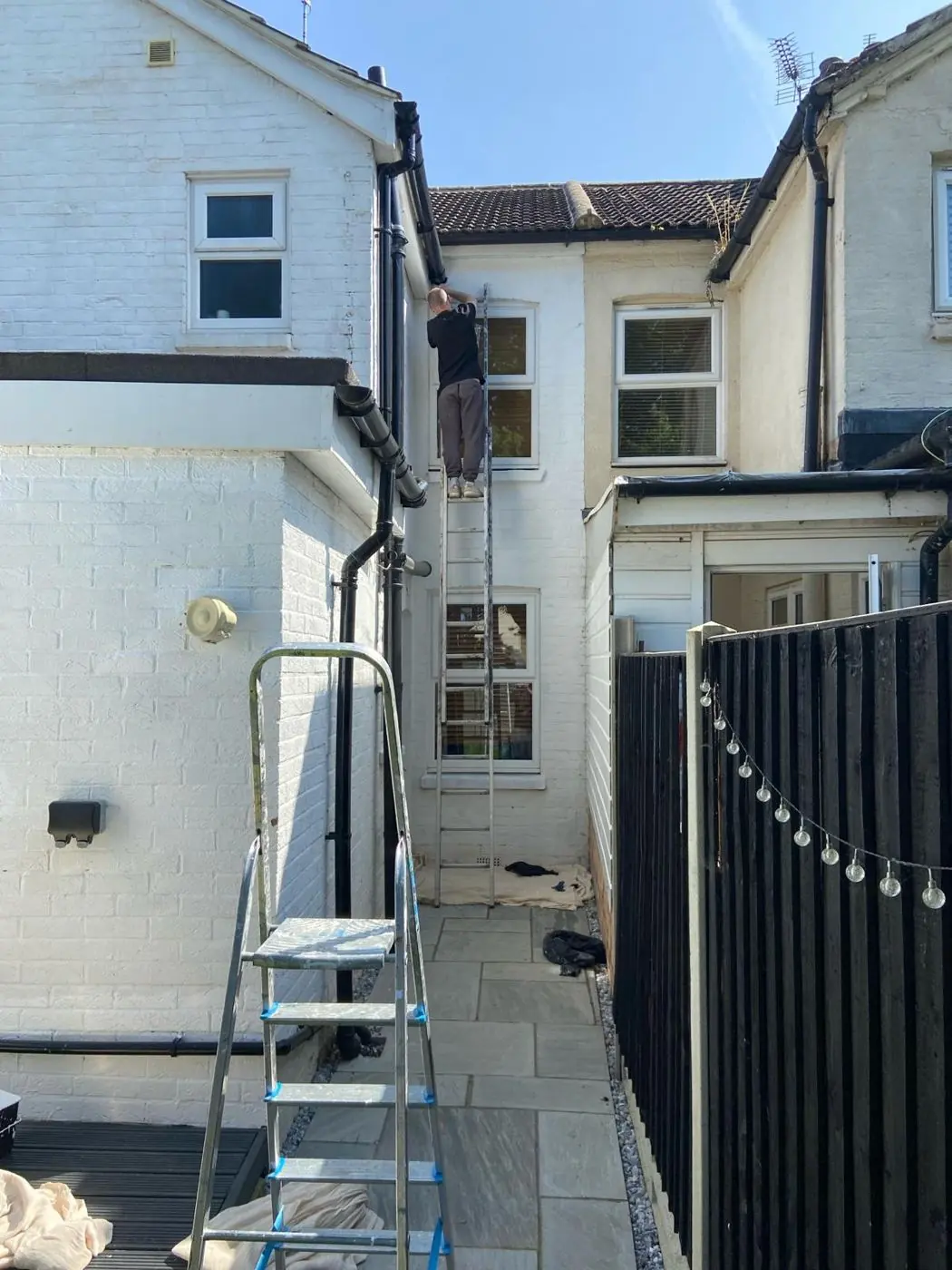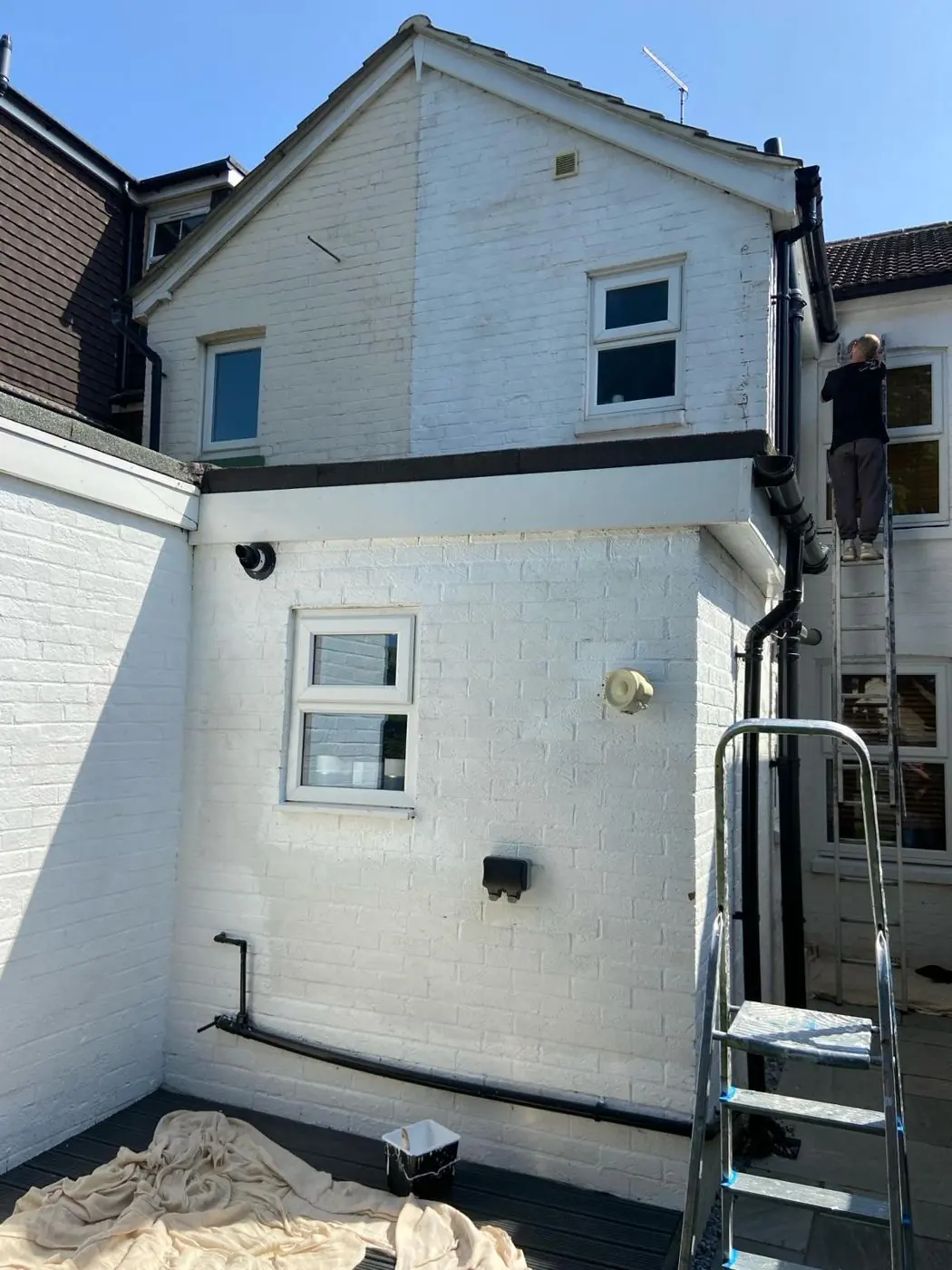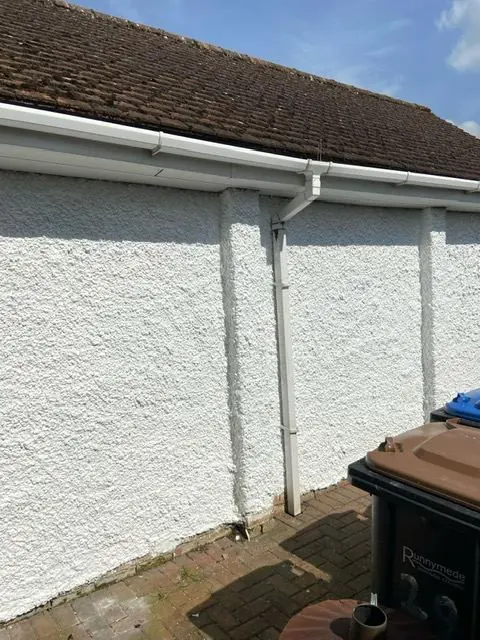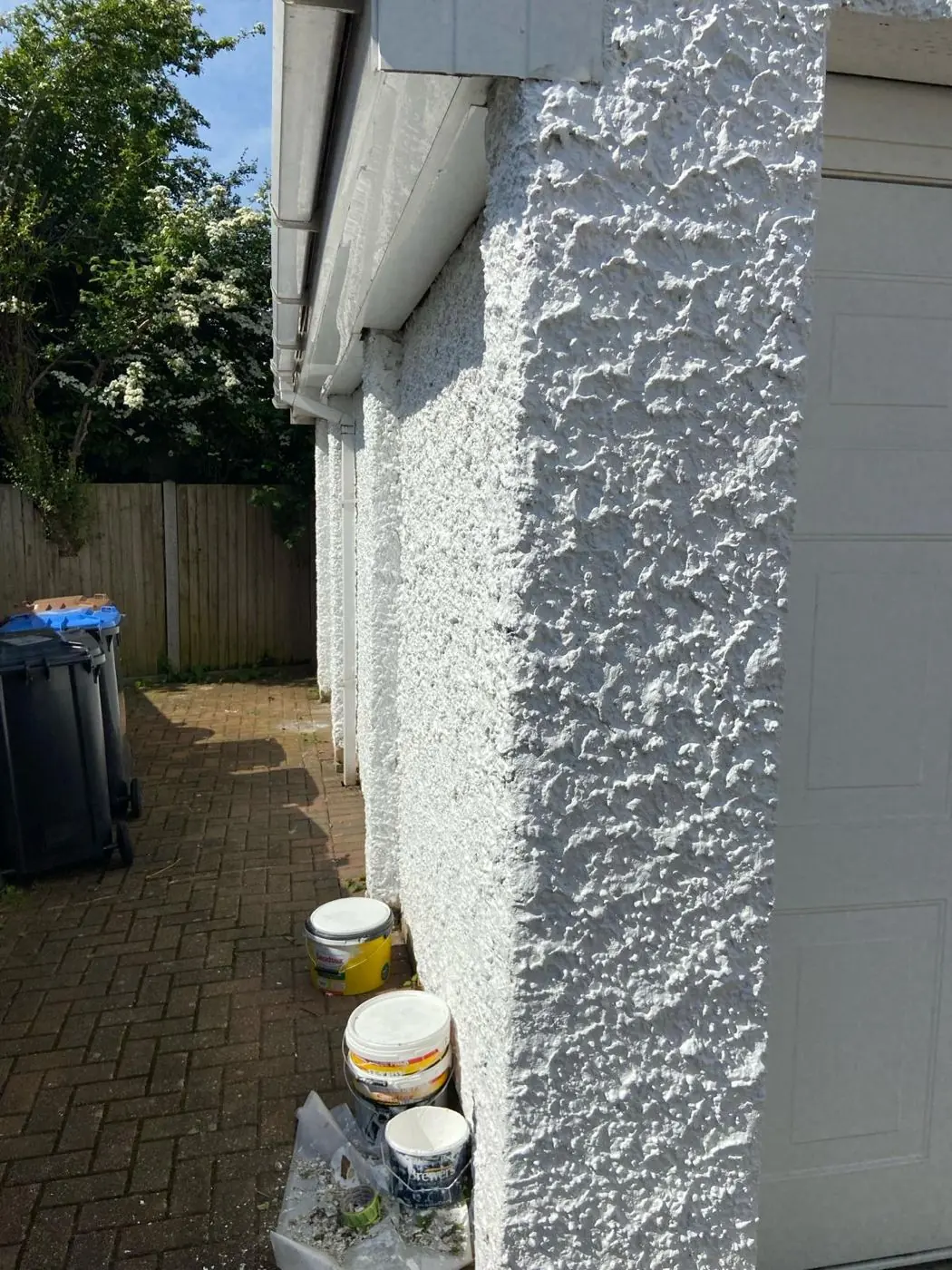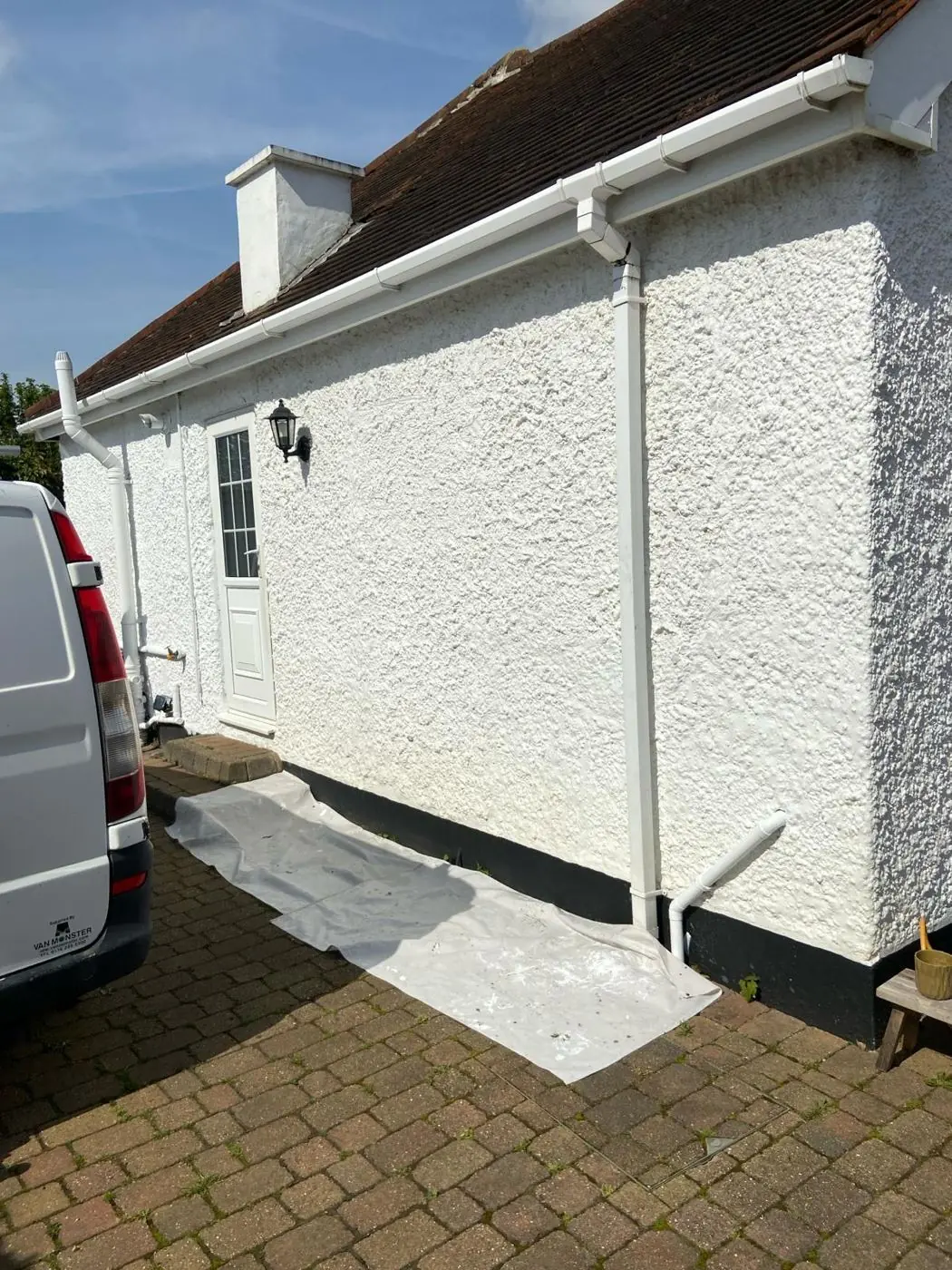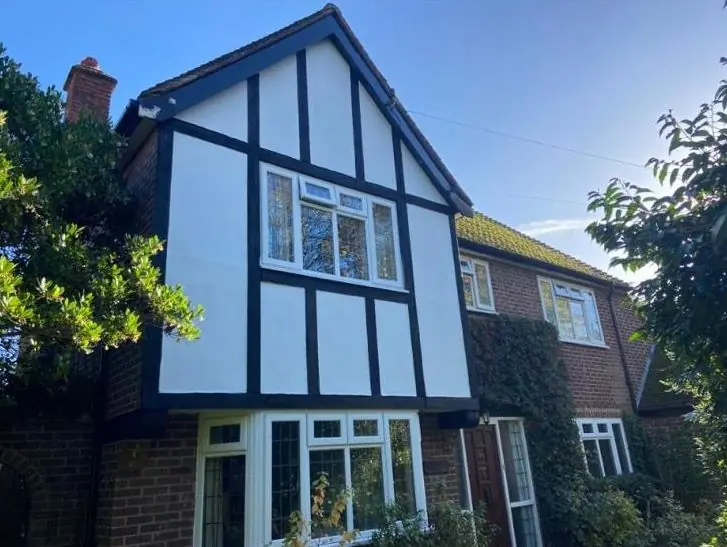
DH Painter & Decorator paints fascias, soffits, bargeboards and gutters across Kislingbury, a village on Northampton's west side some 3.6 miles from the centre. How much roofline timber there is depends on the age of the house, from almost none on the old cottages to full boarding on later homes.
How much roofline does your house actually have?
Kislingbury’s older cottages in the conservation area mostly have stone-coped gables finished with kneelers and brick end stacks. On a gable like that there is no bargeboard at all, and the eaves along the front are often short, with the gutter carried close to the wall. The painting is small in area but fiddly: a narrow eaves board, a run of gutter and a downpipe tight against ironstone, sometimes above a timber lintel that wants doing at the same visit.
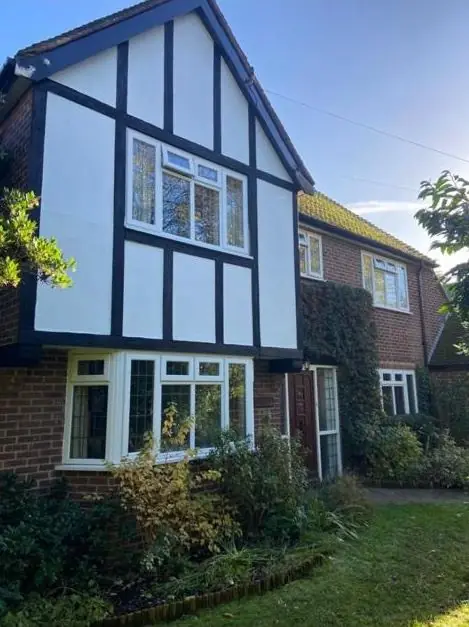
The 20th-century and newer houses around the core are the opposite. They carry standard fascias, boxed or open soffits and bargeboards on the gable ends, which is a conventional roofline job with a lot more surface to prepare.
| House type in the village | Typical roofline timber | Main concern |
|---|---|---|
| Late 17th and 18th-century ironstone cottages | Short eaves board, gutter and downpipe; coped gables with no bargeboard | Keeping paint off the stone and not disturbing old roof edges |
| 18th-century double-fronted houses | Eaves joinery and gutters on taller elevations, slate or plain tile | Height, and colour in keeping with listed status |
| The Sun Inn and other thatch | No conventional fascia | No flame or heat tools anywhere near the thatch |
| Later 20th-century and newer homes | Full fascias, soffits and bargeboards | Algae, flaking on shaded sides, vents and wildlife gaps |
Damp eaves in the Nene valley
Low gravel ground beside the Nene means mornings can stay damp and shaded eaves dry slowly. Soffits under deep overhangs on the newer houses are where mould and paint lifting in strips tend to show first, because the timber never fully dries between showers. We treat any growth, let the boards dry properly and use a microporous paint so moisture can escape from the timber rather than pushing the coating off from behind.
On the polite houses, eaves sit above sashes and painted doorcases, so it makes sense to book roofline work with that joinery to share one access set-up. Gutters matter too. A leaking joint over a fascia will rot the board behind fresh paint within a couple of winters, and on a stone cottage the overflow runs straight down the ironstone. We check outlets and joints first and tell you if there is a repair to sort before we paint.
Getting a ladder up on a walled lane
Cottages built close to Church Lane, Starmers Lane or Hodges Lane often have their front eaves right above the lane, with a stone boundary wall opposite. That leaves very little room for a ladder foot. We set ladders with standoffs to keep weight off old gutters, place barriers so the lane stays usable, and on a three-storey front such as Kislingbury Hall on The Green we may suggest a small tower. Frontages facing the Bugbrooke road see heavy lorries passing, so a second person on the ground is standard when someone is at height there.
On listed buildings, gutter and roofline colours on the street front may fall under listed building consent if they are changing, so we will keep to the existing colour unless you have checked otherwise with the council.
Booking it alongside other work
Roofline painting is often worth doing at the same time as windows and doors, because the access is already set up. Our main fascia and soffit painting page covers the process step by step, and the Kislingbury page covers other work we take on in the village.
Last updated by Dean, DH Painter & Decorator.