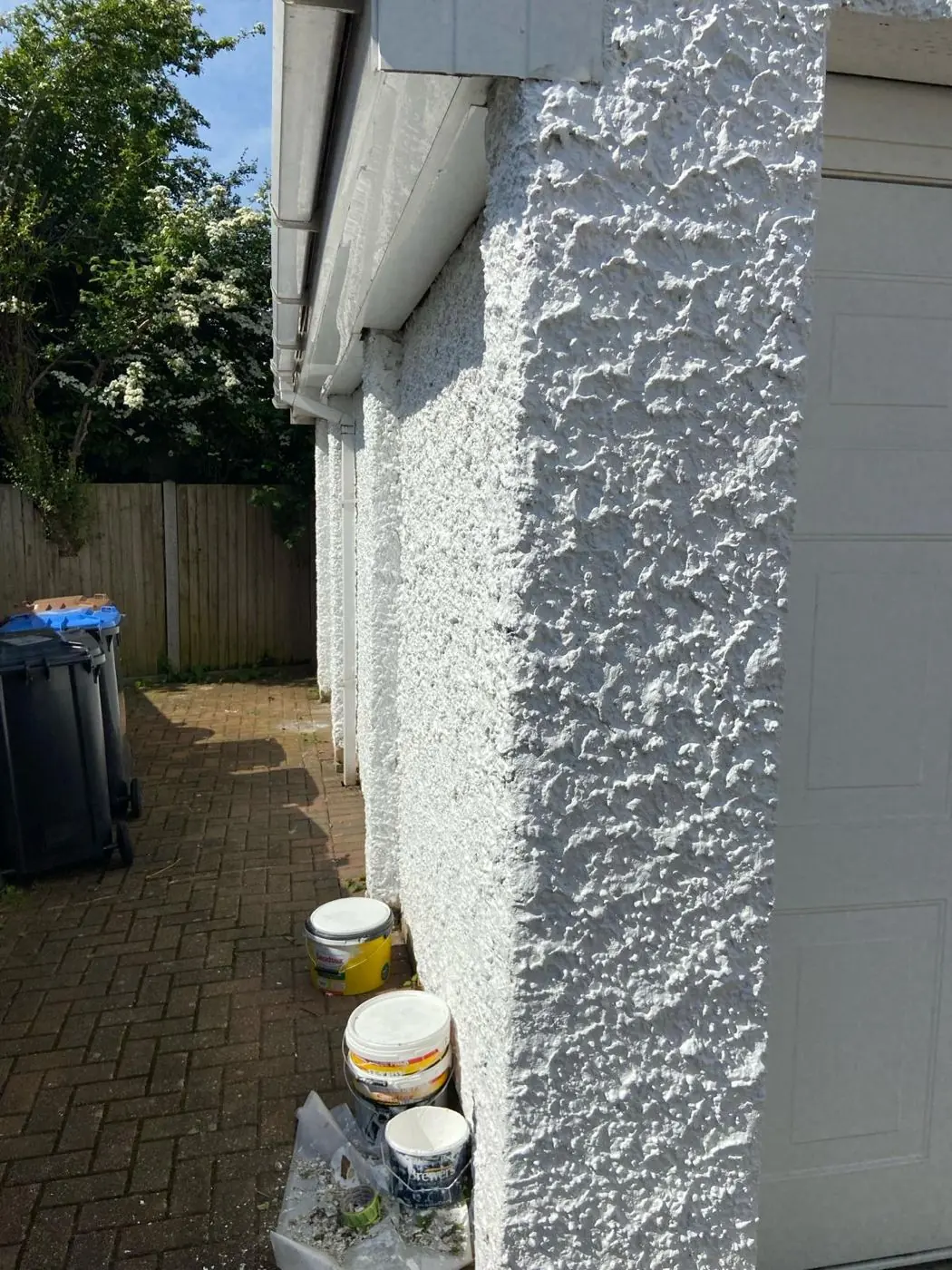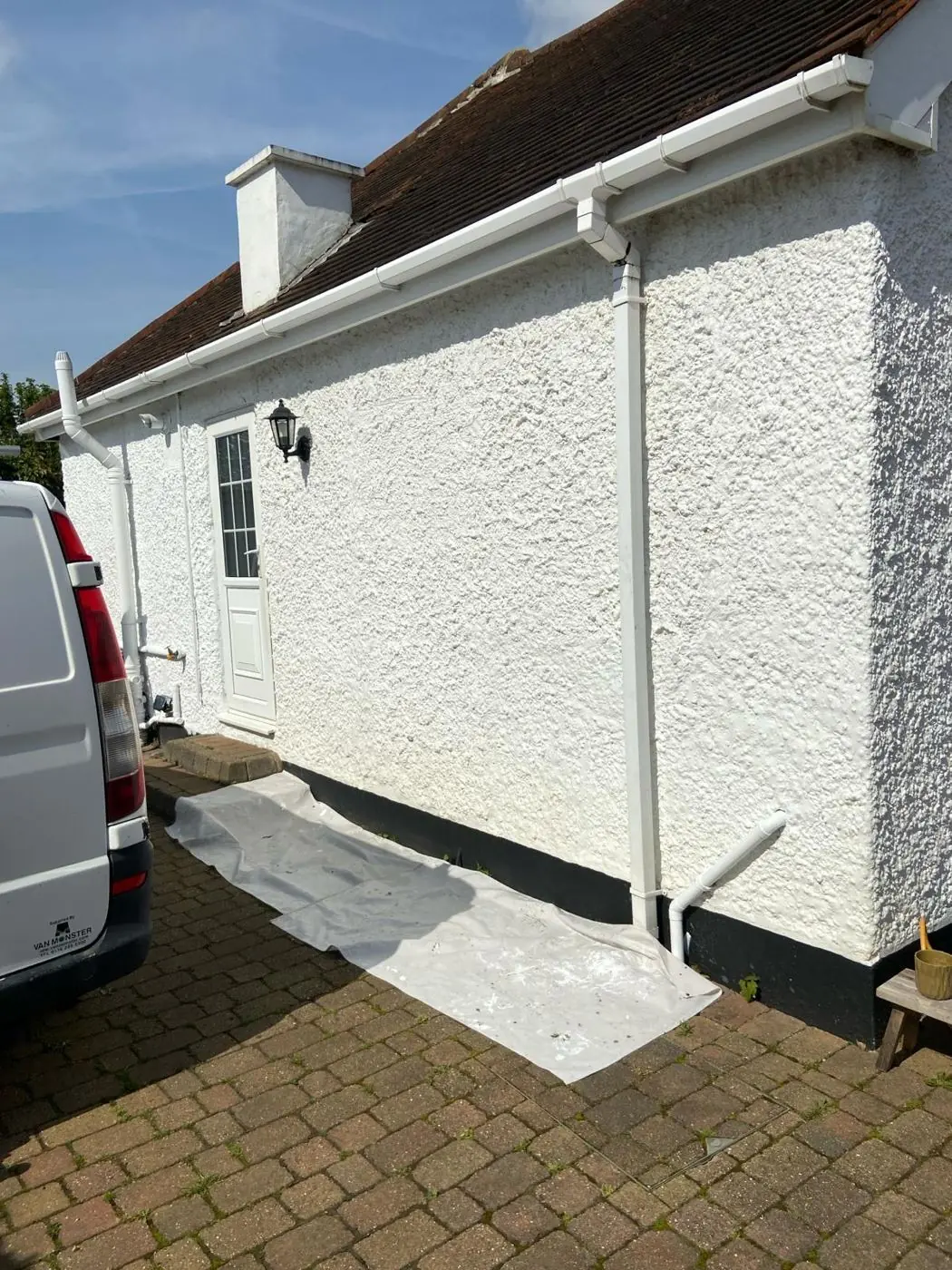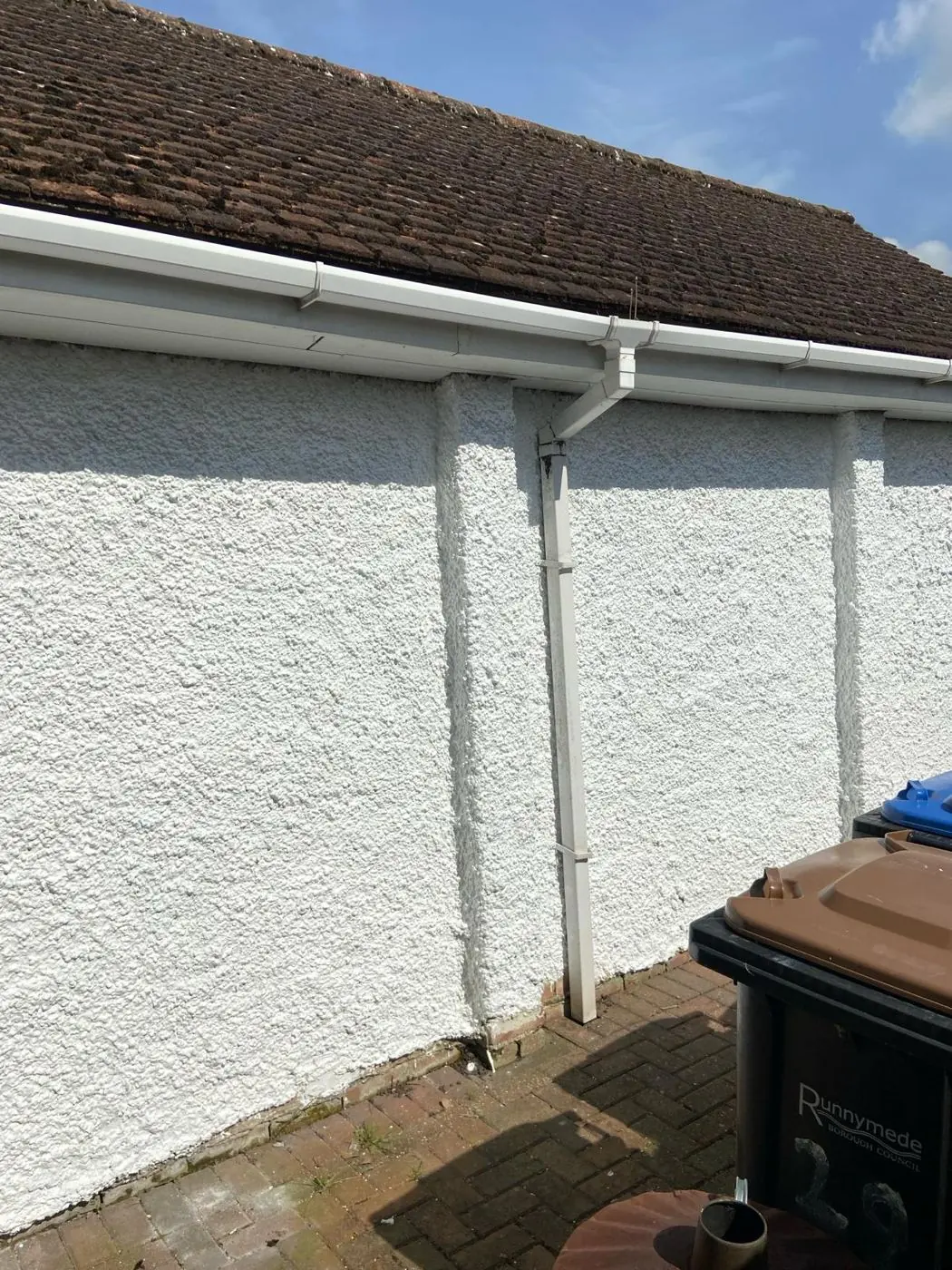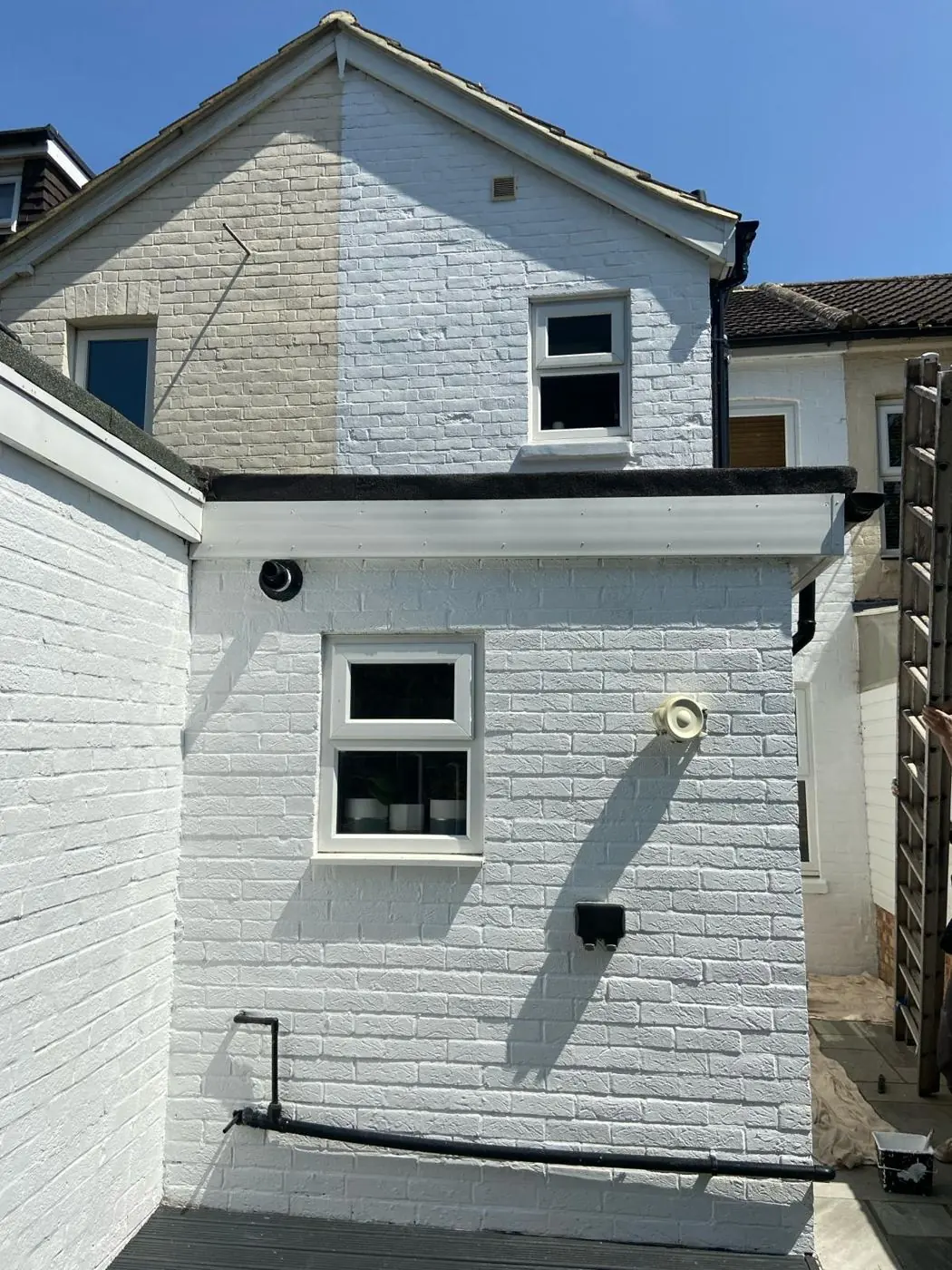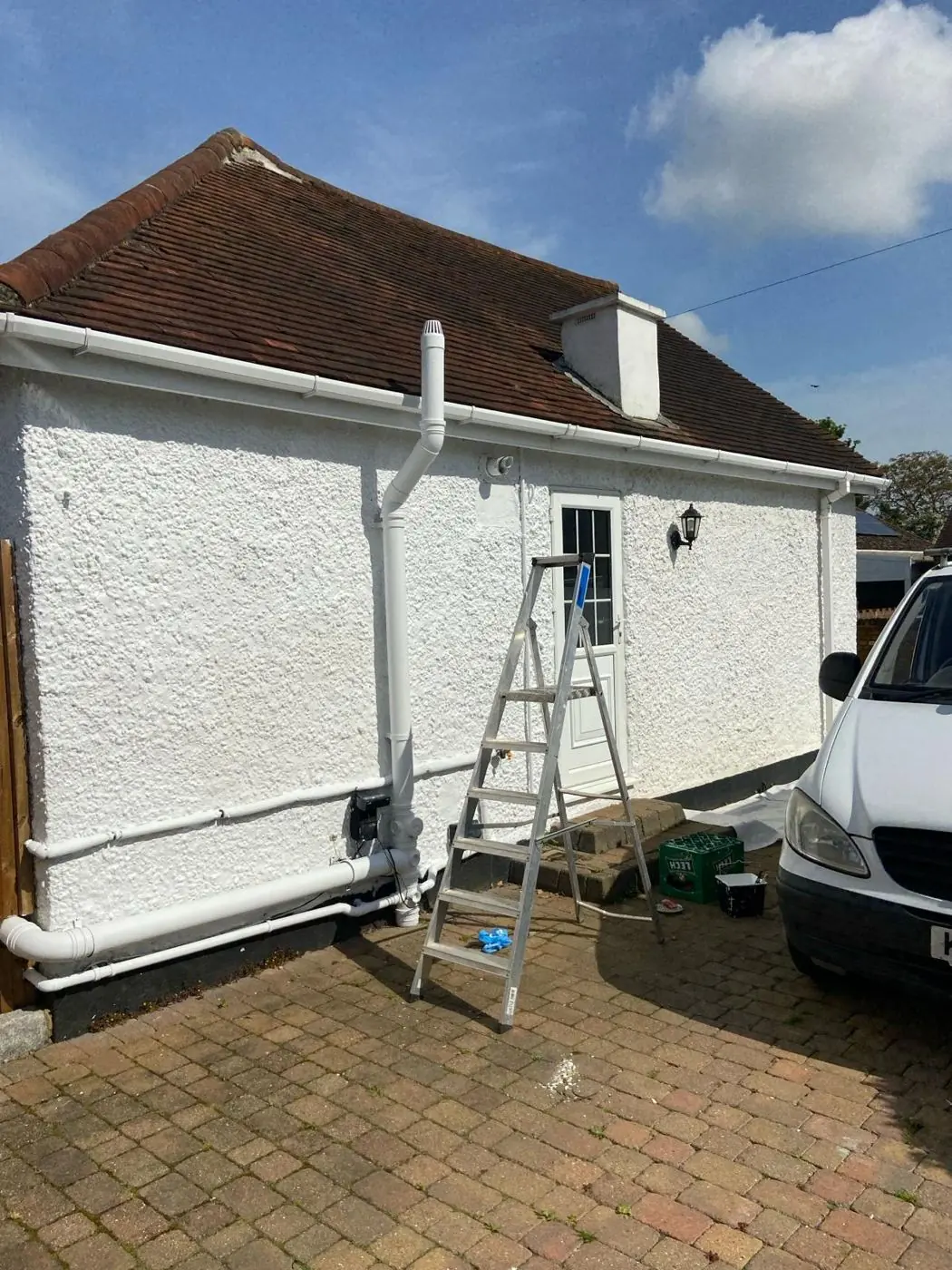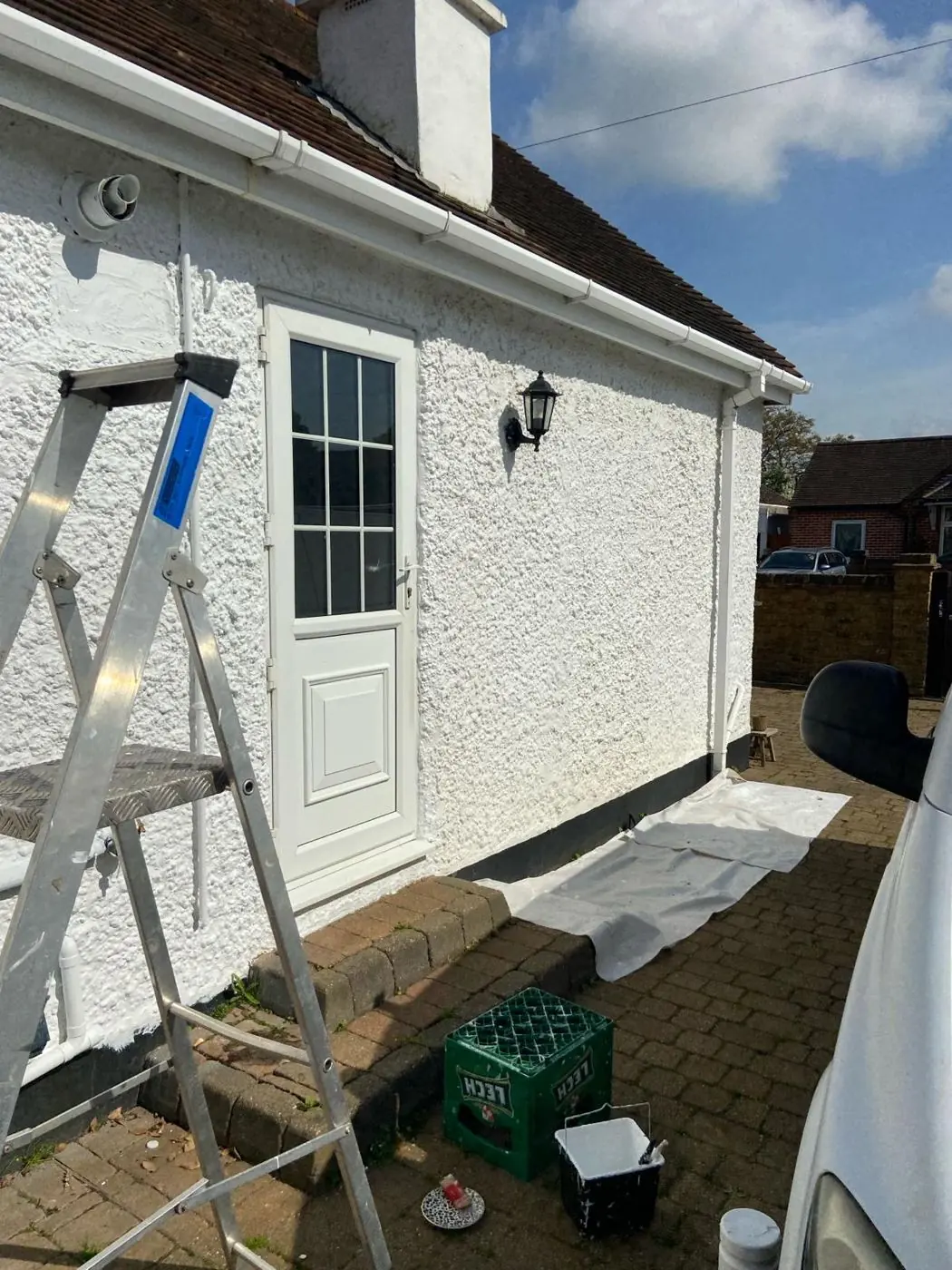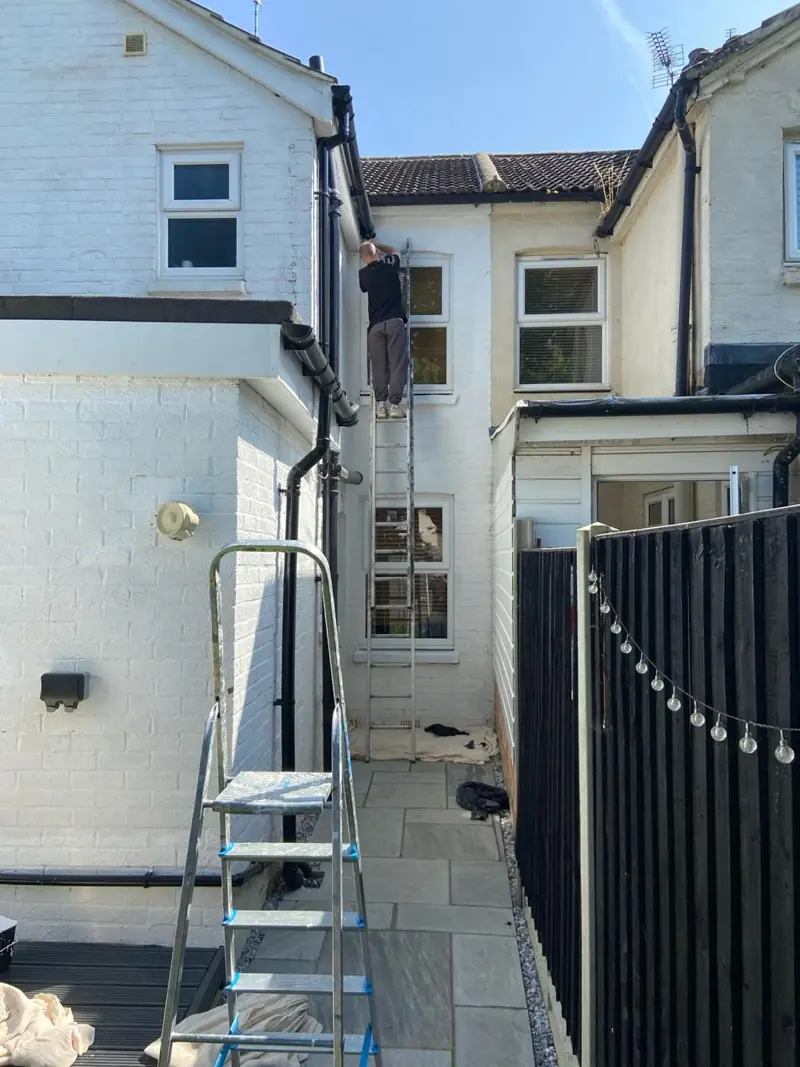
DH Painter & Decorator paints the outside of homes in Kislingbury, the NN7 village on the south bank of the River Nene. Dean covers it which lies 3.6 miles west of our Northampton base, and most exterior work here is timber joinery on ironstone rather than painted walls.
Joinery is the outside job on an ironstone village
Walk round The Green, Church Lane, School Lane or Hodges Lane and almost every older house is coursed squared ironstone, often with a slate, plain-tile or, in the case of The Sun Inn, thatched roof. That stone is meant to be seen and left to breathe, so on the historic core an exterior quote is rarely about walls. It is about the timber set into them: casement windows under wooden lintels, plank front doors, bargeboards on the later houses and the occasional painted porch.
Old softwood casements in deep stone reveals take a hammering. Water sits on the sill, the bottom rail stays damp, and paint lets go at the joints first. We cut back to sound timber, fill or splice where needed, then use a flexible microporous system that moves with the wood and lets it dry out rather than sealing moisture in behind a hard skin.
Sashes, doorcases and the listed houses
The polite 18th-century houses are a different kind of job. Kislingbury Hall on The Green has sashes and a painted classical doorcase, Nos. 12-14 High Street and The Old Rectory have multi-pane sashes, and the 1828 Baptist chapel on Mill Road has its own. Twelve- and sixteen-pane windows are slow, careful glazing-bar work, and we price them honestly as such rather than as a quick coat.
Twenty-seven buildings in the village are listed, all within its conservation area. If your house is one of them, changing the external colour or switching to a different type of paint could require consent, so it is worth a quick check with West Northamptonshire Council before we agree a specification. On unlisted houses in the conservation area the usual approach is to keep joinery colours in step with the ironstone: off-whites, stone tones and muted greens rather than anything bright. Doorcases on period fronts suit oil-based or traditional finishes, and we will say plainly where a modern product is the wrong choice.
The river and the drying time
The village sits low in the Nene valley on gravel at about 66 metres, with the river along its northern edge. Several houses were damaged in the 1998 flood, and low ground near the water can stay damp for long spells. Sheltered elevations facing the river or tucked behind stone walls dry slowly after rain, so we only start timber work when there is a settled dry spell and the wood has actually dried, which we check rather than assume. Our guide to timing exterior work explains why late spring to early autumn is the working window.
Walled lanes, lorries and the bridge
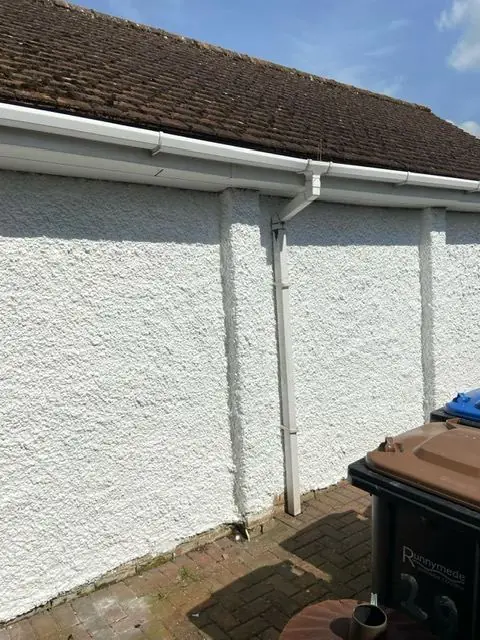
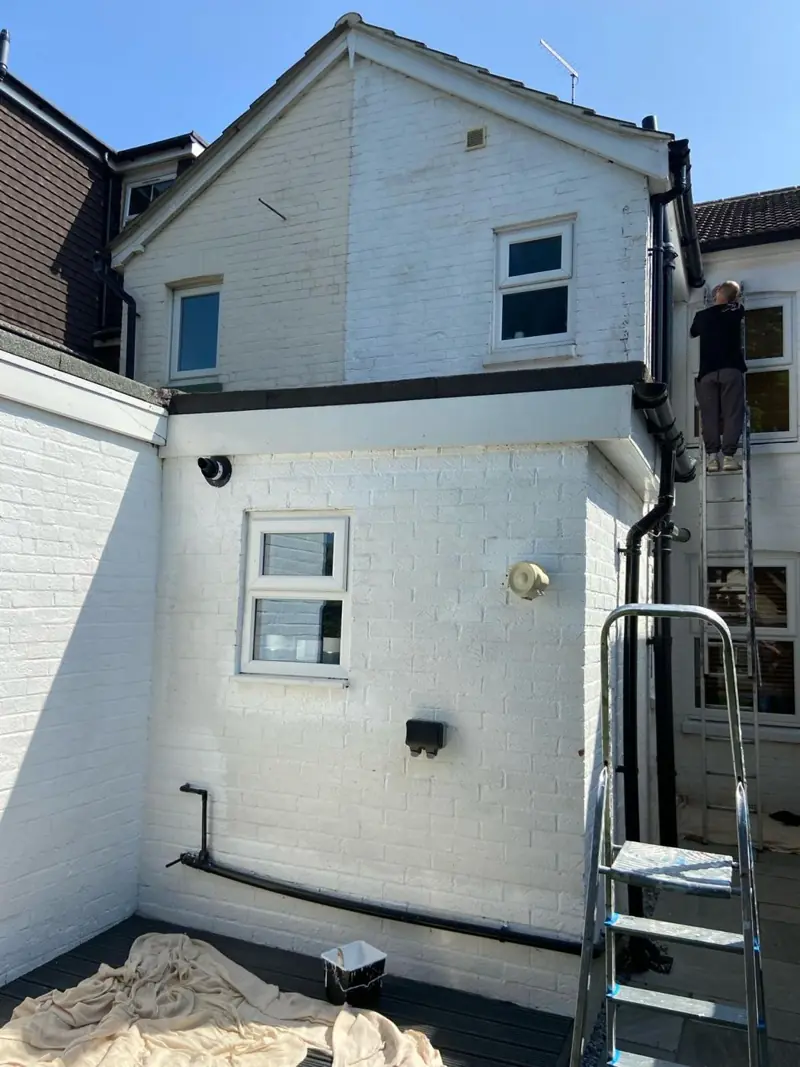
Many cottages on the old walled lanes, Starmers Lane and Hodges Lane among them, were built tight to the road with stone boundary walls on either side. A ladder or tower often has to stand on a narrow lane edge, and the van may need to park round the corner, so we look at where kit can go during the quote visit rather than on the morning. Street-facing elevations on the road towards Bugbrooke get through traffic and quarry and flour mill lorries, which means barriers, a spotter when someone is up a ladder, and road grime washed off before any paint goes on.
From Northampton the route in is the A4500 rather than across the old Nene bridge, whose five arches leave little room for a van loaded with access gear.
What we cover outside
- Casements, sashes, sills and window boards on stone and brick houses
- Front and back doors, doorcases and porches
- Bargeboards, fascias and gutters on the later houses
- Gates, garden timber and ironwork, quoted alongside if you want them done together
The full process, from survey to final coat, is on our main exterior painting page. For an overview of decorating in the village, see the Kislingbury area page.
Last updated by Dean, DH Painter & Decorator.