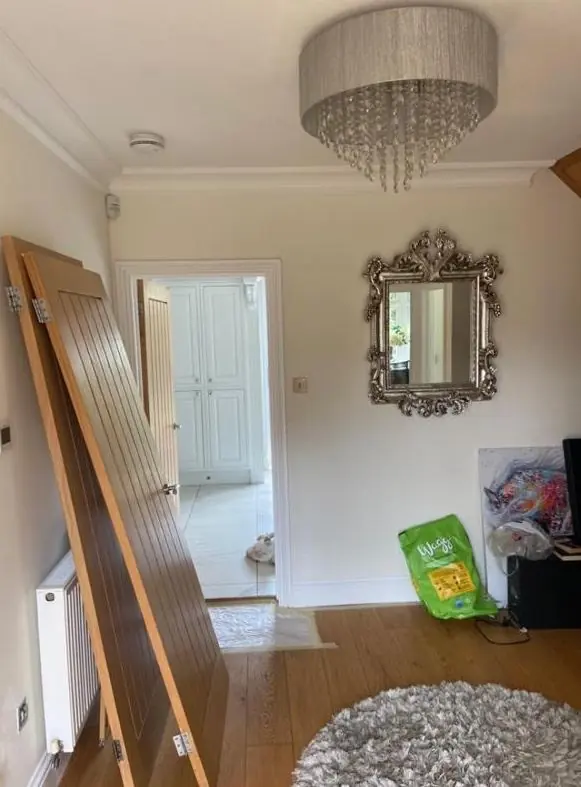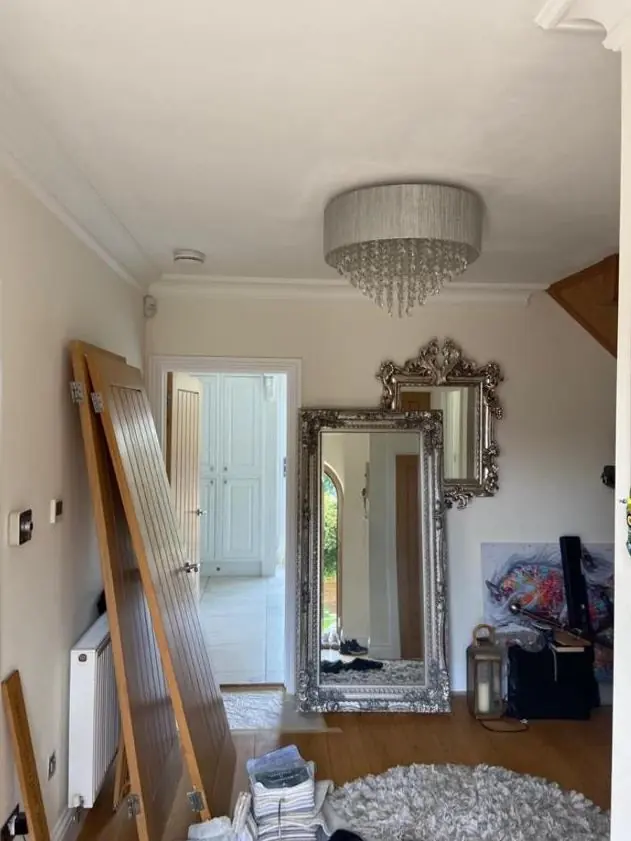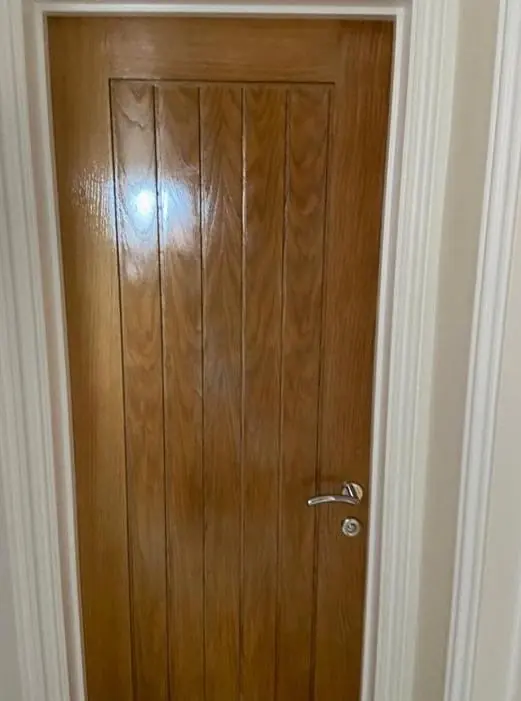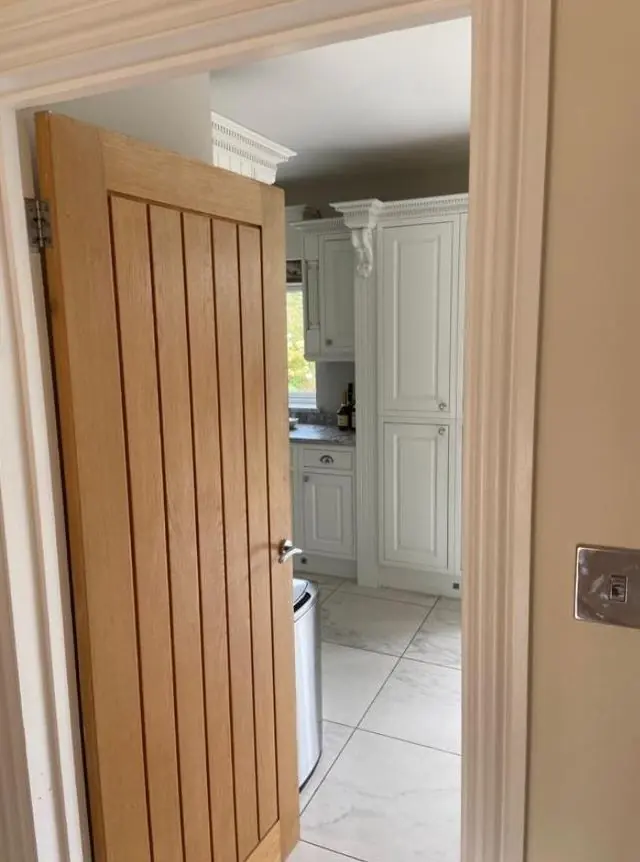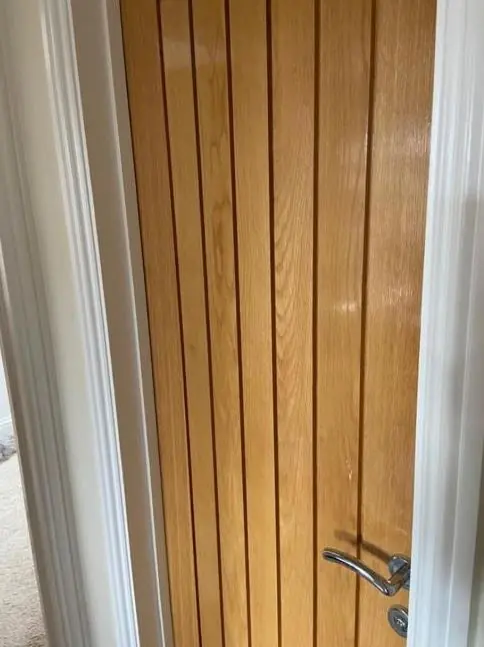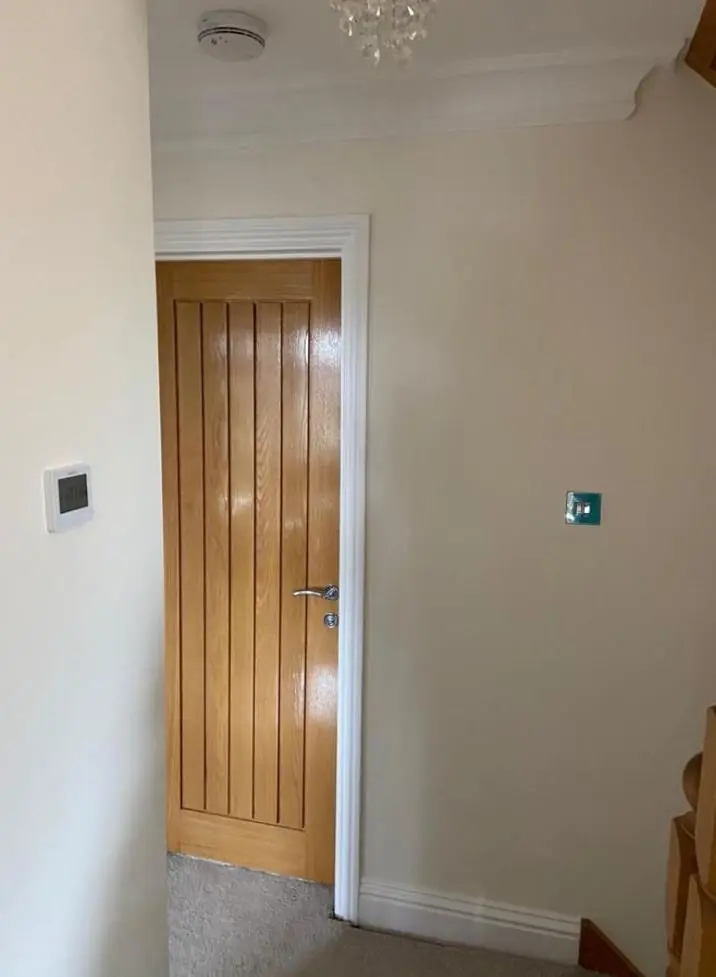
Dean paints internal doors, frames, skirtings and architraves in Kislingbury, NN7, a 3.6-mile drive west of Northampton. In the conservation-area cottages that means gentle preparation of old plank and panelled joinery; in the later houses around the core it is a more standard woodwork repaint.
Old joinery in the ironstone core
Most of the listed houses in Kislingbury date from the late 17th and 18th centuries. The ironstone cottages and farmhouses of the old core, some with cross wings, hold most of the village’s oldest joinery. Inside, the woodwork is rarely factory-flat. Plank doors hang on old hinges, panelled doors have shrunk and moved over a few centuries, and softwood skirtings follow walls that were never straight.
The larger 18th-century houses add fielded panelling and more formal doors. The Old Rectory, built around 1710 to 1720, is recorded with fielded panelling, and houses of that type also have deep architraves and moulded door surrounds. Each layer of paint on these pieces is part of their history, and the mouldings are often softened by decades of coats.
Why we keep heat guns and strippers away
On joinery this old, the urge to strip everything back to bare wood usually does more harm than good. Heat stripping near dry, centuries-old timber, lime plaster and, in one Mill Road pub, a thatched roof is a fire risk we will not take. It can also crack old glass and scorch the edges of mouldings. Older paint layers may contain lead, which calls for wet abrading and careful dust control rather than dry sanding or burning off.
Instead we key the existing paint by hand, fill splits and open joints with a flexible filler, and only take back the areas where paint has failed. That keeps the profile of a fielded panel or a beaded plank crisp without losing original material. Gaps where a skirting has pulled away from an uneven wall are caulked rather than forced back, because old walls and floors still move.
Choosing a finish for period woodwork
A hard, high-gloss finish shows every ripple in an 18th-century door. On cottage joinery we usually suggest a satin or eggshell finish, which suits the age of the house and hides the natural unevenness of hand-worked timber. Where a door has been painted in oil-based paint for generations, we check how the new coat will bond before committing to a water-based system. Colours tend to work well when they sit a shade or two away from the walls rather than a stark white against limewash-toned plaster.
If your cottage is listed, keep in mind that listed building consent can cover interior features as well as the outside. A like-for-like repaint of existing painted joinery is normally treated as maintenance, but stripping original panelling or painting timber that has never been painted is a different matter. It is worth a word with West Northamptonshire Council before anything beyond a straight repaint.
Later homes around the village
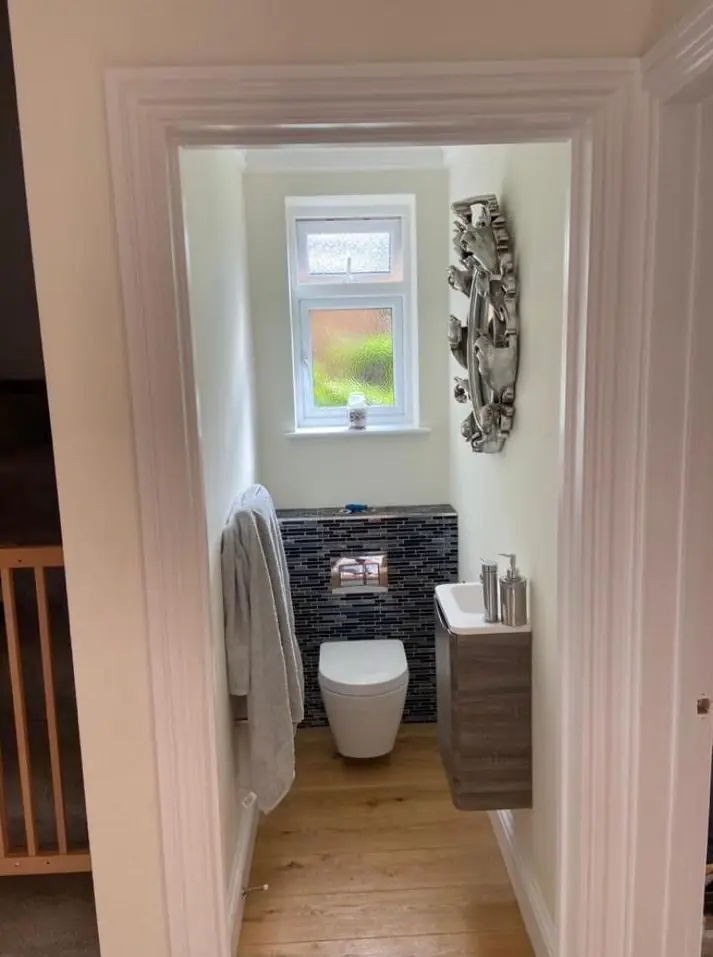
Not every Kislingbury door is three hundred years old. The housing built around the historic core in the 20th century has the moulded doors, MDF or softwood skirtings and standard architraves found across the Northampton area. Those are quicker to prepare and suit a durable satin or gloss, and they can be done in the same visit as the walls. Our door, skirting and woodwork painting page sets out the full preparation and product choices for that kind of job.
Fitting the job around a riverside village
The 1998 Nene flood damaged several houses on the low ground in the village. Where skirtings or door linings were replaced afterwards, the new timber sits beside older joinery and needs knotting and priming before it will take the same finish. Damp-prone ground-floor rooms near the river also suit a paint that tolerates slight moisture movement. Lane parking is tight, so the van’s spot is settled at the quote visit. Quotes for woodwork in Kislingbury are free.
Last updated by Dean, DH Painter & Decorator.