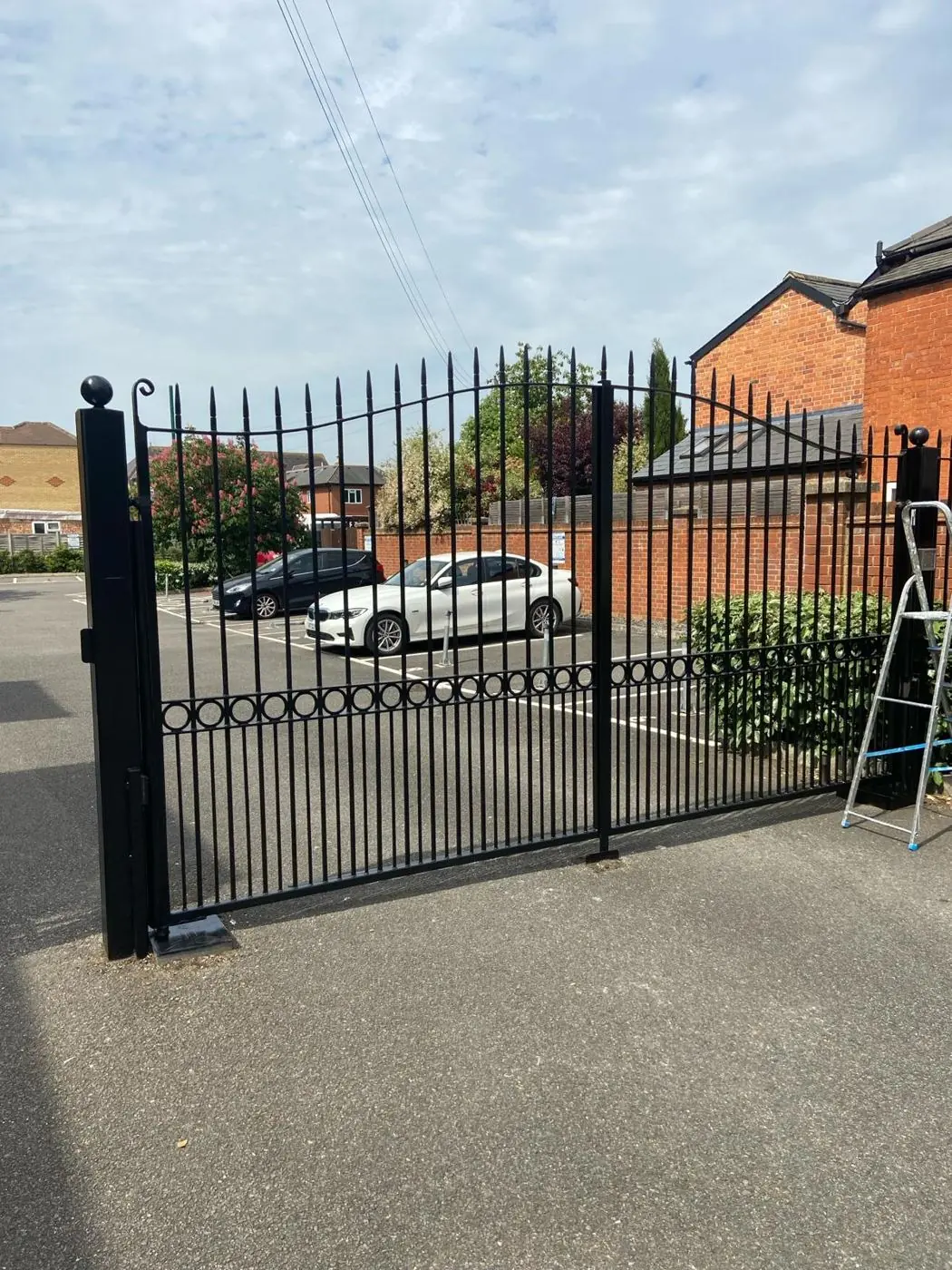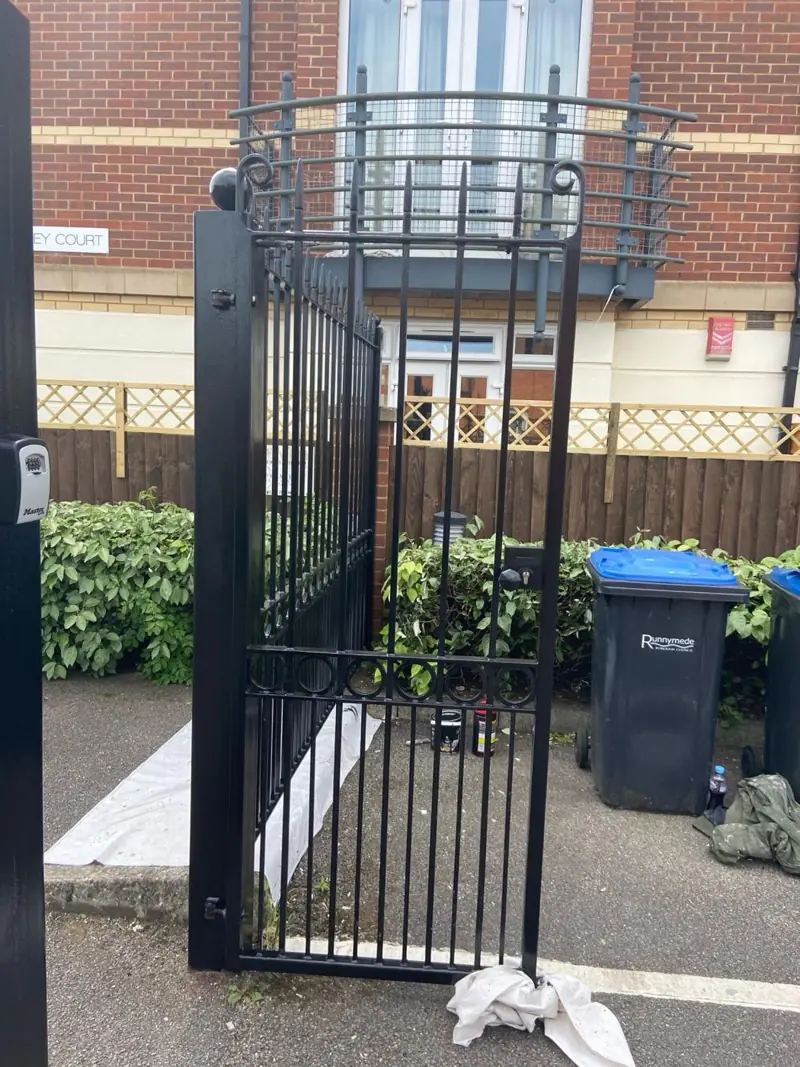
DH Painter & Decorator repaints metal gates, railings and handrails in Kislingbury, a Nene valley village 3.6 miles west of Northampton. Older ironwork here is often fixed into stone, so the preparation has to protect both the metal and the wall it sits in.
Historic ironwork in a listed village
Kislingbury’s conservation area holds 27 listed buildings, and some of them come with ironwork. The Grade II* Old Rectory (c.1710 to 1720) is listed together with its wall, gate, overthrow and gate piers, which shows the kind of historic metalwork that survives in the village. Older gates and railings like this are usually wrought or cast iron, often under many layers of paint, and they need a slower, more traditional approach than a modern steel gate.
On listed ironwork, or ironwork that forms part of a listed building’s setting, stripping methods, paint type and colour may all need agreeing with West Northamptonshire Council before work starts. Hand tools and careful scraping are usually preferred over aggressive grit blasting, which can take detail off old castings. Older paint layers on ironwork of this age should be treated as possibly lead-based, so we wet-scrape and contain the debris rather than dry-sanding it into the garden or onto the lane.
Where iron meets ironstone
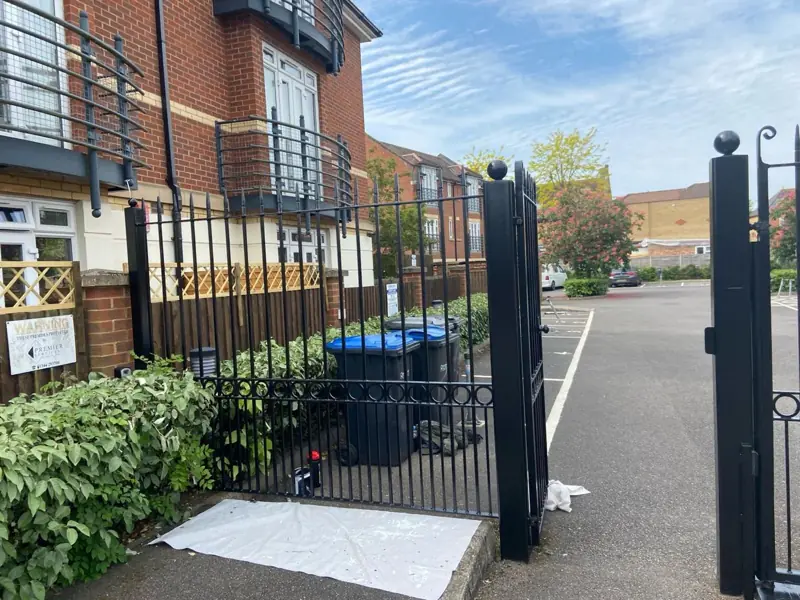
The point of most risk on an old gate or railing is not the bar in the middle but the foot and the hinge pins, where iron is leaded or mortared into stone. Water collects there, rust forms, and rust takes up much more room than the iron it came from. Left long enough, it can crack a stone pier or coping from the inside.
So the job starts at the fixings:
- clean out rust and loose material around each foot and pin as far as can be reached without damaging the stone
- treat and prime bare metal straight away, before it flashes over
- keep primers and topcoats off the surrounding ironstone, which stains easily
- point out any cracked pier or loose fixing that needs a mason, rather than painting over it
Damp air and road spray
Kislingbury’s setting on the valley floor south of the Nene brings damp mornings, and bare metal rusts quickly once the paint film is broken. That is why we prime the same day we prepare, and why painting is booked for dry, mild weather when the metal is above the dew point. Gates and railings facing the road towards Bugbrooke also pick up dirt and spray from through traffic and lorries, which leaves a film that has to be washed off and dried before any primer goes on, or the new coating will not grip.
Newer steel gates on the later houses
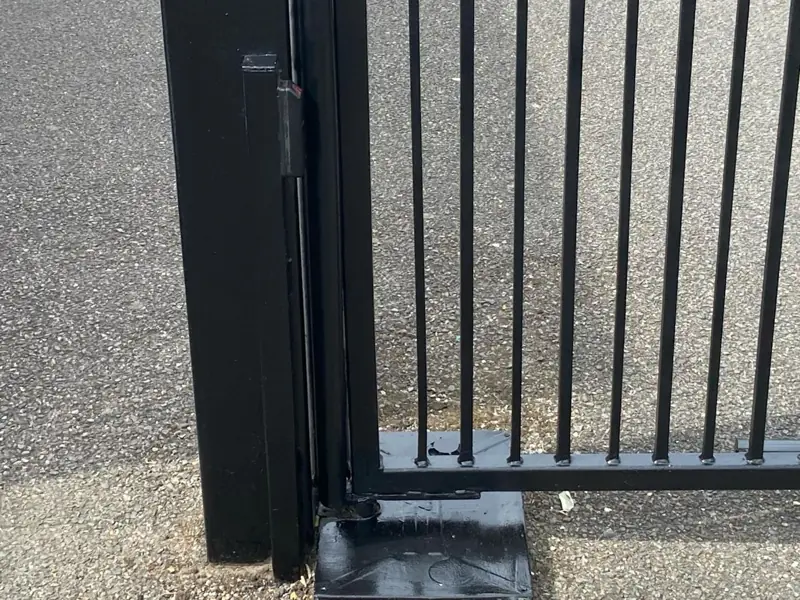
Around the historic core, later houses are more likely to have mild steel or galvanised driveway gates and handrails. These are simpler: wire-brush or abrade the rust spots, use a suitable primer for the metal (galvanised steel needs one made for it), and finish in two coats. A solid black or dark green is common and sits well against the stone of the older properties nearby.
On the narrow walled lanes, a front gate or railing often sits right on the edge of the road with no verge. We keep dust sheets and kit inside the boundary where possible, leave a gate wedged and marked while the paint cures, and plan van parking during the quote visit so that neighbours on lanes like Starmers Lane or Hodges Lane are not blocked in for the day.
Gate piers, timber side gates and front doors are often done in the same visit. Our main metal gate and railing painting page covers identifying the metal and the full preparation sequence, and our Kislingbury page covers other work in the village.
Last updated by Dean, DH Painter & Decorator.