Dean hangs wallpaper and lining paper in Kislingbury, a village 3.6 miles to Northampton's west. In the village's 17th and 18th-century cottages that means lining uneven walls first and planning the pattern around crooked corners, while later homes are a more standard hang. Quotes are free.
Why old cottage walls change the hang
Kislingbury’s oldest houses are built of coursed squared ironstone, and their walls have had three centuries or more to settle. Inside the two-storey-and-attic cottages around The Green and Church Lane you can find a wall that is well out of plumb over its height, a ceiling that falls towards the window, and attic rooms where the paper has to follow a slope. A paper with a strong vertical stripe or a large repeat will show every one of those faults if it is hung to the wall rather than to a true line.
So the first decision is where the pattern is allowed to drift. Dean usually sets a plumb line at the main focal point, often the chimney breast or the wall you see from the doorway, and lets small corrections fall into the darker corners where nobody looks. In a very crooked room, a small all-over pattern or a textured paper hides far more than a repeating geometric one, and it is better to hear that before you order rolls than after.
Lining paper over patched lime plaster
Lime plaster in the older cottages is often patched, cracked and uneven. Hanging decorative paper straight onto it risks seams opening as the wall moves and blemishes showing through thinner papers. A lining paper, hung horizontally so its joints never sit under the finish paper’s seams, gives an even, absorbent base. On walls that are damp-prone, for example ground floors near the Nene that were caught by the 1998 flood, we check moisture first. Paper on a wall that is still drying will lift, and a breathable paint may suit that room better for a season or two.
Attics, winding stairs and tall stairwells
Attic rooms under the roof slope and the tight stairs in two-unit cottages are where most of the hours go. Drops are short, cuts are frequent, and every purlin and slope needs its own trimming. The larger 18th-century houses present the opposite problem: tall stairwells and high ceilings, where a long drop needs a tower or staging and is planned length by length so the pattern still meets at the top.
A short guide by house type
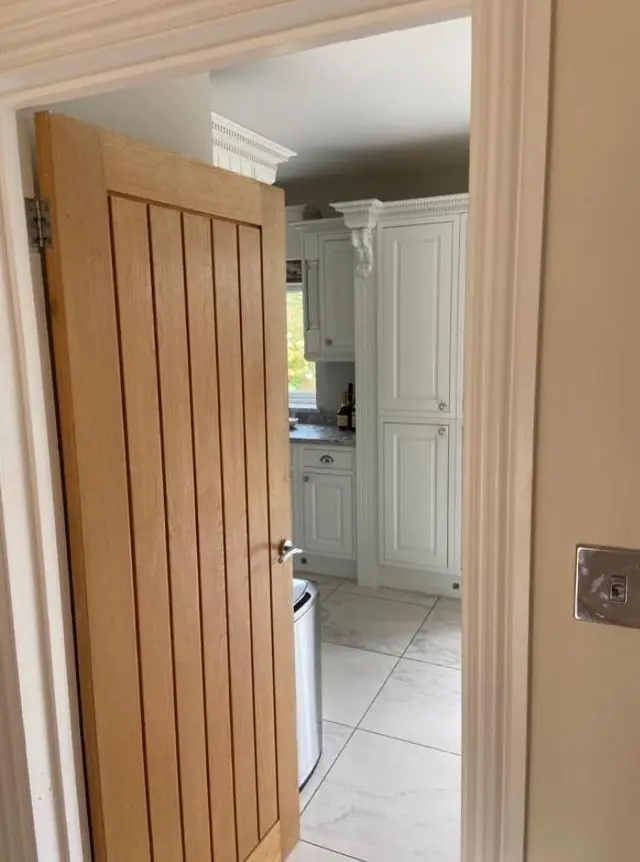
- Listed cottage: lining paper, a forgiving pattern, careful plumb lines; heritage-style papers suit the period if that is the look you want.
- 18th or early 19th-century house: longer drops, cornices and dado rails to cut to, and panelled rooms that usually stay painted rather than papered.
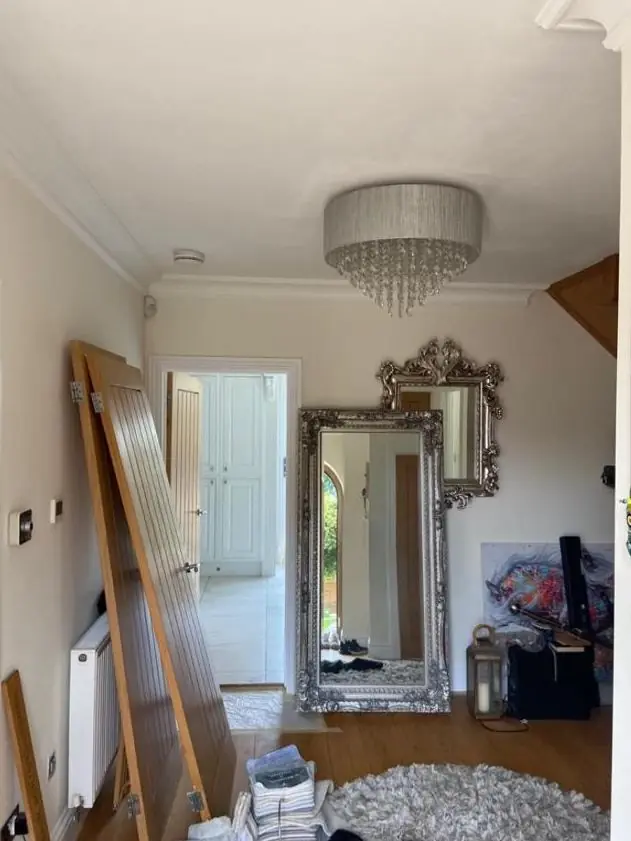
- Later house outside the historic core: plasterboard or modern plaster, sized and hung directly in most cases, so feature walls and bedroom schemes move quickly.
Stripping old paper is often the slowest part in the older houses, where several layers may have been painted over. We test a patch before quoting so the price reflects what is really on the wall. The full process of stripping, sizing and hanging is on the main wallpaper hanging page, and the Kislingbury area page gathers the rest of what we do locally.
Parking is worth a word. The lanes in the conservation area are walled and the cottages sit close to the road, so we agree a spot for the van with you in advance. Paste tables and rolls come in through the front door, so a clear route through the hall on the first morning saves time.
Last updated by Dean, DH Painter & Decorator.