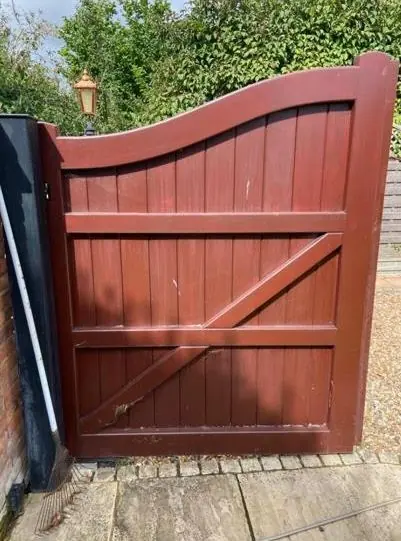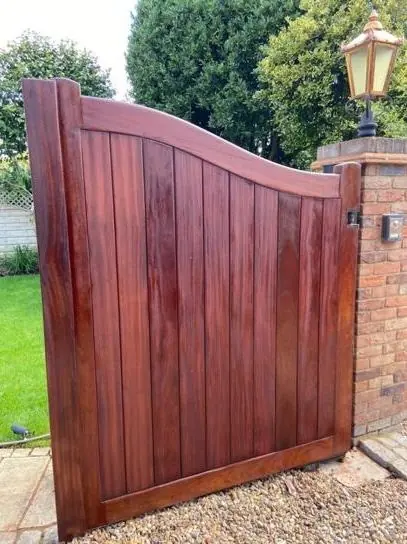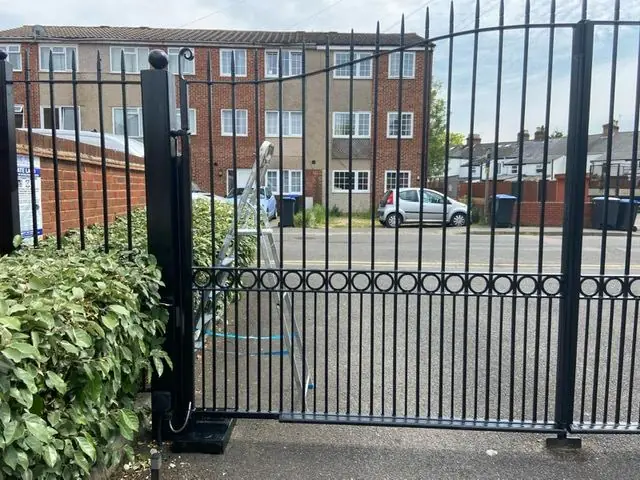
We stain and paint timber fences and gates in Weston Favell, NN3, about 2.9 miles north-east of Northampton town centre. In the old village that often means a gate set into a high stone wall on Church Way or the south end of High Street, and in the suburbs, ordinary back-garden fences.
Gates set into stone walls
Church Way and the south end of High Street are lined with high stone boundary walls, and many of the houses behind them are reached through a gateway, often closed by a timber gate. Those gates take a lot of weather. They face the road, stand in the shade of the wall or the trees, and the bottom rail usually sits close to wet ground. When the finish fails, the end grain at the foot of the boards goes first.
In the Weston Favell conservation area, taking down a wall, fence or gate over 1m high next to a highway needs conservation area consent, and the council is unlikely to support losing significant boundary walls. Looking after the gate you have is simpler than replacing it. We clean it down, rake out the joints, treat any soft spots, and then stain or paint it, working the finish into the end grain and the underside of the bottom rail, where water collects.
The gate is part of the wall, so we protect the stone. Sheets go along the coping and down the face, and we cut in by hand rather than spraying, because a stain splash on limestone soaks in and cannot simply be painted out.
Shade, damp and green growth under protected trees
Many of the mature trees by St Peter’s Church and its churchyard have Tree Preservation Orders. Other trees in the conservation area over 75mm in diameter need six weeks’ notice before any work. You cannot just lop a branch to let light onto a fence. The result is timber that stays damp for long periods, grows green algae and moss, and sheds stain faster on the shaded side.
So the preparation here starts with a fungicidal wash, left to work and then brushed off, followed by proper drying time. We check the timber with a moisture meter before any coat goes on. Staining wet wood traps water under the film and it peels within a season. In a shaded garden that can mean waiting a few dry days, and it is why spring and late summer usually suit this work better than the wettest months. Our guide on when to plan exterior work explains the timing.
Choosing a colour beside limestone
The council’s appraisal picks out Weston Favell’s muted reddish-browns and limestone tones. A gate in a street-facing wall looks most at home in a natural oak, walnut or dark brown stain, or a deep heritage green, grey or black in paint. Bright fence-panel colours that suit a back garden can look out of place set into an old stone boundary wall. Inside your own garden the choice is yours.
Stain shows the grain and wears away gradually, which suits an old boarded gate. Opaque paint hides a patchwork of repairs better. We will recommend one after seeing the timber.
Back-garden fences across the suburbs
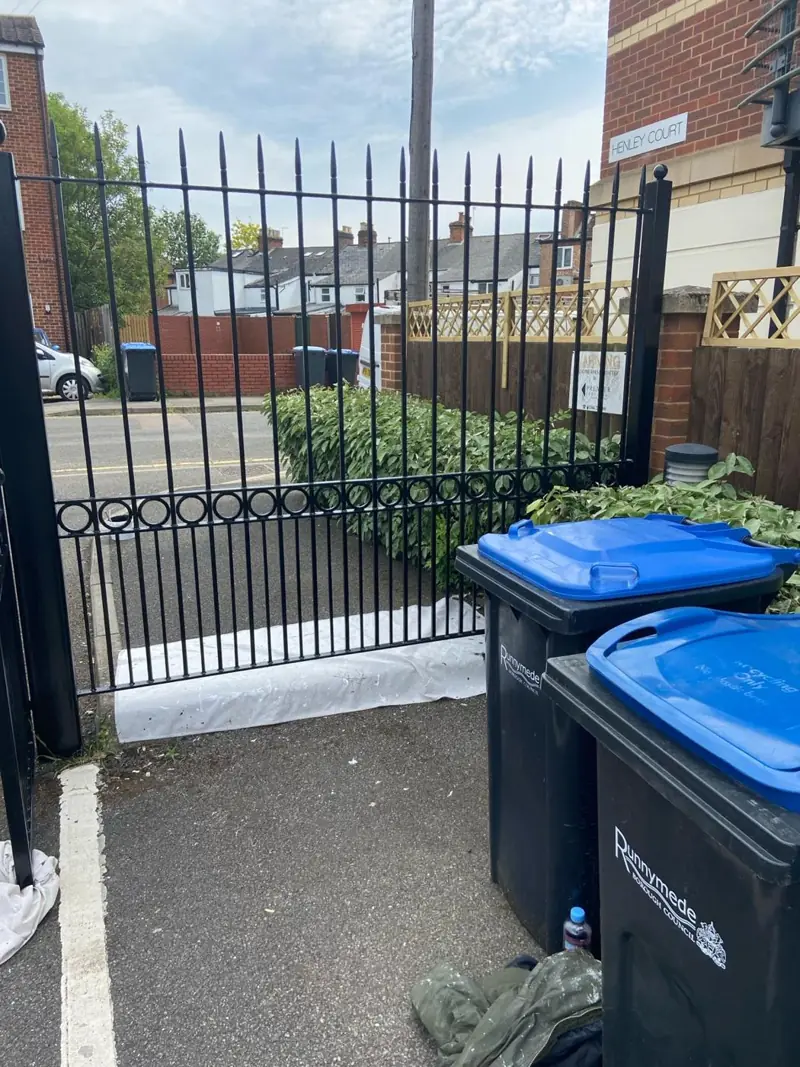
Beyond the conservation boundary, the 20th-century houses on Park Way, Graspin Lane, Edgemont Road, Thorburn Road and the streets around them have ordinary garden fences: lap panels, feather-edge boards, posts and gravel boards, plus side gates. These are straightforward to stain or paint, and the main questions are how weathered the timber is and how much access there is round the side of the house.
If the fence is new pressure-treated timber, it usually needs time to dry before the first coat. If it is old and grey, a clean and brightener may be needed first. The full method is on our main fence and gate staining page.
Last updated by Dean, DH Painter & Decorator.