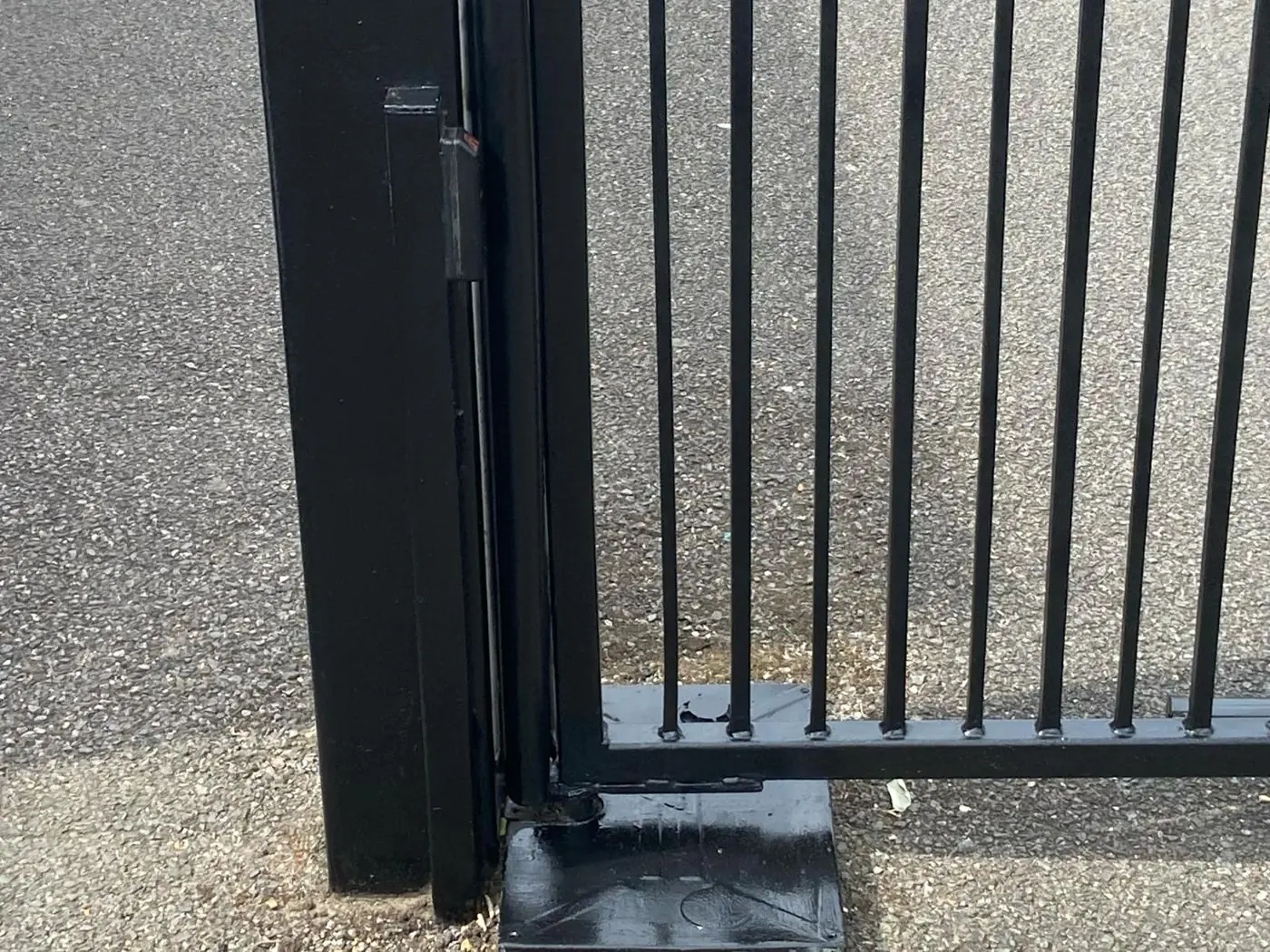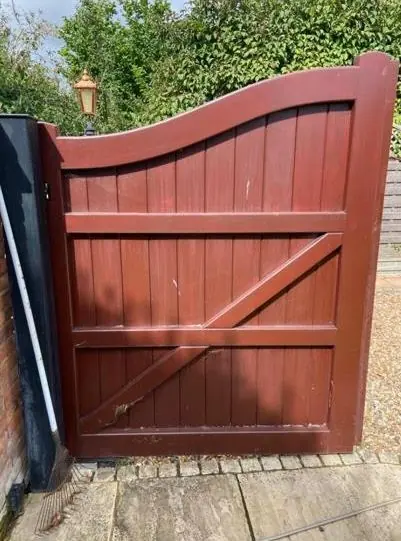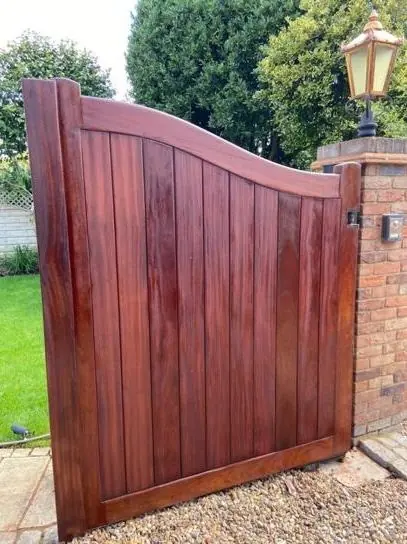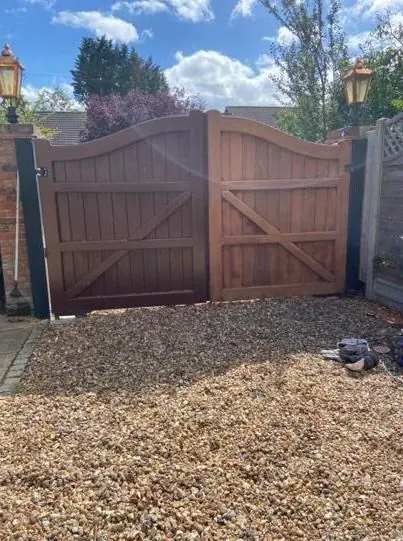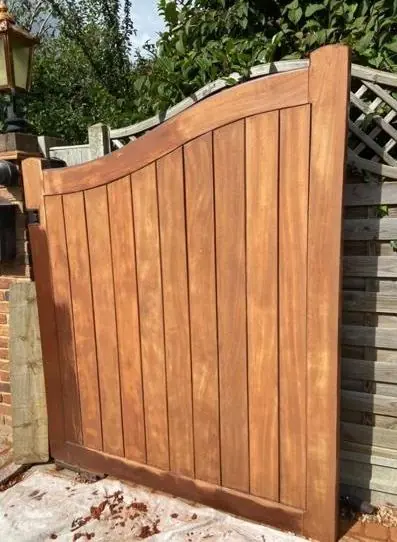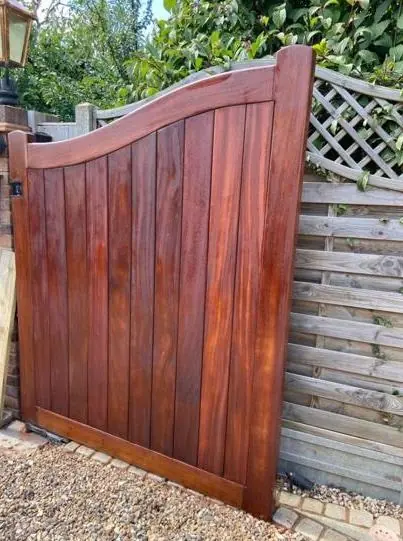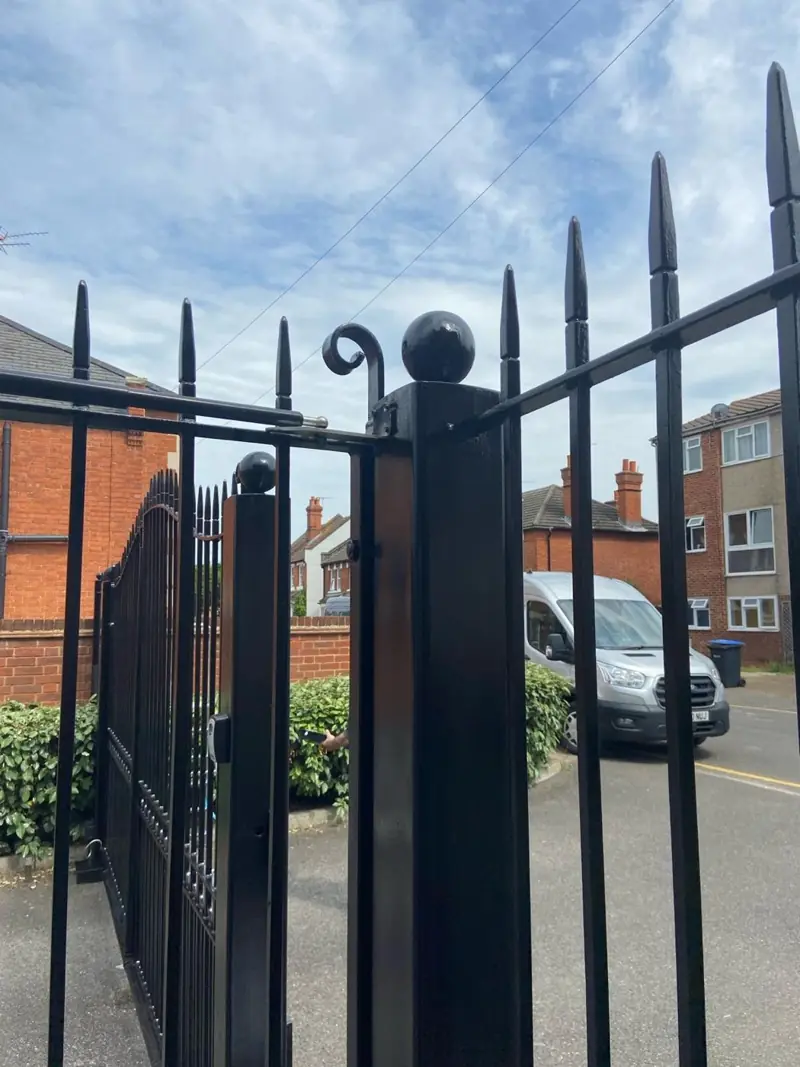
We stain and paint fences, posts and timber gates in Thorplands, NN3, about 3.3 miles north-east of Northampton town centre. Many gardens here back onto shaded green space or stream corridors, so Dean picks a breathable finish and plans recoats around how damp each boundary stays.
Gardens that back onto green space
Green open-space corridors run alongside the Thorplands housing. Thorplands Open Space sits to the north of the courts, Round Spinney Open Space and Playing Field lies towards the industrial estate, and Crestwood Linear Open Space runs to the south-east. Small unnamed streams also cross the estate, some in culverts, near Holmecross Road and up towards the open space.
For a garden fence, that matters. A boundary that faces open grass, trees or a watercourse often gets little direct sun, holds dew late into the morning and sits in damper air than a fence between two patios. Those are the fences where you see green film on the boards, black staining at the base and gravel boards going soft first. A fence on the same court that faces into a neighbour’s sunny garden can look years younger.
Why a breathable finish suits these boundaries
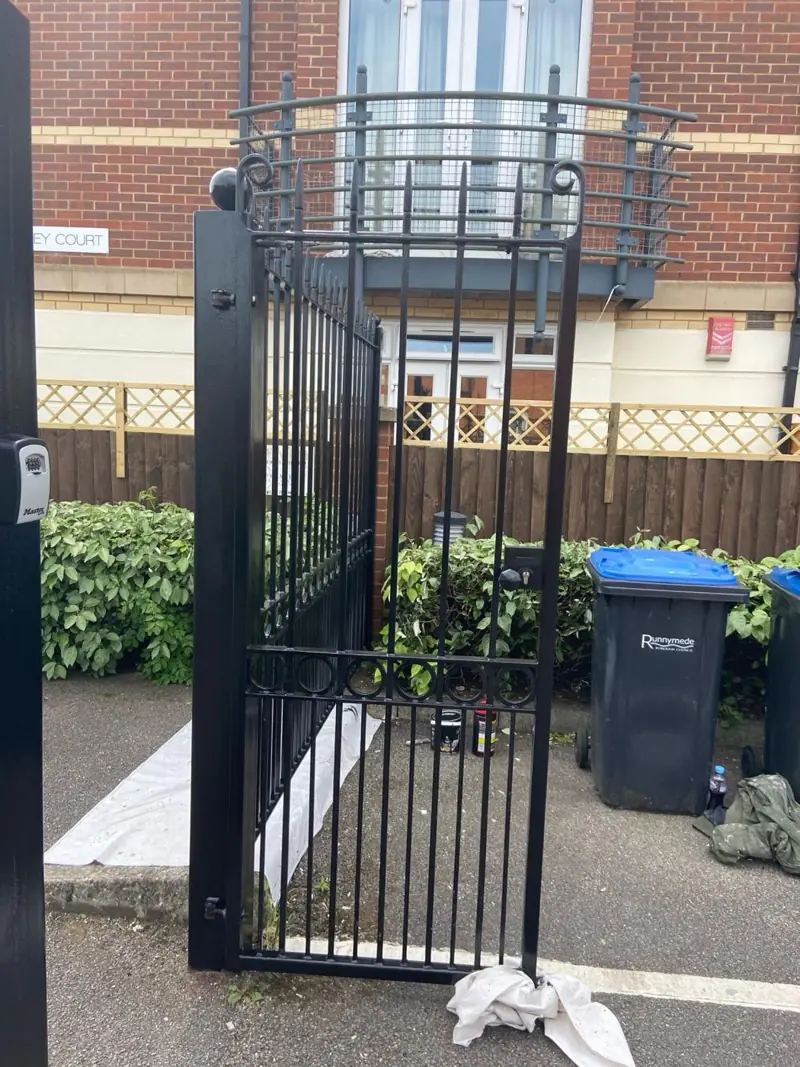
On a fence that stays damp, a thick film that seals the surface tends to trap moisture behind it and lift. A penetrating stain that soaks into the timber and wears away gradually usually copes better, and it can be recoated without stripping. Where you want solid colour, a microporous fence paint is the alternative. Either way the timber has to be clean and properly dry before it goes on, which on a shaded Thorplands boundary can mean waiting for a run of drier days rather than the first one.
The preparation and product choices are explained in full on our fence and gate staining page, and our guide to choosing the season for outside work covers the weather side.
Side gates and rear access on a terrace
Most homes in Thorplands are mid- or end-terrace houses in courts off Holmecross Road and Billing Brook Road. End terraces commonly have a side gate and a longer run of fence along the garden, so they carry more timber than a mid-terrace. Mid-terrace gardens may share a fence line with both neighbours, and a stain applied from one side will show through on the other, so it is worth agreeing the colour before we start.
Reaching the back can take some planning. Where there is no rear path we may need to carry tins and sheets through the house, and we protect floors along the way. Parking is in shared bays, so we bring only what the day needs.
Posts, gravel boards and the gate itself
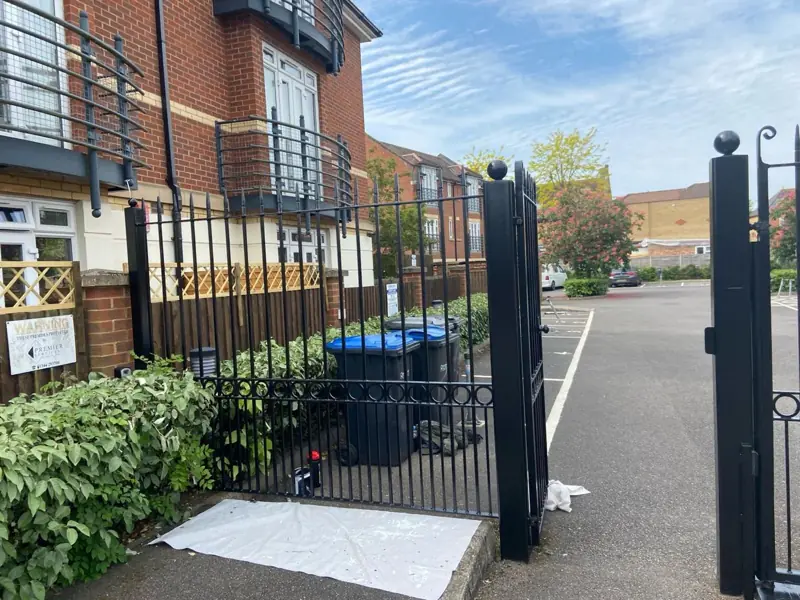
On damp boundaries the weak points are low down. Gravel boards and the feet of posts sit in wet soil or against long grass, and that is where rot usually begins. We pay extra attention there, working stain into the end grain and the bottom edge of each board. Timber side gates on the end terraces get opened every day, so the hinge side, the latch area and the top rail, where rain sits, all need a full coat. If a gate has dropped or a post is rocking, we will mention it, as staining over a loose post only hides a problem for a season.
Rentals and the recoat cycle
A large share of Thorplands homes are rented. Housing providers own most homes on Great Holme Court, and on Pindar Rise 3 of 10 are private lets. For a landlord, a fence restained on a set cycle costs less over time than one left to grey and split until boards need replacing. Doing it between tenancies, when the garden is empty, is often the simplest time.
Owner-occupiers have a free hand on colour, as Thorplands has no conservation area. More about the estate is on our Thorplands area page.
Last updated by Dean, DH Painter & Decorator.