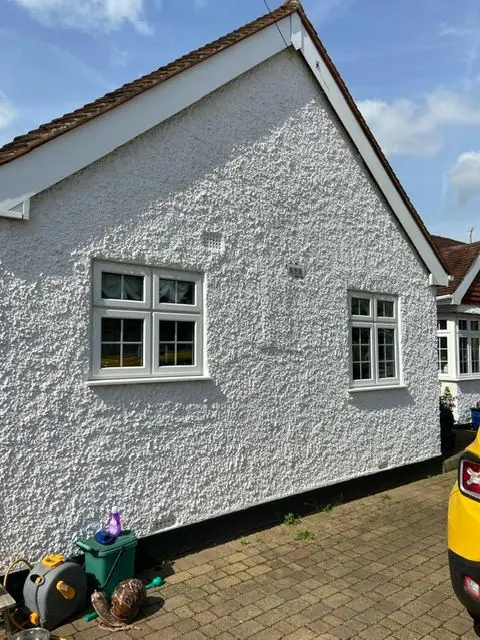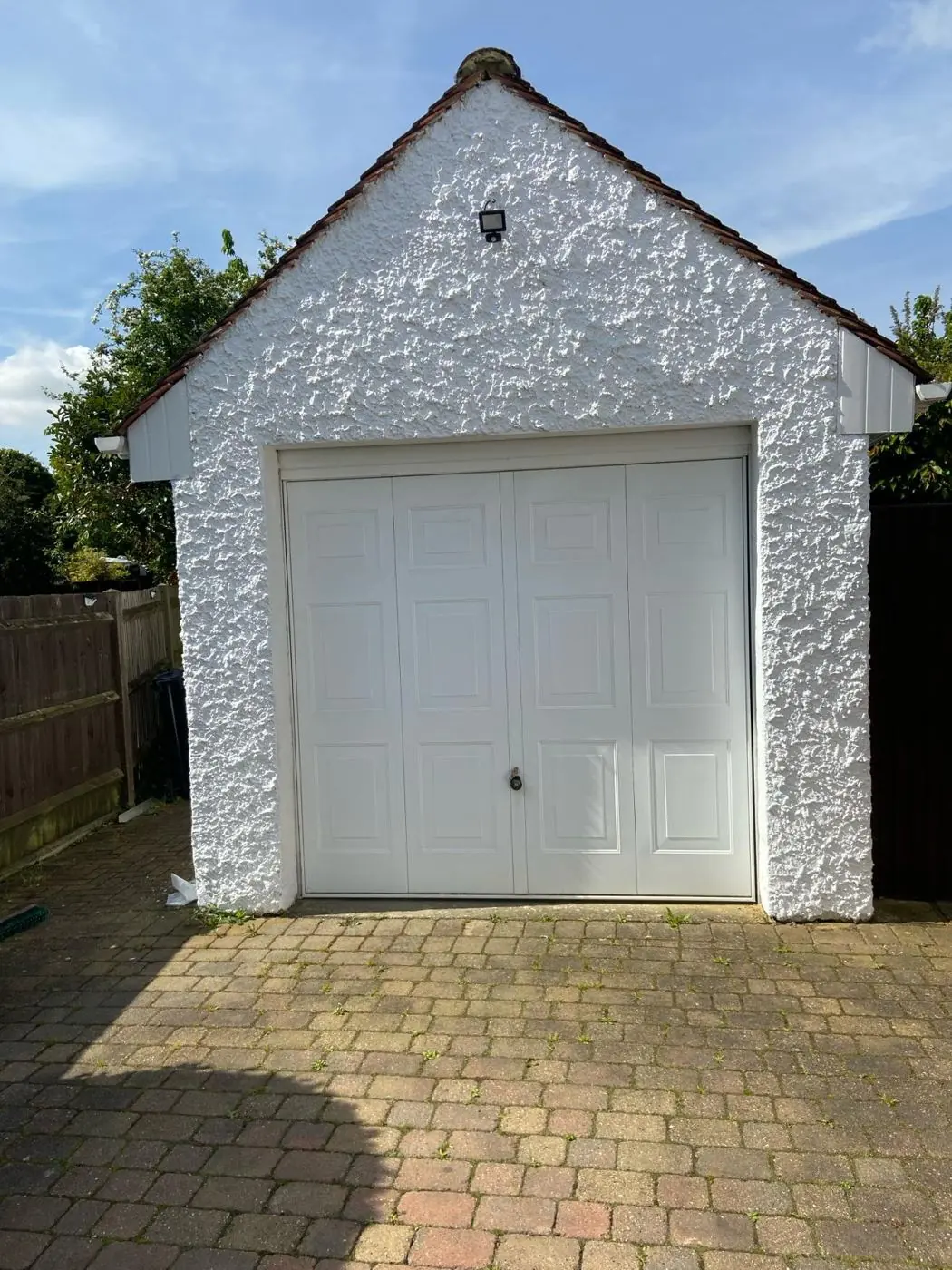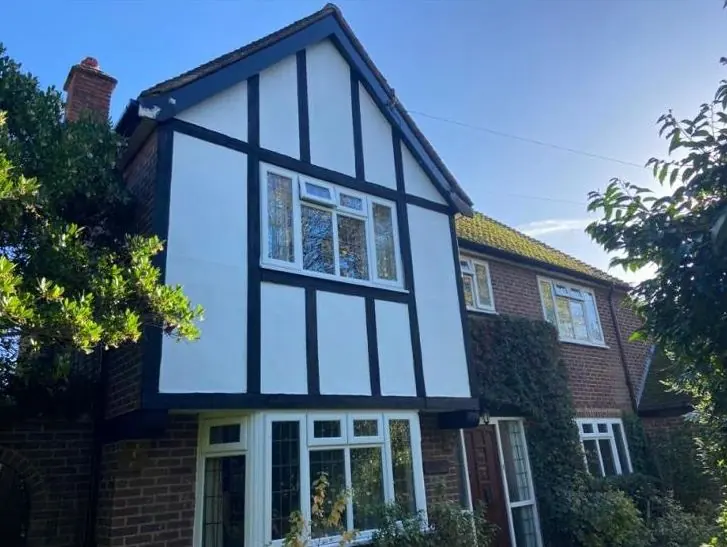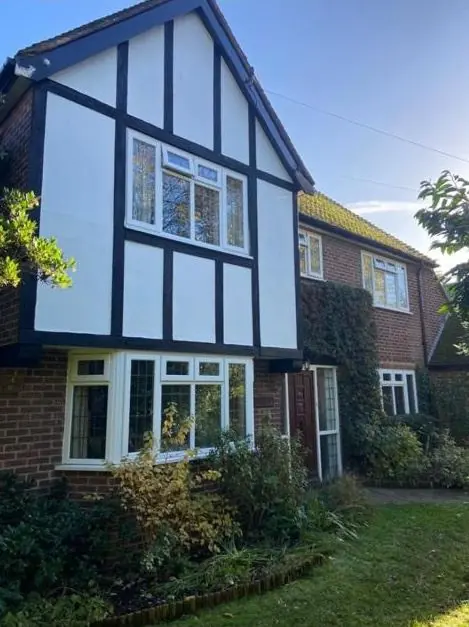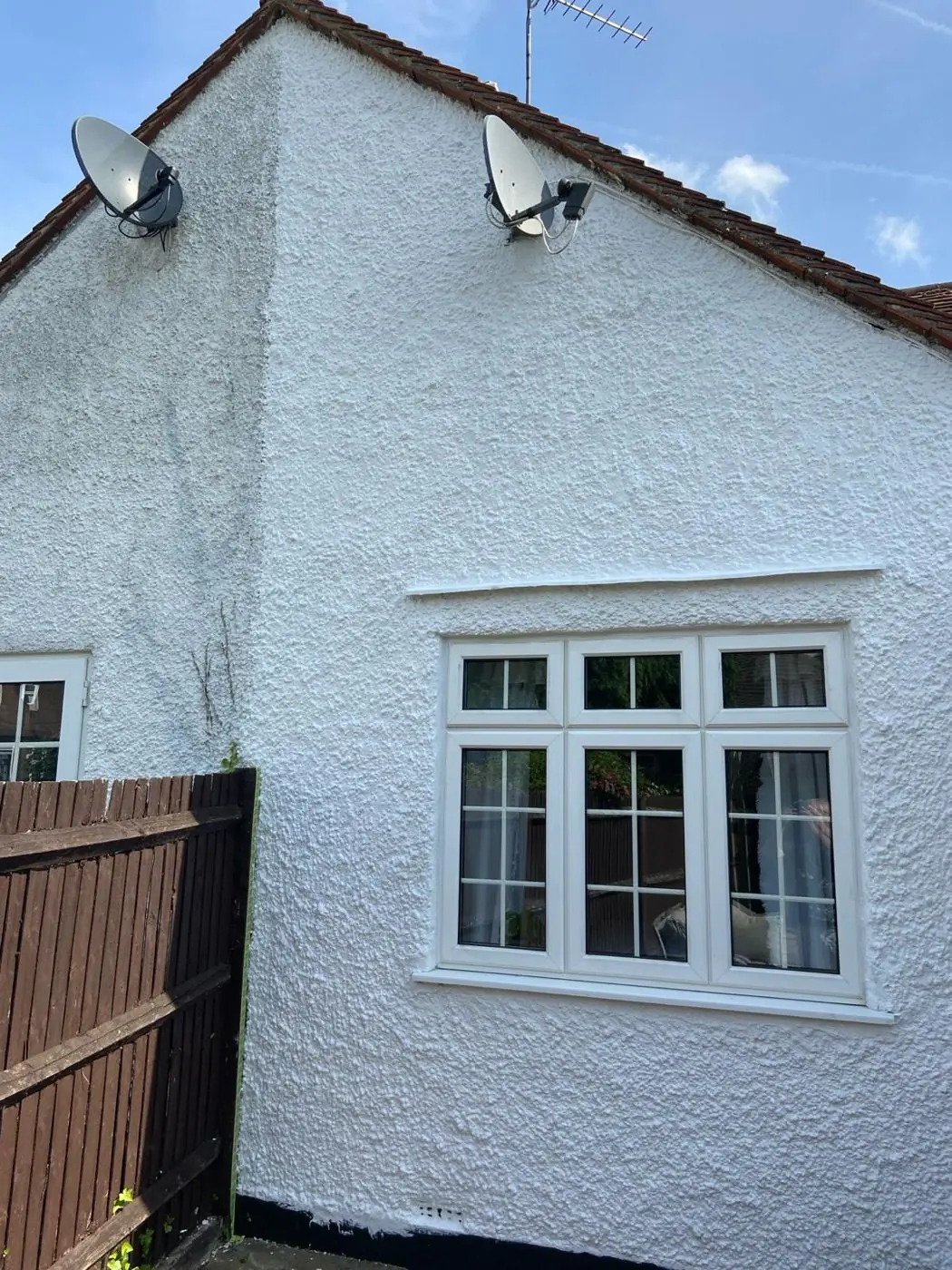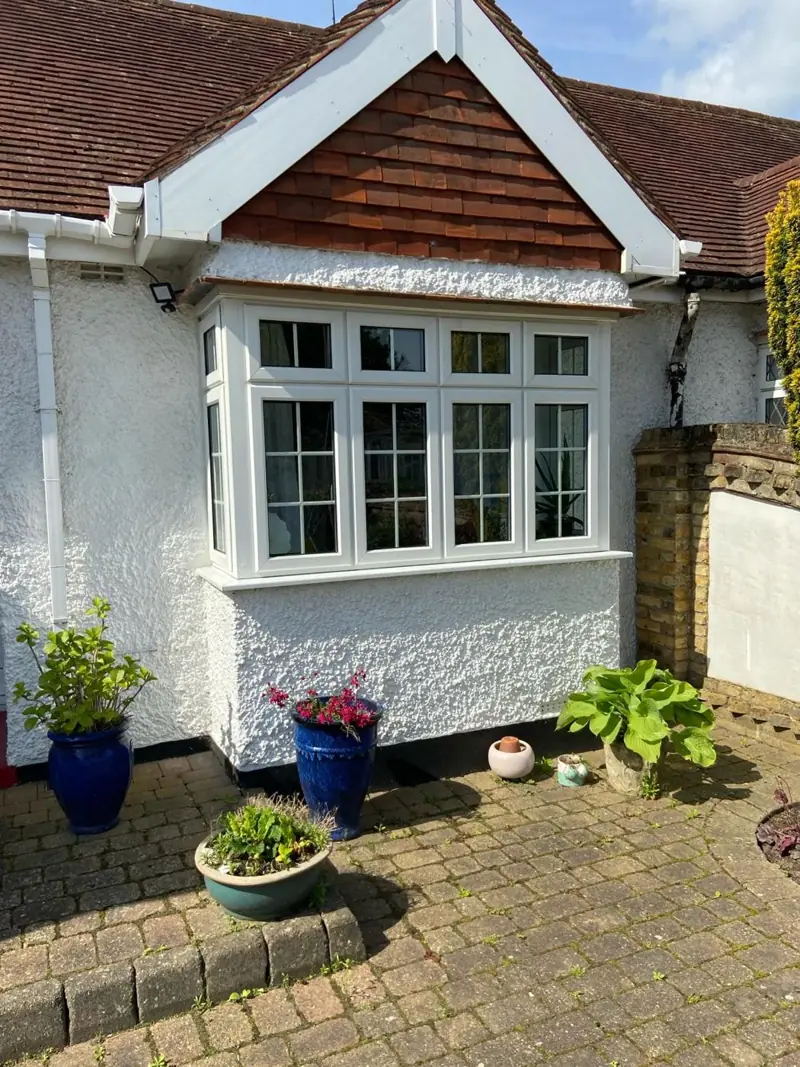
DH Painter & Decorator paints house exteriors in Rothersthorpe, the NN7 village about 3.4 miles south-west of Northampton town centre. Dean covers it from our Northampton base and quotes after a visit, because a listed ironstone farmhouse on Church Street and a modern house on Kislingbury Road need very different work.
Three kinds of house on two old streets
Rothersthorpe’s exterior work splits along the lines of its building history. The core of Church Street and North Street, around The Berry, holds 17th- and 18th-century farmhouses and cottages in coursed squared ironstone. The eastern end of Church Street has 19th-century red brick cottages in English and Flemish bond under slate. Then come the 20th-century infill houses and small estates, set back behind front gardens on Banbury Lane, Kislingbury Road and the newer roads running off North Street. Each group needs a different conversation before a brush comes out.
On the ironstone houses the walls are rarely the job. The stone is meant to be seen bare, so the paintable surfaces are the joinery: sash and casement windows, plank and panelled doors and the odd bargeboard. The brick cottages are similar, with sashes, doors, bargeboards and gutters making up most of a quote. The modern houses are where a full repaint, walls included, is most likely, because some have rendered or painted elevations outside the conservation area core.
What the 2013 appraisal says about colour and finish
The village has been a conservation area since 1976, and South Northamptonshire Council adopted its appraisal and management plan in 2013. No Article 4 direction applies today. Because the plan floats one for windows and doors, we treat original joinery on Church Street and North Street as if it were already covered.
Two points from that appraisal shape how we approach the outside of an older house here:
- White paint dominates on window frames, with a few in black. The appraisal singles out stained timber as out of keeping, which is why period frames here get an opaque paint and never a wood stain.
- Painted and rendered walls are called not particularly characteristic of the area. Recoating a wall that is already painted is maintenance. Painting bare stone or brick for the first time is worth raising with West Northamptonshire Council before anything starts.
Ten buildings in the village are listed, among them Church Farmhouse at 33 Church Street, Poplars House, The Manor and the Manor House at 1 North Street. On those, a change of external colour or finish may need listed building consent, and traditional breathable materials are expected. If you own one, we ask about consent at the quote rather than assume.
Mullions, sashes and farmhouse doors
Many of the older farmhouses keep stone mullion windows with moulded hoods and original leaded lights. Neither the stone nor the lead gets painted. Our part is the timber or metal casement sitting inside each mullion, masked tightly around the leadwork. Where timber has replaced a lost mullion, or a cottage has sliding sashes, we check the putty, cut out soft wood and use a microporous or linseed-based system that lets old timber move without the paint splitting.
Doors vary more than you would expect in a village of this size: plank doors with heavy ironwork on the early farmhouses, and panelled Georgian and Victorian doors elsewhere, including a six-panel door with fanlight on one Georgian house. These are hand-painted, with the ironwork treated as part of the door, in colours that suit the age of the building.
Raised ground, protected chestnuts and road-edge ladders
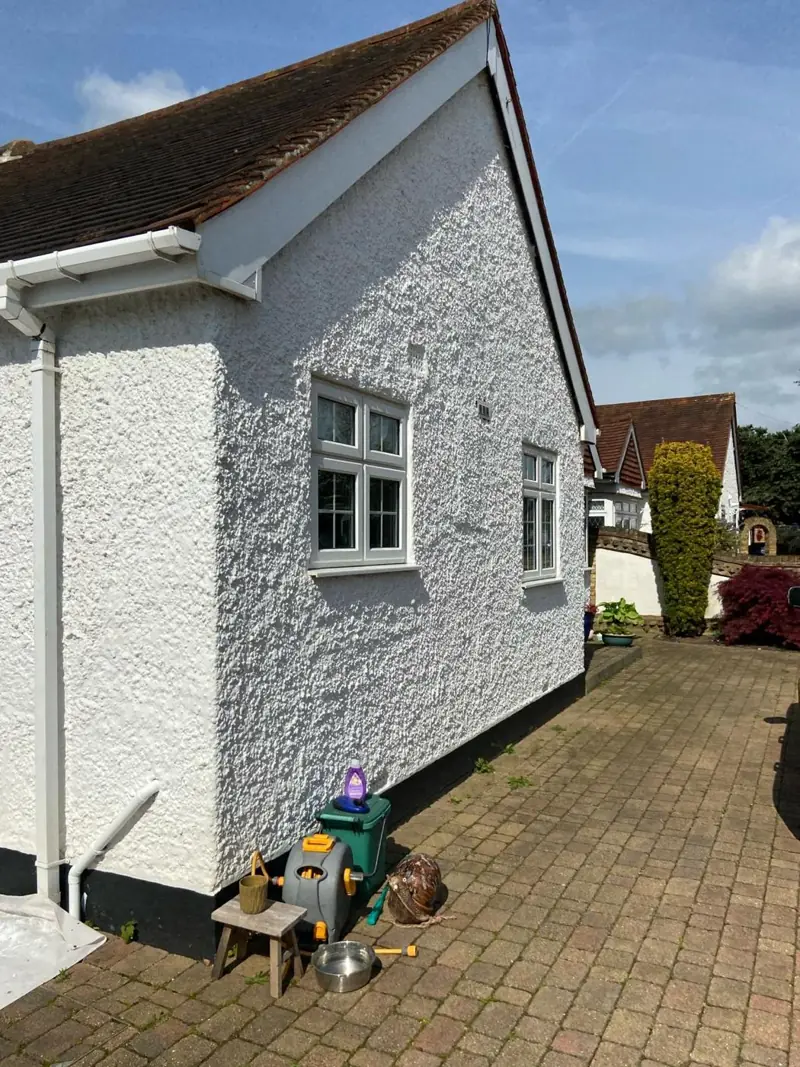
The village stands on raised ground, with the land falling gently away in every direction, and its eastern edge opens out to hedges and fields. Gables and joinery facing that open country take more weather than the sheltered fronts in the middle of the village, so they are what we inspect first when judging how often a house needs repainting.
The chestnut trees on Church Street near Manor Farm carry a group Tree Preservation Order, and there are more mature trees around the churchyard, Danesfield and Castle Farm. Joinery beneath them gets leaf litter, shade and slow drying, so we leave longer between coats, aim for dry spells and avoid the weeks when the chestnuts are dropping leaves. Our guide to the timing exterior painting covers the seasons in general.
Many older buildings sit right on the edge of streets that wind, with short sightlines, and the plots by the church are narrow. A ladder or tower on the road edge has to be placed with passing cars in mind, and we agree where the van will park before the first day. For the full process, from washing down to final coats, see our main exterior painting service in Northampton, and for everything else we offer in the village, the Rothersthorpe area page.
Last updated by Dean, DH Painter & Decorator.