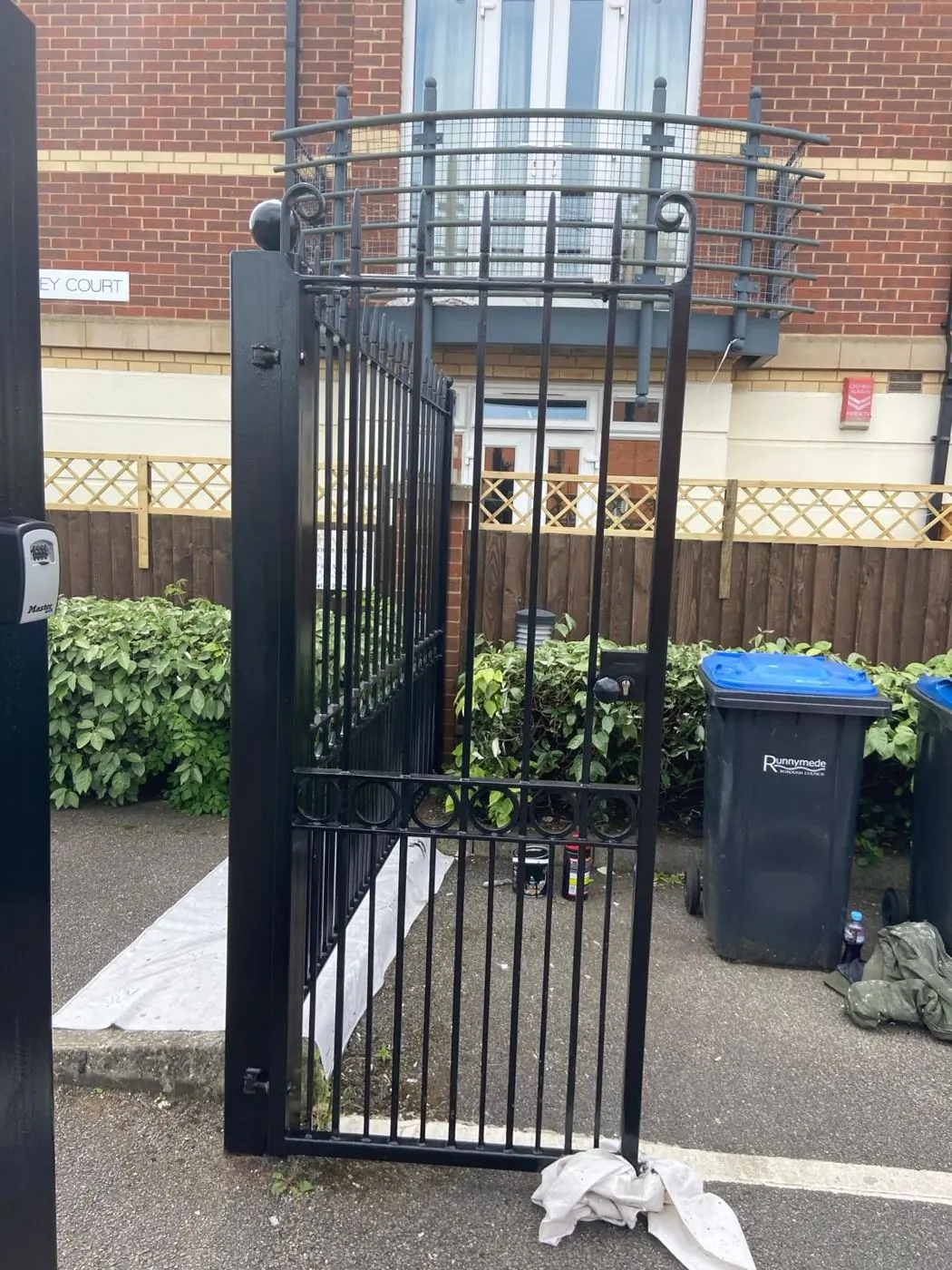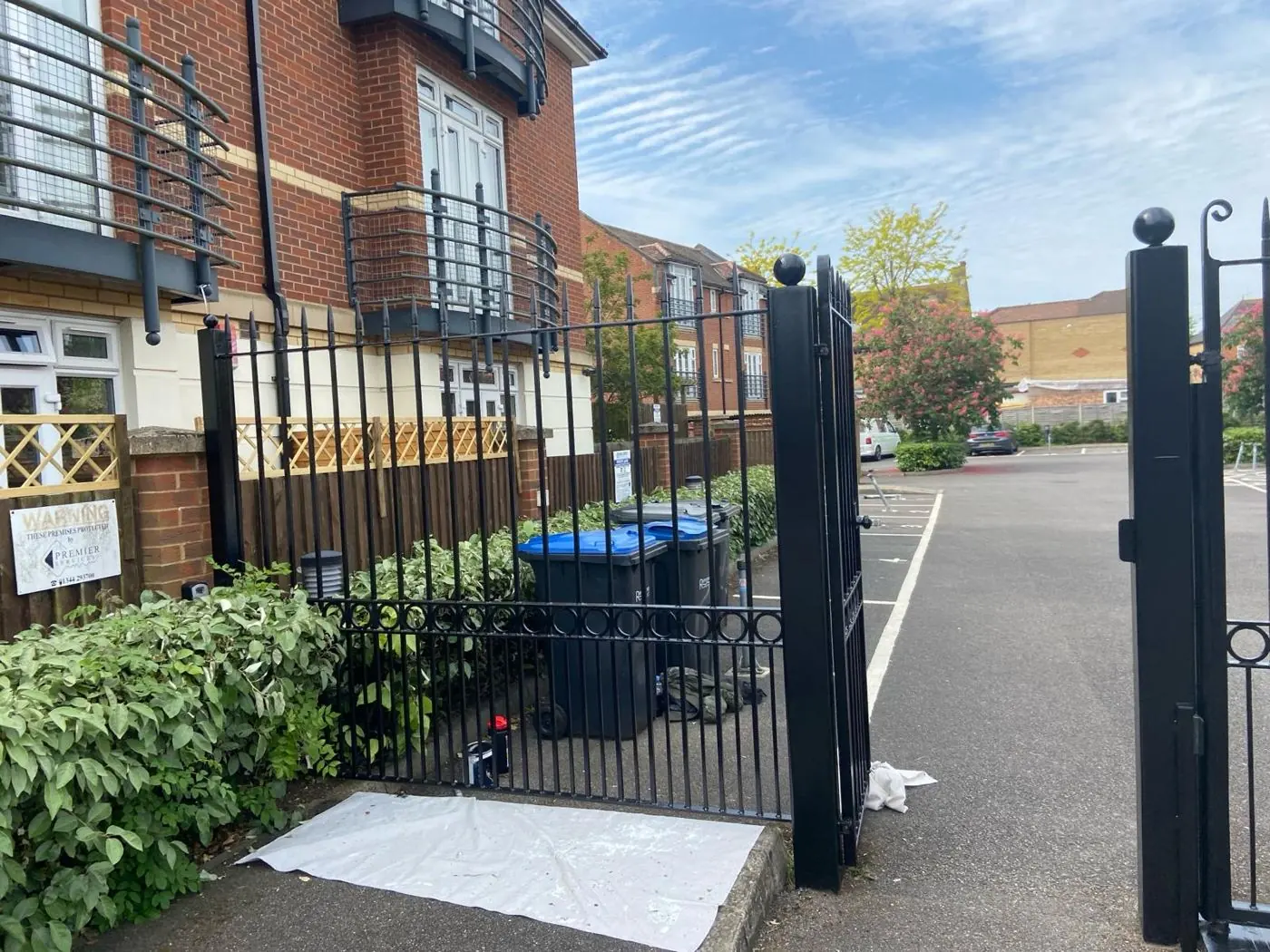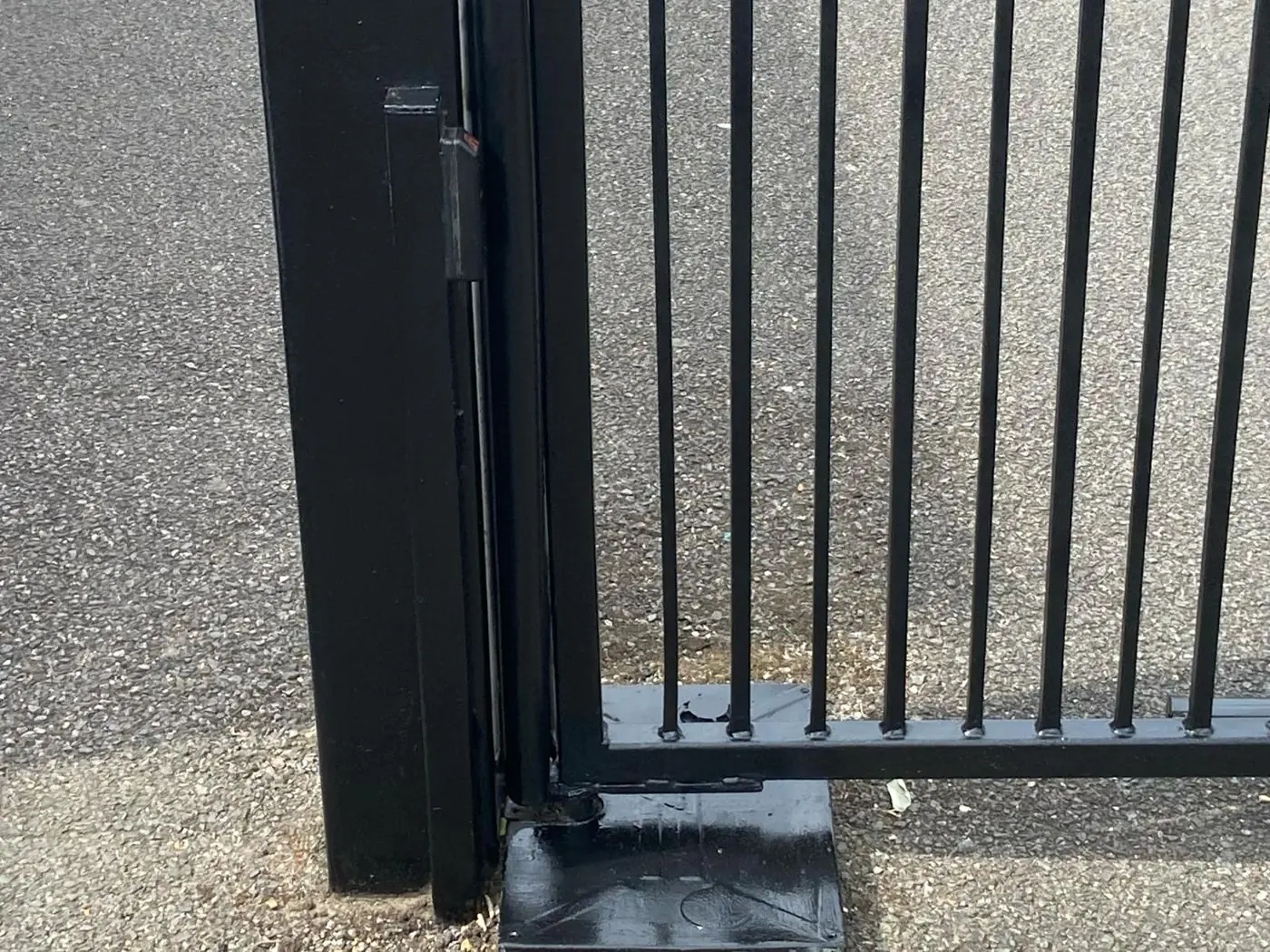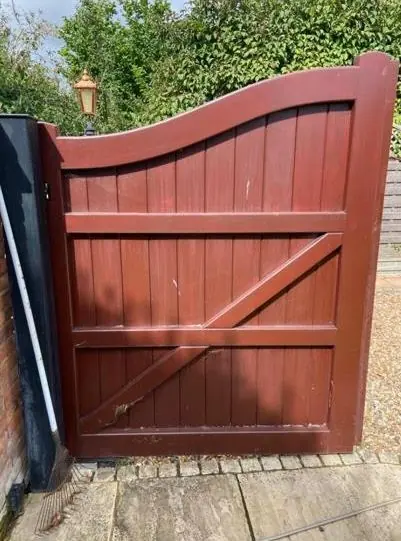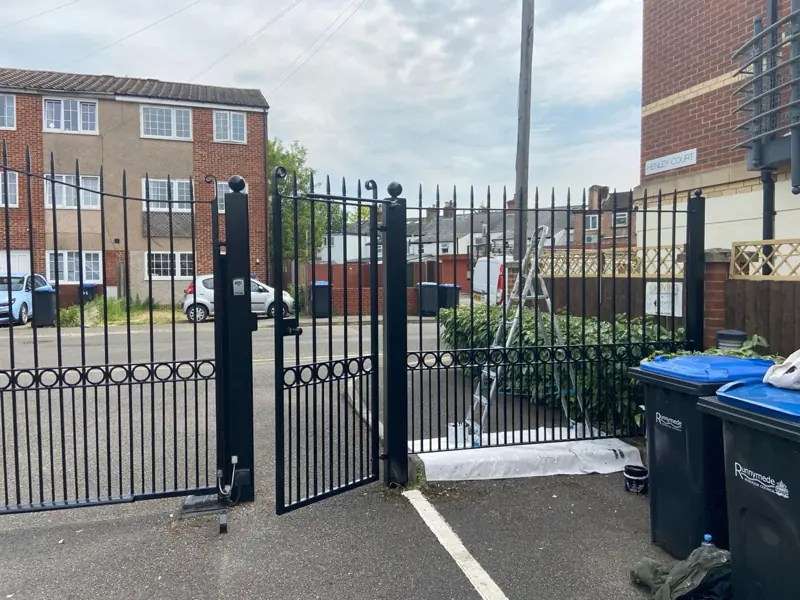
Dean paints metal gates and railings in Milton Malsor, a conservation village about 3.2 miles south-west of Northampton town centre. Each job starts with taking rust back to sound metal, then a rust-inhibiting primer and gloss, with extra care where iron is fixed into stone.
Historic ironwork in a stone village
The most fully recorded ironwork in Milton Malsor is a pair of listed gates: the wrought-iron gates to Milton Malsor Manor House on Malsor Lane, hung on dressed ironstone piers and dated to the late 17th or early 18th century. Gates of that age are a reminder of what old village ironwork often is: hand-worked iron, many coats of paint thick, fixed into stone that has been there as long as the metal.
Other village homes have plainer metalwork, such as garden gates, side gates and short runs of railing, some old and some modern steel. We cover all of it from our Northampton base. The rest of what the village’s houses need is on our Milton Malsor page.
Where iron meets ironstone
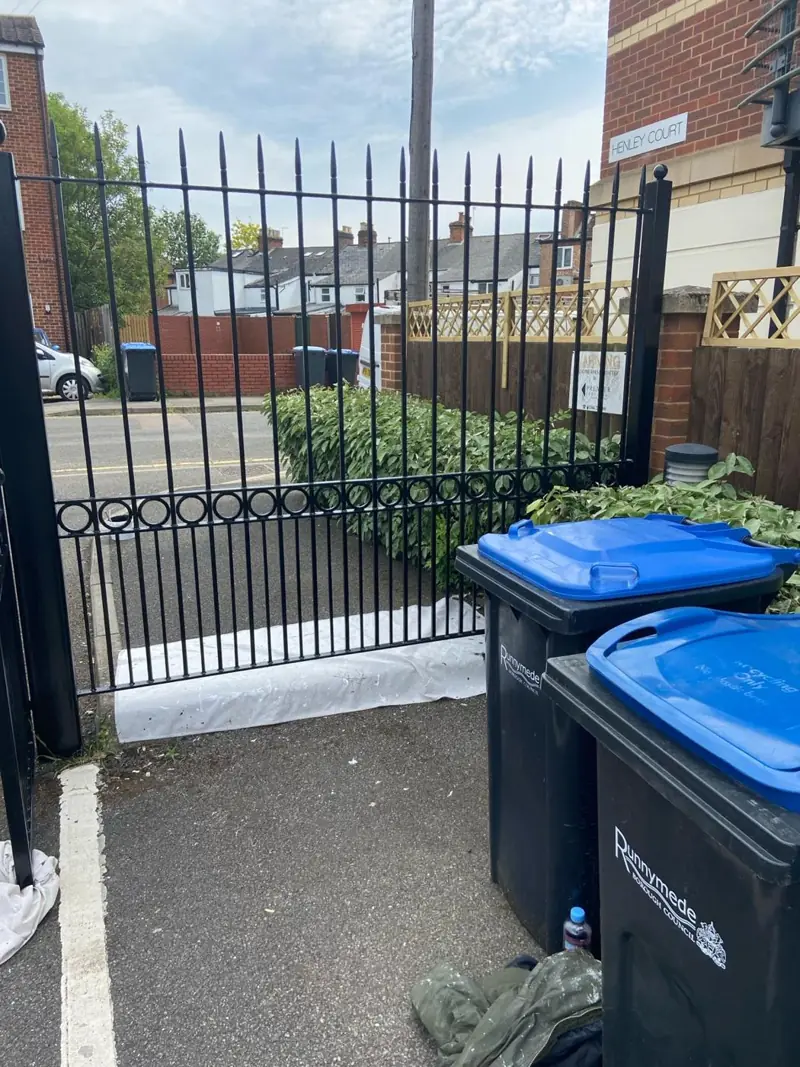
The weak point on most of these gates is not the middle of the bars but where the metal meets the stone. Hinge pins and catches are leaded or set into ironstone piers, and when the iron rusts it swells. That can split the stone around it. So this is where the preparation goes first:
- Loose rust and flaking paint are wire-brushed and scraped from the fixings, working carefully so the stone is not chipped.
- Gaps where water sits between iron and stone are cleaned out so the primer can reach the metal.
- Stone around the fixings is masked, because gloss and primer marks are very hard to remove from porous ironstone.
If a fixing has already cracked the stone, painting will not fix that, and Dean will tell you so. Resetting a fixing is a job for a blacksmith or mason.
Damp gardens and traffic grime
Two local conditions speed up rust. Parts of the village sit on damp sandy ground near the stream through The Dip, and gates on low plots stay wet at the bottom rail and hinge posts for long periods. Exposed frontages also collect grime from the M1, the A43, the A508 and the railway line, which holds moisture against the paint film. A gate that looks fine at head height can be rusting through at ground level.
How we take a gate back
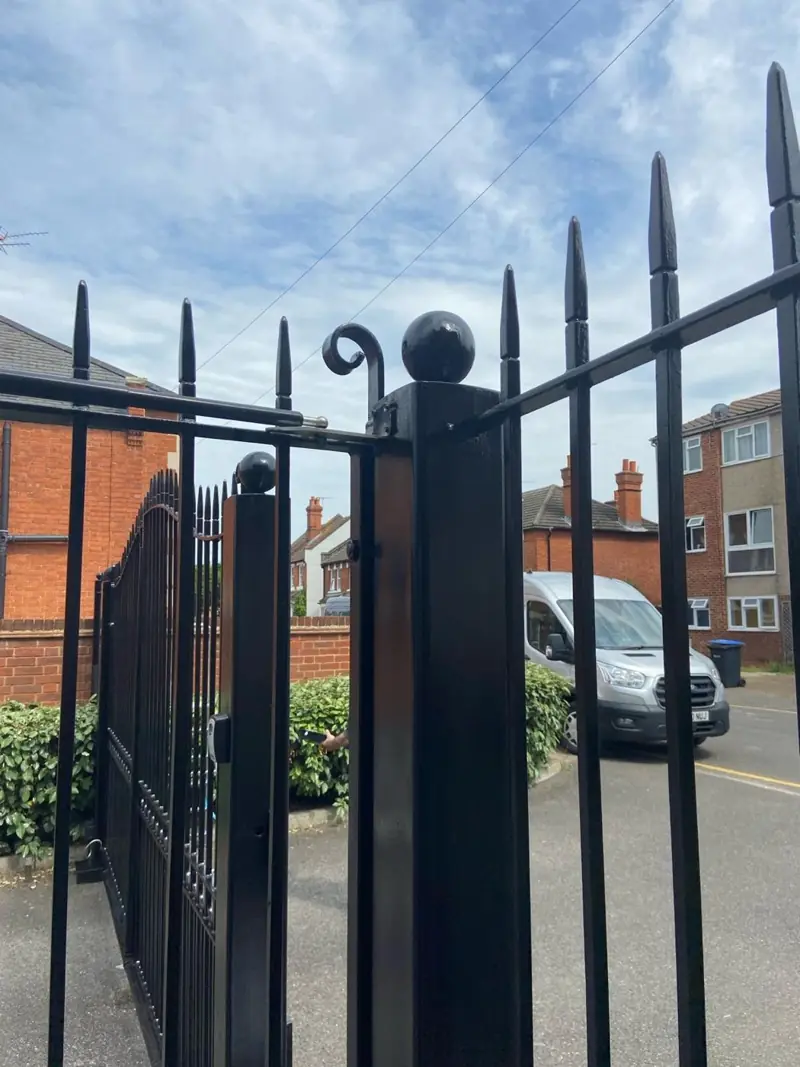
The order of work rarely changes, but the time spent at each step depends on the metal and its condition:
- Wash down to remove grime and any green growth.
- Wire-brush and scrape back to sound metal, with extra attention to joints, scrolls and the bottom rail.
- Spot-prime bare iron at once with a rust-inhibiting primer before it can flash rust.
- Undercoat, then a durable exterior gloss, brushed into every bar and scroll.
Galvanised steel needs a different primer, and old wrought iron can carry lead-based paint layers, which are handled without dry sanding. The detail on identifying metals is on our main metal gate and railing painting page.
Listed gates and colour
For listed ironwork such as the manor gates, like-for-like repainting is maintenance, but stripping historic layers or changing the colour can need listed building consent from West Northamptonshire Council. Black is traditional for village ironwork, and it sits well against warm ironstone piers.
Newer homes built as infill within the village boundary are more likely to have fabricated mild steel or galvanised gates. Mild steel rusts quickly once scratched, often at welds and where the catch rubs. Galvanised gates that have never been painted need a primer made for zinc, or the new paint will lift within a year.
Last updated by Dean, DH Painter & Decorator.