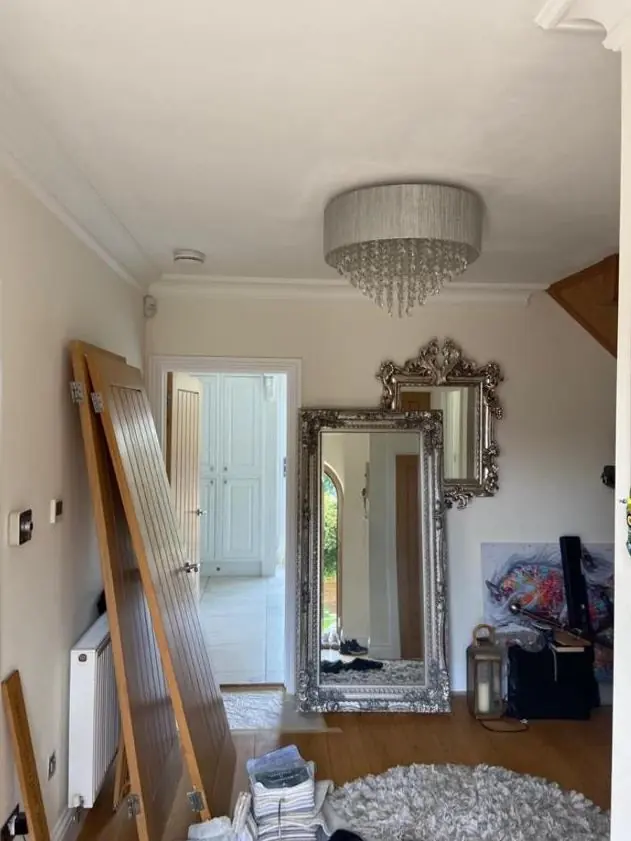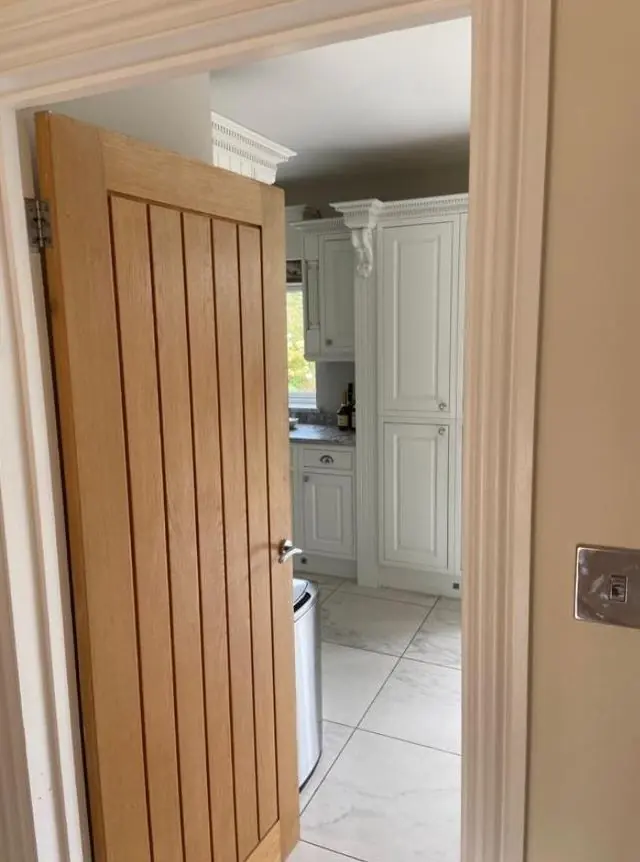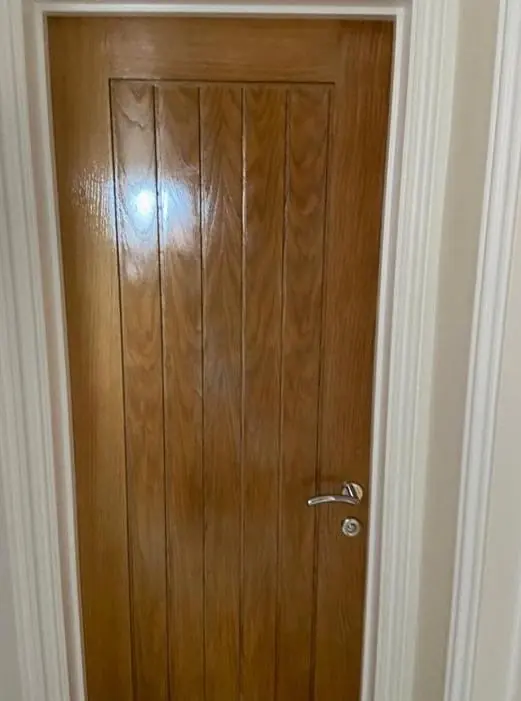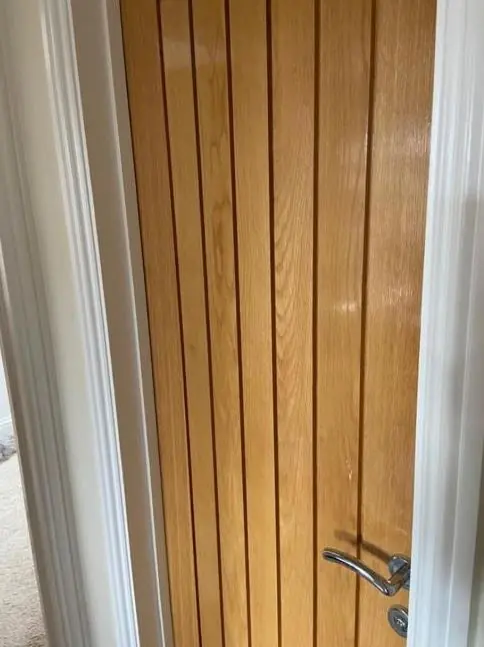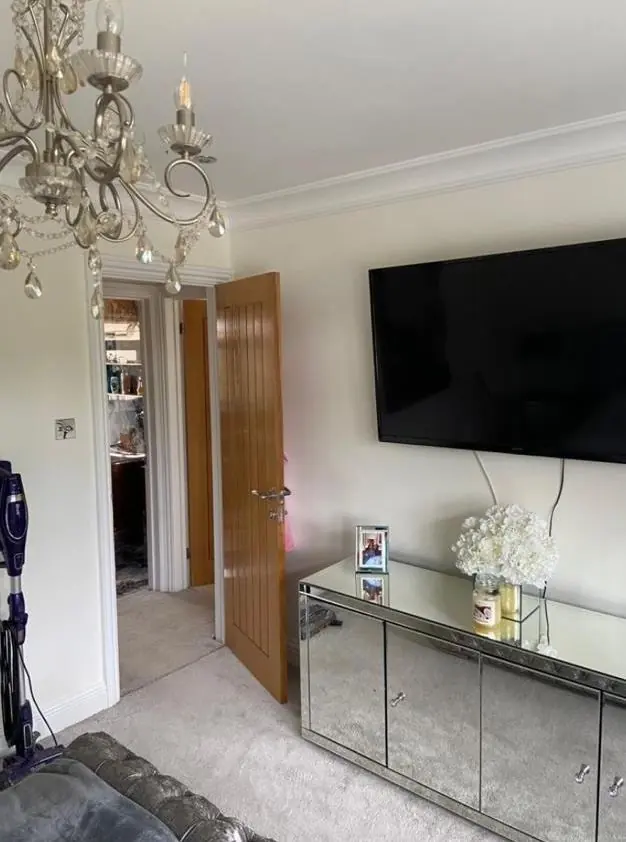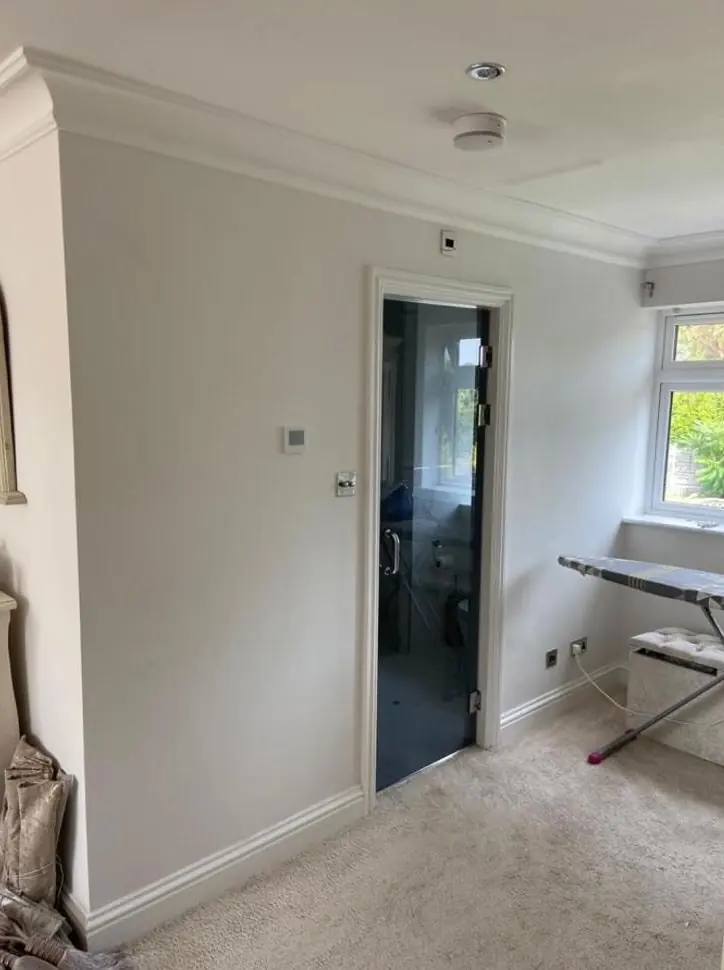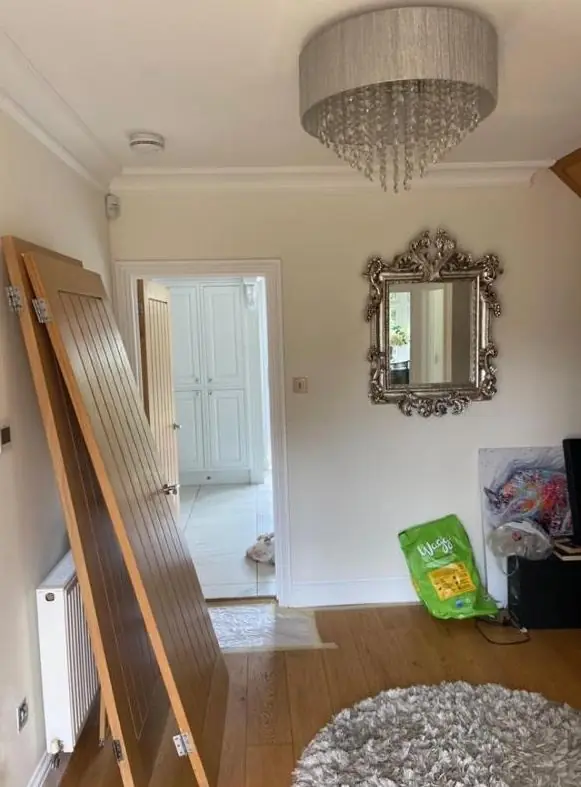
DH Painter & Decorator takes on decorative paintwork in Milton Malsor, 3.2 miles south-west of Northampton. That covers the classical joinery and painted stone dressings on the village's larger listed houses, panelling and moulded doors inside them, and feature walls or paint effects in the infill homes.
Classical joinery among the cottages
Most of Milton Malsor is small ironstone cottages, but a handful of larger houses carry formal, classical detail. Milton House on Rectory Lane, built of ironstone ashlar, has a Doric doorcase. The Old Rectory at 31 Rectory Lane has a six-panel door in a pilastered surround with a pediment. The 1827 Baptist Chapel on Green Street has a pair of six-panel doors under a fanlight. All three are recorded in the village’s listing descriptions, and they show the level of detail found on its larger houses.
Detail like that tests the preparation more than the brushwork. Old paint builds up in the flutes, mouldings and corners until the crisp edges are lost. Bringing them back means careful scraping and sanding, filling splits in old timber and, where necessary, taking paint layers back from the mouldings. On the cottages, many have thatched roofs, and hot-air stripping near thatch is a fire risk, so we use hand tools and chemical methods close to it. The finish coat, usually a traditional gloss or a good eggshell, then goes on in thin, even layers so the profiles stay sharp.
Painted stone surrounds and dressings
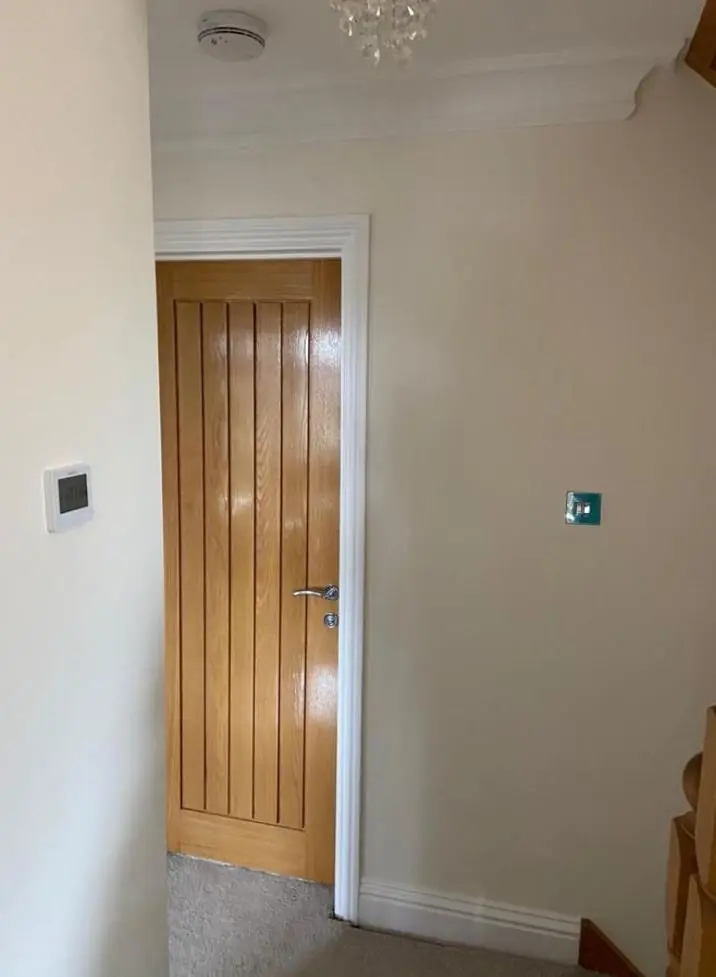
Milton Malsor Manor House on Malsor Lane is rendered ironstone with painted stone window and door surrounds. Painted dressings like these are a decorative finish in their own right. They frame each opening, and a clean contrast line between surround and render is what makes the front look ordered. Stone needs breathable paint, not a hard sealer or a plastic-based gloss, and the edges have to be cut in freehand along stone that is never quite straight. Before doing any work like this on a listed building, check with West Northamptonshire Council whether listed building consent is needed for the colour or finish.
Panelling, doors and beams inside older houses
Inside, decorative work in the older houses is usually quieter. Typical jobs include:
- Painted panelling, where joints and old repairs need filling so the panels read cleanly.
- Six-panel and plank doors, with mouldings picked out in a second shade or sheen.
- Limewash or a breathable distemper-style finish on rough walls between beams, which suits the age of the room better than a flat modern emulsion.
Some houses in the village are said to have 16th- or 17th-century beams. We don’t paint historic timber without discussing it with you first, and on a listed house that decision may also need council agreement. Where beams were blackened or painted in the past, the choice between leaving them, cleaning them or giving them a sympathetic finish is worth making before the walls around them are decorated, because it changes which colours will work in the room.
Feature walls in the newer houses
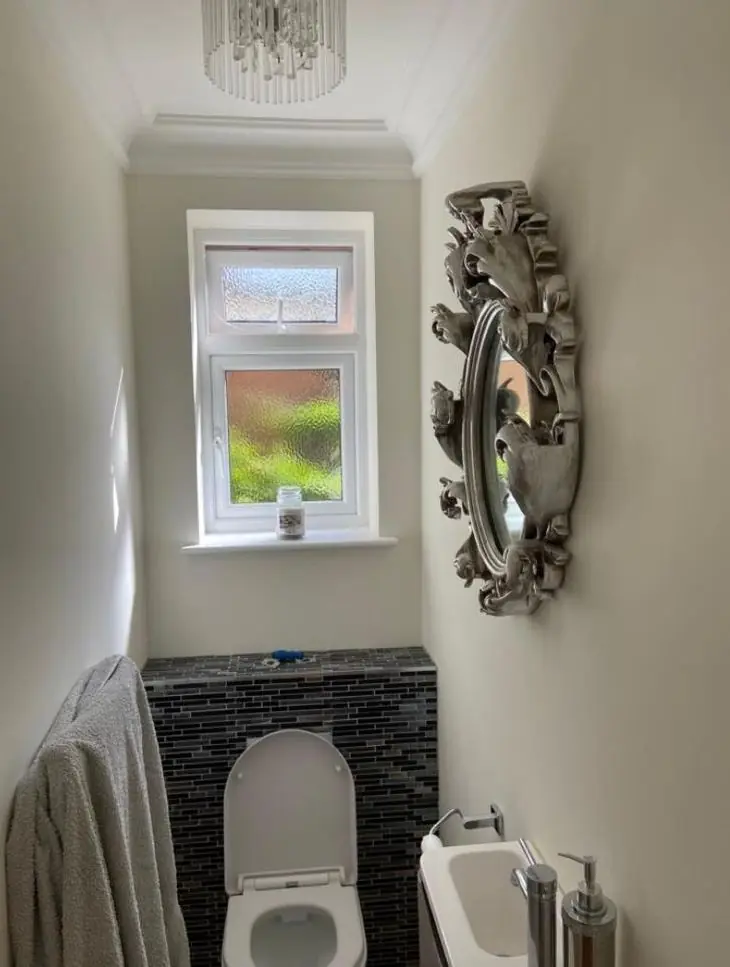
Milton Malsor only allows infill development within the village boundary, so newer homes and extensions are scattered among the older ones. Their flat modern plaster suits effects that would look wrong on lime: crisp two-tone splits, painted wall panelling, colour-blocked alcoves or a glazed paint effect on a chimney breast. Where a new room opens off an old cottage, a painted panelling scheme or a dado-height colour change can link the two parts of the house.
The full range of effects we offer is on the main decorative finishes page. For choosing shades that suit the stone, see our colour advice for Milton Malsor, or return to the village overview. To arrange a visit, phone Dean on 07539 779 036.
Last updated by Dean, DH Painter & Decorator.