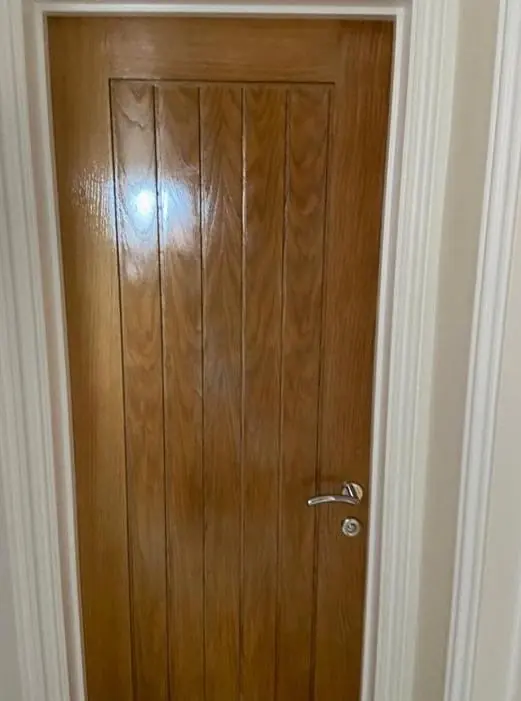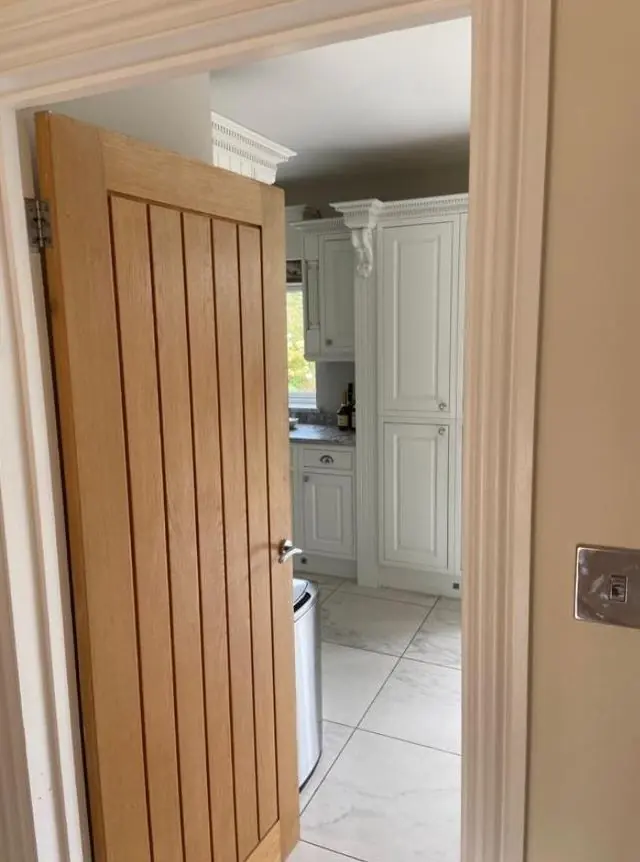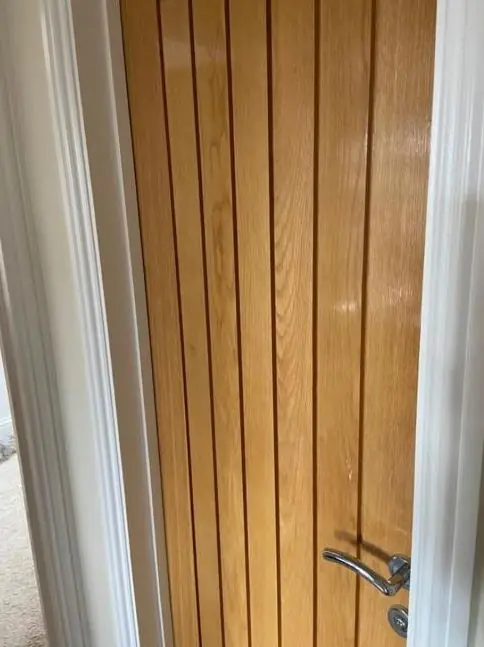
Dean paints doors, skirtings, architraves, sash windows and other woodwork across Duston, about 2.1 miles west of Northampton town centre in NN5. The approach changes with the street: careful repair and traditional finishes for original joinery in the conservation area, and tough gloss or satin for standard joinery on the post-war estates.
Sash windows the conservation appraisal wants kept
The 2009 appraisal for the Duston Conservation Area singles out original sash windows and timber joinery as part of what gives the old village its character, especially on the houses around the Saxon Rise junction and at 1A Sycamore Road. It also lists modern plastic windows among the things eroding that character. The practical message for owners is to keep the timber going with repair and repainting rather than replacement.
On a sash that has been painted for a century or more, that means freeing stuck sashes from paint build-up, cutting out soft wood and splicing or filling it, reputtying where the glazing putty has cracked, and painting so the meeting rails and staff beads still move. We keep paint off the cords and parting beads. On the red brick and stucco town houses further up Main Road, sashes are set in brick and render under clay tile roofs, and traditional pale joinery colours suit them.
The conservation area holds 21 listed buildings, from the Grade I St Luke’s Church to Grade II cottages, plus 20 on the draft Local List. Like-for-like repainting of existing joinery normally needs no listed building consent, but stripping original features or changing a finish can. We suggest a word with the council’s conservation officer before anything beyond a straight repaint.
Three kinds of joinery, three ways of working
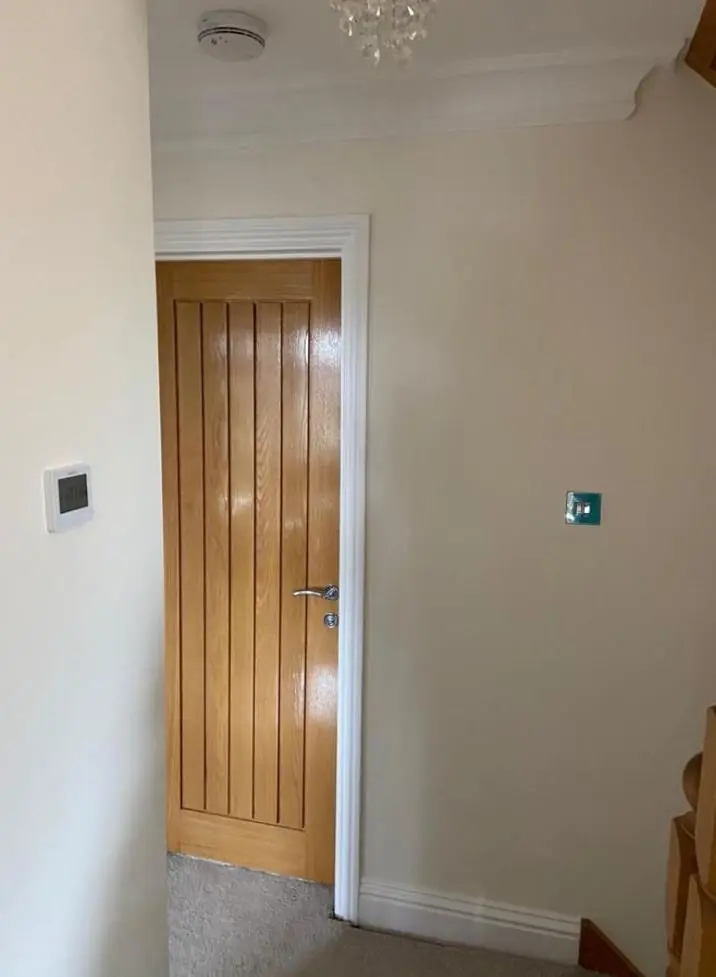
Duston grew in distinct phases, and the woodwork in each phase asks for something different. Our main door and skirting painting page covers the general preparation steps; the table below shows how they apply here.
| Where | Typical joinery | What it needs |
|---|---|---|
| Main Road, Millway, Squirrel Lane | Plank and ledged cottage doors, panelled doors, box sashes, timber lintels | Gentle prep, test for old lead paint, traditional oil or waterborne finishes that suit the age |
| Kerrfield, Limehurst and Eastfield, Chiltern Way | Flush or panelled interior doors, plain skirtings, front doors and garage doors | Degrease, key, fill and a durable satin or gloss |
| Newton Road area | Standard internal joinery with timber weatherboarding outside | Hard-wearing finishes inside and a microporous coating on exterior boards |
Cottage doorways and uneven frames
The 17th and 18th century cottages on Main Road and Millway, several of them thatched, were not built square. Door frames lean, skirtings follow walls that bow, and the lime plaster behind them moves slightly with the seasons. A rigid caulk line along a wavy skirting will crack within months, so we use flexible fillers sparingly and accept a little irregularity rather than forcing a modern straight edge onto a 300-year-old wall.
Old layers matter here too. Pre-1960s paint can contain lead, and cottage doors often carry many coats. We test before sanding and switch to wet abrading or low-temperature stripping where it shows up. For The Elms, the Millway thatched cottages and similar listed houses, the aim is to leave each door looking well kept rather than new.
Front doors and garage doors on the post-war streets
Duston’s Neighbourhood Plan describes the 1950s Limehurst and Eastfield streets and the Chiltern Way area as having evenly spaced windows and doors, and its design policy values that regularity. On these streets it makes sense to paint a front door, its frame and the matching garage door together, in a colour that suits the neighbours rather than standing apart.
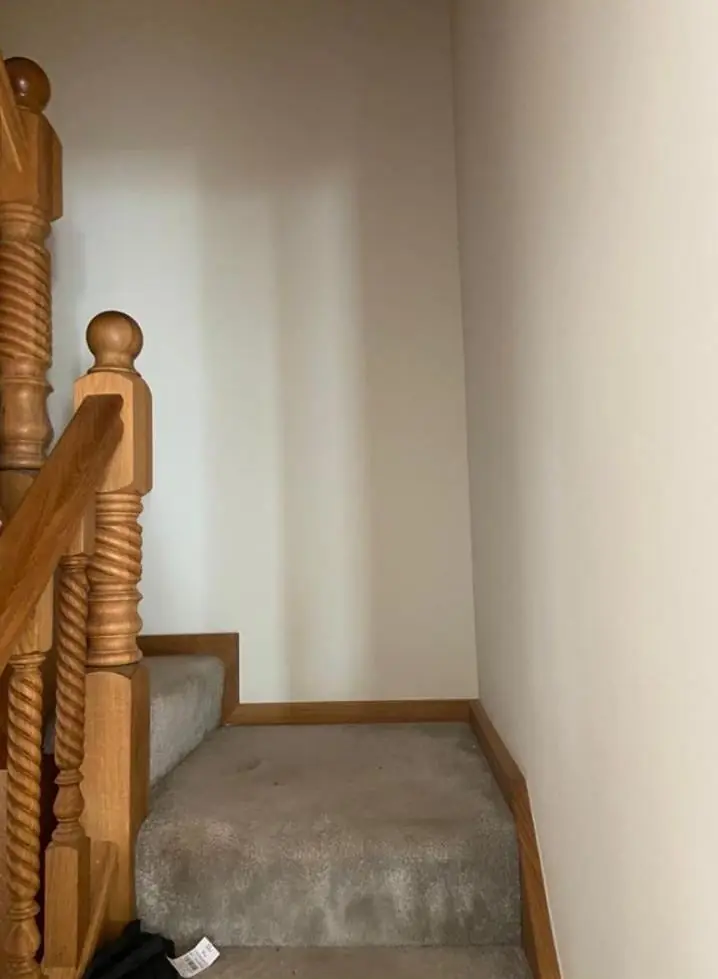
Inside these semis, the woodwork takes everyday knocks: hall skirtings by the front door, stair stringers and kitchen door frames. A satin finish hides marks better than high gloss and is easier to wipe. On Main Road, traffic film builds up on front doors, so they need a proper wash before any keying, or the new paint lifts with the dirt. For other work around the old village and its estates, see painting and decorating in Duston.
Last updated by Dean, DH Painter & Decorator.