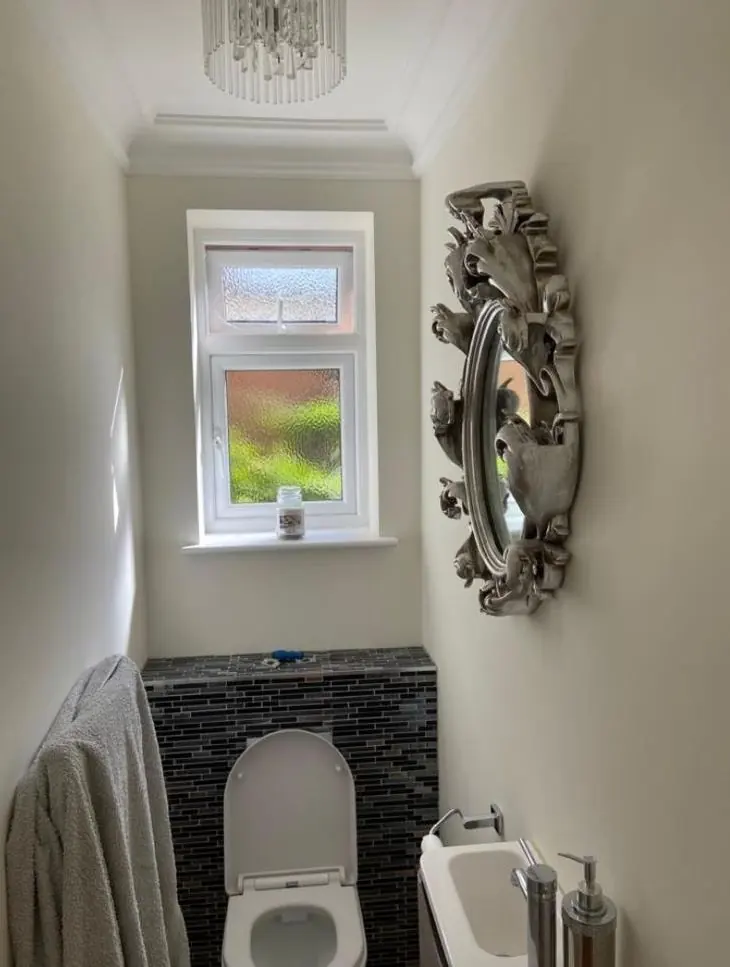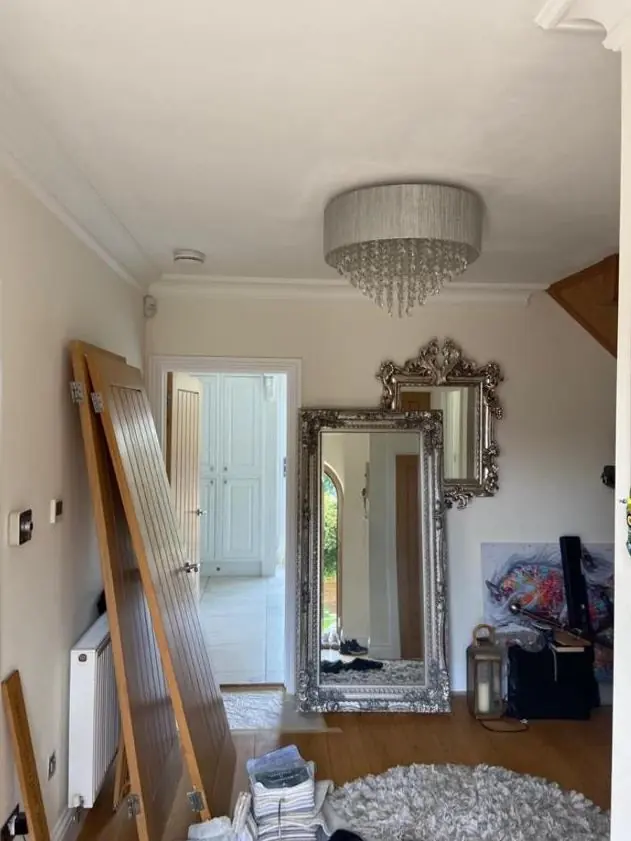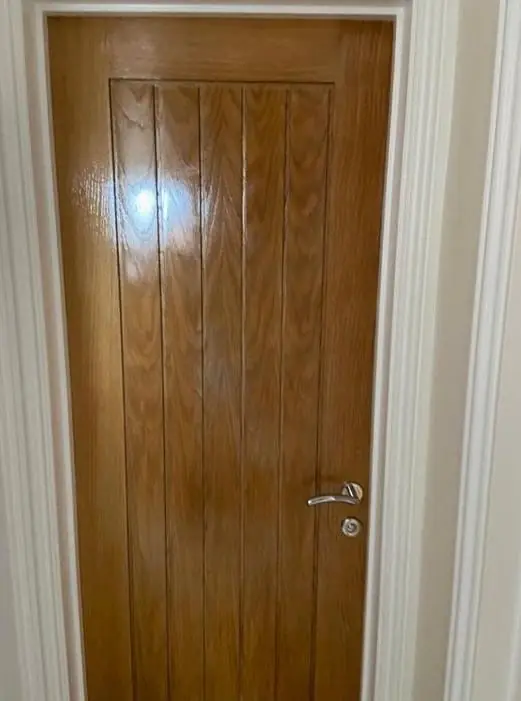
Harlestone (NN7) lies 4.3 miles north-west of Northampton town centre, and Dean at DH Painter & Decorator paints its doors, skirtings, frames, sashes and casements. Much of the village sits in the Harlestone Conservation Area, so we repair and repaint the existing timber rather than suggest replacing it.
Joinery that has outlived several owners
Harlestone’s woodwork tells the story of the village. The late 17th-century thatched cottages in Upper Harlestone have plank doors and leaded-light casements under wood lintels. The 18th-century buildings strung along the A428 in Lower Harlestone, the Fox and Hounds and Park Farmhouse among them, carry 12-pane timber sashes. The Althorp Estate cottages of the 19th century, including the Blore-designed Ten Cottages dated 1851, have ribbed doors set under four-centred heads. Then come the Victorian terrace on Port Road, with stylised front doors and side-hung windows of eight lights, and the Edwardian brick semis with timber detail on their gables.
Inside the older cottages you find boarded doors, ledged and braced, and softwood skirtings that have taken decades of gloss. None of this is factory joinery, and it rarely sits square. Our general method for doors, frames and skirtings is on the main door and skirting painting page. Here we cover what is different in this village.
Ribbed doors, plank doors and the question of colour
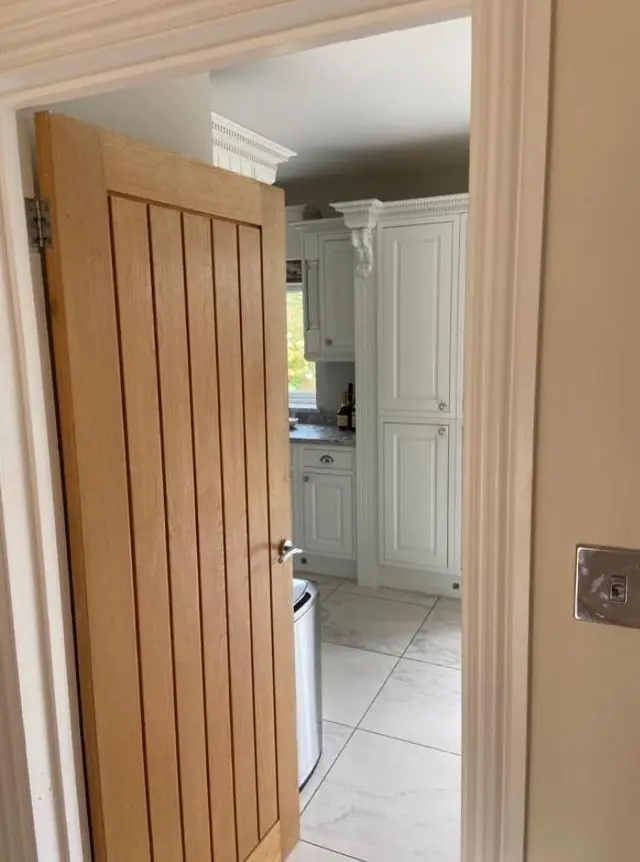
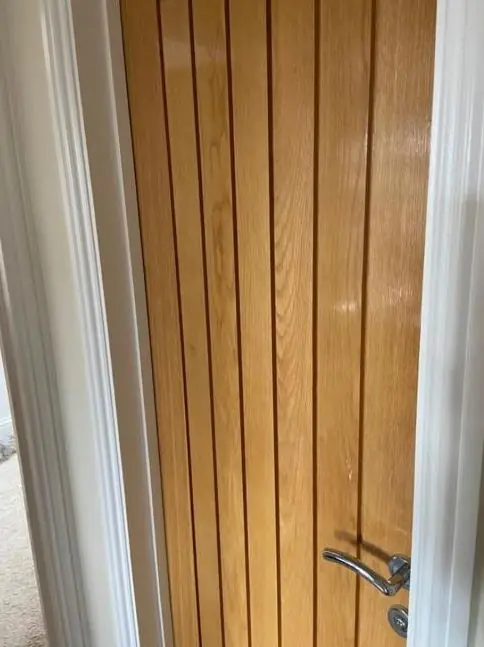
The 2017 conservation area appraisal records Harlestone’s doors as timber plank or panel, some painted in bright colours and some left natural. We offer both routes. A painted plank door needs every joint between boards cleaned out and primed, because water sits in those grooves and lifts paint from the edges first. A ribbed estate door has the same problem many times over, and the ribs need a brush worked along each one rather than a quick roll across the face.
Where a door has been left as bare or oiled timber, we can keep it that way with an oil or stain finish. Turning a natural door into a painted one, or making a big colour change, deserves a check first. The appraisal proposed an Article 4 Direction covering doors and significant changes of exterior colour; we have not been able to confirm its status, so we suggest asking West Northamptonshire Council before committing to a new shade.
Sashes, casements and white frames
Painted window frames in the conservation area are expected to be white or another sensitive colour, and the guidance leans against uPVC. That makes careful maintenance of the timber worth the effort. On sashes we:
- rake out failed putty and dig out soft wood, then fill or splice before priming;
- sand back to a sound edge and spot-prime bare timber the same day;
- use a microporous or linseed-type finish so the timber can breathe;
- paint the sash meeting rails and runners thinly so the windows still slide.
Leaded lights in the oldest cottages need their cames and glass protected while the surrounding timber is painted. Under thatch there is a further rule: no heat guns near the eaves. Old paint around low thatched windows comes off by hand scraping and sanding with dust control.
Skirtings and doors inside solid stone cottages
Lias stone walls are thick and rarely straight, so skirtings in the older cottages often follow a wavy floor and a bowed wall. Gaps along the top edge are filled with a flexible decorator’s filler before painting, and we do not try to force a ruler-straight line where the wall itself is not. Many layers of old gloss can be crazed or brittle; we sand them flat and, where the build-up is thick enough to clog door mouldings, strip locally rather than adding another coat on top.
Older paint on joinery in a house of this age may contain lead. Before dry-sanding anything that predates the 1960s we test it, and if it is positive we switch to wet abrasives and careful cleaning. In the brick houses on Glebe Lane and Harlestone Road, by contrast, skirtings and doors are standard modern softwood or MDF, and the job is much like any Northampton semi.
Working along the A428
Front doors and sashes in Lower Harlestone sit very close to a fast, busy main road. Traffic grime and spray settle on them, so they get washed and degreased thoroughly before sanding, and they tend to need recoating sooner than joinery in the quieter lanes of Upper Harlestone. We plan exterior door and window days for dry spells, because the valley setting and tree cover slow drying. For an idea of costs, see our painter and decorator cost guide, and for the rest of the village see our Harlestone page.
Last updated by Dean, DH Painter & Decorator.