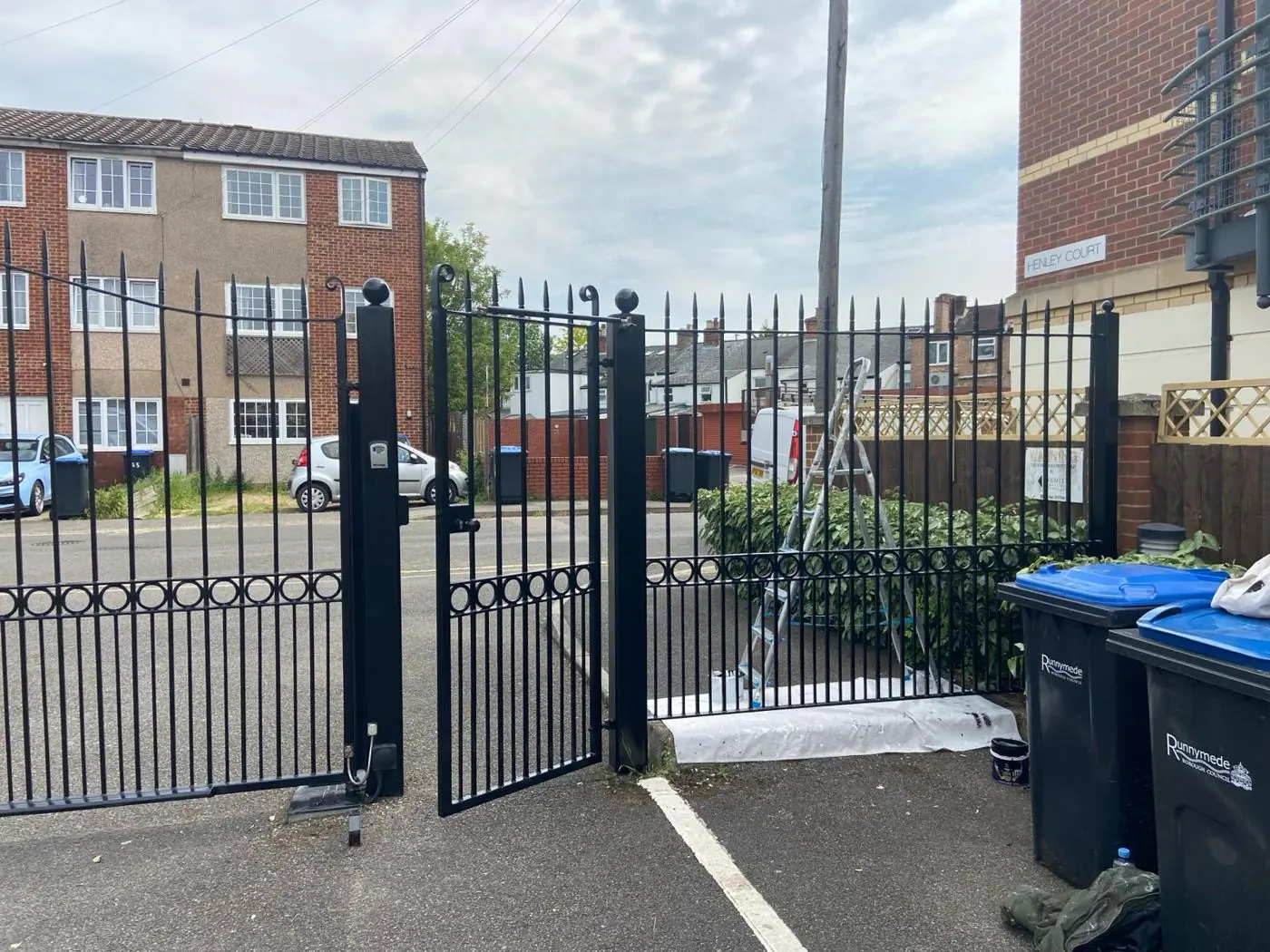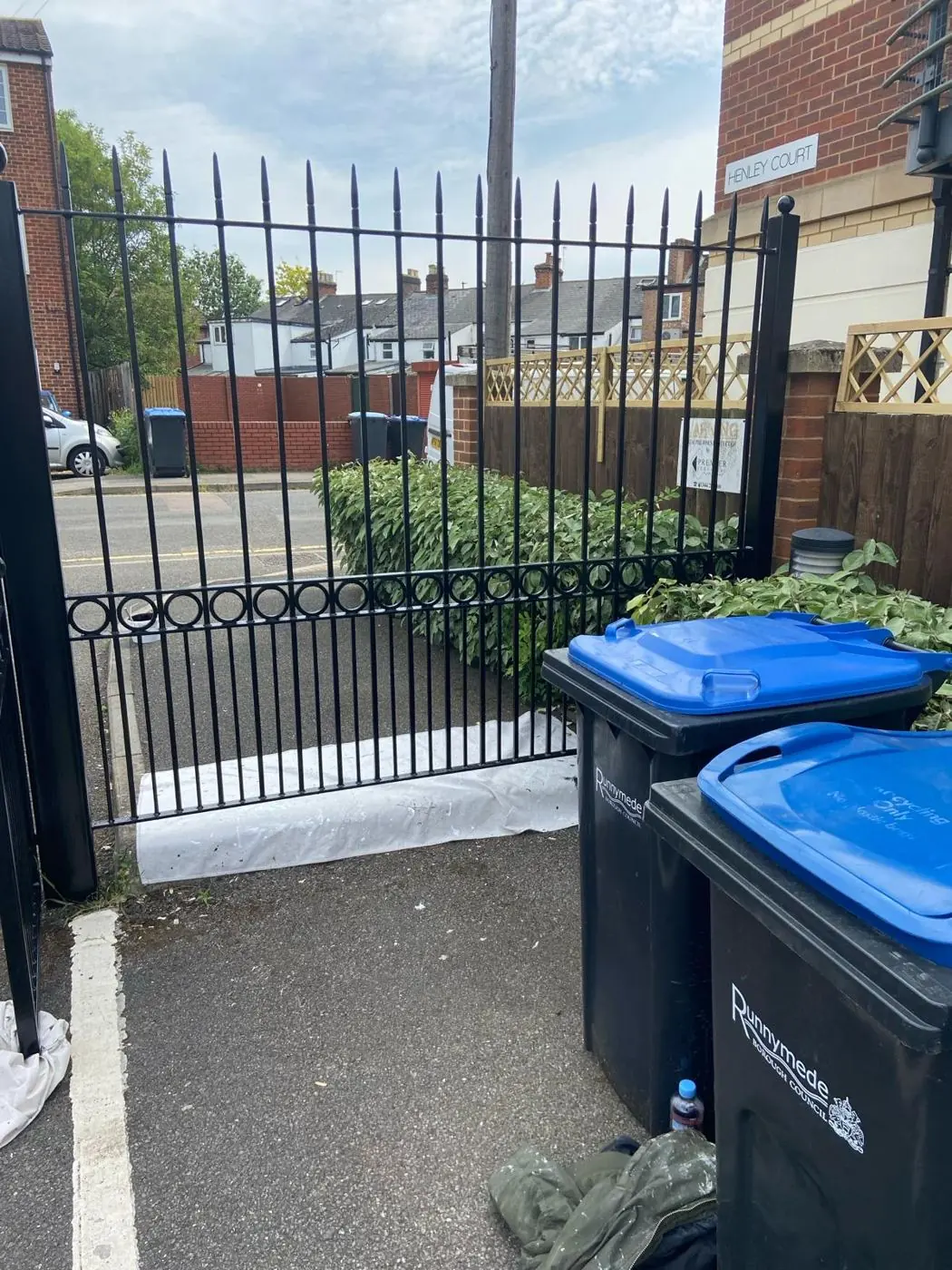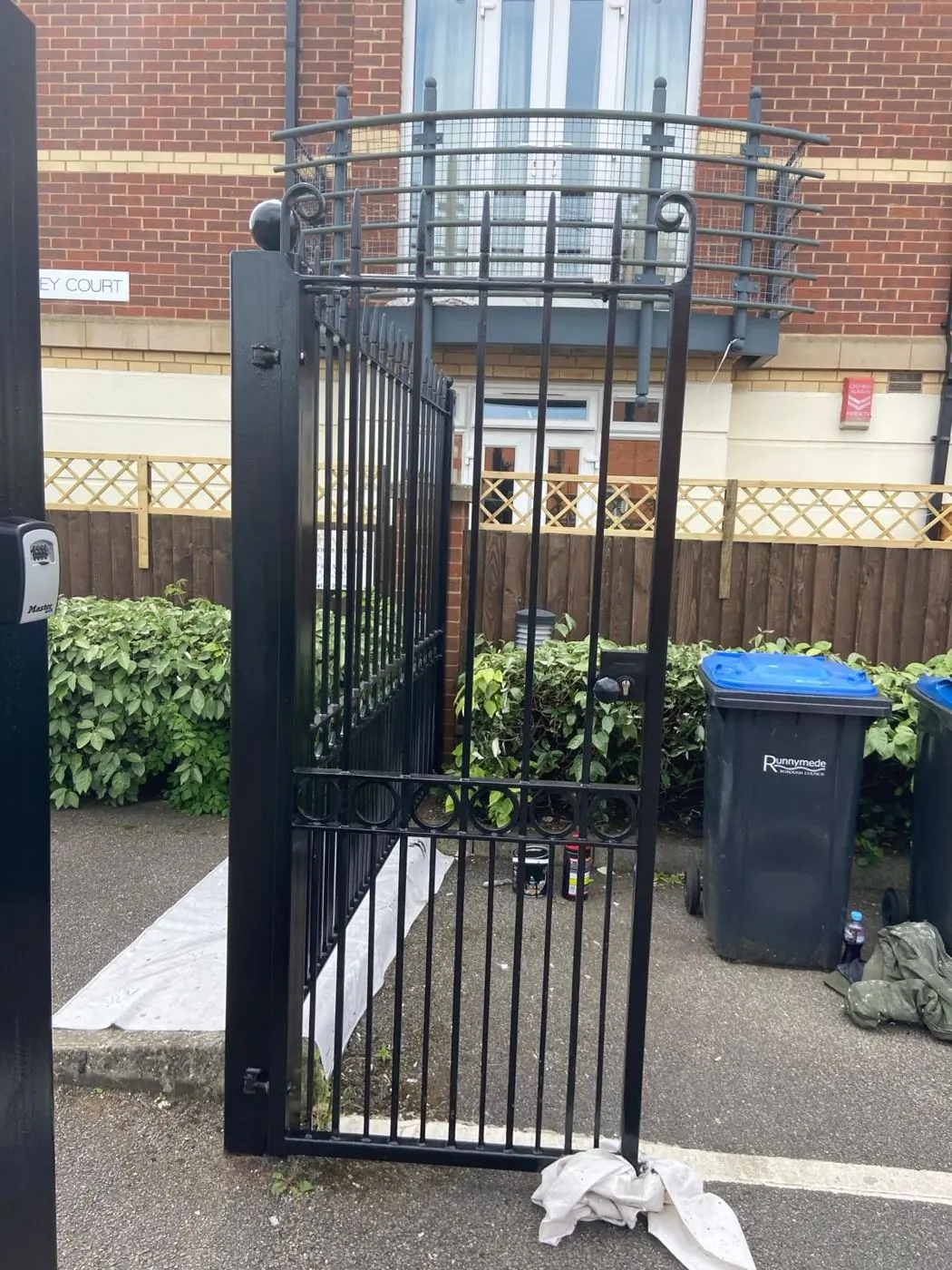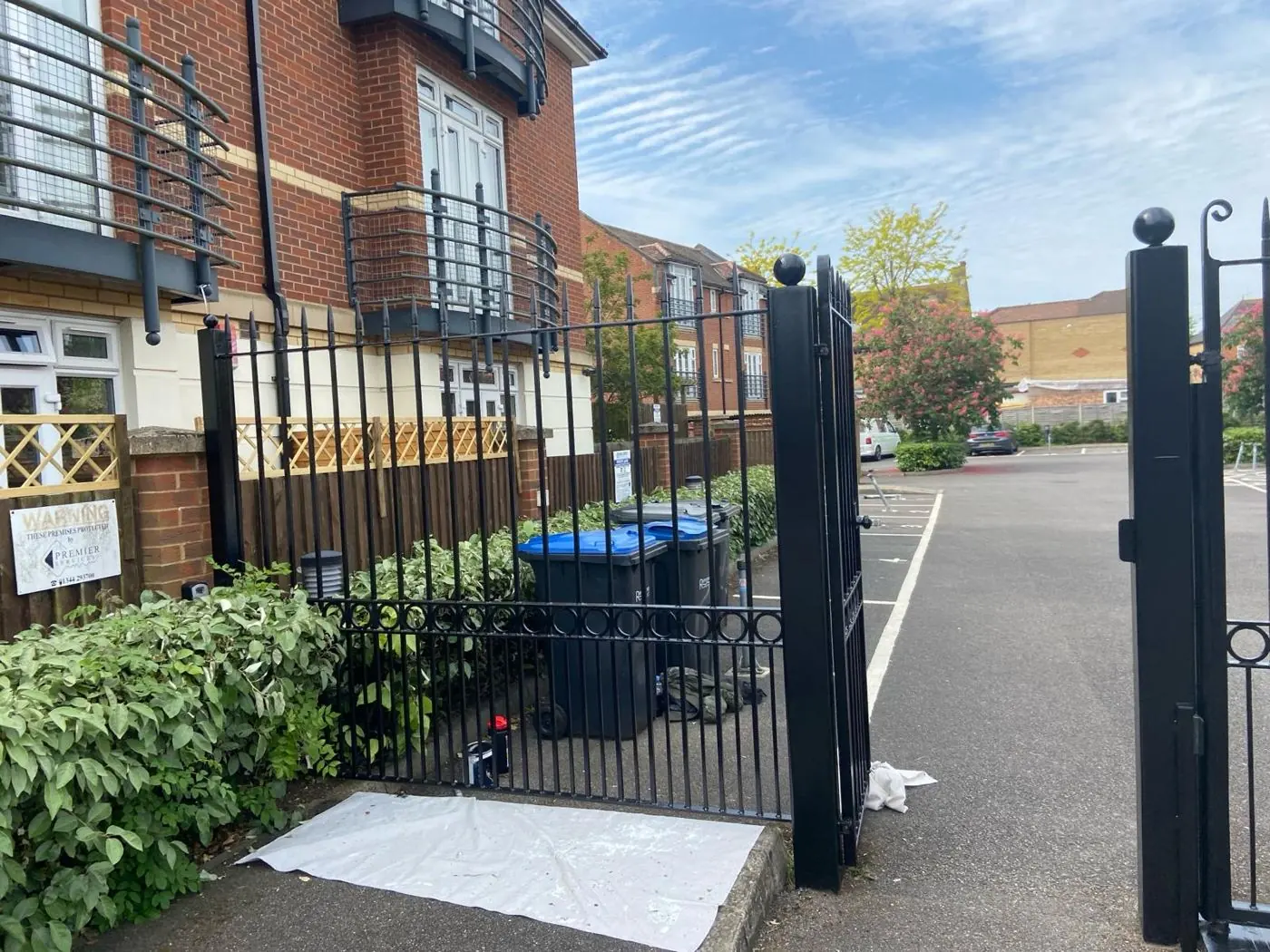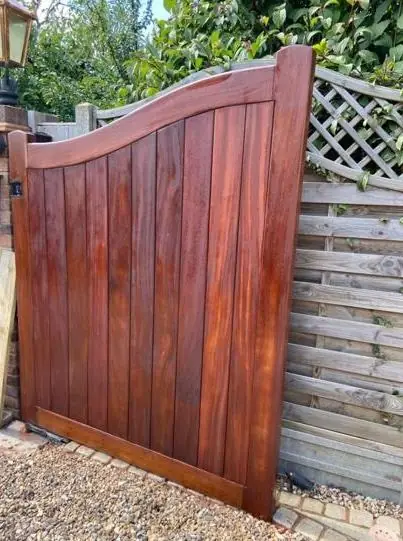
We stain and paint fences, gates and exterior timber in Duston, the NN5 suburb 2.1 miles west of the town centre. The work here ranges from the picket fences of the Kerrfield Estate to side gates on 1950s semis and the weatherboarding of the Newton Road area.
Picket fences on the Kerrfield Estate
The Duston Neighbourhood Plan’s design policy for Kerrfield names hedges and picket fences, alongside the estate’s brick, pebbledash and slate, as part of its character. That is a good reason to look after the fence you have. A picket fence has far more edges and end grain than a closeboard panel, and each pale top is a small horizontal surface that holds rain. Those tops and the bottom rail are where stain wears through first.
We brush every face and edge rather than spraying, so the stain reaches between pales without drifting onto the hedge that usually grows behind. Spraying past a hedge only paints the leaves. If you want a painted picket fence in a solid colour, white or a soft neutral suits the estate’s pebbledash fronts; a translucent stain suits a fence that sits in front of a hedge and is meant to look like timber.
Side gates and back fences on the 1950s streets
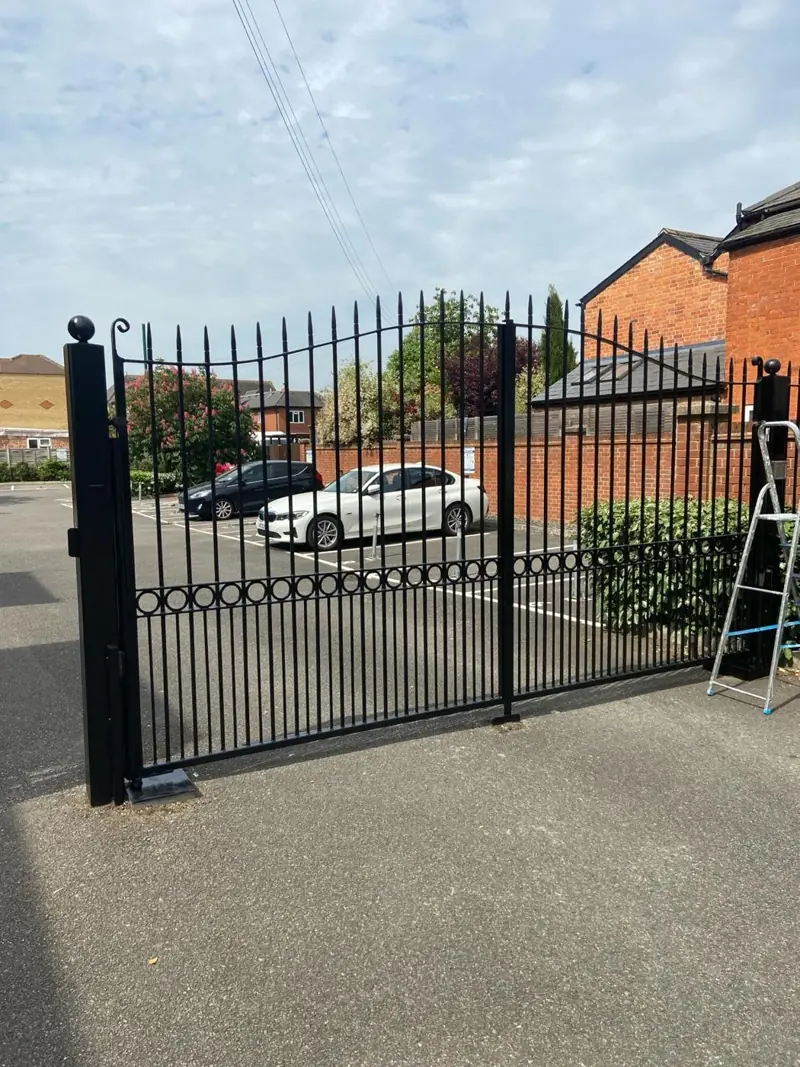
Limehurst and Eastfield and the Chiltern Way area were built with deep front gardens bounded by hedges, so the timber on these plots is mostly at the side and back: a side gate between the semis, garden fences running down to the rear, and sometimes a gate onto a back path. Side gates on a pair of semis catch a lot of wear from bins and bikes. We ease the gate if it is binding, check that the hinges hold firm, then rub down and stain or paint. A fence that divides your garden from next door is treated on your side; the other face is your neighbour’s to decide, and we will only do it with their agreement.
Weatherboarding around Newton Road
In East Duston, the 1960s and 70s terraces and flats south of Liberty Drive are clad in extensive timber weatherboarding, and it is a large part of how the area looks. It needs recoating with a microporous finish on a regular cycle. Microporous coatings let moisture escape from the timber while shedding rain, so they wear back gradually instead of blistering. Where the boards have gone grey, we clean and lightly sand them first so the new coat soaks in evenly. Many homes here are council owned and maintained on the council’s schedule; for owner-occupied and privately let homes on the same rows, matching the colour already used along the terrace keeps the Radburn layout looking consistent.
Shade, algae and the old village gardens
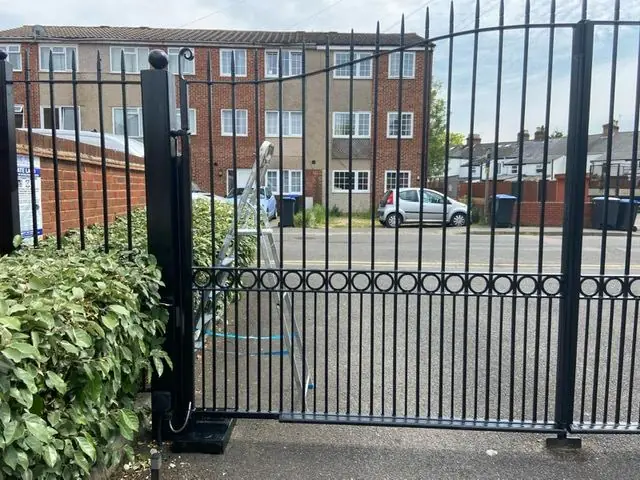
Gardens in the conservation area around Church Lane, Millway and Melbourne Lane sit under some large protected trees, including the blanket Tree Preservation Order copse by Melbourne Lane. Fences in that shade stay damp, turn green and grow algae. They need a fungicidal clean and a proper drying window before any stain goes on, otherwise the finish lifts within a season. Conservation area rules also restrict demolishing walls, fences or gates over a metre high beside a highway, so on an old village frontage refinishing what is there is usually the simpler route.
Preparation steps, stain choices and drying times for fences and gates are on our fence and gate staining service page. Our guide on timing outdoor painting around the weather explains why timber jobs are booked for the drier months, and the Duston area page lists the other work we do in the parish.
Last updated by Dean, DH Painter & Decorator.