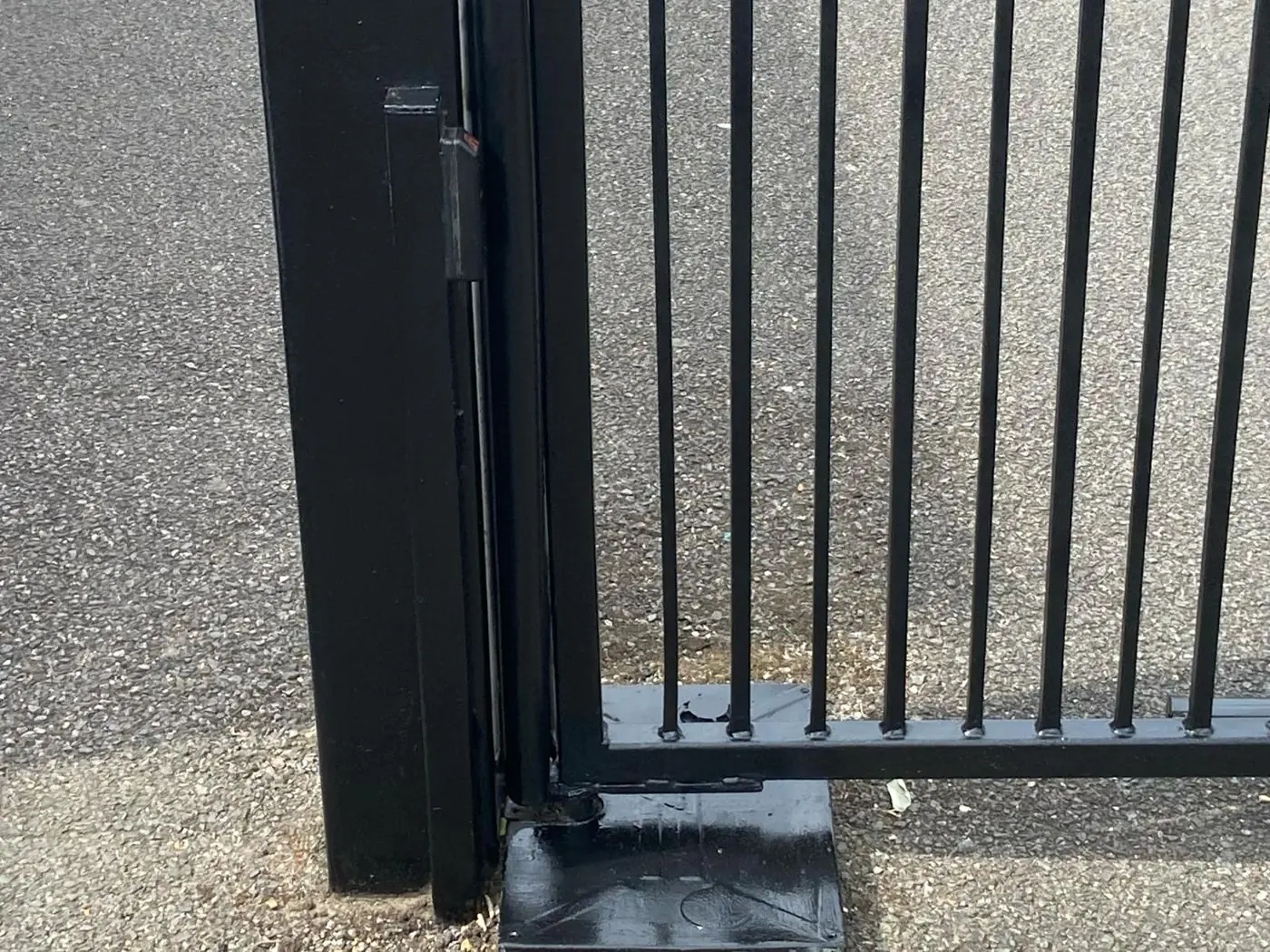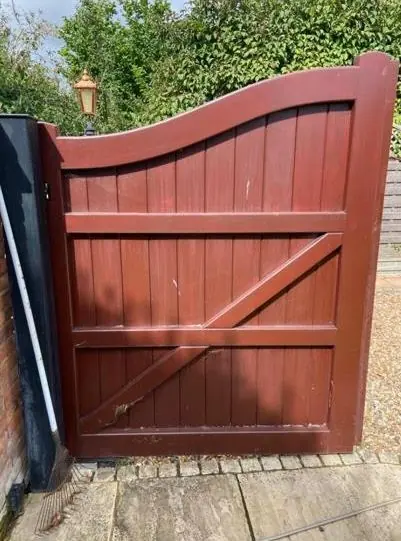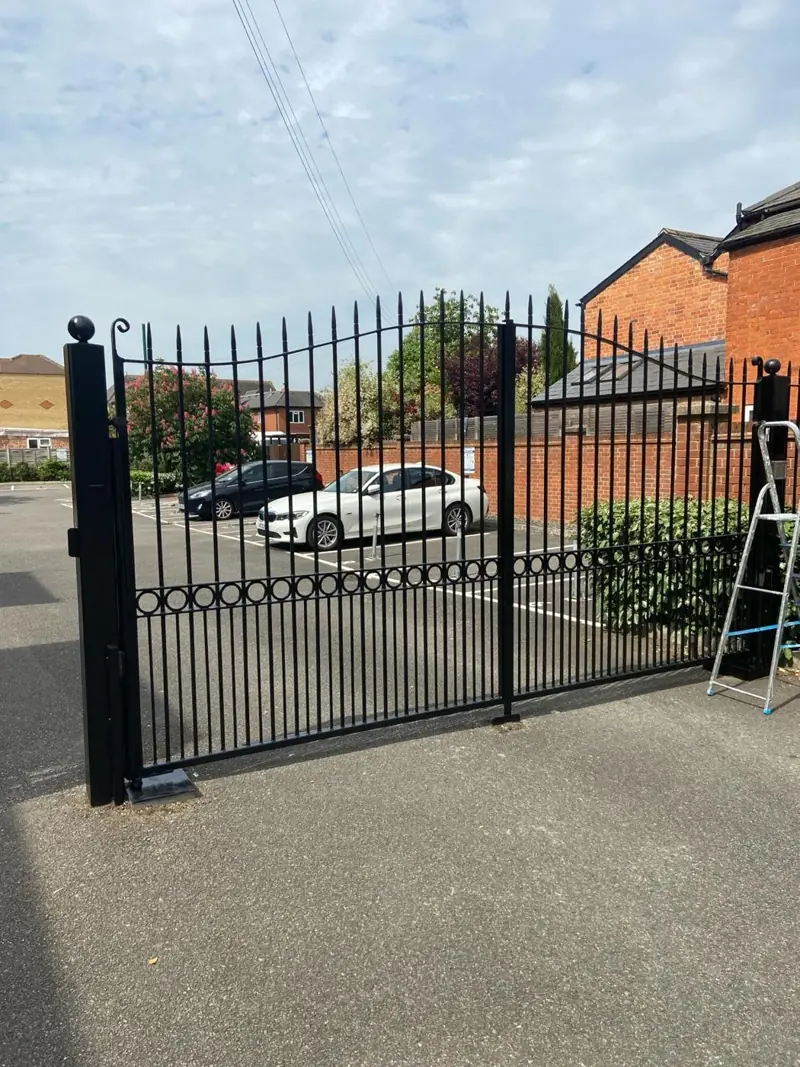
Dean stains and treats garden fences and wooden gates in St Crispin, the neighbourhood built on the former St Crispin's Hospital grounds in NN5, about 2.6 miles west of Northampton town centre. Most jobs here start with cleaning off algae before any stain goes on.
Boundaries in the shade of old trees
When the hospital closed in 1995, the housing estate was built into grounds that already had mature parkland, a green and a cemetery, with Berry Wood, a historic woodland of nature conservation value, along the northern edge. The trees are a big part of why St Crispin feels different from a bare new-build estate. For a garden fence they are less welcome. Panels under branches or on the north side of a garden see little direct sun, stay damp after rain, and grow a film of green algae within a couple of seasons. Leaves sitting at the base of panels leave dark tannin stains on the timber.
Stain applied over algae or wet wood does not soak in. It sits on the surface and starts peeling or flaking by the next spring. So on most fences here the first visit is about cleaning. We apply a fungicidal wash, give it time to kill the growth, scrub or brush it off, and then wait for the boards to dry right through before any coat goes on. In a shaded corner that can mean an extra dry day, and we would rather tell you that at the quote than discover it halfway through the job.
Which product, for which fence
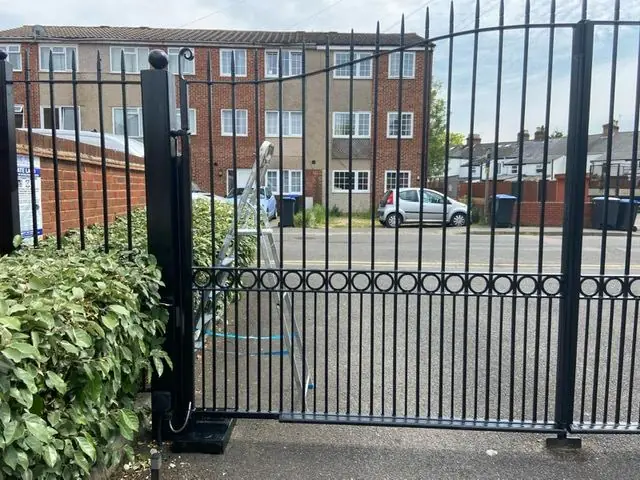
Garden fences on the newer streets, such as those off South Meadow Road, are typically pressure-treated softwood panels and posts, sometimes with a timber side gate. Water-based fence treatments suit sound panels and are kind to plants, while a spirit-based or oil-based stain penetrates further into weathered timber and copes better with the damp that shade brings. For gates, which are handled every day, a harder-wearing exterior wood stain or a microporous finish lasts better than a fence paint. We talk through colour too. A mid-brown or green tone hides leaf staining better than a pale grey on a fence that backs onto trees.
Spraying near the parking courts
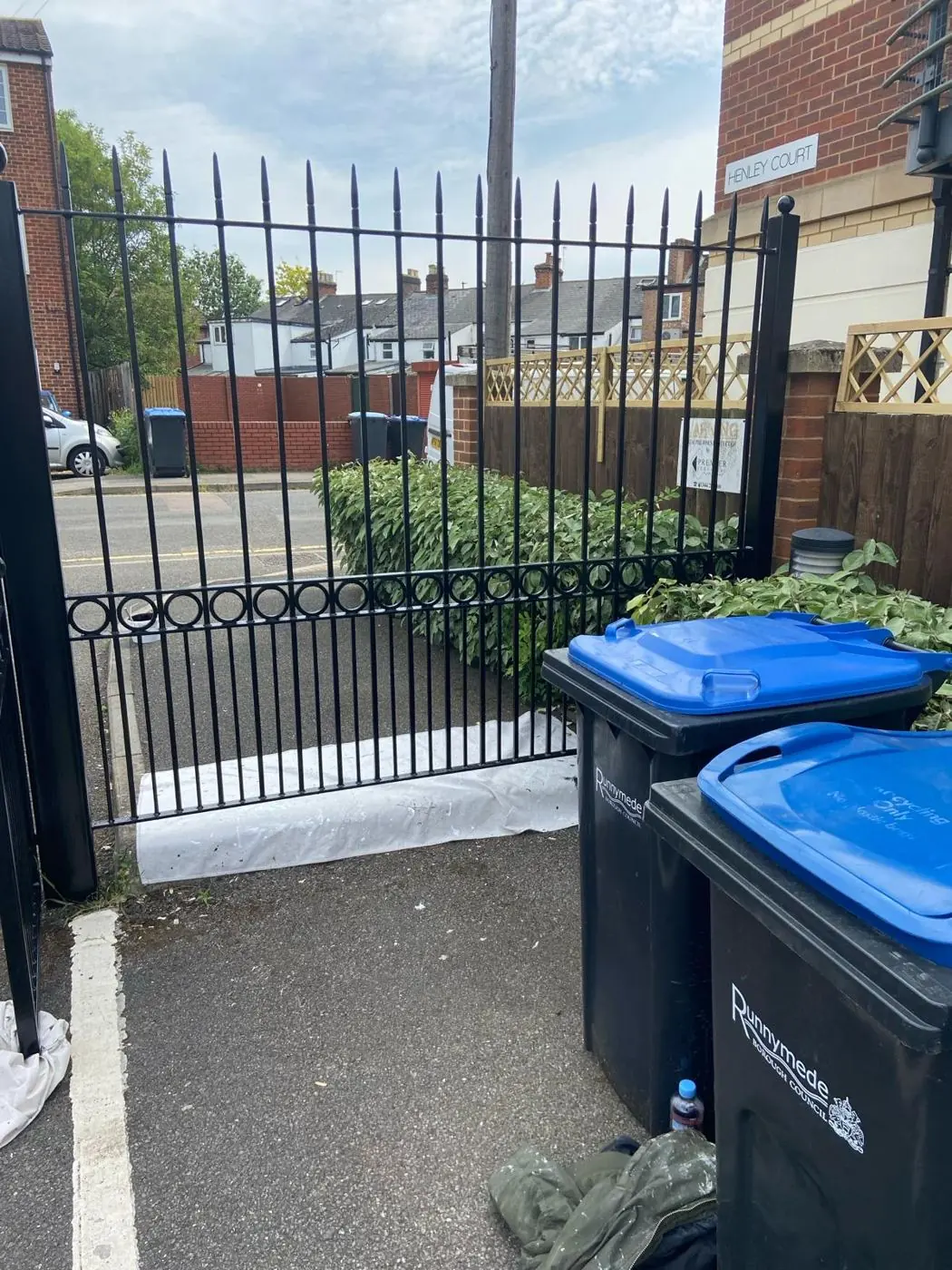
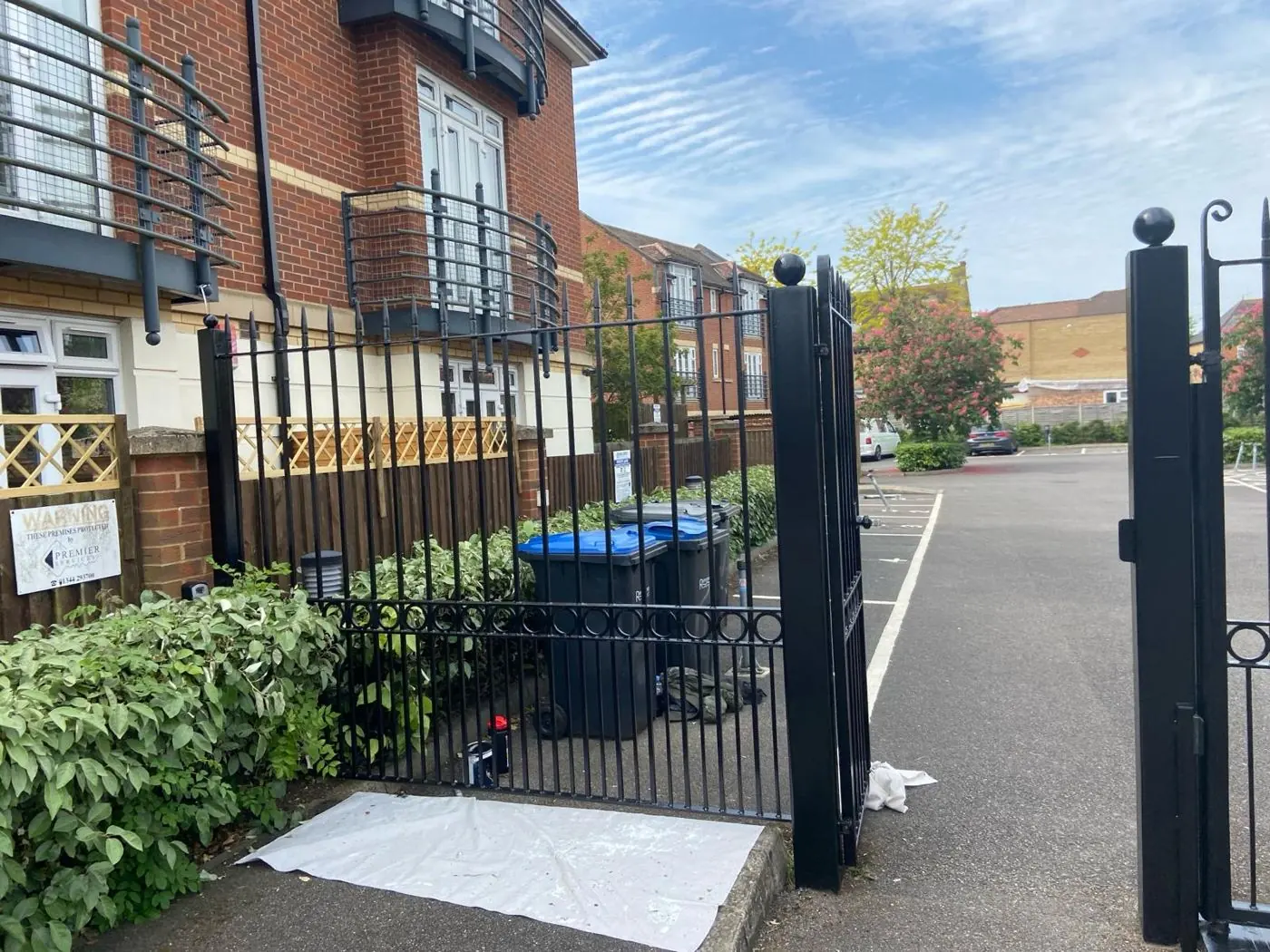
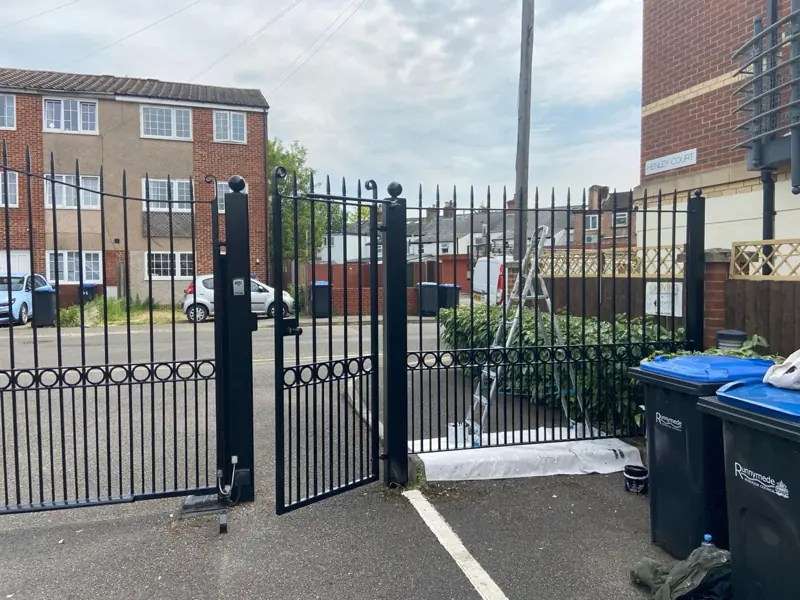
Plenty of St Crispin townhouses back onto or sit beside communal and allocated parking rather than a private drive. Fence sprayers produce fine mist that drifts in a breeze, and a light breeze is common on this raised site above the Nene valley. Any boundary that runs beside a parking court, a path or a neighbour’s car is brushed rather than sprayed. Where a spray unit is worth using, on a long run in an enclosed garden with no cars nearby, we sheet the neighbour’s side, mask the paving and pick a still day.
Shared fences and the conservation area
On a terrace or a row of townhouses most fences are shared with the house next door. Staining only your side is fine, but the colour can show over the top or through gaps, so it is worth a word with your neighbour before choosing. If you want both faces done, we need access to their garden, and we arrange that with them through you.
The St Crispin’s Conservation Area covers the former hospital complex and its parkland, including the green, the cemetery and Berry Wood. Ordinary fence maintenance on a modern house is not usually affected, but if your boundary faces open land or a historic building and you want a strong change of colour, a quick check with West Northamptonshire Council is sensible. Upton Parish Council, which covers St Crispin, encourages sympathetic maintenance of the site’s historic features.
- Panels backing onto Berry Wood or the parkland trees: fungicidal wash and an extra drying day
- Boundaries facing the green, the cemetery or a historic building: muted tones, and a council check for a bold change
- Fences beside a shared parking court: brush only
- West- and south-facing runs on the open side of the hill: a stain that copes with sun and wind-driven rain
Our main fence and gate staining service page explains each step in more detail. For other work we cover across the neighbourhood, see our page for St Crispin.
Last updated by Dean, DH Painter & Decorator.