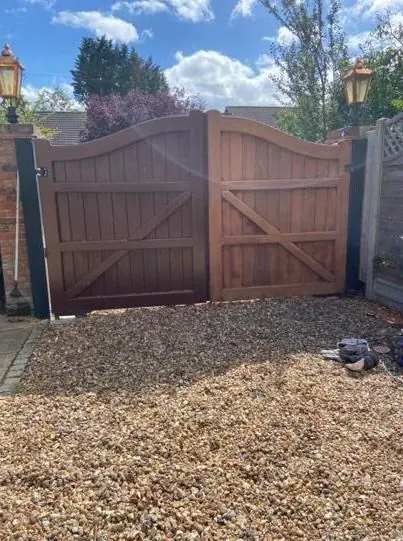
DH Painter & Decorator stains and paints garden fences, posts and wooden gates in Dallington, NN5, about 1.3 miles north-west of Northampton town centre. Dean cleans and treats shaded, damp timber before staining, and also covers new fencing on the Dallington Grange estate.
Gardens in the shade of the brook-side trees
Gardens in Dallington’s old village sit in the valley of the Dallington Brook, where mature trees line the water and surround the greens. Under a canopy like that, fence panels rarely see full sun. They stay damp after rain, collect leaf litter at the base and grow a green film within a season or two. The ground in the brook valley is Upper Lias clay, which holds water, so posts and gravel boards sit in wet soil for much of the year.
None of that means a fence will not last, but it does change the routine. Staining here is less about colour and more about keeping water out of timber that rarely gets a chance to dry.
How we prepare damp, shaded timber

| What we find | What we do first |
|---|---|
| Green algae or black mould on panels | Fungicidal wash, left to work, then brushed off once dead |
| Leaf mulch packed against the base | Clear it back so gravel boards and post feet can dry |
| Sap spots from overhanging trees | Clean off before staining so the finish takes evenly |
| Grey, dry timber on the sunnier side | Brush down and allow a more absorbent first coat |
| Soft or split boards | Flag for repair; we do not stain over rot |
When the timber is dry right through, the stain goes on, brushed into the grain and along the top edges where water sits. In the valley that sometimes means waiting for a dry run of days rather than the first sunny afternoon. The general method, and how stain differs from fence paint, is on our main fence and gate staining page.
Picking a colour near the old village
Dallington’s character comes from sandstone, thatch, old trees and open green space, with white post-and-rail fencing along the brook near the green. A garden fence in the conservation area is a private matter, and routine staining does not normally need permission, but tones that sit quietly beside stone and greenery tend to suit the setting better than bright colours. Mid browns, soft greens and dark neutrals all work well against sandstone. If your boundary forms part of the setting of a listed building, it is sensible to check with the council before a strong change of colour.
One more conservation area point: if branches must be trimmed to get at the fence, West Northamptonshire Council wants six weeks’ notice of the tree work. Plan that before booking the staining, so a dry spell is not lost waiting for clearance.
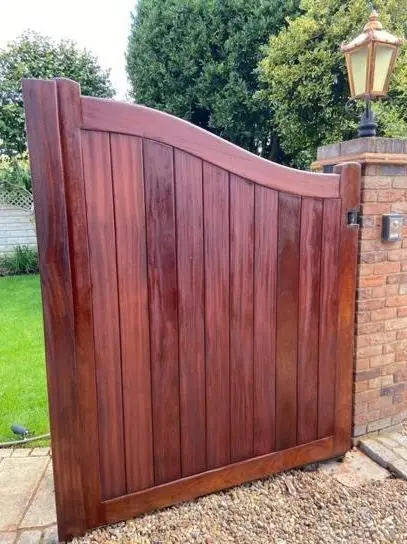
Gates deserve their own mention. A timber side gate in a damp garden swells, sticks and splits at the bottom rail, which is end grain soaking up water from the ground. We seal end grain on every gate we stain, check the hinges are not dragging the frame out of square, and suggest easing a sticking gate before it is coated rather than after.
New fences at Dallington Grange
Out on the north-western edge beside Harlestone Firs, the Dallington Grange estate is planned to grow to around 3,000 homes, and new houses there typically come with new timber fencing. New pressure-treated softwood holds a lot of moisture when it is put up, so staining straight away often leads to a patchy, short-lived finish. It is usually better to let the timber dry out first, following the stain maker’s advice, and then apply two coats. Dean can look at a new fence and tell you whether it is ready. More on the area is on our Dallington page.
Last updated by Dean, DH Painter & Decorator.