Dean stains and treats fences, gates and timber cladding in Harlestone, NN7, which lies 4.3 miles from Northampton's centre on the north-west side. In a village bounded mostly by stone walls, the timber that needs looking after is field gates, post-and-rail fencing, garden gates and the dark cladding on the Swedish Houses.
A village of stone walls, with timber in between
Walk through either half of Harlestone and the boundaries you notice are stone: high walls linking one property to the next, gate piers along the A428 and New Road, and the old paddock walls around the playing fields. The conservation appraisal treats those walls as part of the character and discourages new openings in them. That leaves a particular set of timber to look after. There are side and garden gates set into stone walls, agricultural post-and-rail fencing on the edges of the village where fields meet gardens, back-garden panels on the 20th century houses, and one unusual group of timber-clad homes.
Our general approach to fence and gate finishes is on the wood staining service page. This page is about what Harlestone’s setting adds.
The Swedish Houses in Upper Harlestone
Near the green in Upper Harlestone are six semi-detached Swedish prefabricated houses and bungalows from the 1940s, now on the Local List. They are clad in dark timber, and that cladding is what defines them. The finish needs regular stain or oil maintenance in a dark, consistent colour so the group keeps reading as a set rather than six different houses.
For cladding like this we:
- wash down and treat any green growth, which collects on boards near the green and under trees
- check for open joints, split boards and failed fixings before anything is coated
- match the existing dark tone, testing a small area first, because a stain that comes out lighter or warmer than the neighbours shows from across the green
- brush the finish along the full board length to avoid lap marks, working into the end grain at the bottom edges where water sits
Some of these houses have replacement uPVC windows. We mask those carefully, as stain on white plastic is hard to remove. Where a board has split or a fixing has rusted through, we tell you before staining, because sealing over a failed board only hides the problem until the next winter.
Gates in stone walls and field fencing
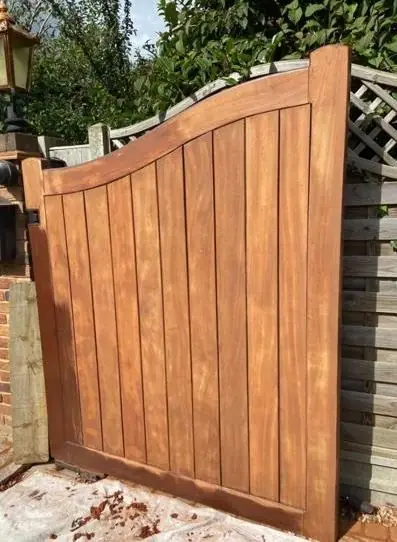
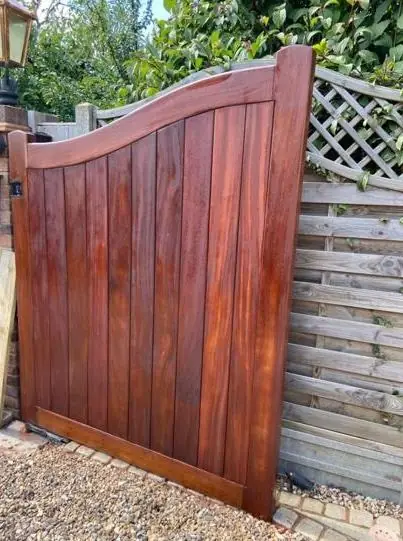
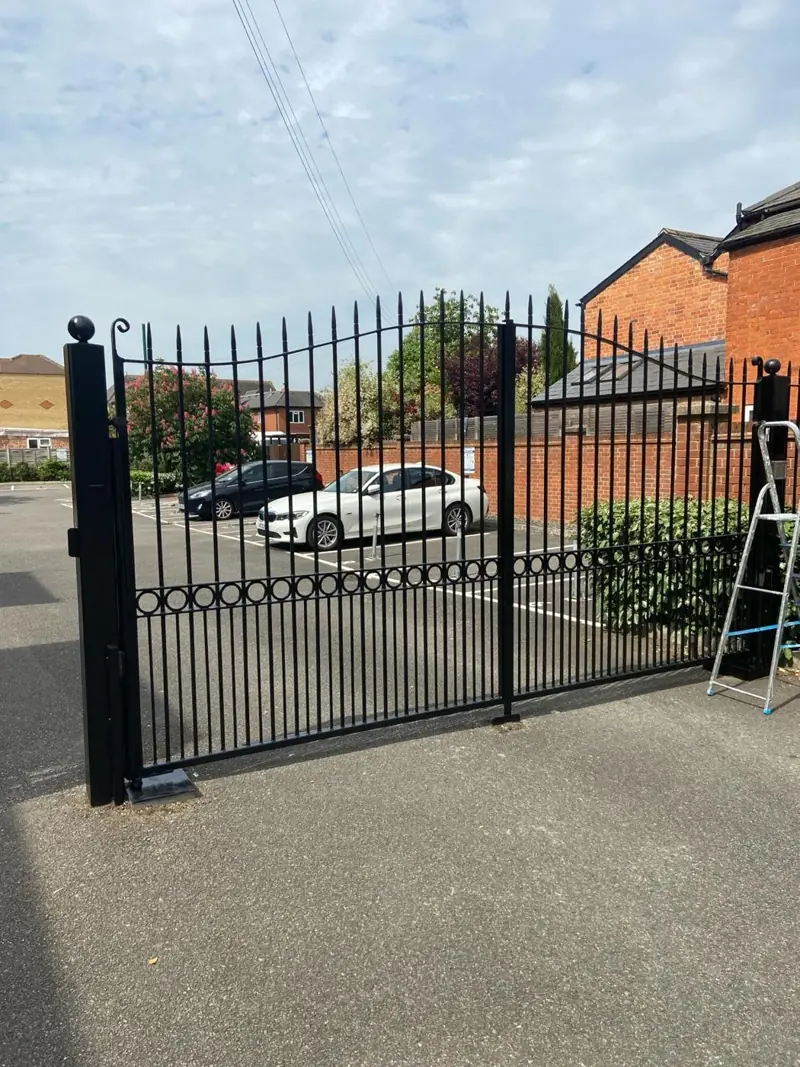
Timber gates hung between stone piers take a lot of weather. The hanging stile and the bottom rail stay damp because they are shaded by the wall and close to the ground. Oil or stain soaks in better than paint here and wears back gradually, so it is simple to maintain. We take the gate off its hinges where that is practical, so the bottom edge can be sealed, and we protect the stone piers from drips. Stone that has never been coated should not be stained or painted.
Post-and-rail fencing around paddocks and field edges is usually rough-sawn treated timber. It takes a penetrating stain well, applied by brush so it gets into the sawn surface and the post tops.
Weather, shade and consent
Harlestone sits in a wooded valley with the brook running through Upper Harlestone, so timber dries slowly after rain and dew can sit on it until late morning outside the summer months. We plan staining for a run of dry days; our guide to the right season for outdoor work explains the reasoning. The proposed Article 4 Direction also lists boundary fences, railings and gates, so if you are thinking of a new gate or a big colour change rather than maintaining what is there, check with West Northamptonshire Council. More on the village is on the Harlestone area page.
Last updated by Dean, DH Painter & Decorator.